Épisodes

  • Counterintuitive Trends, Building Products, and TSMC Chips with Brian Ardinger and Robyn Bolton
    Jan 20 2026
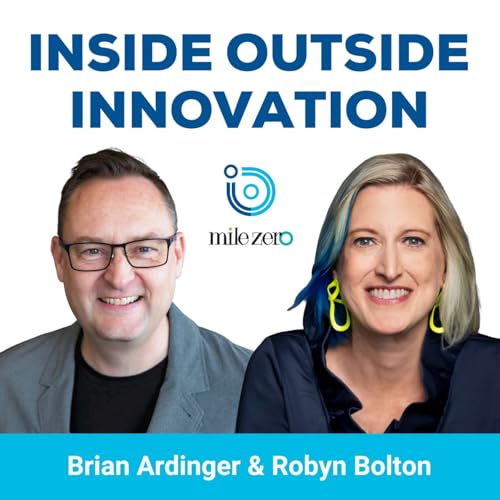
    On this week's episode of Inside Outside Innovation, Robyn and I talk about counterintuitive trends for 2026, tactics for building great products, and how one company is controlling 64% of the future. Let's get started.Inside Outside Innovation is the podcast to help innovation leaders navigate what's next. Each week we'll give you a front row seat into what it takes to grow and thrive in a world of hyper uncertainty and accelerating change. Join me, Brian Ardinger and Miles Zero's, Robyn Bolton as we discuss the latest tools, tactics, and trends for creating innovations with Impact, let's get started.Podcast Transcript with Brian Ardinger and Robyn Bolton[00:00:40] Brian Ardinger: Welcome to another episode of Inside Outside Innovation. I'm your host, Brian Ardinger. With me, I have Robyn Bolton. How are you, Robyn? [00:00:49] Robyn Bolton: I am good. How are you, Brian? [00:00:51] Brian Ardinger: I'm doing great. It's the beginning of 2026 in the midst of trying to ramp up new talent, and that's always fun. So that's what's new on my side. What's new in your world? [00:01:02] Robyn Bolton: The course that I teach at the Massachusetts College of Art and Design is starting in a couple weeks, so I've been busy putting together my syllabus to teach strategy and business models and had to go in and change things up, though I'm very excited. We will be doing a case on Taylor Swift this semester.[00:01:21] Brian Ardinger: The world is changing fast. We'll get into it now with our articles. There are a number of things we've pulled together for this episode.The first one we want to talk about is called Six Counterintuitive Trends to Think About for 2026, and this is from Barry O'Reilly. Barry wrote a book called Unlearn, and he talks a lot about all things lean startup and, and everything, his particular take as he was looking forward into the 2026 and some of the things that he's seeing and how we should be pursuing this whole innovation space.The article talks about the fact that a lot of managers and that are asking the wrong questions, especially when it comes to AI, and we're talking too much about the technology and how fast is AI improving. When the better question that we should be asking ourselves is, how is AI quietly changing how people work, think, decide, and trust themselves at work?And I thought that was an interesting way to rephrase how we go into 2026 and move away from the technology itself and really think about like, how is this technology impacting people?[00:02:25] Robyn Bolton: Completely agree. I've definitely seen that shift from what is our AI strategy to what is our strategy to accomplish our goals through people, through AI, et cetera, kind of the AI enabled strategy. So, it's nice. It's refreshing to see that shift reflected. Again. I loved his very first counterintuitive trend.I was like, oh, please let this be a trend that leadership will be redefined around judgment, not control. And I would argue that leadership was always about judgment. Management was about control, and that was one of the big differences between leaders and managers. But overall, like I really do hope that he's right, that executives, managers, you know, those senior levels of any organization, that they are shifting to more judgment, like not judgment as in condemnation judgment, but like critical thinking, problem solving versus trying to manage every aspect of their direct reports. [00:03:30] Brian Ardinger: Yes. And talks about creating space for reflection and that, not just, again, I think we have a tendency, especially with all the pressure that we're feeling around AI in that to do the next pilot, use the next tool, keep up to speed on what's going on, and keeping in mind that that reflection period is actually where the learning happens a lot of times, and not being afraid to slow down.Having said that, you know, the other thing that he talks about is the speed in which we have to go and deploy things in 2026 and beyond, making sure that we are learning fast. Strategy will ship from planning fast to learning fast. That is the key. It's not about planning per se, it's about, you know, how fast can we learn in this new world of uncertainty. [00:04:14] Robyn Bolton: And the learning being so key for a whole host of reasons, but especially his third point that AI is quietly eroding human confidence. And so it's kind of this interesting juxtaposition of trends in his list of, hey, we have to start focus on learning faster. Leadership is going to be defined by judgment. And by the way, this tool that we've spent certainly all of last year talking about is actually eating away at all of those things.And I think it just highlights the importance of that reflection step and kind of saying, all right, yeah, I got an answer from AI, but does this make sense? Is this actually what I think or am I just parroting what Claude, Chat GPT, et cetera has said? [00:04:57] Brian Ardinger: And then the final ...
    Afficher plus Afficher moins
    17 min
  • Mental Models for AI, Middle School Dating, and Robot Olympics with Brian Ardinger and Robyn Bolton
    Jan 13 2026
    On this week's episode of Inside Outside Innovation, we sit down to talk about new mental models for working with AI, the similarities between startups and middle school dating, and lessons learned from the robot Olympics. Let's get started.Inside Outside Innovation is the podcast to help innovation leaders navigate what's next. Each week, we'll give you a front row seat into what it takes to grow and thrive in a world of hyper uncertainty and accelerating change. Join me, Brian Ardinger and Miles Zero’s Robyn Bolton as we discuss the latest tools, tactics, and trends for creating innovations with impact. Let's get started.Interview Transcript with Brian Ardinger and Robyn Bolton[00:00:40] Brian Ardinger: Welcome to another episode of Inside Outside Innovation. I'm your host, Brian Ardinger, and I have my co-host, Robyn Bolton. Welcome, Robyn.[00:00:50] Robyn Bolton: Thank you. Great to be here as always. [00:00:52] Brian Ardinger: We are in a brand-new year 2026. Who would've thought? Exciting to start the year with you. Appreciate you coming on board. [00:00:58] Robyn Bolton: Yep. High point of the year so far. [00:01:00] Brian Ardinger: We've got a lot of things going on on the plate. Anything you want to talk about? [00:01:04] Robyn Bolton: Couple of new things I mentioned earlier, one of our stories from last year is back in the news, the Samsung AI fridge just voted worst in show at CES this year. People finally caught on to the fact that we may be overcomplicating the refrigerator.Thought that was a funny callback, and I got to admit, I feel like you called it Brian and I echoed it of like we've gone too far. So, personally, professionally in my space, starting to do a lot more work in uncertainty and helping people figure out how to make decisions without the data they want or need, and how to help teams move through a world that is getting only more and more uncertain every day. So, it's exciting. [00:01:51] Brian Ardinger: Saw your newsletter this last week, and yeah, the new positioning, or you're talking about how it's not just about innovation, it's more about how do you deal with the fact that nothing that you expected to happen is going to happen, and how do you deal in probability and uncertainty. [00:02:06] Robyn Bolton: Great for innovators, because that's one thing that as the innovators, whether you're a startup founder, a consultant, a corporate innovator, every day you're dealing with uncertainty and trying to figure out how to move forward. Even though we've always called this innovation, it has much broader application these days. [00:02:23] Brian Ardinger: Absolutely. Let's get right into it.We've got a couple of different articles we've been reading over the holiday season. The first article we want to talk about is called Six Mental Models for Working With AI. It's from Azeem Azhar. He's got a great Substack newsletter out there that publishes pretty much almost daily, I think it comes out. But he was talking about the way he's been looking at AI over the past year and trying to come up with different models that are making it more effective. All these AI tools are brand new and that, and people are trying to figure out what works, what doesn't work, how to use them better, and I think it's sometimes interesting to take other people's perspectives and what has worked for them and discuss that.So, in his article, he goes over a couple of different frameworks that he uses when he is either trying to understand better how to use a tool. One of the ones I was going to talk about is, he calls it the 50 x reframe, and he says, when he is dealing with a particular problem and trying to understand like, how can I automate it, how can I make it better, how can I make it faster and that he asked the question, what would I do if I had 50 people working on this problem. And asked the AI basically to help him think through the framework. Or if you know 50 people were working on this particular project, how could you automate it or what would change if you had 50 people to be able to dig into a particular area.So, I thought that was a very interesting framework to think about it. And we oftentimes get constrained in like it's just me or just my team. But what if you just flipped the framework and said, what if I had 50 people on my team to work on it? How would that change what I'm doing? [00:03:46] Robyn Bolton: I loved that one. I mean that one, it's the first one listed in the article. And I'll admit, I started reading the article. It's a big skeptical when I started reading it because you know, his first sentence is the question of whether AI is good enough for serious knowledge work has been answered. And I was like. Yes, it's been answered. It's not. And then I kept reading. I'm like, oh, he has a different answer.The 50 x reframe just stopped me in my tracks, was like, that's genius of shifting from how do I as one person do this better with AI's help to completely ...
    Afficher plus Afficher moins
    15 min
  • Radical Reinvention, IKEA effect, and AI Innovation with Brian Ardinger and Robyn Bolton
    Dec 30 2025
    On this week's episode of Inside Outside Innovation, we talk about how change is changing, the IKEA effect on MVPs, and how AI is making companies more ambidextrous. Let's get started.Inside Outside Innovation is the podcast to help innovation leaders navigate what's next. Each week we'll give you a front row seat into what it takes to grow and thrive in a world of hyper uncertainty and accelerating change. Join me, Brian Ardinger, and Miles Zero’s, Robyn Bolton as we discuss the latest tools, tactics, and trends for creating innovations with impact.Podcast Transcript with Brian Ardinger and Robyn Bolton[00:00:30] Brian Ardinger: Let's get started. Welcome to another episode of Inside Outside Innovation. I'm your host, Brian Ardinger, and my co-host Robyn Bolton is with me. Hello Robin. How are you?[00:00:45] Robyn Bolton: Hello, Brian. I'm great. How are you?[00:00:50] Brian Ardinger: I am doing well. We are in the middle of December.[00:00:54] Robyn Bolton: And hard to believe that the year is, it's almost over.[00:00:58] Brian Ardinger: Well, I'm ramping up for 2026. We've got a lot of stuff to talk about for the conference that we're going to be planning. Yes. We'll talk to you a little bit more about that, but let's just jump in. We've got some articles to discuss, some things that we've been seeing out there in the ether when it comes to innovation.Innovation and AI in 2026. Setting the Stage for ChangeThe first article is Change is Changing How to Meet the Challenge of Radical Reinvention, published by McKinsey. There's a lot of things I want to dive into this. Obviously, McKinsey's probably in the wheelhouse of disruption, as their game is going to be changed. So, I read this article with two lenses.One, the lens of what they are telling their clients, and then two, are they eating their own dog food when it comes to this? So, for reference, the McKinsey article talks about, you know, when change becomes everywhere, every, everything everywhere, all at once. How are companies dealing with this? And it's no wonder that the average employee experiences all these particular changes and is worn out.And I think one of the things they quoted was the number of new experiences that the average employee faces is fivefold increase than a decade ago. The fact that organizations and leaders have all new types of tools and skills and methods to navigate this changing, complex state, and those old tools don't necessarily apply today. So I love your first insight, and we'll go from there. Radical Reinvention and Innovation Strategy. Rethinking Change at Scale[00:02:13] Robyn Bolton: McKinsey turns out great stuff and great frameworks and all that stuff. And also, as someone who's been a consultant for entirely too long, they also make me laugh. Like in a super nerdy consultant way. Because one of the things that's laid out this article is the four Cs of change.You know, it starts with C1 execute, C2 mobilize, and then we get to C3 transform, which was the buzzword of, I feel like the last five years. You know, we're transforming everything. But now we have a new one. It is level four change, and it is reinvention. And I just loved when we rebrand things that are the same thing we've always talked about, but we've rebranded it, and now there's a different diagram, so it's completely new, and you need to buy from us.But there is good content in here. And you know this idea of creating value with the new identity. Talk about way easier said than done. Like every organization has an identity. When you ask someone like, what do we do here? The answer is the organization's identity and to change that is about as easy as changing an individual's identity, which is to say not at all.Organizational Identity, Leadership, and Innovation Fatigue in the Age of AI[00:03:30] Brian Ardinger: Well, and I found that part of the article actually the most intriguing because I think when you think of McKinsey, again, a lot of stuff they've focused on is how do you optimize and execute on your model? They're not very focused on reinvention. And kind of blowing it up and starting over from that perspective.So, I thought that was an interesting take, that either they have to recognize the fact that the companies that they're working with and the companies out there in general are going to have to reinvent themselves. It's no longer table stakes just to, you know, do what you've been doing and make it better, faster, stronger, cheaper.It's how do we navigate and potentially reinvent what we've done in the past. And then the other key aspect of it that really resonated with me was the fact that how do you create a culture such that change is not a drain to the organization? But as a source of energy, again, coming from a consulting background, that's often not the things you talk about.Like how do you actually create change that energizes and excites people, and provides a source of energy around what you're doing? So those are the ...
    Afficher plus Afficher moins
    15 min
  • Portfolio entrepreneurship, AI research, and brain development with Brian Ardinger and Robyn Bolton
    Dec 16 2025
    On this week's episode of Inside Outside Innovation, we talk about portfolio entrepreneurship, how AI tools are transforming market research and new brain research that indicates adulthood starts later than you think. Let's get started.Inside Outside Innovation is the podcast to help innovation leaders navigate what's next. Each week, we'll give you a front row seat into what it takes to grow and thrive in a world of hyper uncertainty and accelerating change. Join me, Brian Ardinger, and Miles Zero's Robyn Bolton. As we discuss the latest tools, tactics, and trends for creating innovations with impact. Let's get started.Podcast Transcript with Brian Ardinger and Robyn BoltonAI Driven Innovation Trends and Founder Mindset Shifts[00:00:30] Brian Ardinger: Welcome to another episode of Inside Outside Innovation. I'm your host, Brian Ardinger, and with me, I have Robyn Bolton from Mile Zero. Welcome, Robyn.[00:00:34] Robyn Bolton: Thank you. Great to be here.Great to have you, again. This is episode 3 43 ish. We're excited to continue to talk about innovation. There's always something new and exciting to talk about.[00:00:45] Brian Ardinger: Anything going on in your world this week?[00:01:04] Robyn Bolton: I feel like this week I'm going to be spending at grading finals papers wrapped up my corporate innovation course at Boston College, and everyone submitted their finals and that's all great and they're done. And I'm now just looking at a stack of virtual digital stack of papers.[00:01:21] Brian Ardinger: At Nelnet this week we've got our Spark, which is our monthly gathering of folks. We find some interesting project and give them opportunities to sit on stage and talk about what some of the new things that are building out there. That's an opportunity to get our movers and shakers in the same room and share what's going across the different business units. So we're always excited for our Spark this week. Those are some of the things that are happening in my world. [00:01:44] Robyn Bolton: I'll happily come out and go to your Spark event, and you can grade papers. [00:01:46] Brian Ardinger: You're welcome anytime. We've got a lot of things to cover today. We've got three articles that we've curated over the last week or so. The first one we want to talk about is everyone's a founder now and it's from every, and it's a YouTube channel, and it's an interview with Henrik WerdelinPortfolio Entrepreneurship and AI Agents Reshaping StartupsAnd Henrik is a person who started Pre-Hype, started BarkBox, and he has got a new company called Audos. It's a platform that helps people use AI agents to turn ideas into profitable companies. This particular YouTube video in this interview was talking a lot about some of these new tools and how it's really changing the landscape of startups and can apply to corporate innovation as well. With these new tools, Henrick was talking about this idea of portfolio entrepreneurship, so the idea of a new breed of entrepreneurship that's shepherded in by AI.Where founders build family of products or services around the same customer instead of like one moonshot idea. So rather than coming up with Facebook and building that out, there's an opportunity now for entrepreneurs to create maybe more single, double, triple types of companies around a core set of customers that they know and can work with.And it's a variety of different projects and services that can serve that particular marketplace versus the traditional model of venture capital that we've seen out there kind of shooting for the moon. [00:03:02] Robyn Bolton: It's a really interesting video and I encourage people to go watch it. They talk about a lot in this video and you know, some of the ones that I wanna highlight, and you've already touched on this is one, what he's building with Audos. Going back to our last episode where we talked about the Mad Lib. I actually went over to Audos and you can fill in a Mad Lib for your business idea and I think in 10 minutes it built a fully functioning website, videos, everything. It was amazing. I have no idea how to edit any of it or do anything but like just the speed at which you could take a mad lib and create something that looked like a viable business was astounding.Deep Customer Focus and the Rise of Multi Product FoundersHe also talked about, as you mentioned, the importance of picking a target customer and one that you want to serve for 10 years. And he talked about with BarkBox, it was all about serving the dog owner, and most people would talk about, oh, well, you did BarkBox. Now do Meow Box, now do whatever box. And he's like, that wasn't going to work. They went from BarkBox to basically like airplanes for dogs to other things. And it was always the people who are gonna win in this new kind of world are the ones who go really deep on a very specific customer.Then kind of where this all started of the portfolio entrepreneur. He did a great job calling out VCs. Mm-hmm...
    Afficher plus Afficher moins
    15 min
  • AI questions, value propositions, and industry veterans with Brian Ardinger and Robyn Bolton
    Dec 9 2025
    On this week's Inside Outside Innovation, Robyn and Brian sit down to talk about the AI question that no one wants to answer, the power of a good value proposition, and why industry veterans are building tomorrow's billion-dollar startups. Let's get started.Inside Outside Innovation is the podcast to help innovation leaders navigate what's next. Each week we'll give you a front row seat into what it takes to grow and thrive in a world of hyper uncertainty and accelerating change. Join me, Brian Ardinger and Miles Zero's Robyn Bolton. As we discuss the latest tools, tactics, and trends for creating innovations with impact. Let's get started.Podcast Transcript with Brian Ardinger and Robyn BoltonOpening Reflections on Innovation and the Year Ahead[00:00:30] Brian Ardinger: Welcome to another episode of Inside Outside Innovation. I'm your host, Brian Ardinger, and we have Robyn Bolton, our co-host from Mile Zero. Welcome, Robyn.[00:00:53] Robyn Bolton: Thank you. Great to be here as always.[00:00:55] Brian Ardinger: We've got the number of different articles we're going to talk about today. As everyone knows, this podcast is about giving the real insights of what's going on in the world when it comes to innovation. What's going on in your world? [00:01:07] Robyn Bolton: It's funny, it's time of year, so kind of feels like everyone is both wrapping up and gearing up, trying to bring things to a close. So, we can all effortlessly and go on the holidays, but January we'll be here before you know it. And so people are already starting to think about what's going on with AI in 2026, and what does the new world of work look like?[00:01:29] Brian Ardinger: I'm looking forward to my inbox being filled with the best things that happened in 2025 and what to look forward to in 2026, and like kind of year-end wrap stuff that you get. It's interesting times, especially like on the investment front, you know, a lot of things slow down at the end of the year as people start planning for it. I kind of love and hate this time of the year from the standpoint of, gives you some time sometimes to do that stuff that you don't always have time to do and remap what you're going to do for 2026. [00:01:55] Robyn Bolton: Yes. And speaking of the emails, wrapping things up. Spotify's Yearend rap came out I think a couple days ago, so also getting a lot of those in the old inbox.[00:02:07] Brian Ardinger: Alright, well let's get into it. We've got a couple of articles to talk to today. The first one that we came upon was from KP Ready. It is called the AI Question. Nobody wants to Answer and KP does a good analysis. He basically says, is the juice worth the squeeze when it comes to AI. And I think a lot of people are asking that question right now.You know, as more and more enterprises, you're hearing about more and more experiments, more and more people using the technology, and you're getting conflicting results and feedback on is this really paying off. All the money that's being spent into ai, all the things that we're doing around it. Are we seeing the returns and when will we see the returns?You know, from my understanding and what I've seen, the question is not like, will we receive returns, but when and how do we get through this exploration phase so that we can be effective with using the dollars and the time and the resources around this to actually find the value that's created. And so let's start with that particular article. What was your thought on it? Is the Juice Worth the Squeeze? AI ROI and Experimentation[00:03:04] Robyn Bolton: There's always this level of uncertainty around new technologies of is the juice worth the squeeze? Are we gonna get ROI? When are we going to get ROI? Running lots of experiments, but it definitely seems like AI has kind of amplified that. I actually just wrote a blog post asking, like, did your AI strategy, was it developed by the underpants gnomes?And just in case there, we have listeners who don't know who the underpants gnomes are, they're from South Park, and basically their business plan is phase one, collect underpants, phase two, question mark, phase three profit. And it just seems like there are so many AI startups, companies, experts, consultants, et cetera out there who have become underpants gnomes. And kind of just have this like, hi, put it on top of everything, and profit, and no one's kind of slowing down to kind of like, well, do we even need AI? How do we need it? Like, what makes sense here? [00:04:04] Brian Ardinger: I think a lot of people are not necessarily thinking. They feel the pressure to start doing something with AI, and so they start immediately deploying and doing things without looking at, well, is this a particular area that really would benefit? Or could we create real value if we can get this right? And they oftentimes overlook some of the other kind of hidden costs when you talk about it, deploying technology that's new or different.And I think more ...
    Afficher plus Afficher moins
    15 min
  • Learning Smarter, Eating Less, and Innovating Better with Brian Ardinger and Robyn Bolton
    Dec 2 2025
    On this week's episode of Inside Outside Innovation, we talk about Google's Learn Your Way platform, the ripple effects of GLP-1 Medications. And we explored the $10,000 question of why startups build products nobody wants. Let's get started.Inside Outside Innovation is the podcast to help innovation leaders navigate what's next. Each week, we'll give you a front row seat into what it takes to grow and thrive in a world of hyper uncertainty and accelerating change. Join me, Brian Ardinger and Mile Zero's, Robyn Bolton. As we discuss the latest tools, tactics, and trends for creating innovations with impact. Let's get started.Podcast Transcript with Brian Ardinger and Robyn BoltonGoogle’s Personalized Learning and the Future of Education[00:00:40] Brian Ardinger: Welcome to another episode of Inside Outside Innovation. I'm your host, Brian Ardinger. And with me, I have Robyn Bolton from Mile Zero. Welcome, Robyn. [00:00:48] Robyn Bolton: Thank you. Great to be here as always, Brian. [00:00:51] Brian Ardinger: It is exciting to have you on the podcast as our co-host. We always have some great conversations, and this week is no different.We've got three articles we want to talk about, and we're going to start with Google. Google has just solved one of the oldest problems in education, according to Albano Cintas. He has a Twitter post that I saw. In that, he talked about how Google has dropped Learn Your Way, which basically rewrites textbooks based on your individual interests.It's turning boring lectures into fun lessons. Students say that they've used it and have scored 78% versus 67% on retention tests. So maybe it actually works. Let's talk a little bit about Google and other things impacting the world of education. [00:01:31] Robyn Bolton: When I saw the post, I immediately went to Learn Your Way and I took some of their sample lessons, one on economics, an overview of economic systems, and another one on intro to data structures and algorithms, and for the last several years, I've worked a lot with a company in the K through eight curriculum industry. And I immediately sent this to them, with the message, "Uh oh." Because clicking into the system, and I highly encourage listeners, go try one of these out. You know, I did computer science as if I was a middle schooler who enjoyed cooking and food, and I had the option of reading the textbook sort of thing, but having quizzes every couple paragraphs to make sure I was learning.I could watch a slideshow with a voiceover. I could just listen to the voiceover. I could look at a mind map. I was surprised at how many different modalities that I needed to use. But I also did really well on the quizzes, especially the data algorithms, which I usually find computer science stuff very boring. So this feels a hundred percent like the future of learning and truly personalized learning to all the different mechanisms that students have and how different students learn differently. [00:02:54] Brian Ardinger: It's quite exciting and you add that onto the things that you can learn from YouTube. Obviously, Google owns YouTube. They have access to all those particular things, so I'd imagine there's some opportunities and ways they can tie those particular entities together in some way to get you access to just the right paragraph or just the right video clip or things along those lines.You know, I work in Nelnet in the education space, and we're always looking at how is the world of education changing? How does this impact higher education? How does it impact K through 12? How does it affect student loans? All these things can come into play when you have access to the world's knowledge, and it's fed in such a way that it makes it easier to digest and make it easier for the person to actually learn the stuff.I think a lot of our existing school system is functioned on, not necessarily even teaching the person to go through it, but to get them through the gauntlet. And what if we created a world that allowed them to actually learn and created folks that had better tool sets, mindset, skill sets around that. How would that change the world? It's one of those few things of AI that's positive. GLP-1 Medications and Shifting Consumer Behavior[00:03:58] Robyn Bolton: Yes, that is positive. We always have to look at the systems out there. And you know Google, yes, has YouTube. It also has Google Classroom, which is the learning management system. So, you already have a lot of teachers in schools plugged into Google, already using it for so many aspects in the classroom. This just fit perfectly, seamlessly, fits in, especially to get better results. It's a wild new world. I love making it relevant to students and their interests and how they learn. [00:04:28] Brian Ardinger: The second article is a good transition because it moves away from ai, but it's yet another innovation that could have significant effects on a lot of different things.And the article's from ...
    Afficher plus Afficher moins
    14 min
  • AI Innovation, Customer Trust, and Startup Strategy with Brian Ardinger and Robyn Bolton
    Nov 25 2025
    On this week's episode of Inside Outside Innovation, Robyn and I talk about creating flywheel effects through customer obsession, the landscape of AI startups and what's real and what's not, and why workers don't trust AI. Let's get started.Inside Outside Innovation is the podcast to help innovation leaders navigate what's next. Each week we'll give you a front row seat into what it takes to grow and thrive in a world of hyper uncertainty and accelerating change. Join me, Brian Ardinger, and Miles Zero's Robyn Bolton as we discuss the latest tools, tactics, and trends for creating Innovations with Impact. Let's get started. Podcast Transcript with Brian Ardinger and Robyn BoltonStartup Ecosystem Building, Travel, and Early Observations[00:00:45] Brian Ardinger: Welcome to another episode of Inside Outside Innovation. I'm your host, Brian Ardinger, and with me, I have a co-host Robyn Bolton from Mile Zero. Welcome, Robyn.[00:00:50] Robyn Bolton: Thank you. Great to see you, Brian. [00:00:52] Brian Ardinger: Great to see you. Both you and I have been on the road quite a bit for the last couple weeks, so it's nice to actually say hello again and get back into the swing of things.I spent last week in Savannah, Georgia, talking about startup ecosystem building with the Savannah Harbor Innovation Partnership. And they're looking for new ways to spice up and kickstart a lot of the startup activity there. So it was quite interesting. As an innovator, I think it's always important to get out to other communities and see what's going on and share war stories and best practices and all that kind of fun stuff. So, it was fun to get out there.I give a shout out to what they're trying to do, trying to get the right people across all parts of their ecosystem together, whether it's founders or investors, university, and things along those lines. I think they're doing a good job of trying to kickstart a lot of stuff going on down there. I'm excited to see where they go to. [00:01:41] Robyn Bolton: Savannah is home to one of my favorite innovations, the Savannah Bananas. But yes, I was on the road too. I went a little further afield. I was in London for the Thinkers 50 Conference, which as you would imagine was extremely interesting, especially these days where everything is so volatile and uncertain everywhere across the globe.Thinkers 50 Takeaways and Early Reflections on UncertaintyAnd there was a lot of discussion around how now more than ever, is a time for courage and to be brave. There was a lot of discussion around what the future holds and several brave souls who just said, we don't know. It could be anything. One of my favorites was Daniel Pink. He said, basically, we're living in the era of Schrödinger's cat, that the future will be radically different and the same.All at the same time. And I'm like, okay, that sounds totally fair. So lots of really interesting ideas. Lots to think about, as you would expect from a conference's called Thinkers 50. Fascinating, fascinating conversations. [00:02:47] Brian Ardinger: Now we're going to open the box and what do we find when, when it's opened? The box is already open. You know, we're going down that path no matter what. And you know, it is kind of interesting. You, you're seeing a lot more bubble talk and things like that, but yet yesterday Nvidia had their quarterly announcements and $5 trillion valuation and blew out their estimates.And so it's like, well, it's not a bubble yet, or people are at least spending money NVIDIA's getting paid for this stuff. So, we'll, we'll see where it all shakes out. [00:03:12] Robyn Bolton: Yeah. Even if it's a bubble, I mean, we had an internet bubble back in the early part of the century and it didn't mean the internet went away. It just means we resorted ourselves. So even if AI is a bubble, I don't think it's going away. The Flywheel Effect, Customer Obsession, and Human-Centered Touchpoints[00:03:26] Brian Ardinger: Got three articles to talk about today. First one's called the Flywheel Effect: How Customer Obsession Creates Self-Reinforcing Advantages. This is from Wildfire Labs. They've been putting out some great content. The Flying Wheel Effect talks about building a startup isn't about growth hacking. It's really about how do you create customer experiences and these flywheels that generate self-reinforcing momentum because there's so many things out there taking aways attention and competing for dollars and mindset.So how do you build into your process different ways that you can create a flywheel to differentiate and build it up? So, one of the examples they talk about is chewy.com and how Chewy built into their experience the idea of when a person's pet passes away, they actually sent them flowers. And created an experience and a touchpoint as part of that to relate to their customers but also create a means for further conversations. And, you know, creating a positive experience with that brand and with that ...
    Afficher plus Afficher moins
    17 min
  • AI Human Skills, YouTube's Impact, and Lesser Apes with Brian Ardinger and Robyn Bolton
    Nov 11 2025
    On this week's episode of Inside Outside Innovation, Robyn and Brian talk about the human skills needed to adapt to AI, how YouTube is changing the media landscape, and how we might just be becoming lesser apes. Let's get started. Inside Outside Innovation is the podcast to help innovation leaders navigate what's next. Each week, we'll give you a front row seat into what it takes to grow and thrive in a world of hyper-uncertainty and accelerating change. Join me, Brian Ardinger, and Miles Zero's Robyn Bolton as we discuss the latest tools, tactics, and trends for creating innovations with impact. Let's get started.Podcast Transcript[00:00:40] Brian Ardinger: Welcome to another episode of Inside Outside Innovation. I'm your host, Brian Ardinger. And with me, I have Robyn Bolton from Mile Zero. Welcome, Robyn.[00:00:48] Robyn Bolton: Thank you. Great to be here, Brian.The Human Skills to Adapt to AI[00:00:50] Brian Ardinger: Let's dive in. We've got a lot of things on our plate. A lot of things are happening. We've got a number of articles we wanted to discuss of things that we're seeing out there in the world.The first one I wanted to call people's attention to was from Shane Snow. If you're longtime listeners, you may have seen Shane on our podcast, episode 104, when he had another book coming out. His latest article is The Human Skills that Will help us adapt to AI and Not Die. [00:01:17] Robyn Bolton: Not that things are bleak or, or anything, but yeah, exactly.[00:01:19] Brian Ardinger: So Shane is a pretty talented thinker. His article sets the stage with comparing AI to what happened in early Tang Dynasty and China when they discovered gunpowder. And the fact that this gunpowder innovation changed the world in many different ways and democratized the peasants to be able to take over the emperor and everything else.That innovation quickly moved around the world, and it changed to the point where you either had to adapt to this and or die. And he talks a little bit about how that can be a parable to what we're seeing in today's world of AI. [00:01:59] Robyn Bolton: Especially interesting, his characterization of the speed and the speed of adoption, and kind of saying, okay, well, you know, the Chinese had gunpowder first. Why didn't they take over the world? And it's basically because very, very quickly Europe and the rest of Asia, and adopted gunpowder.And so, we're seeing that now is like every company is racing to adopt AI. I also just have to think like, yeah, but some people probably adopted gunpowder and didn't know what they were doing and blew their faces off.So, there's also that risk. But it was an interesting, certainly parallel to people are moving fast to adopt AI, to claim expertise in AI, to claim what AI can do, and there's good reason for folks to adopt it, but there's also risks along the way, and we have to be eyes wide open about it. [00:02:54] Brian Ardinger: I think he talks, you know, a lot about the fact that it's not necessarily the technology itself that makes the changes, it's how we adapt to the technology. And you know, what gives us an advantage are inherently human characteristics, not the technology itself.So, he talks about the advantage that we're going to have going into AI, the ones that are going to have the most advantage. While using this new technology or new gunpowder, rather than blowing up your face, how are you going to be and learn the skill sets of asking sharper questions and making smarter decisions? And weighing the human value around it, and collaboration, a lot of these kind of human-based tool sets to modify or use or mold the technology in a way that doesn't blow up in our face.[00:03:35] Robyn Bolton: Yeah, and you know, as we talked about in the last episode, if AI can be poisoned by 250 documents. You need a human layer of critical thinking and questioning on top of it to get to the right answer. The Human Pace of Change[00:03:49] Brian Ardinger: And I don't think a lot of people or enough people are talking about the human aspect of it. A lot of times we've been talking about it internally in that, and you think the valuations of all these AI companies and all those folks are pushing it so much and the best case scenario is going to be what this is, but I don't think a lot of folks are really understanding the human aspect of it around just the consumer behavior or the adoption behavior.I think people are underestimating the fact that it takes a long time for humans to really want to do something different. And so, it may not be tomorrow that this happens; it may actually end up taking 10 years for people to get into their head or learn how to use it or whatever the case may be.So, there's this pushing and pulling about how fast and the adoption, and I just inherently think that humans in general take a little longer to come around to some of this kind of stuff, especially game-changing stuff. [00:04:38] Robyn Bolton: Yeah, absolutely. And...
    Afficher plus Afficher moins
    15 min