Épisodes

  • Nilgiri Mountain Railway: The Victorian Toy Train Still Climbing Asia's Steepest Track Through India's Blue Mountains
    May 19 2026
    In 1854 a British engineer looked up at the Nilgiri Hills and proposed building a railway to the top.His superiors said no.He proposed it again. No. A third time. No. A fourth time. No.For forty-five years, through multiple proposals, multiple engineers, multiple committees and multiple rejections, the answer was always some version of no. The gradients were too steep. The terrain was too difficult. The engineering challenge was too great.In 1899 the first train finally climbed from Mettupalayam at the base of the hills to Coonoor in the Blue Mountains above, hauled by a Swiss steam locomotive using a rack-and-pinion mechanism borrowed from the Alpine railway tradition. A toothed rack between the rails. A pinion gear on the locomotive. A positive mechanical grip on the track that cannot slip regardless of how steep the gradient becomes.One hundred and twenty-seven years later that same mechanism is still in use. On the same tracks. Through the same sixteen tunnels and across the same 257 bridges. The Swiss steam locomotives are still hauling the steepest section. The wooden blue and cream coaches are still carrying passengers through the same forest gorges and tea-covered hillsides that every passenger on this railway has experienced since 1899.The Nilgiri Mountain Railway is a UNESCO World Heritage Site. It is the only rack-and-pinion railway in India. It is the steepest railway in Asia. And it is one of the most extraordinary travel experiences available anywhere in the subcontinent.In this episode we tell the complete story of the Nilgiri Mountain Railway. The forty-five year battle to build it. The Swiss engineers and the Victorian bureaucrats who argued about whether it was possible. The rack-and-pinion mechanism that made it possible. The sixteen tunnels cut through solid granite. The 257 bridges spanning deep forest gorges. The Bollywood connection that made this railway one of the most recognisable backdrops in Indian cinema history. And the complete guide to riding it today through the extraordinary Blue Mountains of South India.What You Will Discover in This EpisodeThe complete story of how the Nilgiri Mountain Railway took forty-five years to build from first proposal in 1854 to first service in 1899, the specific engineering challenges that caused decades of rejection and the Swiss rack-and-pinion solution that finally made the impossible possibleWhy the Nilgiri Mountain Railway is the steepest railway in Asia with a maximum gradient of 8.33 percent on the section between Mettupalayam and Coonoor, what this gradient feels like from inside the wooden coaches and why it required a completely different technology from any conventional railway in IndiaThe Swiss X Class steam locomotives that still haul the steepest section of the Nilgiri Mountain Railway today, not replicas and not restored antiques but working machines of the original design still performing the same engineering task they were built for in the 1890s on the same track through the same tunnelsThe sixteen tunnels of the Nilgiri Mountain Railway and what the experience of complete darkness inside a mountain gorge tunnel cut by Victorian engineers a hundred and twenty-seven years ago actually feels like from inside a slow-moving heritage wooden carriageThe 257 bridges of the Nilgiri Mountain Railway spanning the deep forest gorges of the lower Nilgiris, the specific experience of looking down through the gaps between the sleepers at the valley floor far below and the extraordinary change in sound as the train moves from solid ground onto the bridge deckThe transformation of the landscape outside the carriage window during the journey from Mettupalayam to Coonoor, from the agricultural flatlands of the Tamil Nadu plains through the dense forest gorges of the lower Nilgiris to the extraordinary moment when the tea gardens of Coonoor first appear on the hillsides above the forest lineThe Coonoor to Ooty section of the journey through the tea estates of the upper Nilgiris, the small heritage stations with their Victorian stone buildings and their chai vendors, the extraordinary pastoral beauty of the Blue Mountains visible through the large wooden carriage windows and the specific experience of travelling at walking pace through a landscape of extraordinary beauty with no hurry and no agendaThe Chaiyya Chaiyya connection, how the director Mani Ratnam filmed the iconic Shah Rukh Khan and Malaika Arora sequence from the 1998 Bollywood film Dil Se on the roof of the Nilgiri Mountain Railway and why this sequence has made the Blue Mountains one of the most recognisable landscape backdrops in Asian cinemaThe practical guide to riding the Nilgiri Mountain Railway in 2026, which section to choose between the full Mettupalayam to Ooty route and the shorter Coonoor to Ooty section, why tickets sell out months in advance during peak season, where to sit for the best views and what to bring for the journeyHow the Nilgiri Mountain Railway fits ...
    Afficher plus Afficher moins
    21 min
  • Baba Baidyanath Jyotirlinga: The Extraordinary Story of the Only Place in the World Where Shiva and Shakti Are United Forever
    May 17 2026
    There are twelve Jyotirlingas in India.There are fifty-one Shakti Peethas.And there is only one place in the entire world where both exist simultaneously within the same sacred complex.That place is Deoghar in Jharkhand. And the story of how it came to hold both of these extraordinary designations begins not with a god but with a demon. The most devoted demon who ever lived. A demon whose love for Shiva was so absolute, so ferocious and so completely unlike anything the divine had ever received before that it moved Lord Shiva himself to appear and heal him.His name was Ravana.The ten-headed king of Lanka was one of the greatest scholars of the Vedas who ever lived. A master of classical music. A military commander whose armies no ordinary force could withstand. And a devotee of Lord Shiva whose worship expressed itself in a form of offering so extreme that it staggers the imagination.He did not offer flowers or fruit or chanted prayers from a safe distance. He offered his own heads. One by one. Each time one grew back he cut it off again and placed it as a sacred offering. Ten times. And Shiva, moved by a devotion that no other being had ever demonstrated in quite this form, appeared before his devotee. He healed every wound. He restored every head. And he earned in that moment the name by which he is worshipped at Deoghar to this day. Vaidyanath. The Lord of Physicians. The divine healer.And then Ravana asked for the greatest possible gift.He wanted Shiva himself, in the form of a Jyotirlinga, to come and live permanently in Lanka. And Shiva agreed. With one condition. The lingam must not be placed on the ground at any point during the journey from Mount Kailash to Lanka. If it touched the earth even once it would remain at that spot forever.The gods watching from the heavens understood immediately what this would mean. Ravana with a permanent Jyotirlinga in Lanka would be unstoppable. The cosmic balance of the universe would be disrupted forever. Something had to be done.So Lord Ganesha disguised himself as a young boy. And waited.The rest of the story is one of the most dramatic, most theologically profound and most completely extraordinary narratives in all of Hindu sacred geography. And it ends with a lingam that has stood in the same sacred spot in Deoghar since the Treta Yuga. Receiving the devotion of millions of pilgrims. Healing the wounds of all who come before it. As it healed Ravana's wounds in the moment that gave it its name.But that is only half the story of Deoghar.The other half involves the heart of Sati. The grief of Shiva. And the reason Deoghar is the only place in the world where the divine physician and the heart of his beloved exist permanently together in the same sacred ground.In this episode we tell both stories in complete and extraordinary detail.What You Will Discover in This EpisodeThe complete story of Ravana's extraordinary devotion to Lord Shiva, why he offered his own ten heads as a sacred offering rather than flowers or fruit, and why this act of extreme devotion moved the divine physician to appear and heal the most powerful demon king in the universeWhy Shiva agreed to travel to Lanka as a Jyotirlinga and the single impossible condition he set for the journey, a condition that would determine the sacred geography of India foreverThe complete story of Ganesha's cosmic trick, how the gods approached him for help, how he disguised himself as a young boy and how he orchestrated the moment that kept the most powerful sacred object in the universe permanently at Deoghar rather than allowing it to fall into the hands of the demon kingdomWhy Ravana's fury at finding the lingam immovable is one of the most humanly understandable moments in the entire Hindu mythological tradition, and why the tradition holds that he continues to visit the spot every day in devotion and contritionThe complete story of Sati's death and Lord Shiva's cosmic grief, how Vishnu used the Sudarshana Chakra to divide Sati's body into fifty-one parts and how the place where each part fell became a Shakti Peeth, one of the most sacred sites in the Hindu devotional landscapeWhy the heart of Sati fell specifically at Deoghar making it the Hriday Peeth, the Heart Shrine, the most emotionally profound of all fifty-one Shakti Peethas in India and the site of the divine feminine presence that makes Deoghar's double sacred status completely unique in the worldThe extraordinary theological significance of the only place in the world where a Jyotirlinga and a Shakti Peeth exist together, and what it means that Shiva the divine healer and the heart of his beloved are permanently united in the same sacred ground at DeogharThe unique Sindur Daan ritual that takes place at Baba Baidyanath Dham on Maha Shivaratri and nowhere else among the twelve Jyotirlingas, the offering of vermilion that happens only here because only here are Shiva and Shakti permanently togetherThe red threads that connect the Jyotirlinga ...
    Afficher plus Afficher moins
    17 min
  • Ancient India Trade Routes: The 2000-Year-Old Document That Proves Vasco da Gama Did Not Discover India
    May 16 2026
    In 1498 Vasco da Gama sailed around the Cape of Good Hope, crossed the Indian Ocean and arrived at the port of Calicut on the Kerala coast.Western history calls this the discovery of India.There is a 2000-year-old document that destroys this claim completely.It was written in approximately 60 CE by a Greek-speaking Egyptian merchant who had almost certainly made the journey himself. It is called the Periplus of the Erythraean Sea. And it describes in specific, practical, commercially detailed language the ports, the goods, the merchants and the monsoon navigation of an India that was trading simultaneously with Rome, Arabia, China, Persia and East Africa fifteen centuries before Vasco da Gama appeared on the horizon at Calicut.When Vasco da Gama arrived at Calicut the Arab navigators who had helped him find his way across the Indian Ocean already knew the ancient India trade routes intimately. They had been sailing them for centuries. The ruler of Calicut received Vasco da Gama with polite curiosity rather than the astonishment of a people encountering the outside world for the first time. The merchants in the port had seen foreigners before. Many of them. For a very long time.What Vasco da Gama discovered was not India. What he discovered was a sea route from Europe to a place that the rest of the world had already been trading with for over a thousand years. The discovery was significant for Europe. It was entirely irrelevant to India.The Periplus of the Erythraean Sea proves this with the authority of two thousand years of documented history.In this episode we take you on the complete journey through ancient India's most extraordinary trade routes, from the port of Barygaza at the mouth of the Narmada River in Gujarat that had been trading with Egypt before Rome existed as a city, to Muziris on the Kerala coast where Roman gold arrived and Indian pepper departed in quantities so enormous that Pliny the Elder complained they were destabilising the Roman economy, to Poompuhar on the Tamil Nadu coast where the Tamil epic Silappatikaram describes a city so cosmopolitan that merchants from Rome, Arabia, China and Southeast Asia lived alongside Tamil traders simultaneously, to Arikamedu near Puducherry where Roman Arretine pottery the premium tableware of the Roman aristocracy is still coming out of the ground two thousand years after the Roman merchants who brought it there left it behind.We tell the complete story of each ancient India trade route port, the goods that were traded there, the merchants who came from across the known world to conduct their business, the monsoon winds that made the journey possible and the extraordinary evidence that archaeology has produced to confirm what the Periplus documented in words.And we explain why every single one of these ancient India trade route ports is a real visitable destination in India today.What You Will Discover in This EpisodeWhat the Periplus of the Erythraean Sea actually is, why a Greek-speaking Egyptian merchant was writing a commercial handbook about Indian ports in 60 CE and why this single document is the most powerful rebuttal of the Vasco da Gama discovery myth ever writtenWhy Hippalus, the Greek merchant credited with discovering the monsoon trade winds, almost certainly learned about them from Indian sailors who had been using them for centuries to cross the Indian Ocean in both directions, and what the Periplus itself says about large Indian vessels off the coasts of East Africa and ArabiaThe full story of Barygaza, the ancient India trade route port now known as Bharuch in Gujarat, that the Periplus describes as the principal distributing centre of western India, whose commercial history goes back to the days of the Pharaohs and whose trade connections extended simultaneously to Egypt, Rome, Persia, Arabia and East AfricaWhy the Periplus warns ancient ship captains about the dangerous tidal bores at the mouth of the Narmada River at Bharuch, how local pilots would come out to meet arriving vessels and guide them in safely, and what specific goods the local ruler expected as gifts and was most interested in purchasingThe extraordinary story of Muziris on the Kerala coast, the ancient India trade route port established by at least 3000 BCE that Tamil poets described as the city where Roman ships arrived with gold and departed with pepper, and why Pliny the Elder complained in Rome that the Indian pepper trade was draining Roman gold reserves at a rate that threatened the imperial economyWhat the excavations at Pattanam near Kodungallur in Kerala have produced since 2006, including Roman amphorae, Mediterranean glass beads and a ring with a portrait of a Roman emperor, and what this physical evidence tells us about the commercial intensity of the ancient India trade routes through the Kerala coastThe sunken city of Poompuhar on the Tamil Nadu coast, the ancient Kaveripattinam described in the Periplus and in the Tamil epic Silappatikaram as ...
    Afficher plus Afficher moins
    23 min
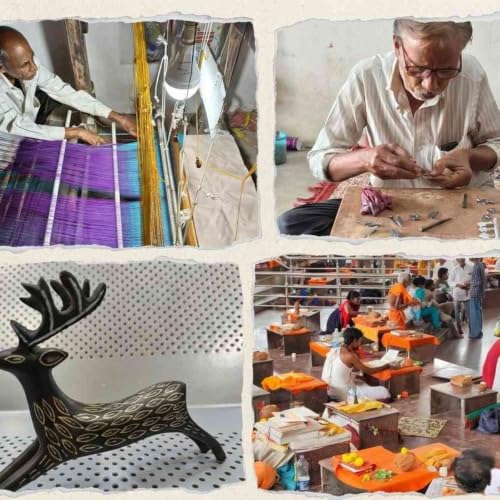
  • Channapatna Toys Tour From Bangalore: The Tiger King's Gift to the World That Michelle Obama Bought and Barack Obama Received
    May 10 2026
    In the last decade of the 18th century, the most formidable military adversary the British East India Company ever faced in South India looked at a small town 60 kilometres from his capital and made a decision that would outlast his empire, his wars and his death in battle by over two centuries.Tipu Sultan decided to make Channapatna the toy capital of India.He created an international export market for the wooden lacquerware toys that local craftsmen had been making in this small Karnataka town. He provided land for artisan workshops. He established trade connections with Persian, Egyptian, Chinese and Turkish merchants who visited his capital at Srirangapatna. The toys that left Channapatna on those 18th century trade routes were made from locally-grown ivory wood, coloured with vegetable dyes made from turmeric, spinach and beetroot and finished with lac melted by friction from a spinning lathe in a technique that was already ancient when Tipu Sultan patronised it.In 1904 the Maharaja of Mysore sent a craftsman named Bavas Miyan from Channapatna to Japan to study its advanced lacquerware and toy-making techniques. Bavas Miyan returned and introduced the Japanese-inspired doll form that you now see on every Channapatna toy shelf, the rounded wobbling figure that children of every culture reach for instantly.In 2006 the Indian government gave Channapatna toys a Geographical Indication tag, placing them in the same protected category as Darjeeling tea and Kanchipuram silk.In 2010 Michelle Obama bought Channapatna toys during her visit to India. In 2015 Barack Obama received them as a gift when he visited the country.From Tipu Sultan's 18th century export market to the White House. In two centuries.In this episode we take you on the complete Channapatna toys tour from Bangalore. We tell the full story of how a king's aesthetic passion created a craft tradition that has survived wars, colonial rule, the near-death experience of cheap Chinese plastic toy competition and two centuries of economic turbulence to arrive at the present day with over 1500 artisan families still making what Tipu Sultan's craftsmen made, in the same town, with the same wood, the same dyes and the same spinning lathe technique. We take you inside a working Channapatna toy workshop and describe the mesmerising process of watching lac melt onto spinning ivory wood in real time. We take you to Asia's largest silk cocoon auction market, one of the most extraordinary and most completely unexpected commercial spectacles available on any day trip from Bangalore. We explore Janapada Loka, the Karnataka folk art museum that is one of the most underappreciated cultural institutions in South India. And we visit the Big Banyan Tree at Dodda Aalada Mara, a single tree over 400 years old whose aerial roots cover three acres of ground and whose canopy was once used as a village marketplace.This is the Channapatna toys tour from Bangalore with 5 Senses Tours. And it is unlike anything else available on a day trip from the city.What You Will Discover in This EpisodeThe full story of Tipu Sultan's extraordinary role in creating the international market for Channapatna toys in the 18th century, including the Daria Daulat Bagh trading pavilion he built specifically for meetings with overseas merchants, the 25 to 30 acres of land he provided for artisan workshops and the export connections to Persia, Egypt, China and Turkey that made Channapatna toys a global product two centuries before anyone used the word globalisationThe remarkable story of Bavas Miyan, the Channapatna craftsman sponsored by the Maharaja of Mysore to travel to Japan in 1904 to study advanced lacquerware techniques, and how the Japanese doll-making tradition he encountered there produced the rounded wobbling Channapatna doll figure that is now one of the most recognisable craft objects in IndiaThe complete toy-making process at a Channapatna workshop, from the sourcing of locally-grown ivory wood through the lathe-spinning technique in which lac sticks are pressed against spinning wood to melt colour into the grain, to the vegetable dyes made from turmeric for yellow, spinach for green and beetroot for red, to the palm leaf polish that gives the finished toy its distinctive warm sheenWhy Channapatna toys faced a genuine existential crisis at the turn of the 21st century as cheap Chinese plastic toys flooded the Indian market, how the Karnataka Handicrafts Development Corporation and multiple social enterprises intervened to save the craft, and how the 2006 Geographical Indication tag formally recognised the toys' unique and protected status alongside Darjeeling tea and Kanchipuram silkThe extraordinary moment when Michelle Obama bought Channapatna toys during her India visit in 2010 and Barack Obama received them as a presidential gift in 2015, and what these two moments meant for the visibility and confidence of the Channapatna artisan communityAsia's largest silk cocoon auction ...
    Afficher plus Afficher moins
    22 min
  • Bodhgaya Buddhist Pilgrimage Tour Blog
    May 7 2026
    In the year 528 BCE, on the banks of a river in what is now the state of Bihar in India, a prince from Nepal sat beneath a fig tree and refused to move until he understood the nature of suffering.He sat for 49 days.On the 49th day, as the last star faded from the morning sky, Siddhartha Gautama attained enlightenment and became the Buddha.The fig tree still stands.Not the same tree but a direct descendant of the original Bodhi Tree, standing in the same place where the most transformative moment in the history of Asian civilisation occurred. And the town that grew up around it, Bodhgaya in Bihar, India, is the most sacred site in the Buddhist world. More sacred than Lumbini where the Buddha was born. More sacred than Sarnath where he first taught. More sacred than Kushinagar where he died. Because it is here that the teaching itself was born.In this episode we take you on a complete Bodhgaya Buddhist pilgrimage tour, through the Mahabodhi Temple complex and the Bodhi Tree, the Vajrasana or Diamond Throne that marks the exact spot where the Buddha sat for 49 days, the extraordinary collection of international monasteries that have transformed this small town in Bihar into the most culturally diverse Buddhist landscape on earth, the sacred Dungeshwari Caves where Siddhartha spent years in austerity before his enlightenment, and the extraordinary extension to Rajgir where the Buddha taught for twelve years and to Nalanda, the greatest university the ancient world ever built.We tell the complete human story of Prince Siddhartha's journey from the palace of his birth to the fig tree of his awakening. We explain how Buddhism spread from this single spot in Bihar to transform the civilisation of an entire continent and eventually reach every corner of the world. We explore the extraordinary international monasteries of Bodhgaya where the entire spectrum of Asian Buddhist tradition gathers in common reverence for the same source. We take you to Vulture's Peak at Rajgir where the Heart Sutra and the Lotus Sutra were delivered. And we stand in the ruins of Nalanda University, the greatest centre of Buddhist scholarship in history, whose library reportedly burned for three months when it was destroyed in 1193 CE.This is not just a pilgrimage guide. It is the complete story of how one man's search for the truth about suffering gave rise to a tradition that transformed the world. And every single place in this story is a real, visitable, experienceable destination in the state of Bihar in India.What You Will Discover in This EpisodeThe complete human story of Prince Siddhartha's journey from extraordinary royal privilege to six years of wandering and austerity to the 49-night meditation at Bodhgaya that produced one of the world's most transformative spiritual and philosophical traditionsWhy Bodhgaya is the most sacred site in the Buddhist world, more sacred than any of the other three sites the Buddha himself identified as worthy of pilgrimage, and why pilgrims from Japan, Thailand, Sri Lanka, Myanmar, Korea, China, Tibet, Vietnam and every Buddhist nation on earth return here again and again throughout their livesThe Bodhi Tree, the Vajrasana and the Mahabodhi Temple, the three sacred elements of the Bodhgaya complex that together mark the exact location of the Buddha's enlightenment and create the most powerful devotional atmosphere available anywhere in the Buddhist worldHow the atmosphere at the base of the Bodhi Tree at dawn and dusk, with monks from a dozen Asian countries chanting simultaneously in a dozen different languages, creates an encounter with living Buddhist diversity that is unlike anything available at any other heritage site in India or the worldThe extraordinary collection of international monasteries built in and around Bodhgaya by Japan, Thailand, Tibet, Bhutan, China, Sri Lanka, Myanmar, Korea and Vietnam, each one an architectural embassy of its nation's Buddhist tradition transplanted to the most sacred location in the Buddhist worldThe Dungeshwari Caves twelve kilometres from the Mahabodhi Temple where Siddhartha spent years in physical austerity before realising this was not the path to liberation, and why these caves give the Bodhgaya pilgrimage a human rawness and emotional depth that the polished devotional atmosphere of the main temple cannot provide on its ownThe Great Buddha Statue at the Daijokyo Temple, 25 metres tall, consecrated by the Dalai Lama in 1989, said to contain 20,000 bronze Buddhas within its hollow interior, standing as one of the most powerful symbols of global Buddhist unity in the entire Bodhgaya landscapeRajgir, the ancient capital of the Magadha kingdom 70 kilometres north of Bodhgaya, where the Buddha spent twelve years teaching after his enlightenment, established his primary monastery in the Veluvana Bamboo Grove and delivered the Heart Sutra and the Lotus Sutra from the summit of Vulture's PeakThe Shanti Stupa at Vulture's Peak, a white peace pagoda built ...
    Afficher plus Afficher moins
    24 min
  • Ancient Goa Temples: Beyond the Beaches the Portuguese Could Never Destroy
    May 6 2026
    Most people who visit Goa think its history began in 1510.That was the year the Portuguese arrived, defeated the Bijapur Sultanate and established the colony that would last 451 years. They left behind extraordinary churches, elegant colonial architecture and a cultural legacy that defines the Goa the world knows today.But Goa's history did not begin in 1510. It began two thousand years before that.And the most dramatic chapter of the story that most foreign tourists never discover is not about what the Portuguese built. It is about what they tried to destroy and could not.The Goa Inquisition, one of the most severe in history, led to the destruction of hundreds of Hindu temples across the region. The Portuguese made it illegal to practice Hinduism openly. Ancient Goa temples were demolished and their stones used to build the very churches that tourists photograph today. Communities that had practiced their faith for centuries were given the choice of conversion or exile.And yet three ancient Goa temples survived.Not by luck. By strategy. By courage. And in one extraordinary case, by being so completely hidden in the jungle that the Portuguese never even found it.In this episode we tell the complete story of these three extraordinary ancient Goa temples. We explore the Kadamba dynasty that built them, the 800-year Hindu kingdom whose artistic tradition the Portuguese tried to erase from the landscape of Goa forever. We stand at the Tambdi Surla Mahadev Temple, the oldest intact Hindu temple in Goa, hidden so deep in the Western Ghats forest that it was not rediscovered until 1935. We tell the story of Saptakoteshwar, the temple whose deity was rescued from Portuguese destruction by Chhatrapati Shivaji Maharaj himself in one of the most heroic acts of cultural preservation in Indian history. And we visit the Mangeshi Temple with its extraordinary seven-storey Deepastambha lamp tower, the ancient Goa temple that disguised itself as a wedding venue to survive the Inquisition.This is not the Goa the brochures promised. This is the Goa that existed long before the brochures. And it is the most extraordinary Goa you will ever encounter.What You Will Discover in This EpisodeThe full story of the Kadamba dynasty and the 800-year Hindu kingdom that built Goa's ancient temples before the Portuguese arrived, whose Kadamba-Yadava architectural tradition produced some of the most refined temple buildings in South Indian historyThe Goa Inquisition that began in 1560 and lasted until 1812, one of the most severe in history, during which hundreds of ancient Goa temples were demolished and their stones recycled into churches, and communities were given the choice of conversion or exile from the land their families had inhabited for centuriesThe Tambdi Surla Mahadev Temple, Goa's oldest intact Hindu temple, built in the 12th century from basalt carried across the mountains from the Deccan Plateau and fitted together without a single drop of mortar, hidden so completely in the Western Ghats jungle that the Portuguese never found it and it was not rediscovered until 1935Why the Tambdi Surla temple is the only surviving specimen of Kadamba architecture in basalt stone in all of Goa, with its extraordinary pyramidal shikhara, its bas-relief figures of Shiva Vishnu and Brahma, and the ancient stone steps and flowing river that create one of the most atmospheric heritage encounters available in any Indian stateThe black cobra that is said to permanently inhabit the inner sanctum of the Tambdi Surla temple as its guardian, the headless Nandi whose story is one of the most poignant details of the entire ancient Goa temple visit, and why walking to the temple across the river bridge in the early morning silence with only the birdsong and the water is unlike any other heritage experience in GoaThe full story of Saptakoteshwar, the chief deity of the Kadamba kings, destroyed by the Bahmani Sultan in the 14th century, partially restored by the Vijayanagara kings and then rescued from Portuguese destruction by Chhatrapati Shivaji Maharaj himself, one of the most heroic acts of ancient temple preservation in the entire history of Indian cultural survivalWhy the intervention of Shivaji Maharaj in the rescue of the Saptakoteshwar Shiva linga gives this ancient Goa temple a dimension that no other Goan heritage site possesses, connecting the story of Goa's Hindu religious survival directly to one of the greatest military and cultural figures in Indian historyThe Mangeshi Temple and the extraordinary act of cultural camouflage by which this ancient Goa temple disguised itself as a wedding venue when the Portuguese forbade the practice of Hindu customs in the region, one of the most creative and most poignant stories of religious survival in the entire history of the Goa InquisitionThe Deepastambha of the Mangeshi Temple, the seven-storey lamp tower whose rows of oil lamp niches when fully lit create a column of fire visible for ...
    Afficher plus Afficher moins
    23 min
  • Hampi Travel Guide: The Complete Guide to India's Most Extraordinary Ruined City
    May 6 2026
    In 1500 AD Hampi was the second largest city in the world.Only Beijing was bigger.Its markets stretched for kilometres in every direction. Its temples were sheathed in gold. Its streets were thronged with merchants from Portugal, Persia, Arabia and China who had come to trade with the most powerful empire in South India. The Tungabhadra River flowed through its heart, its banks lined with ghats and gardens and the residences of a court whose wealth was so extraordinary that foreign travellers ran out of superlatives trying to describe it.Today Hampi is a village of a few thousand people surrounded by over 1600 ancient monuments spread across 4187 hectares of one of the most dramatically beautiful landscapes in India. Massive granite boulders pile upon each other in formations of surreal grandeur. Banana plantations line the river banks. Ruins of palaces, temples, stables and market streets extend in every direction across a terrain that looks like it was designed by a painter rather than shaped by geology.Hampi is the most Google-searched tourist destination in Karnataka. It is a UNESCO World Heritage Site. And it is one of the most extraordinary places in India.In this episode we take you on the complete Hampi travel guide, from the founding of the Vijayanagara Empire in 1336 AD to the catastrophic Battle of Talikota in 1565 that ended it in a single devastating afternoon, from the musical pillars of the Vittala Temple to the sacred geography of the Ramayana landscape that surrounds every monument, from the sunrise at Matanga Hill to the coracle ride across the Tungabhadra and the living village of Anegundi that predates the empire itself.We tell the complete story of Krishnadevaraya, the greatest of the Vijayanagara kings, whose court attracted scholars and merchants from across Asia and whose temple building programme produced some of the most extraordinary examples of Dravidian architecture ever created. We explore every major monument in depth, the Vittala Temple with its 56 musical granite pillars and its stone chariot that appears on the Indian fifty-rupee note, the Virupaksha Temple that has been in continuous worship since the 7th century, the Royal Enclosure where the Mahanavami Dibba platform is covered in extraordinary relief carvings of the court at full ceremonial glory, the Lotus Mahal, the Elephant Stables and the extraordinary Hemakuta Hill temple complex that most visitors miss entirely.And we give you the complete practical Hampi travel guide, the best time to visit, how to reach from Bangalore, Hyderabad and Goa, how long to spend, the entry fees, the photography tips and how to experience Hampi with the depth and understanding it genuinely deserves.What You Will Discover in This EpisodeThe full story of the Vijayanagara Empire from its founding in 1336 AD by brothers Harihara and Bukka Raya to its peak under Krishnadevaraya and its catastrophic fall at the Battle of Talikota in 1565 when the second largest city in the world was systematically destroyed in less than a yearWhy the Portuguese traveller Domingo Paes described Hampi as surpassing Rome in splendour and the Persian ambassador Abdul Razzaq described markets overflowing with rubies diamonds and pearls, and why these were accurate descriptions not exaggerationsThe sacred geography of Kishkinda and how the landscape of Hampi is identified in the Ramayana as the monkey kingdom of Sugriva, with every major hill and river in the UNESCO zone carrying a specific story from one of India's oldest sacred narrativesThe Vittala Temple complex and its 56 musical granite pillars each tuned to a different note of the classical Indian musical scale, still producing clear acoustic tones after 500 years of weathering, with no hollow chambers or internal mechanismsThe stone chariot of the Vittala Temple, one of the most recognisable images in all of Indian heritage photography, which appears on the Indian fifty-rupee note and was originally built with wheels that could rotateThe Virupaksha Temple, in continuous active worship since the 7th century AD, and the morning puja that has been performed in this same stone corridor for over thirteen centuries without interruptionThe Royal Enclosure, the Mahanavami Dibba viewing platform covered in extraordinary relief carvings, the Lotus Mahal built in a stunning hybrid style combining Islamic arches with Hindu decorative vocabulary, and the Elephant Stables whose architectural quality reflects the extraordinary importance of war elephants in Vijayanagara military cultureThe Hemakuta Hill temple complex, the most undervisited site in Hampi, containing pre-Vijayanagara temples and offering the most extraordinary panoramic views of the entire UNESCO zone, and why most visitors miss it completelyThe sunrise experience at Matanga Hill, the sacred geography of the Ramayana sage whose hermitage stood on this summit, and why arriving before dawn and climbing in the dark to witness the light fall across the ...
    Afficher plus Afficher moins
    24 min
  • Amrabad Tiger Reserve: The Hidden Tiger Safari From Hyderabad That Most of India Has Never Heard Of
    May 3 2026
    Ask any wildlife enthusiast in India to name the country's tiger reserves and you will hear the same answers every time.Ranthambore. Kanha. Corbett. Bandhavgarh. Pench. Tadoba.Nobody mentions Amrabad.This is extraordinary. Because Amrabad Tiger Reserve in Telangana is one of the largest tiger reserves in India, covering approximately 2611 square kilometres of the Nallamala Hills in a landscape so dramatic and so biodiverse that wildlife naturalists who have worked here describe it as one of the most rewarding and most underappreciated wildlife destinations in the entire country.While Ranthambore handles hundreds of thousands of visitors every year and Kanha's safari zones fill up months in advance, Amrabad operates in a state of extraordinary, comfortable obscurity. The safari vehicles are never crowded. The jungle tracks are largely undisturbed. The wildlife encounters happen without the competitive urgency that characterises the more famous reserves. And the entire extraordinary experience is available as an overnight tour from Hyderabad, one of India's most dynamic and historically extraordinary cities.But the Amrabad story goes deeper than just an uncrowded tiger reserve.At the heart of the reserve stands the ruined fort of Prataparudra, the last king of the Kakatiya dynasty, whose fall to the Delhi Sultanate in 1323 AD ended one of the most powerful empires in South Indian history. The forests of Amrabad were once the private hunting grounds of the Nizams of Hyderabad, whose roads and rest houses still thread through the reserve. And in the canopy above a percolation tank frequented by leopards, sloth bears and deer, a treehouse named after the reigning tigress of the reserve offers an overnight stay unlike anything else available from Hyderabad.This is the Amrabad Tiger Reserve tour from Hyderabad. And in this episode we tell you everything about it.What You Will Discover in This EpisodeWhy Amrabad Tiger Reserve is one of the largest tiger reserves in India and why almost nobody in the international travel community knows it exists, creating safari conditions of extraordinary quality without the crowds and competitive urgency that characterise India's more famous reservesThe ecological story of the Nallamala Hills and why the Eastern Ghats landscape of Amrabad is dramatically different from the central Indian forests that most tiger tourism destinations occupy, with ancient rock formations, dry deciduous forest, thorn scrub and the extraordinary river valley habitats of the Krishna River creating a wildlife environment unlike any other tiger reserve in the countryThe tiger population of Amrabad and what the current census data tells us about the health and growth of this extraordinary wildlife sanctuary that has benefited so significantly from reduced human disturbance compared to more visited reservesThe complete wildlife of Amrabad beyond the tigers, including one of the most significant and most accessible leopard populations in South India, the Indian wild dog or Dhole whose pack hunts across the open grasslands of the Amrabad plateau are among the most thrilling wildlife encounters available in any Indian reserve, the sloth bear population of the Nallamala Hills rock terrain, the striped hyena, the Indian wolf and over 250 bird species including significant raptor diversity during the winter migration periodThe extraordinary historical dimension that no other Indian tiger reserve can match, including the ruined fort of Prataparudra the last Kakatiya king whose fall in 1323 AD ended one of the most powerful empires in South Indian history, accessible on the dawn trek that forms the most unusual and most memorable element of the Amrabad Tiger Reserve tour from HyderabadHow the forests of Amrabad were once the private hunting grounds of the Nizams of Hyderabad, the extraordinarily wealthy dynasty whose roads and rest houses still thread through the reserve, connecting the wildlife experience directly to one of the most remarkable chapters in South Indian historyThe overnight treehouse experience at Farha named after the reigning tigress of the reserve, positioned above a percolation tank frequented by leopards sloth bears and deer and offering an overnight wildlife encounter unlike anything else available from HyderabadThe Chenchu and Lambada tribal communities who have lived in these forests for generations, their traditional relationship with the reserve's wildlife and the extraordinary cultural heritage of communities whose forest knowledge is as old as the landscape they inhabitHow the safari experience at Amrabad differs fundamentally from India's more famous tiger reserves, with uncrowded tracks, extended unhurried wildlife encounters and forest department naturalists whose tracking skills have been developed in a largely undisturbed environment of exceptional qualityThe extraordinary cultural heritage of Hyderabad that surrounds the Amrabad wildlife experience, from the Golconda Fort ...
    Afficher plus Afficher moins
    20 min