Épisodes

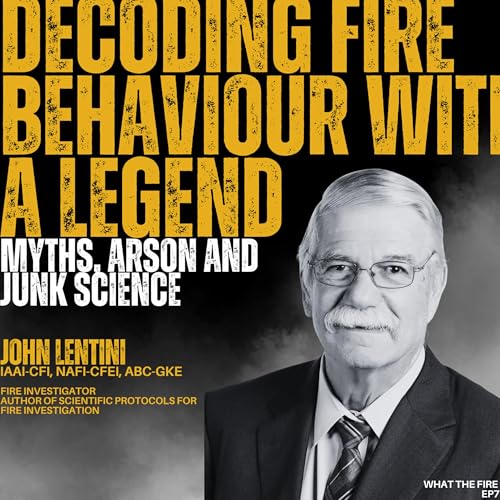
  • Decoding Fire Behaviour with a Legend: Myths, Arson and Junk Science
    Feb 2 2026

    In this episode of What the Fire, host Vithyaa sits down with legendary fire investigator and forensic scientist John Lentini to unpack how our understanding of fire behaviour has changed and why so many investigation reports still get it wrong.

    John explains why “if you’re not a scientist, what are you doing in my profession?” isn’t just a sound bite, it’s a standard. We talk about:

    • Why fire usually burns up and out, not down

    • How low burning and “suspicious” patterns are often misread

    • The overuse (and misuse) of liquid accelerant conclusions

    • How junk science and bad assumptions have fuelled wrongful arson findings

    • What it really means to think like a scientist in fire investigation, even without a science degree

    Whether you’re writing reports, reviewing them, or trying to lift the standard of care in your organisation, this conversation will challenge the way you look at fire scenes and documentation.

    If you find this episode valuable, please follow the show, rate the podcast, and leave a review with your feedback – it helps more people in the fire and forensic community discover What the Fire.

    Keywords: fire investigation, fire behaviour, accelerants, fire reports, forensic science


    John Lentini LinkedIn

    What the Fire Instagram

    What the Fire LinkedIn

    Forensic Origin and Cause Investigations

    Host: Vithyaa Thavapalan LinkedIn

    Afficher plus Afficher moins
    39 min
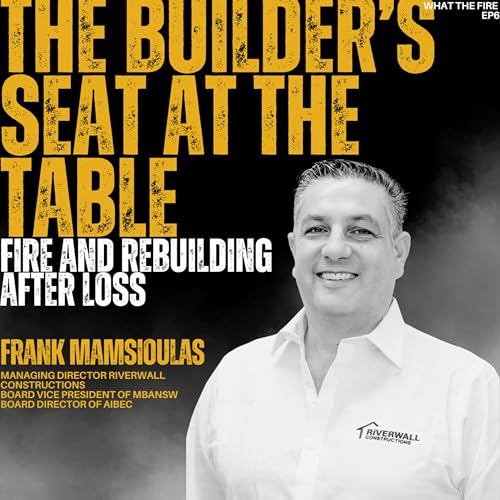
  • The Builder’s Seat at the Table: Fire and Rebuilding After Loss
    Jan 21 2026

    In this episode of What The Fire, Vithya sits down with Frank Mamasioulas, Managing Director of Riverwall Constructions, to explore what 40 years in business, and nearly 30 years on the tools and in leadership – have taught him about communication, responsibility and showing up for people on their worst days.

    Frank shares how Riverwall has evolved from a handwritten, family-run operation into a corporate construction and insurance-repair business, and why personal interaction still matters more than ever in a technology-driven world. From picking up the phone instead of sending another email, to reading someone’s tone and emotion in real time, he explains how simple communication habits can resolve issues faster, build trust and strengthen collaboration across insurers, builders, consultants and clients.

    We also talk about working on fire and fatality scenes, the role builders play alongside fire investigators and first responders, and how empathy, structure and clear reporting lines help teams navigate high-pressure, emotional environments. Frank reflects on learning from older generations, asking questions, sitting next to experienced people, and why collaboration is essential for both personal and professional growth.

    If you work in construction, insurance, fire investigation, restoration or any field where people and pressure collide, this conversation is for you.

    If you enjoy this episode, follow What The Fire on your favourite podcast app and leave a rating and review so more people in our industry can find the show.

    Afficher plus Afficher moins
    36 min
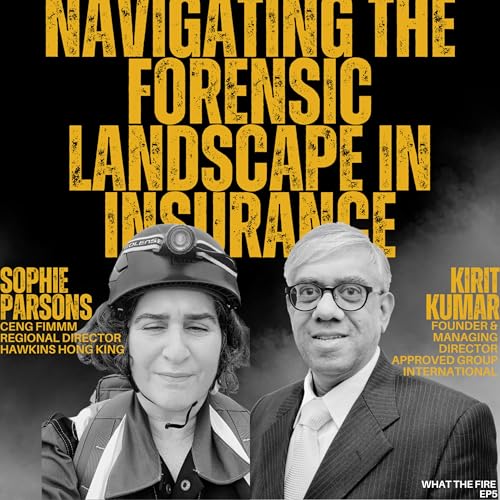
  • Navigating the Forensic Landscape in Insurance with Dr Sophie Parsons & Kirit Kumar
    Jan 12 2026

    In this episode of the What The Fire Podcast, host Vithyaa is joined by forensic experts Sophie Parsons and Kirit Kumar for a candid conversation about the realities of modern forensic engineering and disaster response.

    Drawing on decades of experience across Asia, the UK, and beyond, Sophie and Kirit discuss how recent disasters, including major flooding events, are increasing the demand for forensic services and reshaping how investigations are carried out. They explore the challenges of evidence collection in complex post-disaster environments, where multiple parties are often working on site at the same time, and why getting there quickly can make all the difference.

    The conversation also looks at the growing role of technology and artificial intelligence in forensic investigations, from decision making to report writing, and how these tools are beginning to change the profession. Alongside this, the episode highlights the importance of clear communication in managing client expectations, particularly in an era where rapid answers are often expected.

    Sophie and Kirit share insights on professional development, the value of industry conferences and mentorship, and why understanding building codes and safety regulations is critical for effective forensic work. They also reflect on how the forensic field is evolving to meet modern challenges, and what the next generation of professionals should be preparing for.

    This episode offers an honest, behind-the-scenes look at how forensic experts really talk shop, combining technical insight with practical experience from the field.


    Afficher plus Afficher moins
    56 min
  • From Firefighter to Investigator: Evolution of Fire Services and Investigations
    Dec 11 2025

    Join us in this captivating episode as we sit down with Robert Howarth, a seasoned fire investigator and former battalion chief, to explore the intricate world of fire services and investigations. With over 35 years of experience, Robert shares his journey from a volunteer firefighter to leading complex investigations in both public and private sectors. Discover the evolution of fire service culture, the impact of technology, and the critical role of leadership in emergency services. Whether you're in the field or simply curious about the science behind fire investigations, this episode offers valuable insights and inspiring stories. Tune in to learn from Robert's wealth of experience and his vision for the future of fire investigations.


    Afficher plus Afficher moins
    58 min
  • From Fear to Forensics: Fire, Evidence and the Arc Damage Debate withh Melanie Cairns
    Dec 3 2025
    • What if a childhood fear could become a powerful career? In this episode, Melanie Cairns, P.Eng., CFEI traces her path from being scared of fire to leading investigations powered by engineering rigour. She shows how treating every scene like it’s your last sharpens preparation, why meticulous documentation (across 600+ cases) is non-negotiable, and what the work really looks like, less glamour and gadgets, more grit, debris, and extreme conditions. Curiosity threads through her story too: a fascination with fire trucks that grew into a purpose-driven vocation.

      We also explore how to turn fear into focus, the role of family support, and what it means to navigate this industry as a woman. And we tackle the controversial arc damage question head-on: drawing on her electrical engineering expertise, Melanie explains how arc effects on steel enclosures can be the result of fire, not the cause.

    Afficher plus Afficher moins
    42 min
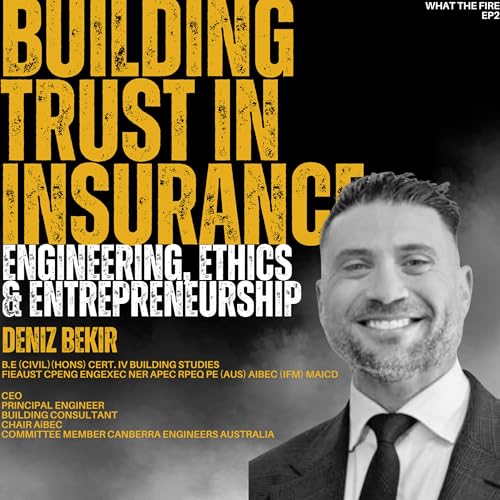
  • Building Trust In Insurance: Engineering, Ethics & Entrepreneurship with Deniz Bekir
    Nov 24 2025

    In the latest episode of the What the Fire podcast, host Vithyaa Thavapalan welcomes Deniz Bekir, a seasoned Australian chartered engineer and CEO of Silver Wolf Projects. With over 25 years of experience in engineering and the insurance sector, Deniz shares his insights on building trust through transparency, professional ethics, and the importance of continuous education in the industry.


    The Journey to Engineering and Entrepreneurship

    Deniz Bekir’s journey into engineering was deeply rooted in family tradition, with a lineage of builders guiding him towards this profession. "I wish I was a merchant banker, but we weren't clever enough to do that," he humorously reflects, indicating that his path was almost predetermined. Deniz emphasizes that engineering is fundamentally about problem-solving, stating, "An engineer is, in essence, one that solves problems." This mindset not only defined his career but also fueled his entrepreneurial spirit, leading him to establish Silver Wolf Projects in 2007.


    The Challenge of Building a National Business

    Deniz recounts the challenges he faced while building Silver Wolf Projects into a national entity. He describes the early days as a struggle, particularly when the job market was tight after the Sydney Olympics. "Work was not as affluent or available... you'd be fighting for an interview," he recalls. However, through hard work and dedication, the company grew organically, emphasizing, "Business is a formula... it’s about hard work, time, and continual effort.” His philosophy on business growth reflects his engineering background, where momentum is vital. "When you start a business, you have no velocity, you have no mass, so you have no momentum or movement."


    Quality and Consistency in Service

    At Silver Wolf Projects, quality and consistency are non-negotiable. Deniz likens his company’s services to a hamburger, stating, "At the end of the day, a hamburger is a hamburger... what's the difference? It's the delivery and how it tastes." This analogy underscores the importance of brand reliability and service quality. The aim is to ensure that clients have a clear understanding of what to expect from their reports, which are crafted with professionalism and integrity. Deniz believes that, "We remain true to the brand and are consistent in our delivery," which has helped build trust with clients.


    The Birth of AiBEC

    Deniz’s commitment to professional standards led him to establish the Association of Insurance, Building and Engineering Consultants (AiBEC) in 2024. He explains, "I’m very proud of being involved in the insurance industry... I love solving those issues." AiBEC aims to elevate professional standards and ethics, addressing the gaps in transparency that have plagued the industry. Deniz cites the 2022 federal flood inquiry as a turning point, highlighting the need for accountability and ethical practices in claims handling.


    Conclusion: Key Takeaways

    Deniz Bekir’s insights provide a valuable perspective on the intersection of engineering, ethics, and the insurance industry. His journey illustrates the importance of hard work, consistency, and a commitment to professional integrity in building trust. As he emphasises, success in both engineering and business comes from doing your best and maintaining a steadfast approach to quality and ethics. For those looking to navigate the complexities of the insurance sector, Deniz's experiences serve as a guiding light towards fostering trust and accountability.


    Tags: Insurance Industry, Engineering, Professional Ethics, Business Growth, Trust Building, ABAC, Silver Wolf Projects, Podcast Insights, Fire Safety, Claims Handling.

    Afficher plus Afficher moins
    45 min
  • Igniting Change with Randy Watson: Lessons from a Fire Investigation Titan
    Nov 17 2025

    In the latest episode of the What the Fire podcast, host Vithyaa sits down with Randy Watson, a titan in the fire investigation industry with over 48 years of experience. Their conversation delves deep into the intricacies of fire investigation, the importance of education, and the responsibility to inspire the next generation of investigators.


    Randy Watson is well-known in the fire investigation community, having worked in the field for nearly five decades. With a rich background that includes roles in fire service, law enforcement, and private sector fire investigation, Randy has dedicated himself to improving the standards and practices within the industry. He has served as the president of the International Association of Arson Investigators and has been involved with the National Fire Protection Association for over 40 years, where he played a pivotal role in shaping important guidelines such as NFPA 921, the guide for fire and explosion investigation.

    Randy's passion for fire investigation was ignited at a young age. He recalls his first fire at just 18 years old, which instilled a determination to understand the causes behind fire incidents. This passion led him to a significant career that he describes as blessed. He emphasises the importance of being involved in shaping the future of fire investigation rather than simply responding to events, stating, "Either you can sit back and watch what happens or you can make a choice to be involved in shaping what happens."

    The Importance of Education and Curiosity

    A significant focus of Randy’s career has been on education. He believes that the development of formal fire science programs at universities has transformed the field, providing a solid foundation for new investigators. Randy emphasises that while scientific knowledge is vital, young investigators must also cultivate curiosity and the desire to learn, as these traits drive discovery and thorough investigation.

    Training the Next Generation

    Randy shares insights about mentoring students in fire investigation. He enjoys working with those who are eager to learn and moldable, yet he acknowledges the challenge of conveying the harsh realities of the job. He highlights that while students often come in with enthusiasm, it’s crucial they also understand the physical and mental demands of the profession. He looks for curiosity in students, as it indicates a willingness to explore and understand the complexities of fire investigation.

    Impactful Cases that Shaped Perspectives

    Randy recounts two pivotal cases that influenced his outlook on fire investigations. The first involved a tragic mobile home fire where a child lost their life, prompting Randy to realise the need for better training for investigators and prosecutors. The second case, the Hamlet Chicken Plant Fire, was a significant event that led to changes in safety laws in North Carolina. This case taught him the importance of thorough investigations and the attention to detail required in handling large loss incidents, reinforcing the idea that every detail matters in preventing future tragedies.

    The conversation with Randy Watson offers profound insights into the fire investigation industry, emphasising the importance of education, curiosity, and mentorship. As the industry evolves, it is crucial for experienced professionals to inspire and guide the next generation, ensuring that the lessons learned from past tragedies shape a safer future. Key takeaways include the value of passion in fire investigation, the necessity of formal education, and the responsibility to foster curiosity among new investigators.


    Tags: fire investigation, fire safety, forensic science, mentorship, fire science education, fire prevention, Randy Watson, What the Fire podcast

    Afficher plus Afficher moins
    1 h et 10 min
  • Welcome to WTF
    Nov 12 2025

    Unpacking the Flames: A Deep Dive into the World of Forensic Fire Investigation

    Introduction:

    Welcome to the fiery world of forensic fire investigation, where every blaze tells a story waiting to be uncovered. In the inaugural episode of the podcast "What the Fire," host Vithya, a seasoned forensic fire investigator, shares insights from over a decade of experience in the field, aiming to demystify the complexities of fire investigations and shed light on the human side of the profession.

    Main Content:

    Understanding the Role of a Forensic Fire Investigator

    Vithya introduces herself and her role in forensic fire investigations, emphasising her dual responsibility as both an investigator and a translator of complex details. For over 10 years, she has worked across various settings, from residential homes to industrial sites, answering the pivotal questions: "Where did it start?" and "How did it start?" This section highlights the importance of clear communication in a field often shrouded in technical jargon.

    Breaking Down Barriers

    The podcast aims to break down the barriers that often keep the fire investigation world exclusive. Vithya explains her motivation for starting the podcast: to simplify technical language and to highlight the contributions of various professionals involved in fire investigations, including engineers, adjusters, and first responders. She notes, "The Fire world is technical, but it shouldn't be gate kept," inviting listeners to join the conversation and learn from each other.

    Evolution of Forensic Fire Investigation

    Vithya discusses the significant changes in the field over the years. Moving away from gut feelings and assumptions, the focus has shifted towards hypotheses and empirical testing. For example, she states, "There is no more, it looks like arson. It's hypotheses, it's tests, it's receipts." This shift underscores the importance of evidence-based conclusions in fire investigations.

    Modern Methods and Technology

    The integration of modern technology is transforming fire investigations. Vithya highlights tools such as 3D scans and drones, which assist in gathering evidence and analysing fire scenes. However, with these advancements come new fire risks, particularly from emerging technologies like electric vehicles and lithium batteries. Vithya warns that these innovations present unique challenges, stating, "They all leave different signatures and present different hazards."

    The Importance of Documentation

    A critical takeaway from Vithya's discussion is the emphasis on thorough documentation. She stresses that if something isn't recorded, it doesn't exist in the investigation. The shift in terminology, such as distinguishing between an "electrical event" and an "electrical cause," reflects the growing importance of precise language in reports.

    Mentoring the Next Generation

    Vithya expresses her commitment to mentoring upcoming investigators, noting that for the field to thrive, knowledge must be passed down. This dedication is encapsulated in the podcast's mission: "Curious Evidence-Led People First." By fostering a community of learning and collaboration, the podcast aims to ensure the sustainability and advancement of forensic fire investigation.

    Conclusion:

    In conclusion, the first episode of "What the Fire" sets the stage for a captivating journey into the world of forensic fire investigation. Vithya's passion for the field, combined with her commitment to transparency and education, promises to deliver valuable insights for both professionals and enthusiasts alike. Key takeaways include the evolution towards evidence-based practices, the integration of modern technology, and the importance of mentorship in ensuring the future of fire investigation.


    Afficher plus Afficher moins
    4 min