Épisodes

  • James Traub | Democratic Resilience Starts in the Classroom
    Jun 2 2026

    What role do schools play in strengthening democracy? In this episode, award-winning author James Traub argues that civic education remains one of the most important tools for building democratic resilience. From declining attention spans and digital distractions to respectful disagreement and civic engagement, Traub reflects on what he learned from classrooms across America and what it takes to prepare the next generation of citizens.

    Afficher plus Afficher moins
    32 min
  • Jeffrey Rosen | Hamilton, Jefferson, and the Future of American Democracy
    May 14 2026

    What would the Founding Fathers make of America today? In this episode host Andrew Keen talks with constitutional historian Jeffrey Rosen about the centuries-old struggle between liberty and executive power. From Hamilton and Jefferson to Donald Trump and AI, Rosen traces how America's constitutional system has drifted from the Founders' orginal vision, and why restoring democratic resilience may require rethinking the balance between Congress, the presidency, the courts, and the public itself.

    Afficher plus Afficher moins
    26 min
  • Soli Özel | Democratic Resilience or Illusion? Lessons from Turkey
    Apr 27 2026

    In this episode of How to Fix Democracy, we turn to Turkey to explore what democratic resilience like over the long arc of history. Joined by the political scientist Soli Oezel, the conversation traces more than a century of "bouts of freedom" punctuated by military interventions, constitutional resets, and shifting balances between state authority and popular will.

    From the late Ottoman period to the present, Oezel examines how Turkey's political system has repeated oscillated between openness and control, highlighting the military's historical role as both guardian and disruptor of democracy, and the more recent shift toward a fully civilian, yet increasingly liberal, political order. Despite these tensions, one constant remains: the enduring importance of elections and the deep-rooted expectation among citizens that their voices should count.

    The episode also probes deeper structural questions. Why have liberal democratic norms struggled to take hold? How do state-centric traditions, nationalism, and unresolved identity questions, particularly around the Kurdish issue, shape political life? And what explains the persistence of democratic aspirations even under pressure?

    At its core, this conversation challenges a common assumption: that democracy's resilience is primarly institutional or cultural. Instead, Oezel argues that it hinges on something more tangible, whether democratic systems deliver economic security, opportunity, and a sense of fairness. When they do, they build legitimacy; when they don't, they risk erosion from within.

    Afficher plus Afficher moins
    33 min
  • Konstanty Gebert | From Solidarity to Uncertainty: Poland's Ongoing Fight for Democracy
    Mar 31 2026

    Poland's story is often told as a triumph of democracy, but it's far from over. In this episode, author, activist and journalist, Konstanty Gebert reflects on a lifetime spent confronting authoritarianism, from underground activism in the 1970s to the rise of Solidarity and the fall of communism.

    But victory brought new challenges: how do you transition from unity against oppression to the compromises democracy requires?

    This episode examines the paradox at the heart of democratic resilience: the same forces that unite people in resistance can later divide them in freedom. As new threats emerge, from populism at home to Russia abroad, Poland's experience offers urgent lessons for democracies everywhere.

    Afficher plus Afficher moins
    41 min
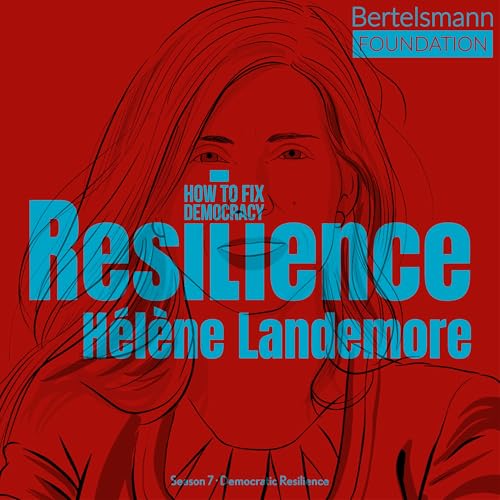
  • Hélène Landemore | Who Owns Democracy? Citizens vs. Elites
    Mar 19 2026

    As trust in political institutions fades, who really holds power in democracy? Helene Landemore argues that elite decision-making has left democracies less responsive and less resilient. In this episode she joins Andrew Keen to explore how citizen assemblies, broader participation, and new approaches to governance could reshape the future of democratic life.

    Afficher plus Afficher moins
    38 min
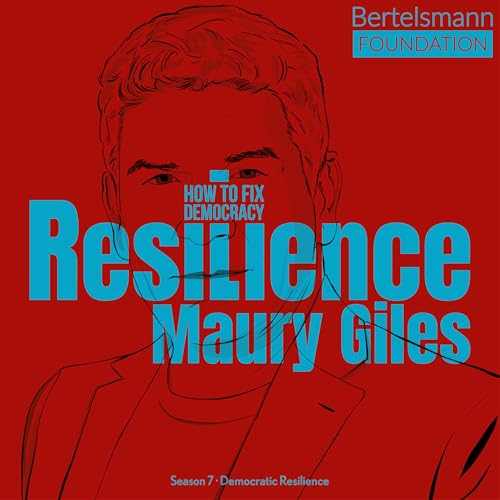
  • Maury Giles: Courageous Citizenship — Practicing Resilience in an Age of Outrage
    Mar 6 2026

    As How to Fix Democracy opens its seventh season on democratic resilience, host Andrew Keen welcomes Maury Giles, the new CEO of Braver Angels, for a candid conversation about whether American democracy can withstand what Giles calls the "industrial outrage complex." In a year marking the nation's 250th anniversary, Giles argues that resilience is not something institutions deliver from above, but something citizens practice from below.

    Drawing on his experience leading one of the country's largest cross-partisan civic movements -and on the lived reality of raising a political divided family of ten- he makes the case for "courageous citizenship", the discipline of choosing to act rather than react.

    Together Keen and Giles explore why polarization in 2026 may feel more toxic than a decade ago, how performative politics and social media have eroded trust, and why dialogue alone is no longer enough without collaborative local action. They confront hard questions about government incentives, declining institutional trust, and whether putting down our devices might be a precondition for rebuilding civic culture. Yet the tone remains cautiously hopeful: if the pain of division is finally high enough, Americans may be ready to change. In the end, this episode suggests that democratic renewal will not come from one side defeating the other, but from citizens rediscovering their agency, and practicing resilience as a daily civic habit.

    Afficher plus Afficher moins
    36 min
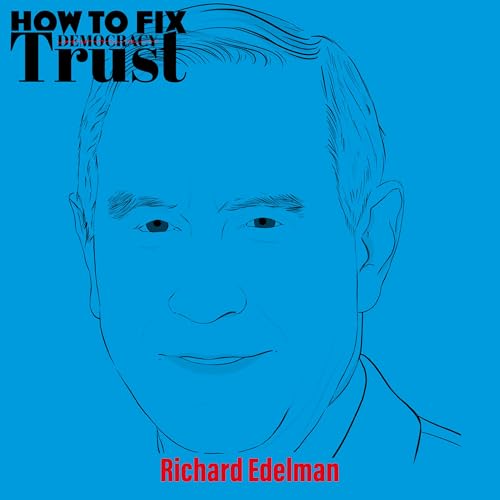
  • Richard Edelman | From Polarization to Insularity: Can Trust be Rebuild
    Mar 2 2026

    For 26 years, Richard Edelman has measured the world's trust levels through the Edelman Trust Barometer. In this final episode of our trust series, he joins Andrew Keen to diagnose a new and troubling phase: insularity.

    After years of polarization, grievance, and activism, societies are hardening into self-contained camps, "turtles in shells", as Edelman puts it, trusting only those who share their values, media and worldview. Governments are faltering, media credibility is shrinking, and a widening mass class divide is fueling pessimism about the future. Yet amid AI disruption, nationalism, and economic anxiety, Edelman argues that trust can still be rebuilt, from the bottom up. Employers, local institutions, and "poly-national" businesses may hold the key. The question is whether democracies can restore optimism before insularity becomes permanent. Is trust the missing ingredient in democratic, or its final casualty?

    Afficher plus Afficher moins
    30 min
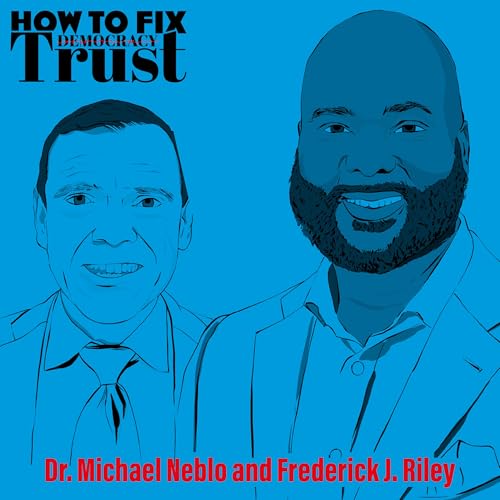
  • Rebuilding Trust: Can We Fix America's Social and Political Fractures? | Featuring Dr. Michael Neblo and Frederick J. Riley
    Feb 19 2026

    In this episode of How to Fix Democracy, host Andrew Keen explores America's deepening crisis of trust, both social and political. Joined by Frederick Riley of Weave at the Aspen Institute and Dr, Michael Neblo of the Ohio State University, the conversation examines rising isolation, collapsing confidence in institutions, and the growing divide across communities. From neighborhood-level connection to large-scale democratic reform, they discuss practical, evidence-based ways to restore trust, and why small, everyday actions may be the key to saving democracy.

    Afficher plus Afficher moins
    45 min