Couverture de The Dr. Rod Berger Channel - Stories That Meet The Moment

The Dr. Rod Berger Channel - Stories That Meet The Moment

The Dr. Rod Berger Channel - Stories That Meet The Moment

De : Dr. Rod Berger
Écouter gratuitement

À propos de ce contenu audio

The Dr. Rod Berger Channel pulls together global stories from around the world through several engaging shows. Dr. Rod Berger explores deep into the minds of those on the frontiers of our society. Uncovering the 'why' behind acclaimed contributors forging their path through life and those new souls just stepping beyond the crowd. Investigating the source of inspiration that drove those who have gone before us, HeadRoom with Dr. Rod Berger, The Narrative Edge, and The Dr. Rod Berger Show, hope to inspire the 'next' in us. Join Dr. Rod and uncover the stories seldom told, adding richness to the narratives within our own lives.The Dr. Rod Berger Channel Sciences sociales
Épisodes
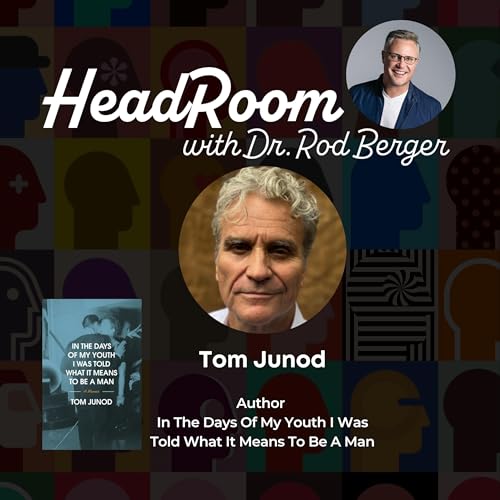
  • If You're Going To Be A Bear Be A Grizzly - An Intimate Conversation with Author Tom Junod
    Apr 29 2026
    A powerful conversation with the incomparable Tom Junod brought to you by Dr. Rod Berger. In the world of memoir writing, the question of identity often looms large. How we define ourselves, the names we carry, and the stories we tell shape our experiences and the narratives we create. In this post, we dive into the profound discussions that emerged from my recent conversation with Tom Junod, a celebrated writer whose memoir, *In the Days of My Youth, I Was Told What It Means to Be a Man', uncovers the complexities of identity through the lens of family, legacy, and storytelling. About Tom Junod Tom Junod is a senior writer for ESPN and has received numerous accolades, including an Emmy and the Dan Jenkins Medal for Excellence in Sports Writing. His previous work has appeared in esteemed publications such as GQ and Esquire, where his profile of Fred Rogers inspired the film *A Beautiful Day in the Neighborhood*. In his memoir, Junod reflects on his upbringing and his father's influence, exploring how these experiences have shaped his voice as a writer. The Significance of Names and Identity One of the central themes we discussed was the power of names in shaping our identities. Junod shared his own journey with his name, transitioning from *Lou Genard* to *Tom Junod*. This change was not merely a matter of pronunciation but a reflection of his desire to carve out his own identity separate from his father's legacy. Junod explained how his father's strong presence at the family dinner table often left him feeling overshadowed. He recounts moments of internal struggle where he grappled with his father's expectations and the need to assert his individuality. It wasn't until Junod began writing about his childhood experiences that he found his narrative voice. A pivotal moment for him was recalling the sound of his father's ankles cracking as he got out of bed, a memory filled with love and fear that encapsulated their complex relationship. This moment of clarity allowed Junod to embrace his unique voice in his writing. The Writing Process: From Drafts to Final Product Junod's memoir was not without its challenges. He revealed that the initial draft of the book was a staggering 200,000 words—an overwhelming amount that ultimately led him to reevaluate his approach to storytelling. The process of cutting down his manuscript was painful, as it involved discarding many cherished words that did not serve the narrative's purpose. However, by focusing on the essence of his story, Junod distilled his experiences into a cohesive, impactful memoir. In discussing the importance of voice in memoir writing, Junod emphasized that it is the rhythm and music of one's narrative that resonates with readers. Many memoirs succeed because they convey a distinct voice that carries the emotional weight of the story. The Last Word: A Father's Influence A particularly poignant moment in our discussion revolved around the theme of "the last word" in the context of father-son dynamics. Junod reflected on how his father's dominant personality often left him feeling voiceless at the dinner table. This struggle for agency fueled Junod's desire to become a writer. The need to assert his voice and explore the secrets of his father's life became a driving force in his literary career. He explained that the memoir is not just about recounting memories but also about investigating his father's complexities and the impact on his own identity. Junod's writing captures the duality of his father's influence—both the admiration and the struggle for independence. His memoir becomes a space for exploring these emotions, allowing readers to connect with their own experiences of familial relationships. Tom Junod's memoir serves as a reminder of the power of storytelling in navigating our identities. By reflecting on his experiences, he invites us all to examine our own stories and the names we carry. For more insights on memoir writing and identity, consider exploring Junod's work and the profound lessons woven throughout his narrative. Dr. Rod Berger is a keynote speaker, moderator, producer, author, and expert in strategic storytelling. Berger’s book, The Narrative Edge: Authentic Storytelling That Meets The Moment (Wiley), hits bookstores in late 2025. He draws on more than 4,000 interviews conducted worldwide for Forbes, Entrepreneur Magazine, and Fair Observer, including a cover story about former Virgin Entertainment co-founder Jason Felts, for Los Angeles Magazine, as well as various podcasts. He has captured the narratives of investors, CEOs, renowned entrepreneurs, bestselling authors, scholars, and cultural icons such as NBA legends Magic Johnson and Charles Barkley, as well as United Nations officials and Van Halen’s Sammy Hagar, while also exploring the behind-the-scenes world of Formula 1.Berger has met with the Crown Princess of Sweden, Pope Francis, United Nations officials, and NGO leaders, covering stories of ...
    Afficher plus Afficher moins
    1 h et 6 min
  • Understanding Culture By Understanding Ourselves with Todd Wuestenberg
    Apr 21 2026
    Building a Thriving Workplace Culture: Insights from Todd Wuestenberg Learn how to cultivate a vibrant workplace culture from Todd Wuestenberg, Chief Culture Officer at Haverkamp Group. Discover strategies for fostering connection and development in organizations. Creating a thriving workplace culture is essential for any organization aiming for long-term success. In this blog post, we delve into insights shared by Todd Wuestenberg, Chief Culture Officer at Haverkamp Group, who believes that culture is not just a side project but a crucial component of any successful business strategy. Understanding Culture: The Kitchen Table Perspective Culture is often shaped by our early experiences, and Todd's upbringing in a small Iowa town exemplifies this. Growing up in a close-knit community of just 1,500 people, Todd experienced a deep sense of connection with others. Conversations around the dinner table were not just about sharing food; they were rich discussions that fostered relationships and a sense of belonging. The Importance of Connection In Todd’s words, "there’s always a sense of being connected, whether it would be with family or community." This connection has greatly influenced his worldview and his approach to creating a culture in the workplace. As organizations grow, the challenge often lies in maintaining that connection, especially when teams scale rapidly. The Concept of Culture Farming Todd introduces the concept of "culture farming," which involves understanding the dynamics of organizational culture as one would understand the intricacies of farming. Just as farmers must consider soil, weather, and seasons, leaders must be aware of the environment in which they cultivate their organizational culture. Patience in Development According to Todd, cultivating culture takes time and requires a patient approach. "Farmers understand that there's a rhythm and there's a process to things," he explains. This philosophy applies to onboarding new employees as well, emphasizing the need for them to understand the organizational values from the outset. The Role of a Chief Culture Officer In a world where titles can often feel redundant, Todd’s role as Chief Culture Officer signifies a commitment to prioritizing culture within the organization. He believes that "words do matter," and having a dedicated position for culture reinforces its importance. Culture as a Blend of People and Processes Todd defines culture as a blend of people and processes. "You could have the best people in the world, but without the right processes, you’re going to lose them," he notes. This duality is essential for creating an environment where employees can thrive and contribute to their fullest potential. The Shift in Perception of Soft Skills Todd emphasizes the importance of soft skills in today’s workplace, arguing that they are not merely an added bonus but rather essential skills for survival in a competitive environment. He highlights how organizations that fail to recognize the value of soft skills may struggle with retention and overall success. Culture as a Strategy Rather than viewing culture as a soft skill, Todd encourages leaders to see it as a strategic necessity. "Culture is integral to the double bottom line," he asserts, indicating that a positive culture not only enhances employee satisfaction but also directly impacts profitability. Addressing Productive Discomfort Todd acknowledges that creating a vibrant culture involves navigating uncomfortable situations. He refers to this as "productive discomfort," where leadership sets the tone for open dialogue and encourages participation from all employees. Everyone's Role in Culture Culture is not solely the responsibility of leadership; every employee contributes to the organizational culture. Todd believes that by fostering an environment where everyone feels empowered to participate, organizations can create a thriving culture that adapts to change. Conclusion Cultivating a strong workplace culture is a journey that requires intention, patience, and a focus on connection. By understanding the dynamics of culture and recognizing its importance, leaders can create an environment where employees feel valued and engaged. As Todd Wuestenberg illustrates, culture is not just a task; it is a continuous process that shapes the future of an organization. Dr. Rod Berger is a keynote speaker, moderator, producer, author, and expert in strategic storytelling. Berger’s book, The Narrative Edge: Authentic Storytelling That Meets The Moment (Wiley), hits bookstores in late 2025. He draws on more than 4,000 interviews conducted worldwide for Forbes, Entrepreneur Magazine, and Fair Observer, including a cover story about former Virgin Entertainment co-founder Jason Felts, for Los Angeles Magazine, as well as various podcasts. He has captured the narratives of investors, CEOs, renowned entrepreneurs, bestselling authors, scholars, and cultural icons ...
    Afficher plus Afficher moins
    50 min
  • Three Decades in Hollywood Without Losing the Kid From Atlanta
    Apr 16 2026
    There's a moment Jhamal Robinson describes that stopped me in my tracks. He's on a global town hall panel at Warner Bros. Discovery, thousands of employees watching on Zoom, and someone asks him point blank: Do you feel like you have to tailor yourself when you walk into a room? His answer comes immediately. Yes. He code-switches. He adjusts. He becomes a version of himself calibrated to make others comfortable. And then, almost in the same breath, he adds the part that carries the real weight: But not when he walks into the Oprah Winfrey Network room. Not there. Because in that room, the adjustment isn't necessary. That contrast, spoken aloud in a company-wide forum, is the kind of truth that doesn't show up on a résumé. This episode of The Narrative Edge is a conversation between two people who met more than 30 years ago, long before either had a title worth mentioning. I sat down with Jhamal, who now serves as the head of US production for unscripted and scripted at Fremantle, and what unfolded was not an interview about career milestones. It was a conversation about what it costs to show up as yourself in rooms that weren't designed with you in mind, and what happens when you decide the cost of pretending is higher. Jhamal's career reads like a map of Hollywood's most significant addresses. Netflix, Warner Bros. Discovery, A&E, NBC Universal, Yahoo. He's an Emmy winner. He's overseen productions from Stranger Things to The Price Is Right. But the thread that runs through all of it isn't the titles or the logos. It's the question he keeps asking himself, sometimes consciously and sometimes only in retrospect: Was I too much myself? That question haunts more people than will ever admit it. Not just Black executives navigating predominantly white spaces, though Jhamal speaks candidly and specifically about that experience. It haunts anyone who has ever walked out of a meeting wondering whether their full self was the reason the room went quiet. We spend a lot of time in this conversation exploring what code-switching actually feels like from the inside, not as a sociological concept but as a daily tax on a person's energy and sense of self. Jhamal is six foot seven. He's aware that his physical presence can register as intimidating before he's said a single word. So he's spent decades learning how to, as he puts it, bring people into the conversation. That phrase kept coming back. Not "command the room." Not "own the narrative." Bring people in. It's a leadership posture that starts with lowering the barrier rather than raising the flag. One of the most revealing stories he tells is about interviewing for his current role at Fremantle. He met with the CEO, Jen Mullen, for 20 minutes. Walked out convinced he'd bombed it. His mind immediately went to the familiar loop: Should I have code-switched? Should I have performed a different version of myself? Days later, the call came. He got the job. And the lesson landed not as a triumph but as a quiet reckoning. What if showing up as his full self was not the risk he'd always been taught it was, but the thing that actually worked? And what if he'd gotten the job by performing? Then he'd be trapped playing a character indefinitely. We also talked about success and the strange discomfort of not knowing how to measure it. Jhamal describes being one of the first Black members of his college's board of trustees and not realizing it was a big deal. He describes returning to Netflix for a Black employee resource group event a year after leaving, walking in and feeling like a celebrity, not because of his title but because people remembered how he made them feel. Young Black executives approached him to say his LinkedIn posts had mattered, that watching his career gave them permission to imagine their own. He gets visibly moved telling this story, and I think that's the point. The impact that shakes you is almost never the one you planned. Toward the end of our conversation, I asked Jhamal to take me back to the kitchen in Georgia where he grew up. His father cooking dinner. A young kid walking in and saying, Dad, I want to audition for the Mickey Mouse Club. His father doesn't stop stirring. Doesn't laugh. Just says, if that's what you want to do, I fully support you. Jhamal didn't make it on the Mickey Mouse Club. But that moment, that quiet permission to want something and say it out loud, is the origin of everything that followed. His father and mother told him, in their own ways, that his story was being written. It would just take a second. We closed by talking about the responsibility storytellers carry right now, especially as AI reshapes what's possible in production. Jhamal isn't running from technology. He oversaw an AI studio at A&E and is deep into those conversations at Fremantle. But his instinct is grounded in something simple: accuracy matters, and so does feeling. If a story doesn't make you feel something, it doesn't matter how it was made. And ...
    Afficher plus Afficher moins
    39 min
adbl_web_anon_alc_button_suppression_c
Aucun commentaire pour le moment