Couverture de HEYS REVIEWS Podcast

HEYS REVIEWS Podcast

HEYS REVIEWS Podcast

De : Nick Heys
Écouter gratuitement

3 mois pour 0,99 €/mois

Après 3 mois, 9.95 €/mois. Offre soumise à conditions.

À propos de ce contenu audio

HEYS REVIEWS Podcast is a weekly podcast exploring the best books on the open plan for world control.

Nick Heys
Les membres Amazon Prime bénéficient automatiquement de 2 livres audio offerts chez Audible.

Vous êtes membre Amazon Prime ?

Bénéficiez automatiquement de 2 livres audio offerts.
Bonne écoute !
    Épisodes
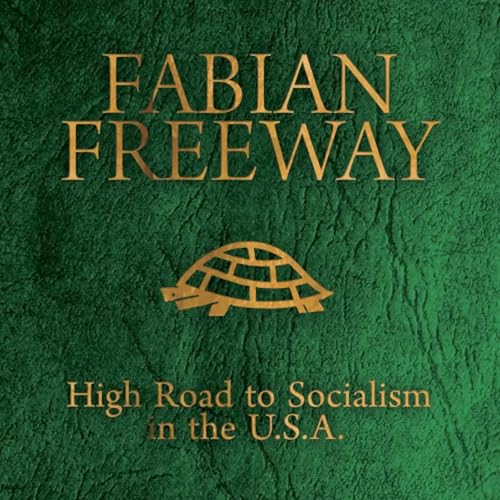
    • Fabian Freeway Part 5
      Jan 15 2026

      Chapter 9: The Fabian Turtle Discovers America

      Edward Bellamy’s Looking Backward (1888) becomes an unexpected bestseller and political catalyst. Bellamy, a frail, tubercular former journalist known for attacking “competitive industry,” produces what is described as a highly effective piece of propaganda.

      The novel is labeled “a socialist romance which never once mentioned socialism.” ⚠️ Covert socialism via fiction. The Nation (March 29, 1888) praises it as “a glowing prophecy and gospel of peace,” judging it more radical than the proposals of Henry George.

      Bellamy’s vision calls for making land and “all other investments equally unprofitable,” to be achieved through a “National Organization of Labor under a single direction.” Like Uncle Tom’s Cabin, it promotes abolition—this time of “wage slavery.”

      Selling “a thousand copies a day,” Bellamy becomes a symbolic leader. British Fabians assist in shaping the movement. Lawrence Gronlund’s The Cooperative Commonwealth (1884) repackages Marxism for American readers and is withdrawn to promote Bellamy’s novel. ⚠️ Marxism rebranded for U.S. audiences.

      Marx and Engels are cited as believing revolution could proceed “peacefully” in the U.S. and Britain by exploiting free institutions. Early American socialism struggles due to German-language isolation, anarchist violence, and scandals involving “free love.”

      Universities become key transmission points. Richard T. Ely and the American Economic Association (1885) promote municipal and national ownership ideas. Sydney Webb publishes through these academic networks, which include figures such as Woodrow Wilson.

      Webb and Edward Pease visit in 1888, promoting gradualism. The Boston Bellamy Club reorganizes as the “Nationalist Club,” using patriotic language to conceal nationalization. Its declaration condemns “competition” as “brute,” praises trusts as proof of “practicability,” and urges industries to operate “in the interests of the nation.”

      Chapter 10: Putting the Silk Hat on Socialism

      The Bellamy movement expands rapidly. By November 1890 there are “158 nationalist clubs in 27 States,” concentrated in New York and California, which Gronlund calls “ripe for the Cooperative Commonwealth.”

      The movement avoids former Confederate states and largely bypasses the Catholic Church. Bellamy presents nationalism as an American “Social Gospel,” not foreign radicalism. By February 1891 there are “165 chartered clubs” and “50 newspapers” offering support.

      The Literary Digest (launched March 1890) treats Looking Backward favorably and reports socialism’s spread in British universities and churches, including the public role of Annie Besant.

      Clubs are predominantly middle-class and New England–oriented, attracting figures such as William Dean Howells, Edward Everett Hale, Hamlin Garland, and theosophist John Storer Cobb. Many support socialist aims while remaining unaware of their Marxist foundations. ⚠️ Elite respectability enables “unconscious socialism.”

      Women participate prominently, including Julia Ward Howe and Frances Willard. Meetings draw “the best people in town,” from luxury hotels to prominent synagogues.

      Leadership rests with committed socialists: Bellamy, Gronlund, Elwood Pomeroy, and Rev. W.D.P. Bliss, who argues Christianity and socialism are compatible despite papal defenses of private property.

      Nationalist clubs merge into the People’s Party in 1892 and soon collapse. Bellamy’s July 4, 1892 editorial predicts a new “Declaration of Independence” abolishing class distinctions, achieved “peaceably or forcibly.”

      After anarchism is outlawed in 1894, socialism avoids prohibition. Nationalism has provided a “veneer of respectability”—“putting the silk hat on socialism.” Former nationalists go on to seed later socialist institutions.

      Afficher plus Afficher moins
      1 h et 45 min
    • Fabian Freeway by Rose L Martin (1966) - Part 4
      Dec 22 2025

      Grammar – What They Say

      • From 1945–1951, Britain’s constitutional traditions and personal liberties were dismantled by lawful parliamentary means, using reforms planned years earlier by Fabian theorists.
        • ⚠️ Claim: socialism was pre-designed and merely implemented after Labour’s victory.
      • A Fabian-dominated Labour government socialized Britain’s economy, nationalizing:
        • Banking and credit
        • Utilities and energy
        • Transport and aviation
        • Communications and broadcasting
        • Iron and steel (1949)
      • State control led to inefficiency, deficits, falling real production, and public inconvenience.
      • Central planning imposed:
        • Wage and price controls
        • Rationing
        • Currency and export controls
        • ⚠️ Assertion: peace-time controls exceeded war-time necessity.
      • Civil liberties declined:
        • Ministries entered homes without warrants
        • Job freezes compelled workers into fixed employment
        • Mass prosecutions for regulatory violations
      • Social services were minimal and inflation-eroded:
        • Healthcare overstretched
        • Food rations near subsistence
        • Benefits inadequate to abolish want
      • Britain avoided collapse only through external funding:
        • U.S. loans
        • IMF withdrawals
        • ⚠️ Striking claim: Labour’s survival depended on American money and Soviet tolerance.
      • When funding waned, leaders admitted socialism required higher taxes, sacrifice, and lower living standards.
      • Defeat in 1951 left a weakened economy but a permanent Fabian bureaucracy.
      • Fabians then exported socialism abroad via:
        • Socialist International
        • Trade unions
        • Education of colonial elites
        • Independence movements

      Logic – How They Argue

      • Fabian socialism is presented as deliberate long-term strategy, not political accident.
      • Democratic procedures are used to impose outcomes voters would reject if explicit.
      • Reasoning chain:
        1. Parliamentary reform → concentrated power
        2. Nationalization → inefficiency
        3. Inefficiency → scarcity
        4. Scarcity → controls and loss of liberty
      • Nationalized industries must run losses unless subsidized by taxpayers or foreign creditors.
      • Defeat at home is reframed as strategic repositioning, not failure.
      • ⚠️ Core claim: Fabian socialism and communism are complementary methods, applied differently across societies.

      Rhetoric – Why It Persuades

      • Moral inversion: elite planners exploit the conscience of ordinary citizens.
      • Contrast: promised “Earthly Paradise” versus lived rationing and regulation.
      • Language of exposure: secrecy, understatement, and invisibility recur.
      • ⚠️ Rhetorical thrust: Fabian gradualism is camouflage, not moderation.
      Afficher plus Afficher moins
      2 h et 2 min
    • Fabian Freeway by Rose L Martin (1966) - Part 3
      Dec 14 2025

      Grammar – What They Say

      • After World War I, the Labour Party, guided by Fabians, replaces the Liberal Party and becomes the main vehicle for socialist reform.
        • “Every social reform introduced by the Fabian-steered Labour Party was carefully contrived to weaken… the national economy.”
      • Fabian socialists are shown alternating between gradualism and cooperation with communists, depending on political opportunity.
        • ⚠️ “All that distinguished many a Fabian socialist from the local communist… was the lack of a Communist Party card.”
      • The Zinoviev Letter crisis exposes links between Labour, Fabians, and Moscow, temporarily collapsing the Labour government.
      • During the interwar years, Fabians dominate education, publishing, and research, especially through the London School of Economics and the Left Book Club.
        • “Its trend was frankly Marxist and clearly catastrophic.”
      • World War II is framed as the long-awaited opportunity for socialist takeover.
        • ⚠️ “The coming cataclysm was a priceless opportunity for socialist expansion.”
      • The Fabian Research Bureau becomes the central planning body for postwar Britain.
        • “Privately controlled research… applied with explosive effect.”
      • The Beveridge Report is presented as a Fabian psychological operation promising “cradle to grave” security.
        • “A species of state-administered insurance extending from the womb to the tomb.”
      • After 1945, a Fabian-dominated Labour government dismantles the British Empire and restructures the economy.
        • “One jewel after another was plucked from the Imperial Crown.”

      Logic – How They Argue

      • Fabian success is attributed to elite capture, not popular mandate: universities, research, media, and bureaucracy shape outcomes in advance.
      • Political parties are treated as instruments, not ends; Labour is the “chosen instrument.”
      • Research and welfare promises are used as tools of mass persuasion, especially in wartime fear.
        • ⚠️ Welfare is framed as benefit, while dependency and taxation are deferred.
      • Fabian anti-imperialism is argued to weaken Britain while strengthening Soviet influence globally.
      • Fabian democracy is shown as procedural rather than genuine, using uninstructed delegates and co-opted executives.
        • ⚠️ “A strange example of political democracy at work.”
      • The parallel between Fabian socialism and other totalitarian movements is made explicit.
        • “Hitler’s party had been elected no less legally and democratically.”

      Rhetoric – Why It Persuades

      • Heavy use of war, betrayal, and deception metaphors frames Fabianism as internal subversion.
      • Welfare language is exposed as emotional manipulation, exploiting fear, hope, and wartime exhaustion.
      • Fabian leaders are portrayed as cold planners vs. a trusting public.
        • ⚠️ “A cruel farce perpetrated… on a hungry and hopeful nation at war.”
      • The Empire’s collapse is narrated as self-inflicted, achieved peacefully where enemies failed by force.
      • The chapter closes with elegiac irony, turning patriotic slogans into lament.
        • “What had once been a stirring victory march became… a dirge.”
      Afficher plus Afficher moins
      1 h et 52 min
    Aucun commentaire pour le moment