Épisodes

  • Every Drop Counts: Exploring Water with Young Learners
    Oct 28 2025

    What can water teach young children about science, curiosity, and caring for the planet? Author and educator Ann Gadzikowski, MEd, joins host Emily Garman to discuss her new book, Every Drop Counts: Exploring Water Science with Young Children in a Changing Climate (Gryphon House, 2025). Drawing on her collaboration with her daughter, a water scientist, Ann shares how educators can inspire scientific thinking and environmental stewardship—beginning with joyful, hands-on play.

    In This Episode, You'll Learn:

    • How simple water play helps children develop curiosity, problem-solving, and early STEM thinking.

    • Ways to introduce environmental awareness and stewardship through age-appropriate exploration.

    • How the book aligns with the Head Start Early Learning Outcomes Framework and Next Generation Science Standards.

    • Strategies for addressing children's (and adults') eco-anxiety with reassurance and curiosity.

    • Why play—and time outdoors—is the foundation for future scientific and environmental understanding.

    • Practical classroom ideas for introducing water systems, the water cycle, and conservation through play.

    Key Quote:

    "Go outside and play as much as you can. Get wet, play in the mud, and get messy—that's the most important thing." — Ann Gadzikowski

    Guest:
    Ann Gadzikowski, MEd is an award-winning educator, author, and curriculum designer specializing in early childhood STEM and critical thinking. Her latest book, Every Drop Counts, empowers educators to teach science through wonder, play, and environmental care.

    Learn More:
    Explore Every Drop Counts: Exploring Water Science with Young Children in a Changing Climate at gryphonhouse.com.

    Afficher plus Afficher moins
    30 min
  • Every Child Can Fly: Including Children of All Abilities
    Oct 9 2025

    In this inspiring conversation, author and educator Jani Kozlowski shares her personal and professional journey toward creating more inclusive early learning environments. Drawing from her own experience as a person with a disability—and as the parent of a child with a disability—Jani helps educators and families see that inclusion is not a place, but a culture of belonging.

    She offers practical advice for educators who want to welcome every child, explains the importance of people-first language, and highlights how high expectations paired with support help all children grow and thrive.

    Listeners will walk away with a renewed sense of confidence and compassion for creating classrooms where every child can fly.

    Key Topics:
    • Jani's personal story and how it shaped her work in early childhood inclusion

    • Why inclusion is a culture of belonging, not just a setting

    • People-first language and how words shape perceptions

    • How teachers and families can partner to support each child's success

    • The benefits of inclusive classrooms for all children

    • Balancing high expectations with appropriate support

    • How educators can start building inclusive practices today

    Featured Guest:

    Jani Kozlowski, MEd
    Author of Every Child Can Fly: An Early Childhood Educator's Guide to Inclusion and Empowering Your Child to Fly: A Parent's Guide to Inclusion (Gryphon House Books)

    Afficher plus Afficher moins
    38 min
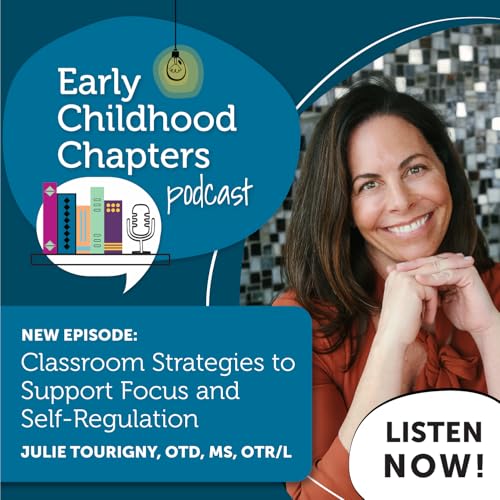
  • Classroom Strategies to Support Focus and Self-Regulation
    Sep 16 2025

    In this episode of Early Childhood Chapters, host Emily Garman sits down with Dr. Julie Tourigny, pediatric occupational therapist and author of Calm and in Control, Organized and Engaged, and her upcoming release, Alert and Attentive. Together, they explore why attention is not a fixed trait but a skill that can be taught and strengthened in early childhood. Dr. Tourigny shares practical strategies educators and caregivers can use to help children regulate emotions, sustain focus, and thrive in both learning and play.

    Listeners will learn:

    • Why attention and focus are developmental skills, not personality traits.
    • How self-regulation and emotional control directly affect a child's ability to concentrate.
    • Simple classroom environment adjustments that reduce distractions and support focus.
    • The power of games, play, and routines in building attention span.
    • How screen time has shifted children's ability to self-regulate and why boredom is essential for growth.
    Afficher plus Afficher moins
    31 min
  • Conversations That Count: Making Parent-Teacher Conferences Work
    Sep 3 2025

    Parent-teacher conferences can feel rushed, overwhelming, or even intimidating—for both educators and families. But when done well, these conversations can build trust, strengthen relationships, and set children up for success.

    In this episode of Early Childhood Chapters, we talk with Tricia Shelton, EdD, author of Partnering for Success: Effective Strategies for Parent-Teacher Conferences. Drawing from her dual perspective as both an educator and a parent, Dr. Shelton shares practical strategies for turning conferences into meaningful two-way conversations rather than checklist-style meetings.

    Listeners will learn:

    • How to avoid common mistakes educators make in conference preparation

    • Ways to build trust with families before, during, and after the meeting

    • How to balance academic updates with insights into the whole child

    • Why culturally responsive communication matters—and how to practice it

    • Tips for handling difficult or emotional conversations with empathy and clarity

    Whether you're a classroom teacher, administrator, or parent, this episode will help you reimagine conferences as opportunities for collaboration and connection.

    Afficher plus Afficher moins
    27 min
  • Thinking Outside the Prize Box: Dr. Adam Holland on Challenging Classroom Behaviors
    Aug 15 2025

    In this engaging and often funny conversation, Dr. Adam Holland—educator, trainer, and author of the upcoming Gryphon House book Thinking Outside the Prize Box: Navigating Challenging Behaviors in Today's Classroom—shares real-world strategies for managing challenging behavior without relying on prize boxes, clip charts, or other reward-and-punishment systems that lose effectiveness over time.

    Drawing on his own journey from a "bad kid" in school to an award-winning teacher and now a coach to educators nationwide, Dr. Holland explains why all behavior is communication, how to identify the "why" behind a child's actions, and why moving from compliance to connection changes everything. He breaks down the difference between consequences and punishments, offers insight on co-regulation (including his own missteps), and gives practical, ready-to-use tips for reshaping classroom environments so the "right" behaviors happen naturally.

    What You'll Learn in This Episode:
    • Why traditional rewards and punishments often backfire in the long run
    • How to uncover the real reasons behind challenging behavior
    • The importance of connection over compliance—and how to build it
    • Why clip charts may be doing more harm than good
    • The difference between natural consequences and punishments
    • How small environmental and procedural tweaks can prevent problems before they start
    • Real, tried-and-tested strategies you can implement tomorrow
    About Our Guest:

    Dr. Adam Holland has spent more than 25 years in education as a teacher, coach, and trainer. His work focuses on helping educators understand and respond to challenging behavior in ways that build strong relationships, reduce stress, and create calmer, more connected classrooms. His first book, Thinking Outside the Prize Box, will be released September 1 by Gryphon House.

    Afficher plus Afficher moins
    43 min
  • Family First: Building Relationships That Support Children's Success
    Jul 14 2025

    In this episode of Early Childhood Chapters, we talk with Dr. Thomasa Bond about why family first isn't just a philosophy but a practical approach to building strong, safe, and successful early childhood programs.

    Dr. Bond brings over 30 years of experience in early childhood education, including 14 years as a child care licensing consultant. She shares real-world strategies to help program directors, teachers, and administrators strengthen communication with families and create true partnerships that put children's well-being at the center.

    Highlights include:

    • Why clear, open communication with families starts before enrollment
    • How strong policies and procedures build trust instead of barriers
    • Advice for handling challenging conversations with parents with empathy and respect
    • The importance of staff training to support effective, consistent communication
    • Real-life scenarios where centers repaired trust with families after mistakes
    • Simple changes centers can implement to keep families engaged and informed

    Dr. Bond is the author of two Gryphon House books: The Early Childhood Director's Guide to Solving Everyday Challenges and Build Your Dream Team: How to Recruit, Train, and Retain Early Childhood Staff.

    She's dedicated to helping programs create safe, high-quality environments that truly partner with families to support every child's learning and well-being.

    Connect with Dr. Bond:

    • Website: drthomasa.com
    • LinkedIn, Facebook, Instagram, X: @DrThomasaBond
    • Virtual and in-person training provided through Early Childhood Education Growth LLC
    • Annual early childhood conference

    For the episode transcript, video and other resources, view this on our website!

    Afficher plus Afficher moins
    28 min
  • Understanding and Addressing Challenging Behaviors in the Classroom
    May 27 2025

    In this episode of Early Childhood Chapters, we speak with Dr. Ginger Welch, clinical psychologist, author, and early childhood expert, about how educators can better understand and respond to challenging behaviors in the classroom.

    Dr. Welch draws on her decades of experience in homes, schools, and clinical settings to explain why children act out—not as willful defiance, but often as communication of unmet needs, anxiety, or trauma. She shares practical strategies from her book How Can I Help? to help educators shift their mindset, reframe behaviors, and build stronger relationships with children and families.

    Key takeaways include:

    ✅ Viewing behavior through biological, environmental, and relational lenses
    ✅ Using a "trauma-first" approach when assessing challenging behaviors
    ✅ Recognizing how anxiety may appear as inattention or hyperactivity
    ✅ Practicing self-care through small, daily micro-strategies to prevent burnout
    ✅ Building positive, strengths-based relationships with families to better support children

    This episode is a must-listen for early childhood educators, caregivers, and anyone seeking compassionate, research-backed strategies for working with young children.

    Find Dr. Welch's books at GryphonHouse.com.

    Afficher plus Afficher moins
    47 min
  • Healing Begins with You: Trauma-Sensitive Strategies for Infant-Toddler Educators
    May 14 2025

    In this powerful episode, Dr. Barbara Sorrels, renowned early childhood expert and author of Reaching and Teaching Children Exposed to Trauma and Trauma-Sensitive Care for Infants, Toddlers, and Two-Year-Olds, joins us to explore what it truly means to care for young children impacted by trauma.

    Dr. Sorrels shares heartfelt stories and actionable strategies from her decades of experience working with children, families, and educators. From recognizing the subtle signs of trauma in infants to creating responsive, healing environments, this conversation is filled with wisdom and practical tools every early childhood professional can use.

    In This Episode, You'll Learn:

    • What trauma-sensitive care looks like in infant-toddler classrooms
    • How even medical trauma at birth can impact brain development
    • Subtle signs of trauma in preverbal children
    • The power of rhythm, movement, and connection in calming dysregulated children
    • How to build trust and rapport with families—even when trauma is present in the home
    • Self-care strategies for educators facing compassion fatigue
    • Why responsive care is more important than ever—and what systems and policies can better support it
    Afficher plus Afficher moins
    34 min