Couverture de Dream Job Cafe

Dream Job Cafe

Dream Job Cafe

De : Larry Port
Écouter gratuitement

Offres de saison | 0,99 € par mois pendant les 3 premiers mois

5,99 €/mois par la suite. Des conditions s’appliquent. Annulation mensuelle possible.
Dream Job Café is the podcast for anyone navigating their next career move, a challenge that’s only gotten trickier now that AI has joined the mix. Hosted by Larry Port, each episode goes beyond job titles to explore the realities of different professions — from daily schedules and travel demands to pay, pressure, and whether that career will exist in five years. ㅤ You’ll hear from industry leaders, working professionals, and career experts who share candid stories about what it’s really like to do the job. Whether you’re a college student facing an uncertain job market, a recent graduate navigating new opportunities, or a mid-career professional who needs a change, this show will help you sort through options with clarity and confidence. ㅤ Dream Job Cafe is here to help you align your skills, values, and lifestyle goals so you can not just imagine but actually pursue your dream job.Copyright 2026 Larry Port Développement personnel Economie Réussite personnelle
Épisodes
  • The Private Equity Playbook: Deal Sourcing, Research, and the AI Shift
    Sep 30 2026

    What does it actually mean to work in private equity, and how does the industry differ from traditional investment banking? In this episode, Michal Petrzela, Partner at Lightyear Capital, breaks down the multifaceted nature of private equity, outlining how market research, executive relationship-building, financial modeling, and operational board oversight converge to build long-term business value.

    Michal shares his personal story—growing up under Communism in Czechoslovakia, earning a swimming scholarship to Syracuse University, and climbing through accounting at Arthur Andersen and investment banking before finding his 21-year career home at Lightyear Capital. He offers candid insights into non-traditional career paths, emphasizing how persistence, resilience, and proactive networking often outweigh an Ivy League pedigree. Finally, Michal provides a peek into how private equity firms use AI tools like Claude to perform deeper due diligence faster, while evaluating the disruptive risks automation poses to labor-intensive service industries.

    Michal Petrzela is a Partner and member of the Management Committee at Lightyear Capital, a leading New York-based private equity firm. A former competitive swimmer from Czechoslovakia, Michal earned his undergraduate degree in accounting from Syracuse University and an MBA before launching a career spanning Arthur Andersen, investment banking, and over 21 years at Lightyear Capital.

    What We Cover
    • Private Equity vs. Investment Banking: Understanding the shift from transactional advisory work to direct ownership, risk management, and long-term operational value creation.
    • The Four Muscles of PE: How market sizing research, executive relationship-building, financial modeling, and operational board management intersect.
    • Non-Traditional Pathways: Why resilience, persistence, and proactive networking can overcome non-Ivy League recruiting hurdles.
    • The Power of Primary Research: Moving beyond off-the-shelf industry reports to gain first-party executive insights and identify market "green space".
    • Curiosity as a Prerequisite: Why genuine interest in business mechanics and relationship-building is required to succeed in private equity.
    • AI-Enhanced Due Diligence: How private equity teams use tools like Claude to automate financial modeling, accelerate data analysis, and execute deeper due diligence.
    • Evaluating AI Market Risk: Analyzing how automation affects labor-intensive service pricing, margins, and long-term company defensibility.

    Afficher plus Afficher moins
    26 min
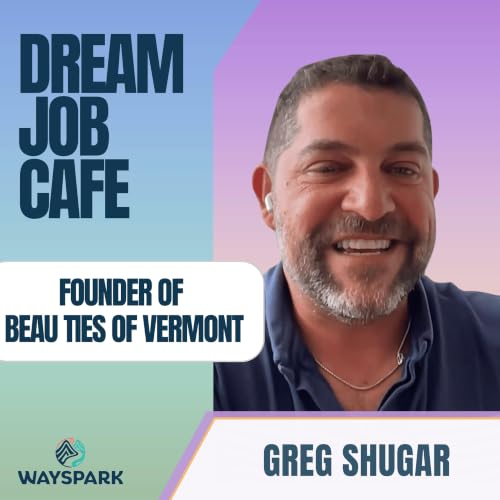
  • Greg Shugar & The Cereal Spill That Sparked a Fashion Empire | Ep. 33
    Jul 15 2026

    What does it actually take to break away from a stable career you despise and build functional wealth on your own terms? Greg Shugar pulls back the curtain on his transition from the legal grind to multi-million-dollar e-commerce success. Starting as a side hustle born from pure curiosity over a $70 retail tie markup, Greg tracked down Chinese suppliers on a little-known site called Alibaba in 2004, discovered the product only cost $2.10 to make, and built a garage-based startup that exploded overnight thanks to a single feature in the Chicago Tribune.

    Greg provides a masterclass on the operational habits that sustain a CEO, explaining why rigid founders fail and why rapid problem-solving is a leader's greatest hard asset. Looking at the economic landscape of 2026, Greg explains why starting a business from scratch is now a highly dangerous gamble. Instead, he lays out a safer, highly lucrative alternative: buying existing, cash-flowing small businesses from retiring baby boomers. From his intense hatred of franchises to the real-world impact of AI Engine Optimization (AEO) on modern consumer brands, Greg delivers raw, unfiltered advice for anyone looking to step into the owner's box.

    What We Cover
    • The Litigator's Escape: Why the constant friction, negative dynamics, and rigid structures of law school and litigation push so many professionals into depression and career changes.
    • The Siding Company Inspiration: How analyzing the financial statements of everyday, blue-collar business clients exposed Greg to the massive wealth potential of small business ownership.
    • The Startup Transition Trap: How to leverage a full-time job to fund the early development of a side hustle before taking the financial leap.
    • The Case Against Franchising: Why the rigid rulebooks, forced marketing systems, and revenue royalties make franchises the absolute worst choice for creative founders.
    • The Humility Metric: Why founders who get defensive over customer feedback or advice doom their companies, and why admitting you are wrong is a core business skill.
    • Acquisition over Creation: Why buying a profitable, existing service business in 2026 is vastly cheaper and less risky than building an e-commerce startup from scratch.
    • The Demise of Product Photography: How off-the-shelf artificial intelligence tools are completely eliminating traditional commercial photography roles.
    • AEO vs. SEO: How the shift from short keywords to long-winded conversational AI prompts is forcing e-commerce brands to entirely reinvent their digital marketing.

    Learn more about Greg Shugar and Beau Ties of Vermont: https://www.beautiesltd.com

    Afficher plus Afficher moins
    36 min
  • Paul Schlader: From Finding a Passion to Building a Coffee Brand | Ep. 32
    Jul 8 2026

    Building a highly successful brand in a hyper-competitive landscape requires far more than just a great product; it demands radical operational transparency and a commitment to human service. Paul Schlader pulls no punches when discussing the brutal financial realities and early execution errors of scaling Birch Coffee. From an overstaffing blunder in their first month that forced them to lay off half their staff to surviving a five-year commercial lease in Manhattan, Paul outlines how keeping fixed costs low gave them the literal runway to make mistakes, learn the ropes, and survive.

    The conversation delivers an operational masterclass on retail optimization, detailing why Birch chose to eliminate entire kitchens and popular food lines to focus strictly on high-margin, small-batch coffee roasting in Long Island City. Moving into the current 2026 economic environment, Paul shares a fascinating workplace shift: an influx of job applicants holding advanced technology degrees whose roles have been upended by AI. This episode highlights why authentic face-to-face service is experiencing a massive renaissance and why human connection remains completely irreplaceable by automation.

    What We Cover
    • The Bedrock of Service: Why Paul and his partner Jeremy intentionally structured their entire corporate culture around community service rather than product profit.
    • Chasing the Perfect Brew: The story of the single cup of Ethiopian Amaro Ghaile coffee that redefined Paul's career trajectory in 2007.
    • The First-Month Firing Crisis: Managing the emotional toll of laying off half of an over-hired workforce due to initial transaction miscalculations.
    • Killing the Kitchens: The strategic financial decision to shut down profitable food operations to maximize high-margin coffee revenues.
    • The Long Island City Pivot: Overcoming the logistical and architectural nightmares of establishing an industrial coffee roastery inside New York City limits.
    • The Lean Post-COVID Machine: How Birch scaled back from a bloated 12-person corporate office down to a highly optimized, profitable leadership squad.
    • The Tech-to-Service Migration: Why retail brands are experiencing a surge in applications from highly credentialed tech workers displaced by automation.
    • The Anatomy of a Pivoter: Why rigid professionals fail in entrepreneurship, and why thriving requires an intense tolerance for constant fire-fighting.

    Learn more about Birch Coffee.

    Afficher plus Afficher moins
    35 min
adbl_web_anon_alc_button_suppression_t1
Aucun commentaire pour le moment