Couverture de Bootie and Bossy Eat, Drink, Knit

Bootie and Bossy Eat, Drink, Knit

Bootie and Bossy Eat, Drink, Knit

De : Bootie and Bossy
Écouter gratuitement

À propos de ce contenu audio

Bootie and Bossy are two sisters who share a love of cooking and crafting. Please join us in our adventures and misadventures! We'll share our best recipes and make you feel better about your craft projects. Whatever you do, don't knit like my sister! For show notes and more, please visit Bootieandbossy.comAll rights reserved Alimentation et vin Art Cuisine
Les membres Amazon Prime bénéficient automatiquement de 2 livres audio offerts chez Audible.

Vous êtes membre Amazon Prime ?

Bénéficiez automatiquement de 2 livres audio offerts.
Bonne écoute !
    Épisodes
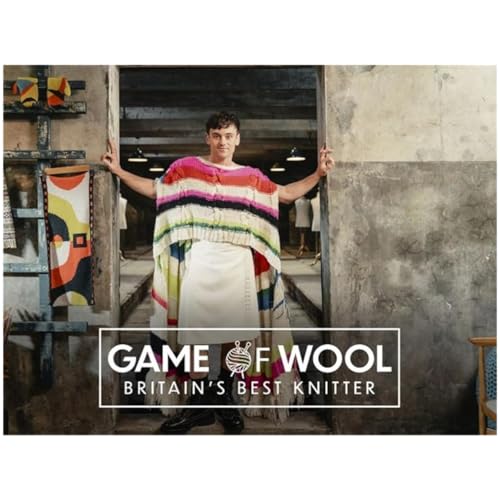
    • Episode 57: Will Bootie and Bossy Go on Game of Wool?
      Feb 8 2026

      First we want to say that we love that there is a British show about knitting. Period. Full stop. And we love that Tom Daley is the host--he is warm, funny and good humored about testing the knitted deck chairs the contestants make with his well-sculpted butt. But knitters that we are, would Bootie and Bossy go on the show? Let's be clear: NO ONE IS ASKING US. We also don't live in the UK. But the answer is still a definite "No." For one, we would never subject anyone--even an Olympic swimmer with a flawless body--to wearing a swimsuit we had designed and knitted. "Game of Wool: Britain's Best Knitter" is a bit of a misnomer--we are reminded Mike Meyers's famous character of Linda Richman on Saturday Night Live who might have said, "I am feeling verklempted. I'll give you a topic: 'The show is neither a game, nor about wool or knitting.' Discuss amongst yourselves." There's a lot of crochet in this knitting show, which is kind of like mixing coffee and tea, as any fiber artist with an ounce of reverence for the two crafts will tell you. Plenty of accomplished knitters follow patterns as written with great creativity in selecting the material and colors, but the show often expected serious design skills, which left some some contestants in the dust from the start. And the time constraint of 12 hours meant contestants had to use bulky wool with needles the size of shotguns. As one contestant, Holger, remarked:

      "Asking me to express myself in chunky yarn is like asking a vegetarian to express themselves with only something like steak." Later he would say, "The method I am using is pure and utter desperation."

      Holger Auffenberg, "Game of Wool: Britain's Best Knitter," Episode 1.

      Here's the thing: we loved the contestants sporting their own handknits, and we wanted to know more about them. Where was the camera crew following them back to their homes so we could meet their kids and parents and learn more about what inspired them? As one of the judges Di Gilpin said, "Knitting generally is all about telling a story." What a great premise! How about following it? Tell us the stories behind Tom Daley's outfits!

      So we want another season where they get it right and tell more stories about the contestants, the judges, and knitting with something other than bulky yarn. The craft of knitting deserves this. We promise to watch the second season, but in the meantime, we will be busy eating Oreo Cookie Truffles because Valentine's Day is just around the corner, so we have to leave healthy behind (that phase lasted long, didn't it?!). This is the perfect homemade treat for your Valentine or Galentine or Palentine, or just for yourself--try it!

      Afficher plus Afficher moins
      43 min
    • Episode 56: Your Stash: Inspiration or Albatross?
      Jan 23 2026

      So it's the New Year. Hooray. And maybe like us you opened up that closet to put back the decorations and thought, "Do we need all of this? What's in these boxes anyway?" Perhaps your thoughts have now turned to your stash--not your drug stash, or a stash of stolen goods, the word's original meaning when it first entered English usage in 1914. We're talking about your yarn stash. Is it a source of inspiration to you, or an albatross? We are here to help. In typical Bootie and Bossy fashion, we decided the best way to tackle this was first to read about it, and then to talk about it, because you don't want to be too hasty and spring into action too quickly here. So we read A Stash of One's Own: Knitters on Loving, Living with, and Letting Go of Yarn, a wonderful collection of essays edited by Clara Parkes. Because a yarn stash is not just a pile of random string, as Parkes explains, "Yarn holds energy (literally twist), but it also holds energy in the form of memories . . . Every knitter will be able to pick up skein from her stash--any skein--and tell you a complete and compelling story about it" (p. 109). This might be why Stephanie Pearl-McPhee cannot get rid of the ball of yarn her daughters gifted her, even though it’s so pink and shiny it looks exactly like “what you’d get if Barbie and My Little Pony dropped acid and tried to come up with a colorway” (p. 32).

      As much as your yarn stash is a kind of fiber scrapbook—especially that vacation yarn that’s “all larded up with sentiment and emotion and meaning to the point where you weep slightly when recalling the now defunct yarn shop where you bought it" (Ann Shayne, p. 46)—it’s also connects you to the future. At its core, a stash is a repository of hope, as Anna Maltz explains:

      "There is a deep optimism in how much we acquire and keep around, and in our belief that we can make and learn from that vast quantity in a single lifetime.

      Anna Maltz, “Moving Yarn/Portable Stories,” in A Stash of One’s Own, p. 79.

      For Debbie Stoller, having a stash is also an empowering feminist act:

      "[A] yarn stash makes a pretty large statement to the world that a woman is planning to spend hours—nay, years—of her life engaging in something that doesn’t promise to make her skinnier or look younger or give her a tighter butt. Something that won’t make her a better mother, or a better wife . . . It announces to the world that she has decided to do something just for herself in pursuit of only one thing: pleasure.”

      Debbie Stoller, "A Stash of One's Own: Yarn as a Feminist Issue," A Stash of One's Own, p. 180.

      If your stash inspires and empowers you, great—keep doing what you are doing. If it starts to feel like an albatross, then there’s help for that too. As knitter and social worker Sue Shankle explains, “People have a hard enough time understanding themselves. Expecting others to ‘get’ you (or your love of beautiful yarn) is not always realistic. That’s why you need a posse. People who understand it all, no explanation necessary” (91-2).

      So make a nice, warm batch of healthy Instant Pot Curry with Chickpeas, Spinach and Tomatoes, and as you contemplate your stash, know that it’s much more than just yarn in a bin—it’s your past and your future, your statement to the world of how you want to spend your time, and we understand that because we are your posse!

      Afficher plus Afficher moins
      39 min
    • Episode 55: What's so great about 1950's America?
      Dec 19 2025

      What's so great about 1950s America? We admit this is a trick question. It might have been great for men, but at least according to Anne Macdonald in No Idle Hands: The Social History of American Knitting, for many women, particularly young mothers, it felt like being "trapped in a squirrel cage" of modern appliance-packed houses that feminist writer Betty Friedan would later describe as "comfortable concentration camps" (p. 323). More women dropped out of college to get the coveted "Mrs" degree and then devoted themselves to cleaning their houses and popping out kids. And they succeeded--the birth rate at the time was close to India's. But they also struggled to meet impossible and opposing expectations, as one woman memorably described it:

      "I've been married ten years and I still feel my husband expects me to be a combination of Fanny Farmer and Marilyn Monroe."

      --Quoted in Anne Macdonald, No Idle Hands: The Social History of American Knitting, p. 323.

      With little time and mounting resentment, the 1960s and 70s unsurprisingly ushered in Women's Lib and the era of "Jiffy Knits" with giant needles. No one is knitting for thrift anymore, but knitting still offers cures for the following ailments: nail biting; arthritis (dubbed by one woman as "Mr. Arthur," whom she successfully banished from her hands with knitting every morning); anxiety; agoraphobia; overeating; smoking; impatience and finally boredom, as many knit while waiting in the long lines during the gas shortage. But out of this period emerge the three graces of the knitting world: Mary Walker Phillips, Elizabeth Zimmerman and Barbara Walker. They bring their expertise to the masses, and we all owe them a tremendous debt.

      As we approach the holiday season, we are grateful to Anne Macdonald for writing No Idle Hands, which has given us so much to talk about and stories to share. So take a moment to make a batch of biscotti, then grab your pointed sticks and settle in for some good stories about finding the bright side of things, stories that have made us smile many times over the years. And join us in declaring this the season of "Cookies for Everyone!"

      Afficher plus Afficher moins
      43 min
    Aucun commentaire pour le moment