Épisodes

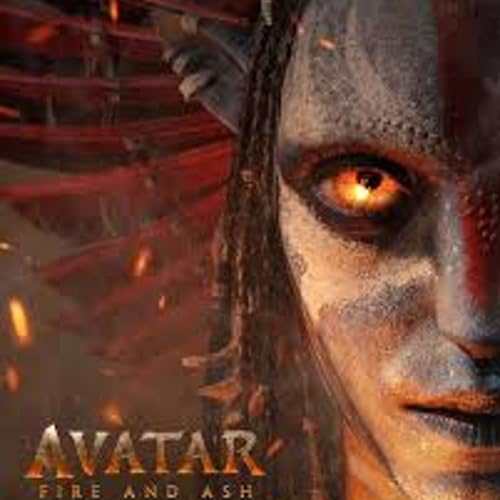
  • Avatar: Fire and Ash
    Jan 23 2026

    We start this one the only way we know how: Pete quits his job (casually), we open a bottle of potentially corked wine (possibly poisonous), and then—somehow—end up reviewing Avatar 3, despite half the room not even watching Avatar 2.

    Pete’s approach is simple: he’s not here to defend or attack Avatar. He’s here to report back from the front lines of three hours and ten minutes of James Cameron doing what James Cameron does.

    The setup (in plain English)

    You’ve got:

    • Jungle people (from Avatar 1)
    • Sea people (Avatar 2)
    • Now: Fire people (Avatar 3)

    The grief and revenge angle ramps up after the events of the second film, and the new “fire clan” are positioned as more brutal, more pagan, and basically built to escalate the conflict. The humans (the “sky people”) are still doing what humans do: exploiting the planet, weaponising alliances, and trying to crack the next big advantage.

    What we actually talk about

    • Skipping straight to film three: why it’s weirdly possible, because these films run on a repeating template.
    • Spider and the “air-breather” idea: a human kid embedded with the Na’vi, and the implications if humans can reverse-engineer breathing on Pandora.
    • The fire clan: their volcanic backstory, their vibe shift from the earlier tribes, and the “new enemy faction” energy.
    • The villain problem: how characters keep “dying” in ways that clearly don’t stick, setting up sequels forever.
    • The big third-act battle: yet another massive end set-piece, but with a new environmental twist that feels… very convenient.
    • The core contradiction: the storytelling is bloated and recycled, but the spectacle is undeniable.

    The verdict

    Pete’s take lands here: these films are ridiculous, repetitive, and absolutely stunning to look at. As cinema experiences, they’re hard to argue with visually. As stories, they’re basically a shiny loop — but a shiny loop that keeps making a billion dollars.

    If you want to hear us:

    • unravel the plot without pretending it’s deep,
    • argue about whether Avatar has any cultural footprint at all,
    • and admit (through gritted teeth) that Cameron’s visuals are still operating on a different level…

    …this episode is for you.

    You can now text us anonymously to leave feedback, suggest future content or simply hurl abuse at us. We'll read out any texts we receive on the show. Click here to try it out!

    We love to hear from our listeners! By which I mean we tolerate it. If it hasn't been completely destroyed yet you can usually find us on twitter @dads_film, on Facebook Bad Dads Film Review, on email at baddadsjsy@gmail.com or on our website baddadsfilm.com.

    Until next time, we remain...

    Bad Dads

    Afficher plus Afficher moins
    20 min
  • Midweek Mention... The Island of Dr Moreau
    Jan 21 2026

    This week’s episode begins in full “Bad Dads” mode: we’re recording with barely any gear in sight, arguing about blinking lights, and realising—mid-flow—that “Island Week” might have scrambled everyone’s brains. But the chaos is fitting, because the film we tackle is The Island of Dr. Moreau (1996)… a movie so famously cursed it feels like it was assembled in a panic from whatever footage survived the production.

    Based on the H.G. Wells story, it follows Edward Douglas (David Thewlis), a plane-crash survivor rescued at sea and dumped onto a remote island run by the mysteriously missing (and very infamous) Dr. Moreau (Marlon Brando). Douglas is told not to wander. Naturally, he wanders—straight into a nightmare lab of human–animal hybrids, bizarre rituals, and creatures that look like they were costumed by a school drama department on a tight deadline.

    What we cover in the episode

    • Why this film is notorious: the on-set chaos, the director being fired two days in, and the sense the final cut is basically a patchwork survival story.
    • Brando’s “what am I watching?” performance: whiteface, robe, bizarre headgear, godlike status on the island… and an energy that suggests nobody was in control.
    • Val Kilmer as peak 90s disaster energy: an increasingly unhinged presence, and how behind-the-scenes dysfunction seems to bleed into the film itself.
    • The hybrids: early reveals, dodgy prosthetics, worse CGI, and one moment that completely breaks the brain (yes, a human-llama birth).
    • The island society: worship, obedience via pain-inducing implants, and the whole thing drifting into cult vibes.
    • When it goes full pantomime: the uprising, the armory, and the film’s most unintentionally hilarious image—a creature firing a machine gun with a hoof.
    • A bleak, messy ending: power vacuums, violence, and an escape plan so flimsy the biggest concern becomes… why isn’t he wearing a hat?

    The verdict

    This isn’t a “good film” recommendation. This is a you-have-to-see-it recommendation. It’s only about 90 minutes, it’s weirdly breezy, and it’s endlessly watchable as a cinematic car crash—especially if you enjoy hearing us dissect disasters while laughing at the parts that clearly should not be funny.

    If you like cult curios, notorious flops, and episodes where we’re basically reviewing the production meltdown as much as the movie itself—this one’s for you.

    You can now text us anonymously to leave feedback, suggest future content or simply hurl abuse at us. We'll read out any texts we receive on the show. Click here to try it out!

    We love to hear from our listeners! By which I mean we tolerate it. If it hasn't been completely destroyed yet you can usually find us on twitter @dads_film, on Facebook Bad Dads Film Review, on email at baddadsjsy@gmail.com or on our website baddadsfilm.com.

    Until next time, we remain...

    Bad Dads

    Afficher plus Afficher moins
    20 min
  • The Night Manager
    Jan 16 2026

    This episode begins, as ever, in total disarray: missed jokes, football updates, wine anxiety, and the creeping realisation that the best material always happens before the mic is on. Then Dan drops a bombshell: The Night Manager is so tense he physically struggled to finish it.

    And that’s the hook.

    Based on John le Carré’s novel, The Night Manager is a six-part espionage thriller starring Tom Hiddleston as Jonathan Pine, a hotel night manager pulled into a covert operation to bring down international arms dealer Richard Roper (a towering Hugh Laurie). Set against the backdrop of the Arab Spring, it’s a story of guilt, infiltration, and moral compromise — where every smile hides a weapon and every ally might be a leak.

    We talk about:

    • Why this is one of the most gripping British series of the last decade
    • Hiddleston’s transformation into a Bond-adjacent undercover operative
    • Hugh Laurie’s chilling reinvention as “the worst man in the world”
    • The mechanics of building a fake identity and earning trust from monsters
    • Olivia Colman’s ferocious MI6 handler and the cost of doing “good”
    • The unbearable tension of near-misses, close calls, and cliffhangers
    • John le Carré’s MI6 roots and why his work still defines spy fiction

    It’s sleek, paranoid, adult television — the kind where you pause episodes just to steady your nerves. With a new season finally arriving, this is the perfect moment to (re)discover it.

    If you like espionage with teeth, villains who smile while they ruin lives, and stories where nobody is truly safe, this episode is your invitation to dive in.

    You can now text us anonymously to leave feedback, suggest future content or simply hurl abuse at us. We'll read out any texts we receive on the show. Click here to try it out!

    We love to hear from our listeners! By which I mean we tolerate it. If it hasn't been completely destroyed yet you can usually find us on twitter @dads_film, on Facebook Bad Dads Film Review, on email at baddadsjsy@gmail.com or on our website baddadsfilm.com.

    Until next time, we remain...

    Bad Dads
    Afficher plus Afficher moins
    15 min
  • Midweek Mention... The Ministry of Ungentlemanly Warfare
    Jan 14 2026

    This episode begins the only way we know how: absolute chaos. We veer from wills, tits, and Stranger Things before eventually remembering we’re meant to be talking about a film. If you’re new here, that’s the show.

    The film in question is Guy Ritchie’s The Ministry of Ungentlemanly Warfare — a swaggering WWII caper based on a real black-ops unit hand-picked by Churchill and Ian Fleming. Set in 1941, it imagines the birth of modern special forces: not rules, not honour, just twenty feral specialists sent in to break things and terrify the enemy.

    We talk about:

    • The shift from “civilised” warfare to winning at any cost
    • Henry Cavill as a proto–James Bond, recruited straight out of prison
    • The opening “Swedish fishermen” massacre as a mission statement
    • Cartoon-level violence, moustaches, one-liners and Guy Ritchie excess
    • The joy of watching war movies ditch decorum for chaos
    • Why SAS: Rogue Heroes makes the perfect companion piece

    It’s not subtle. It’s not serious. It’s loud, slick, and gleefully ridiculous — a war movie powered by bravado and bad behaviour.

    If you like explosions, rule-breaking, and men with absolutely no fear of death, this episode (and this film) are for you.

    You can now text us anonymously to leave feedback, suggest future content or simply hurl abuse at us. We'll read out any texts we receive on the show. Click here to try it out!

    We love to hear from our listeners! By which I mean we tolerate it. If it hasn't been completely destroyed yet you can usually find us on twitter @dads_film, on Facebook Bad Dads Film Review, on email at baddadsjsy@gmail.com or on our website baddadsfilm.com.

    Until next time, we remain...

    Bad Dads

    Afficher plus Afficher moins
    22 min
  • Wake Up Dead Man
    Jan 9 2026

    Benoit Blanc is back — but not in the way you might expect.

    In this episode, we dig into Wake Up Dead Man, the third entry in Rian Johnson’s Knives Out series, and quickly realise this isn’t just another playful, sun-drenched whodunnit. The tone is darker, stranger, and far more morbid than Knives Out or Glass Onion, leaning hard into religious imagery, guilt, confession, and moral rot.

    Set around a remote church and a fire-and-brimstone priest, the film opens with what looks like an impossible murder: a man stabbed in a sealed room, in full view of his congregation. From there, Blanc circles a tight group of suspects — each with motive, history, and secrets — as the film toys with classic murder-mystery rules… and then quietly breaks a few of them.

    What we talk about in the episode:

    • The tonal shift — why this feels closer to gothic noir than cosy Agatha Christie
    • Religion, confession, and judgment as thematic engines, not just window dressing
    • Whether the mystery is too Scooby-Doo or intentionally rejecting “fair-play” sleuthing
    • A stacked cast and who actually makes an impact (and who doesn’t)
    • Daniel Craig’s Benoit Blanc: more observer than solver this time — for better or worse
    • The film’s final act, revelations, and why it left us oddly unsatisfied despite clever ideas
    • How it stacks up against Knives Out (still the gold standard) and Glass Onion (the loudest sibling)

    We also get into a broader debate about modern murder mysteries, Netflix’s influence on structure and pacing, and whether this series is drifting away from the thing that made it work in the first place: watching a brilliant detective actually do the detecting.

    If you like your whodunnits bleak, talky, and a little unholy — or if you just want to hear us wrestle with a film that’s clever, flawed, and deliberately frustrating — this one’s for you.

    🎧 Listen to the full episode for the deep dive, the disagreements, and our verdict on whether Wake Up Dead Man is a bold evolution… or a mystery that forgets to be fun.

    You can now text us anonymously to leave feedback, suggest future content or simply hurl abuse at us. We'll read out any texts we receive on the show. Click here to try it out!

    We love to hear from our listeners! By which I mean we tolerate it. If it hasn't been completely destroyed yet you can usually find us on twitter @dads_film, on Facebook Bad Dads Film Review, on email at baddadsjsy@gmail.com or on our website baddadsfilm.com.

    Until next time, we remain...

    Bad Dads

    Afficher plus Afficher moins
    21 min
  • Midweek Mention... Die Hard
    Jan 7 2026

    Die Hard is the kind of “comfort violence” film that never gets old!

    It’s a Christmas film for structural reasons, not vibes.
    Christmas isn’t just background dressing. The party only happens because it’s Christmas, the building is half-staffed because it’s Christmas, McClane is only in LA because it’s Christmas, and Hans’ whole timing depends on a holiday lull. Remove Christmas and the plot collapses.

    • McClane isn’t an action hero at the start — he becomes one.
      He’s scared, he bleeds, he’s improvising, and he’s basically running on stubbornness and spite. That’s why it’s satisfying: it’s competence earned under pressure, not superhero nonsense.
    • Hans Gruber is the real blueprint villain.
      He’s calm, intelligent, funny, and actually seems like he has a plan. Rickman makes him feel like he’s doing theatre while everyone else is doing an action film. It’s why the film still plays now.
    • Ellis is the most realistic character in the whole thing.
      Not “realistic” as in good, but realistic as in: give a coke-sniffing corporate gobshite a crisis and he’ll try to negotiate his way into being important. Then immediately get shot.
    • The Powell/McClane friendship is pure genius.
      They barely share a scene, but it lands emotionally because it’s built on voice, trust, and the fact Powell is the only person treating McClane like a human being instead of a “situation.”

    And yes: a 24/7 Die Hard channel is basically the final form of Christmas television. Even if you don’t watch it, it’s reassuring that it exists, like a lighthouse for divorced dads and men in dressing gowns.

    You can now text us anonymously to leave feedback, suggest future content or simply hurl abuse at us. We'll read out any texts we receive on the show. Click here to try it out!

    We love to hear from our listeners! By which I mean we tolerate it. If it hasn't been completely destroyed yet you can usually find us on twitter @dads_film, on Facebook Bad Dads Film Review, on email at baddadsjsy@gmail.com or on our website baddadsfilm.com.

    Until next time, we remain...

    Bad Dads

    Afficher plus Afficher moins
    27 min
  • Midweek Mention... Merry Christmas, Mr Lawrence
    Dec 24 2025

    Homoeroticism, honour codes, and the least festive “Merry Christmas” ever recorded.

    This week’s pick looks like a seasonal warm hug by title alone, but it’s actually a POW-camp psychodrama where Christmas is basically just another opportunity for humiliation, beatings, and cultural misunderstanding.

    The core triangle

    • Lawrence (Tom Conti): the cultural bridge. He respects Japan’s traditions more than the other prisoners do, but still can’t square the camp’s brutality with the language of “honour.”
    • Celliers (David Bowie): quiet defiance, charisma, scars, and a refusal to surrender mentally even when physically broken.
    • Yonoi (Ryūichi Sakamoto): the commander whose obsession with honour is also clearly entangled with fascination/desire — especially towards Celliers — and whose self-loathing (the “missed coup / lost honour” backstory) bleeds into how he runs the camp.

    What the film is really doing

    This isn’t a “war movie” in the guns-and-heroics sense. It’s a study of shame and power:

    • The Japanese guards are trapped by their own code: surrender is incomprehensible, confession is weakness, punishment is “order.”
    • The prisoners are trapped by their code: resistance is identity, humiliation is poison, compromise looks like collaboration.
    • And between them is Lawrence, trying to keep men alive with language — while knowing language isn’t enough.

    The flashback that explains everything

    Celliers’ confession about failing to protect his younger brother (and the brutal boarding-school initiation) is where the film stops being “about the camp” and becomes “about the kind of violence men normalise.” That shame mirrors Yonoi’s shame. Different cultures, same wound.

    The moments you won’t forget

    • The mock execution: Bowie refusing the blindfold because it’s “for them.”
    • The Christmas scene: Hara drunk on sake, Lawrence spared, and the phrase that becomes the film’s ghost.
    • The public kiss: Celliers’ desperate, weaponised tenderness to stop an execution — the emotional bomb that breaks Yonoi.
    • The ending, years later: Lawrence visiting Hara, now the condemned man, and the final line delivered with a tragic calm:

    “Merry Christmas, Mr. Lawrence.”

    Verdict

    Not festive. Not cosy. Not easy. But brilliantly acted, quietly devastating, and still unusually forward-thinking in how it frames desire, masculinity, and shame without turning it into cheap scandal.

    If you want tinsel: watch Elf.
    If you want a Christmas film that leaves a bruise: this is the one.

    You can now text us anonymously to leave feedback, suggest future content or simply hurl abuse at us. We'll read out any texts we receive on the show. Click here to try it out!

    We love to hear from our listeners! By which I mean we tolerate it. If it hasn't been completely destroyed yet you can usually find us on twitter @dads_film, on Facebook Bad Dads Film Review, on email at baddadsjsy@gmail.com or on our website baddadsfilm.com.

    Until next time, we remain...

    Bad Dads

    Afficher plus Afficher moins
    29 min
  • Rare Exports: A Christmas Tale
    Dec 19 2025

    Horns, Hostages, and Human Trafficking Santa – Rare Exports: A Christmas Tale (2010)

    This week on Bad Dads Film Review, we go full Finland and unwrap a Christmas movie that answers the question nobody asked: what if Santa Claus wasn’t a jolly gift-giver, but an ancient, horned, child-snatching nightmare buried under a mountain?

    Our main feature is Rare Exports: A Christmas Tale (dir. Jalmari Helander), a wintery sci-fi/horror-dark-comedy that feels like The Thing wandered into a folk tale, got frostbite, and decided to start a black-market Santa operation.

    The setup is instantly great: a US drilling team blasts into the Korvatunturi mountain and hits something that absolutely should not be thawed. Nearby, reindeer herders start finding their animals slaughtered, children begin disappearing, and weird petty theft spreads through the village — radios, hairdryers, potato sacks… all vanishing like some grim Advent calendar of doom.

    At the centre is young Pietari, a kid who’s convinced Santa is real… and that Santa is coming to punish him. While the adults argue about Russians, borders and compensation invoices, Pietari is reading ancient texts about a pagan “Santa” with horns, and building literal Home Alone-style defences because he thinks he’s next.

    Then things get properly deranged: a naked, feral old man is caught in a wolf trap baited with a pig’s head — and the locals start to suspect they’ve found Santa. Turns out they’ve found one of his helpers… and the rules are simple: no swearing, no aggression, no “bad behaviour”, because these elves replicate and escalate like gremlins with hypothermia. Suddenly it’s old, nude men everywhere, and the film leans into it with alarming confidence.

    The finale goes full Goonies-in-a-blizzard: helicopters, a reindeer pen used as a trap, kids in sacks as bait, dynamite in the ice, and a plan so insane it only works because everyone is too cold to argue.

    And then the ending swerves again — from folk-horror survival to capitalism speedrun — as the village realises the “elves” are worth money, hoses them down, trains them up, and ships them around the world as mall Santas in crates like festive livestock. It’s bizarre, dark, and very funny in a “wait… did they really just do that?” way.

    It’s not cosy. It’s not sweet. It is snowy, grim, inventive, and weirdly brilliant — with proper atmosphere, real faces, and a premise it commits to without winking at you.

    Strong recommend.

    You can now text us anonymously to leave feedback, suggest future content or simply hurl abuse at us. We'll read out any texts we receive on the show. Click here to try it out!

    We love to hear from our listeners! By which I mean we tolerate it. If it hasn't been completely destroyed yet you can usually find us on twitter @dads_film, on Facebook Bad Dads Film Review, on email at baddadsjsy@gmail.com or on our website baddadsfilm.com.

    Until next time, we remain...

    Bad Dads

    Afficher plus Afficher moins
    23 min