

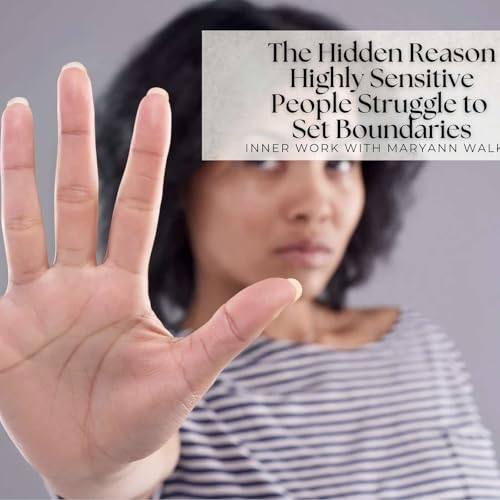
200: The Hidden Reason Highly Sensitive People Struggle to Set Boundaries
Impossible d'ajouter des articles
Échec de l’élimination de la liste d'envies.
Impossible de suivre le podcast
Impossible de ne plus suivre le podcast

200: The Hidden Reason Highly Sensitive People Struggle to Set Boundaries
-
Lu par :
-
De :
À propos de ce contenu audio
Send a text
Why People Pleasers Tolerate Disrespect (And How to Finally Set Boundaries)
What if the very thing you’re doing to keep the relationship… is the thing slowly eroding your self-respect?
If you’re a highly sensitive person or a recovering people pleaser, you’ve likely tolerated behavior that didn’t feel good. You minimized it. You excused it. You smoothed it over. Not because you’re weak — but because your nervous system was trying to protect you.
In this episode, I’m breaking down why people pleasers tolerate disrespect, how the freeze and fawn responses keep you stuck, and what it actually looks like to set boundaries without guilt.
If you’ve ever thought:
- “I don’t want to make a big deal out of it.”
- “I’m probably just being too sensitive.”
- “They didn’t mean it.”
- “If I’m patient enough, they’ll change.”
…this episode is for you.
Because in trying not to lose the relationship, you may be losing yourself.
Why Highly Sensitive People Struggle With Boundaries
When someone makes a cutting comment or dismisses your experience, your body doesn’t always respond with confrontation.
Many highly sensitive people default to:
Freeze – You go into shock. You can’t believe they would treat you that way.
Fawn – You rush to reassure the person who hurt you.
“It’s okay.”
“I know you didn’t mean it.”
This isn’t weakness. It’s a stress response.
But when you repeatedly smooth things over instead of addressing the behavior, you unintentionally teach others that your boundaries are optional. And your body feels it — anxiety, tension, walking on eggshells.
4 Sneaky Ways You Say “Yes” When You Mean “No”
1. You Accept Words Without Watching for Change
They say, “I’m sorry. I’ve changed.”
You want to believe them, so you focus on their words instead of their behavior. You forgive without evidence. You accept apology without accountability.
Kindness without accountability keeps unhealthy patterns alive.
2. You Minimize the Impact to Protect the Relationship
You tell yourself:
- “It’s not that bad.”
- “They’re just stressed.”
- “I’m overreacting.”
But every time you minimize their behavior, you also minimize your boundary. Over time, your needs matter less.
3. You Overexplain Your Boundaries
Instead of saying,
“That doesn’t work for me,”
you add context and reassurance.
You take on the emotional labor so they don’t have to self-reflect. Clear boundaries don’t require a long defense. They require calm clarity.
4. Your Body Has Checked Out And is Saying No— But You’re Still Saying Yes
You feel tightness in your chest.
You feel drained.
You walk on eggshells.
Your body is saying no, but your mouth keeps saying yes.
Sometimes you don’t realize a boundary was crossed until later. That delayed awareness doesn’t invalidate the violation. Your body keeps the score.
Boundaries don’t push the right people away. They filter out the wrong ones.
A true yes doesn’t feel anxious or heavy.
It feels steady. Clear. Expansive.
Boundaries don’t destroy healthy relationships.
They reveal which ones are.
If this episode resonated and you’re ready to stop people pleasing, strengthen your boundaries, and rebuild self-trust, I’d love to support you.
Book your free clarity call here:
👉 https://calendly.com/maryannwalkerlife/freeconsult
You do not have to betray yourself to be loved.

Vous êtes membre Amazon Prime ?
Bénéficiez automatiquement de 2 livres audio offerts.Bonne écoute !


