Épisodes

  • Episode 1345: Freedom from False Images
    Jan 30 2026

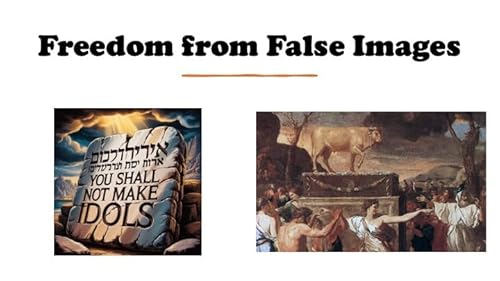
    The Second Commandment is far from a restrictive religious decree; it is a transformative gift that facilitates human flourishing by demanding wholeness. Idolatry, whether in the form of carved statues or modern "quiet gods" like success and approval, inevitably creates a fragmented life. When we answer to multiple "masters," we exhaust ourselves by maintaining different versions of our identity to please various false images of the divine. Jesus’ teaching that "no one can serve two masters" highlights the psychological and spiritual impossibility of thriving while divided. True integration—the state of being one whole person—is only possible when we stop trying to manage God through manageable images and allow the living, unpredictable Creator to be our sole center of gravity.

    By forbidding false images, God is actually liberating us from the tyranny of lies. Every false god is an insatiable chain: wealth demands more wealth, and the need for approval requires constant, exhausting performance. These images are tyrannies that reduce us to smaller, more anxious versions of ourselves. However, we are remade in the image of what we worship. When we behold the true God in Christ—without the filters of our own making—we don't just follow a rule; we undergo a "beholding" that reshapes us. We transition from a performed, false self to a true self that is courageous, compassionate, and secure, moving from the "muscle memory" of spiritual slavery into the freedom of being God's "treasured possession."

    The path to this abundant life begins with the honest naming and releasing of the specific images we have used to domesticate God. This is a persistent, lifelong practice of awareness rather than a one-time achievement. As we surrender our "golden calves"—whether they are political idols, theological systems, or personal pride—we discover that God is patient with our fearful hearts. He does not leave us empty but points us toward Jesus, His own chosen and living image. In Christ, the Second Commandment reaches its fulfillment, offering us a God who cannot be manipulated but who can be trusted to heal our fragmentation and lead us into genuine, undistorted flourishing.

    Afficher plus Afficher moins
    10 min
  • Episode 1344: The Second Commandment in the Teachings of the Apostle Paul
    Jan 29 2026

    Paul interprets the Second Commandment as a comprehensive principle of liberation rather than a mere religious restriction. He identifies the core human problem in Romans 1 as a deliberate "exchange" where we trade the overwhelming, sovereign reality of the immortal God for manageable, man-made distortions. This isn't just about carved statues; it is about the "apparatus of human distortion"—false theologies, deceptive philosophies, and misshapen visions of the good life. By reducing God to an image we can control, we create a lie that fundamentally misrepresents the truth, protecting ourselves from the demanding nature of the living Creator but ultimately darkening our own understanding.

    A central insight in Paul’s writing is that worship is inherently formative: we inevitably become like what we value. If we worship a god of power, we become domineering; if we worship a god of appetite (our "stomach"), we become enslaved to our desires. Paul’s urgent command to "flee from idolatry" stems from the reality that participating in false worship bonds our identity to a lie, leading to internal fragmentation. Because humans are image-bearing creatures, the question is not whether we will be shaped by an image, but which one. Contemplating false images results in a distorted humanity, whereas beholding the true glory of God in Christ transforms us into His likeness with "ever-increasing glory."

    Ultimately, Paul reveals that the Second Commandment is fulfilled in Jesus, who is the "image of the invisible God." God forbade human-made images to clear the way for His own perfect self-revelation—not in a static concept or a stone monument, but in a living person. Christian formation is the process of "putting off" the old self, corrupted by deceitful desires and false mental images, and "putting on" a new self-created to be like God in true righteousness. The commandment is thus an invitation to stop being shaped by the hollow traditions and "elemental forces" of the world and to be reshaped by the only image that is alive, relational, and true.

    Afficher plus Afficher moins
    10 min
  • Episode 1343: The Second Commandment in the Acts of the Apostles
    Jan 28 2026

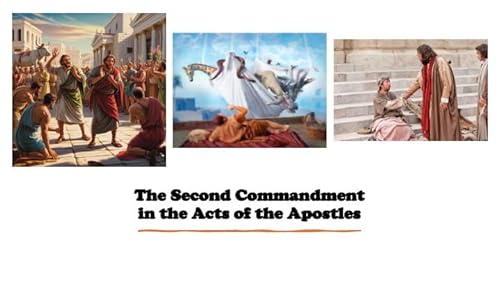
    The book of Acts serves as the practical lived experience of the Second Commandment, demonstrating how a community encounters the living God without the need for physical shrines, images, or mediators. Following Jesus' ascension, the disciples find that God refuses to be localized or managed; instead, the Holy Spirit arrives at Pentecost as wind, fire, and voice—elements that are active and relational rather than static or possessable. This shift fulfills the logic of the commandment by showing that God does not provide an image of Himself but gives Himself directly and personally, ensuring His presence cannot be turned into a talisman or a commodity.

    Throughout the narrative, the apostles consistently refuse to let themselves or their theology become idols. Peter and John immediately redirect the crowds' wonder away from their own "power or godliness" toward the God of Abraham, while Peter later rebukes Simon the Sorcerer for trying to purchase the Spirit as if it were a transferable technique. Even Peter’s own theological system is dismantled through a vision of unclean animals, teaching him that divine holiness cannot be trapped within a single culture's image or religious purity code. This illustrates a profound lesson: even "correct" systems become idols when they are used to limit or define what God is allowed to do.

    Finally, Acts highlights the severe consequences of violating this commandment while celebrating the liberation it brings. The death of Herod, who accepted divine worship, stands as a stark warning against human representations of the divine, while Paul’s speech at the Areopagus systematically argues that the Creator of heaven and earth does not live in man-made temples or silver images. By shifting worship from the Temple to the "table"—centering on homes and local communities—the early church discovered that God is not diminished by the absence of a physical form. Instead, the Second Commandment frees believers from dependence on mediators and opens them to a direct, unmanageable encounter with the God who transcends all human imagination.

    Afficher plus Afficher moins
    10 min
  • Episode 1342: The Second Commandment in the Teachings of Jesus
    Jan 27 2026

    Jesus entered a world dominated by mental and theological idols—rigid categories that reduced the living God to a manageable entity accessed through specific locations, rituals, and outward performances. As the "Second Commandment made incarnate," Jesus systematically dismantled these distortions, not to be difficult, but to clear the path for genuine relationship. By telling the Samaritan woman that God is Spirit—uncontainable by any mountain or building—He rejected the premise that divine presence could be trapped in human forms. This radical shift moved worship from a transactional ritual to a relational, heart-centered response to the Father.

    In the Sermon on the Mount and His interactions with religious leaders, Jesus continued this "Second Commandment work" by purifying the distorted image of a God who is satisfied with surface compliance. He revealed that God is not impressed by public righteousness or human tradition, but is intimately concerned with the interior truth of the heart. By challenging the Sadducees' limited logic and the Pharisees' tradition-heavy systems, Jesus insisted that God is always greater than our conceptual limits. He refused to be the "gentle moral teacher" or the political messiah people projected their desires onto, consistently withdrawing from those who tried to make Him a tool for their own interests.

    Ultimately, Jesus fulfilled the Second Commandment by revealing that God alone chooses how He is seen. While humans are forbidden from creating images because we inevitably shrink and distort God, the Father provided His own perfect revelation in His Son. Jesus is the only image that works because He is not a static representation we can control; He is a living person we must follow. In the climax of His ministry, Jesus invited Philip—and all of us—to stop looking for a separate vision of the Father and to find Him in the life, suffering, and radical love of Christ. This invitation calls us to abandon our certainties and trust a God who is larger than our categories and deeper than our pain.

    Afficher plus Afficher moins
    10 min
  • Episode 1341: Old Testament Stories that Speak to the Second Commandment
    Jan 26 2026

    The Old Testament patterns of image-making reveal a fundamental tension between humanity’s desire for tangible certainty and God’s insistence on relational freedom. From the warnings of Moses on the plains of Moab to the departure of God’s glory from Ezekiel’s Temple, the biblical narrative serves as a diagnostic tool for the "seduction of sacred objects." Moses emphasizes that at Sinai, the people heard a voice but saw no form, establishing that God reveals Himself through speech and covenant rather than visual containment. This distinction keeps God relational and free; whereas a form is static and finite, a voice can always say something new, preventing the Creator from being domesticated by human craftsmanship or architectural boundaries.

    The stories of the Ark of the Covenant and the bronze serpent illustrate how even divinely sanctioned gifts can devolve into dangerous idols when they are used as magical talismans rather than pointers toward the Divine. When Israel brought the Ark into battle as a good-luck charm, they prioritized the possession of an object over obedience to God, resulting in a devastating defeat. Similarly, the bronze serpent—originally a vessel for healing—was eventually destroyed by King Hezekiah because the people had begun to worship the object itself. Hezekiah’s act of calling it Nehushtan (simply a piece of bronze) underscores a vital spiritual principle: symbols must never be allowed to fossilize, and when a gift from God outlives its purpose by obscuring the Giver, it must be broken.

    Ultimately, the prohibition against images in the Second Commandment protects the reality that God is a living, non-negotiable presence who cannot be stored, owned, or manipulated. Isaiah’s mockery of the craftsman who uses the same wood for cooking and for god-making highlights the absurdity of self-referential worship, where idols merely mirror human limitations rather than divine transcendence. Whether through the collapse of Egyptian deities during the plagues or Solomon’s admission that even the "highest heaven" cannot contain the Almighty, the scriptures consistently argue that God will not be trapped in any form—be it carved stone, frozen theology, or hollow tradition. To know God is to move beyond the safety of the object and into a transformative, unmanageable relationship with the Living Word.

    Afficher plus Afficher moins
    10 min
  • Episode 1340: Jesus as the True Image
    Jan 23 2026

    The second commandment's prohibition against human-made images exists because God intended to provide the only perfect image Himself: Jesus Christ. As Paul explains in Colossians, Jesus is the "image of the invisible God," the exact representation of His being. While the Old Testament people knew God primarily through voice and word, the New Testament reveals that the invisible God has become visible by taking on flesh. Jesus does not abolish the second commandment but fulfills it; he replaces static, human-distorting representations with a living, breathing reality that reflects God’s glory without diminishing or controlling it.

    When we look at Jesus, we encounter a God who defies our small, inherited assumptions. We see a God who is tender enough to hold children, yet fierce enough to overturn tables; a God whose power is displayed in the vulnerability of the cross rather than in worldly domination. Jesus consistently shatters our "manageable" images by healing on the Sabbath, eating with outcasts, and offering radical mercy. The second commandment protects us from being trapped by our own narrow understanding so that when the true Image appears, we are free to let Him reshape our theology rather than forcing Him to fit into it.

    Ultimately, the goal of Christian discipleship is to transition from relating to God through inherited images to relating to God through the person of Jesus. This requires a willingness to be surprised and challenged by the Gospels, allowing Jesus' priorities—His compassion for the broken and His demand for holiness—to become our primary lens for seeing the Father. Because we are prone to edit and shrink God to fit our comfort, we must rely on the only "undistorted revelation." In Jesus, the living image, we discover a God who is not a static portrait to be studied, but a presence who loves, speaks, and calls us to be reshaped in His likeness.

    Afficher plus Afficher moins
    10 min
  • Episode 1339: The Risk of Being Known
    Jan 22 2026

    Relinquishing a fixed image of God is a vulnerable experience because it removes the "shield" of predictability and leaves us exposed to a living Presence. While a static representation allows us to keep God at a safe distance, encountering the living God means realizing we are completely transparent before Him. As David expresses in Psalm 139, there is nowhere to flee from a Spirit that perceives our thoughts from afar. This exposure is initially terrifying because it strips away our ability to perform or present a curated version of ourselves; we are forced to move from managing a religious representation to experiencing the weight of being truly known.

    This radical honesty is the only path to genuine restoration, as illustrated by Peter’s encounter with Jesus by the Sea of Galilee. Jesus did not meet Peter’s failure with a lecture or a checklist, but with the penetrating question, "Do you love me?" By seeing Peter’s brokenness and loving him anyway, Jesus demonstrated that being fully known does not result in the rejection we fear, but in the healing we need. We often cling to images because they allow us to hide our shame and doubt, but flourishing is impossible while maintaining a false self. Only when we stop performing and show up as we actually are can we experience the kind of love that makes true transformation possible.

    Ultimately, the second commandment serves as an invitation to trade the safety of a silent portrait for the risk of a living relationship. This requires the courage to pray "raw" prayers—the honest, unpolished cries found in the Psalms—rather than the "right" prayers we think God wants to hear. While an image allows us to remain as we are, the living God sees us, loves us, and calls us to become more. By letting our shields down and acknowledging the parts of ourselves we have been protecting, we discover that the most profound flourishing comes not from our own image management, but from being fully known and still fully loved.

    Afficher plus Afficher moins
    10 min
  • Epispde 1338: Editing God to Fit Our Needs
    Jan 21 2026

    A common form of spiritual dishonesty is not the outright rejection of God, but the selective editing of His character to fit our personal comfort. We often emphasize the traits we find appealing—such as grace, mercy, or prosperity—while quietly omitting challenging attributes like justice, holiness, or the call to sacrifice. This "editing" creates a partial god who is permissive and manageable but ultimately hollow. Like King Jeroboam in the Old Testament, who set up golden calves at convenient borders to keep his people from the demanding pilgrimage to Jerusalem, we create "accessible" versions of faith that require less travel, less disruption, and less transformation.

    The cost of this theological editing is spiritual stagnation and the loss of genuine human flourishing. A god shaped entirely by our preferences never challenges us to grow, whereas the unedited God—who embodies the paradox of being both infinitely just and infinitely merciful—forces us to wrestle with truths that transcend our limited categories. When we reduce God to a purely permissive figure, we lose the drive toward virtue and wisdom; when we reduce Him to a purely judgmental figure, we lose the capacity for healing and restoration. Flourishing requires a "whole God" who is capable of both comforting us in our weakness and calling us out of our complacency.

    To resist the temptation of a partial god, we must intentionally engage with the aspects of Scripture that make us uncomfortable. If we gravitate toward individual blessings, we must study God's demand for communal justice; if we lean heavily on judgment, we must meditate on His tenderness toward the broken. Awareness of our "selective belief" is the first step toward freedom. By refusing to edit the divine into a "comfortable religion," we open ourselves to a fierce and transformative love that refuses to let us remain as we are, leading us toward the integrated, abundant life we were created to enjoy.

    Afficher plus Afficher moins
    10 min