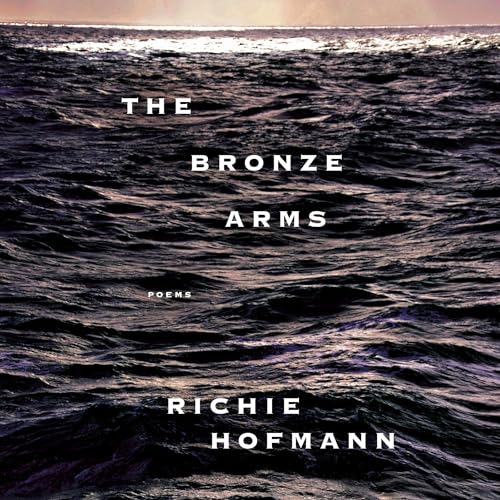
The Bronze Arms
Poems
Impossible d'ajouter des articles
Désolé, nous ne sommes pas en mesure d'ajouter l'article car votre panier est déjà plein.
Veuillez réessayer plus tard
Échec de l’élimination de la liste d'envies.
Veuillez réessayer plus tard
Impossible de suivre le podcast
Impossible de ne plus suivre le podcast
0,00 € les 60 premiers jours
Offre à durée limitée
3 mois pour 0,99 €/mois
Offre valable jusqu'au 29 janvier 2026 à 23 h 59.
Jusqu'à 90% de réduction sur vos 3 premiers mois.
Écoutez en illimité des milliers de livres audio, podcasts et Audible Originals.
Sans engagement. Vous pouvez annuler votre abonnement chaque mois.
Accédez à des ventes et des offres exclusives.
Écoutez en illimité un large choix de livres audio, créations & podcasts Audible Original et histoires pour enfants.
Recevez 1 crédit audio par mois à échanger contre le titre de votre choix - ce titre vous appartient.
Gratuit avec l'offre d'essai, ensuite 9,95 €/mois. Possibilité de résilier l'abonnement chaque mois.
Précommander pour 6,13 €
-
Lu par :
-
Richie Hofmann
-
De :
-
Richie Hofmann
À propos de ce contenu audio
Recognizing the fragility of the body and soul in a world of threat, these startling poems stem from a central boyhood memory—the author’s near-drowning in a swimming pool on Crete. The observant child was troubled that none of the statues he saw had arms—and then it was his father’s arms lifting him from the water, saving his life.
Hofmann balances elegance and brutality as he explores the fables of that childhood as well as the contours of sex and relationships in modern cities, in order to write his own personal history of love and survival: “Masculine arms lifted me. / Masculine arms held me while I slept.” The poems navigate risks, abandonments, and rescues, moving through a series of mazes that become a labyrinth of erotic awakening, with quick turns and dangerous diversions. In poems that alternately sear and crush delicately, we wander the ruins where the self is lost and broken and ultimately reclaimed: at the dark center, in the heart of the past.
A triumphant follow-up to the fetching catalog of lovers in Hofmann’s last book, this collection thrills with its archaeology of self, its notes of austerity and decadence.
Vous êtes membre Amazon Prime ?
Bénéficiez automatiquement de 2 livres audio offerts.Bonne écoute !
Commentaires
“Delicate, deep, and powerful: those adjectives are not enough to describe the absolute beauty emanating from the poems of Richie Hofmann, a Cavafy for our times.” —Édouard Louis, author of Change
“What thrills me most about Richie Hofmann’s new collection is its haunting, dispassionate commitment to thingly beauty. Despite the kinky sex and eventful Greek myths to which they testify, these poems are “hard and classical,” with exteriors as slender, taut, and delicately jointed as suits of armor. What else would satisfy the exacting sensibility of Hofmann’s speaker—with his “love of surfaces” and “beautiful things,” his radiant eye for detail, and his often dissociative relationship to his own body? How better to dramatize the struggle for control pulsing within him? Don’t be fooled by the formal exquisiteness of these poems—there is real blood coursing through them.” —Maggie Millner, author of Couplets
“In Richie Hofmann’s poems, love is considered as a force, as a sort of beautiful violence. Leading us through classical civilizations and visions of the old world, The Bronze Arms excavates the body’s labyrinth, through which desire stalks, restlessly. The urges of sex, love and rapture go on wounding, completing and undoing us. The brilliance of these statuesque poems, in which a precision of line is matched perfectly, astonishingly, with a precision of image and emotion, is in their attention to the feral and the elegant, the brutal and the beautiful at once. Timeless and utterly contemporary, The Bronze Arms brings the obscure gods of desire and time into the light of perfect form.” —Seán Hewitt, author of Open, Heaven
“Erotically charged and combining classical allusions with frank depictions of kink, the stately third collection from Hofmann displays the hushed tones and precision for which he is celebrated. . . . The poems are pristine, evoking the white marble of ancient Greek statuary. . . . There are plenty of knockouts to be found in this elegant assemblage.” —Publishers Weekly
“What thrills me most about Richie Hofmann’s new collection is its haunting, dispassionate commitment to thingly beauty. Despite the kinky sex and eventful Greek myths to which they testify, these poems are “hard and classical,” with exteriors as slender, taut, and delicately jointed as suits of armor. What else would satisfy the exacting sensibility of Hofmann’s speaker—with his “love of surfaces” and “beautiful things,” his radiant eye for detail, and his often dissociative relationship to his own body? How better to dramatize the struggle for control pulsing within him? Don’t be fooled by the formal exquisiteness of these poems—there is real blood coursing through them.” —Maggie Millner, author of Couplets
“In Richie Hofmann’s poems, love is considered as a force, as a sort of beautiful violence. Leading us through classical civilizations and visions of the old world, The Bronze Arms excavates the body’s labyrinth, through which desire stalks, restlessly. The urges of sex, love and rapture go on wounding, completing and undoing us. The brilliance of these statuesque poems, in which a precision of line is matched perfectly, astonishingly, with a precision of image and emotion, is in their attention to the feral and the elegant, the brutal and the beautiful at once. Timeless and utterly contemporary, The Bronze Arms brings the obscure gods of desire and time into the light of perfect form.” —Seán Hewitt, author of Open, Heaven
“Erotically charged and combining classical allusions with frank depictions of kink, the stately third collection from Hofmann displays the hushed tones and precision for which he is celebrated. . . . The poems are pristine, evoking the white marble of ancient Greek statuary. . . . There are plenty of knockouts to be found in this elegant assemblage.” —Publishers Weekly
Aucun commentaire pour le moment