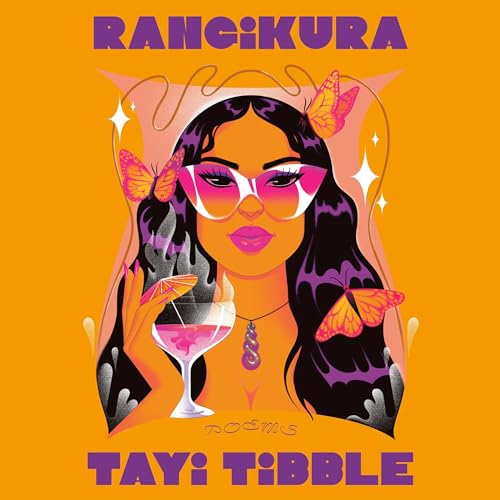
Rangikura
Poems
Impossible d'ajouter des articles
Désolé, nous ne sommes pas en mesure d'ajouter l'article car votre panier est déjà plein.
Veuillez réessayer plus tard
Échec de l’élimination de la liste d'envies.
Veuillez réessayer plus tard
Impossible de suivre le podcast
Impossible de ne plus suivre le podcast
0,00 € les 60 premiers jours
Offre à durée limitée
3 mois pour 0,99 €/mois
Offre valable jusqu'au 29 janvier 2026 à 23 h 59.
Jusqu'à 90% de réduction sur vos 3 premiers mois.
Écoutez en illimité des milliers de livres audio, podcasts et Audible Originals.
Sans engagement. Vous pouvez annuler votre abonnement chaque mois.
Accédez à des ventes et des offres exclusives.
Écoutez en illimité un large choix de livres audio, créations & podcasts Audible Original et histoires pour enfants.
Recevez 1 crédit audio par mois à échanger contre le titre de votre choix - ce titre vous appartient.
Gratuit avec l'offre d'essai, ensuite 9,95 €/mois. Possibilité de résilier l'abonnement chaque mois.
Acheter pour 6,13 €
-
Lu par :
-
Tayi Tibble
-
De :
-
Tayi Tibble
À propos de ce contenu audio
Tayi Tibble returns on the heels of her incendiary debut with a bold new follow-up. Barbed and erotic, vulnerable and searching, Rangikura asks readers to think about our relationship to desire and exploitation. Moving between hotel lobbies and all-night clubs, these poems chronicle life spent in spaces that are stalked by transaction and reward. “I grew up tacky and hungry and dazzling,” Tibble writes. “Mum you should have tied me/to the ground./Instead I was given/to this city freely.”
Here is a poet staking out a sense of freedom on her own terms in times that very often feel like end times. Tibble’s range of forms and sounds are dazzling. Written with Māori moteatea, purakau, and karakia (chants, legends, and prayers) in mind, Rangikura explores the way the past comes back, even when she tries to turn her back on it. “I was forced to remember that,/wherever I go,/even if I go nowhere at all,/I am still a descendent of mountains.”
At once a coming-of-age and an elegy to the traumas born from colonization, especially the violence enacted against indigenous women, Rangikura interrogates not only the poets’ pain, but also that of her ancestors. The intimacy of these poems will move readers to laughter and tears. Speaking to herself, sometimes to the reader, these poems arc away from and return to their ancestral roots to imagine the end of the world and a new day. They invite us into the swirl of nostalgia and exhaustion produced in the pursuit of an endless summer. (“My heart goes out like an abandoned swan boat/ghosting along a lake”). They are a new highpoint from a writer of endless talent.
Vous êtes membre Amazon Prime ?
Bénéficiez automatiquement de 2 livres audio offerts.Bonne écoute !
Commentaires
"The fresh, funny and immensely skilled voice of a generation...'[Tayi Tibble's] poetry just has this huge, wild energy,' said Hera Lindsay Bird, a New Zealand poet...'You read her and think, this is a person who’s possibly read Edward Said, and also watches ‘The Kardashians,’ said Nicholas Wright, a lecturer in English literature at Canterbury University...[An] undercurrent of pride and defiance appears throughout [her] work...[Now,] her work, her high-octane Instagram presence and a certain sparkly star quality have made her something of an 'it girl' and style icon in New Zealand, as well as a renowned poet. "—Natasha Frost, The New York Times
"When Tayi Tibble was eight, she decided she’d be a writer...Despite a slew of accomplishment at just 28—including, but not limited to, being the first Māori writer published in The New Yorker and an appearance in in Lorde’s Solar Power music video—she remains miraculously humble....Rangikura, her incendiary second collection, hits bookshelves this week in the States...[In it] Tibble nimbly zig zags from comedic lines about the Kardashians to reflections on ancestral trauma, colonization and love affairs." —Eloise King-Clements, Interview Magazine
"There’s a reason why U.S. poet laureate Joy Harjo calls Tayi Tibble 'one of the most startling and original poets of her generation.' The Māori writer’s sophomore collection of poetry [Rangikura] is nothing short of gripping and fearless. And if that wasn’t enticing enough, Tibble also counts Lorde as one of her biggest fans."—"April 2024's Must-Read Book Releases," Nylon
"Māori poet Tibble (Poukahangatus) meditates on the turbulence of youth and the spiritual guidance of her ancestors in her sagacious and impishly outspoken second collection. These poems engage with overt and overlooked subjugation, the weight of expectation, and the quest for self-containment in piquant, virtuosic stream of consciousness fused with ripe sensuality and robust lyricism. Playful slang, refreshing impropriety, and the Māori language establish an aura of authenticity and relatability...Hilarious, punchy one-liners are ubiquitous...These poems pulsate with the heightened emotions of formative years."—Publishers Weekly, starred review*
"When Tayi Tibble was eight, she decided she’d be a writer...Despite a slew of accomplishment at just 28—including, but not limited to, being the first Māori writer published in The New Yorker and an appearance in in Lorde’s Solar Power music video—she remains miraculously humble....Rangikura, her incendiary second collection, hits bookshelves this week in the States...[In it] Tibble nimbly zig zags from comedic lines about the Kardashians to reflections on ancestral trauma, colonization and love affairs." —Eloise King-Clements, Interview Magazine
"There’s a reason why U.S. poet laureate Joy Harjo calls Tayi Tibble 'one of the most startling and original poets of her generation.' The Māori writer’s sophomore collection of poetry [Rangikura] is nothing short of gripping and fearless. And if that wasn’t enticing enough, Tibble also counts Lorde as one of her biggest fans."—"April 2024's Must-Read Book Releases," Nylon
"Māori poet Tibble (Poukahangatus) meditates on the turbulence of youth and the spiritual guidance of her ancestors in her sagacious and impishly outspoken second collection. These poems engage with overt and overlooked subjugation, the weight of expectation, and the quest for self-containment in piquant, virtuosic stream of consciousness fused with ripe sensuality and robust lyricism. Playful slang, refreshing impropriety, and the Māori language establish an aura of authenticity and relatability...Hilarious, punchy one-liners are ubiquitous...These poems pulsate with the heightened emotions of formative years."—Publishers Weekly, starred review*
Aucun commentaire pour le moment