

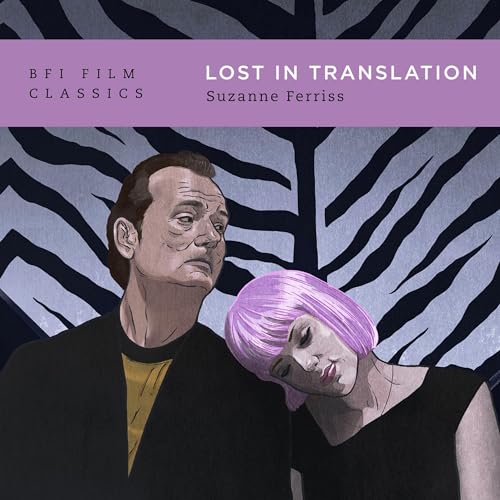
Lost in Translation
Impossible d'ajouter des articles
Désolé, nous ne sommes pas en mesure d'ajouter l'article car votre panier est déjà plein.
Veuillez réessayer plus tard
Veuillez réessayer plus tard
Échec de l’élimination de la liste d'envies.
Veuillez réessayer plus tard
Impossible de suivre le podcast
Impossible de ne plus suivre le podcast
Bénéficiez gratuitement de Standard pendant 30 jours
5,99 €/mois après la période d’essai. Annulation possible à tout moment

Lost in Translation
Lu par :
Gabrielle Glaister
Acheter pour 13,48 €
-
Lu par :
-
Gabrielle Glaister
-
De :
-
Suzanne Ferriss
Sofia Coppola’s Lost in Translation (2003) brings two Americans together in Tokyo, each experiencing a personal crisis. Charlotte (Scarlett Johansson), a recent graduate in philosophy, faces an uncertain professional future, while Bob Harris (Bill Murray), an established celebrity, questions his choices at midlife. Both are distant — emotionally and spatially — from their spouses. They are lost until they develop an intimate connection. In the film’s poignant, famously ambiguous closing scene, they find each other, only to separate.
In this close look at the multi-award-winning film, Suzanne Ferriss mirrors Lost in Translation’s structuring device of travel: her analysis takes the form of a trip, from planning to departure. She details the complexities of filming (a 27-day shoot with no permits in Tokyo), explores Coppola’s allusions to fine art, subtle colour palette and use of music over words, and examines the characters’ experiences of the Park Hyatt Tokyo and excursions outside, together and alone. She also re-evaluates the film in relation to Coppola’s other features, as the product of an established director with a distinctive cinematic signature: ‘Coppolism’. Fundamentally, Ferriss argues that Lost in Translation is not only a cinema classic, but classic Coppola too.©2023 Suzanne Ferriss (P)2025 Bloomsbury Publishing PLC
adbl_web_anon_alc_button_suppression_t1
Commentaires
Ferriss finds precision amid ambiguity in her acute study of Sofia Coppola's second feature. . . . Sharp on the movie-wise banter between Bob and Charlotte, she's equally sensitive to the film's unspoken, unresolved feelings: in Ferriss' reading, Lost unfolds like a pop song, its fragments charged with lingering feeling.
Aucun commentaire pour le moment