

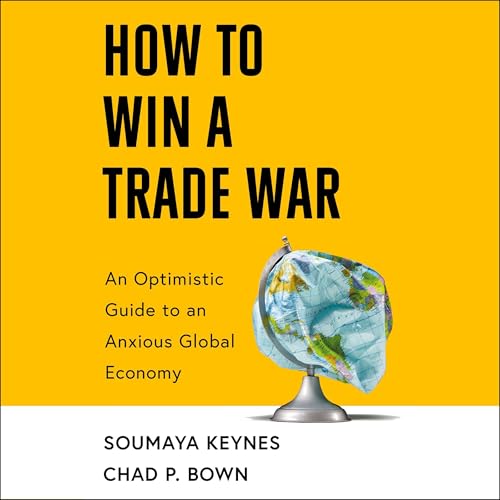
How to Win a Trade War
An Optimistic Guide to an Anxious Global Economy
Impossible d'ajouter des articles
Désolé, nous ne sommes pas en mesure d'ajouter l'article car votre panier est déjà plein.
Veuillez réessayer plus tard
Veuillez réessayer plus tard
Échec de l’élimination de la liste d'envies.
Veuillez réessayer plus tard
Impossible de suivre le podcast
Impossible de ne plus suivre le podcast
Bénéficiez gratuitement de Standard pendant 30 jours
5,99 €/mois après la période d’essai. Annulation possible à tout moment

How to Win a Trade War
Lu par :
Soumaya Keynes
Acheter pour 17,99 €
-
Lu par :
-
Soumaya Keynes
We used to take trade for granted. Trillions of dollars of goods and services crossed borders each year, made possible by a global, rules-based system. Nobody paid too much attention to supply chains: they just worked.
Now we are in an era of trade conflict and can no longer avoid the fight. Trump’s latest tariff announcement can jolt markets, push prices up, and sour decades-long alliances. China’s export restrictions on rare earths could bring the West’s car production to a halt. Curbs on trade in cutting-edge chips could determine who wins the AI race.
Keynes and Bown argue that the rules of the game have been abandoned, and a different strategy is needed. Yearning for the old approach to start working again isn’t an option. Countries must adapt, which means learning from history, economics, and from each other—including China. The stakes couldn't be higher.
The authors explore the history, the players, and the rules of trade, and consider how we can prepare for what the future might hold. What would all-out economic warfare look like? Could trade wars lead to hot wars? What can the West learn from China?
Accessible and leavened with an appealing wit, this book explains how to win a trade war, where “winning” might mean minimizing the losses, and the weapons that we wield—subsidies, stockpiles, export restrictions and, of course, tariffs—have the potential to hurt us, too.
How to Win a Trade War is the guide to one of the global economy’s biggest challenges.
adbl_web_anon_alc_button_suppression_t1
Aucun commentaire pour le moment


