

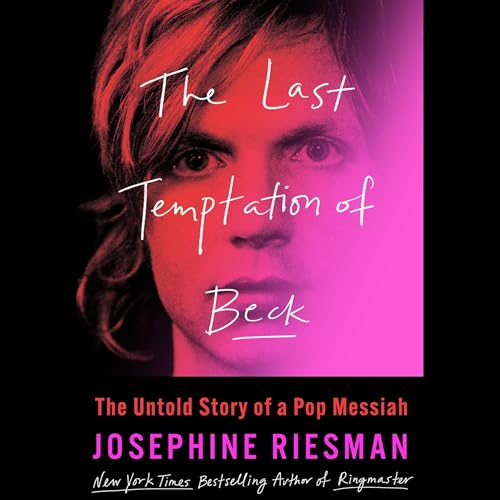
The Last Temptation of Beck
The Untold Story of a Pop Messiah
Impossible d'ajouter des articles
Désolé, nous ne sommes pas en mesure d'ajouter l'article car votre panier est déjà plein.
Veuillez réessayer plus tard
Veuillez réessayer plus tard
Échec de l’élimination de la liste d'envies.
Veuillez réessayer plus tard
Impossible de suivre le podcast
Impossible de ne plus suivre le podcast
Accès illimité à notre catalogue à volonté de plus de 10 000 livres audio et podcasts.
Recevez 1 crédit audio par mois à échanger contre le titre de votre choix - ce titre vous appartient.
Gratuit avec l'offre d'essai, ensuite 9,95 €/mois. Possibilité de résilier l'abonnement chaque mois.

The Last Temptation of Beck
Précommander pour 16,99 €
-
Lu par :
-
De :
-
Josephine Riesman
À propos de ce contenu audio
Once upon a time, there was a man who made himself into a myth.
He went by a single name: Beck. He sang songs that didn’t make easy sense in plain English, but which were somehow urgent and undeniable to those who heard them. He mined a dizzying array of musical styles from the past to construct albums that were eminently of the zeitgeist. Before and after the smash success of his 1993 single “Loser,” he was the hardest-working slacker in America. He went platinum multiple times over. And for a time, he was regarded by journalists and devoted fans alike as the “pop messiah”—a title that referred not just to the new energy he brought to the radio and MTV, but to the devotion he inspired.
But something happened to Beck Hansen, right at the dawn of this century. His music, once defiant and bombastic, turned morose and inward-facing. It was more than just a musical shift. Beck destroyed the online forum where his devoted fans had gathered. He cut ties with the small collective of LA-based bohemians he’d come up alongside, surrounding himself instead with sycophants and celebrities. Beck had been born and raised in the Church of Scientology; many in his orbit feared he’d been pulled back to the faith.
In the years since, Beck’s music has continued to win accolades, including multiple Grammys. But the true story of Beck in the nineties and beyond has never been told.
With sensitivity and an arrestingly original style, New York Times bestselling author Josephine Riesman offers a vivid and multifaceted look at a singular artist and the Generation Xers for whom he became a reluctant spokesman. Drawing from interviews with those who’ve been closest to Beck, as well as troves of never-before-published documents, Riesman offers a story about authenticity and irony, paranoia and belief. Situated at the last gasp of the millennium, it’s more than a simple biography—it’s a riveting drama about the blurry lines between fandom and worship; between myth and lies; and between the old world that is dying and the new one that still struggles to be born.
Aucun commentaire pour le moment


