

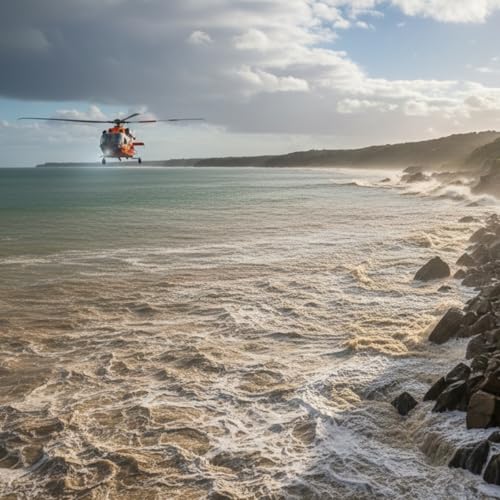
🌊 Victoria Flash Floods: Great Ocean Road Crisis and Recovery Management
Impossible d'ajouter des articles
Échec de l’élimination de la liste d'envies.
Impossible de suivre le podcast
Impossible de ne plus suivre le podcast

🌊 Victoria Flash Floods: Great Ocean Road Crisis and Recovery Management
-
Lu par :
-
De :
À propos de ce contenu audio
On January 15, 2026, a catastrophic flash flooding event struck the coastal communities along Victoria's Great Ocean Road, primarily affecting Wye River, Kennett River, Cumberland River, and Lorne. An exceptionally intense thunderstorm cell dumped more than 170 millimeters of rain in just a few hours. At Mount Cowley, recorded rainfall reached over 175 millimeters in six hours, setting a record for the site. This sudden deluge overwhelmed narrow valleys and saturated grounds, leading to what witnesses described as a tsunami of water carrying debris, logs, and wreckage toward the beachfront.
The impact on holidaymakers was particularly severe. At the BIG4 Wye River Holiday Park, the grounds, which are usually grass, were transformed into a raging river within minutes. Campers were forced to abandon their tents, vehicles, and personal belongings as floodwaters surged. Social media footage captured the power of the current as multiple cars and caravans were swept through bridge channels and pushed out into the ocean surf. One resident at Separation Creek described a wall of water taller than a person, filled with tree trunks, which demolished structures on their property in seconds.
Emergency response efforts involved the evacuation of hundreds of people. Approximately 500 individuals sought refuge at the Wye River pub, which served as a primary relief center. Staff from local caravan parks circulated among the campers to guide them to higher ground, while the Country Fire Authority and State Emergency Service assisted in relocating people to safety. Despite the extensive property damage, including the loss of cars and caravans and the flooding of the local general store, authorities reported no missing persons or significant injuries.
The region's infrastructure was crippled by the storm. The Great Ocean Road was closed in both directions between Skenes Creek and Fairhaven due to flooding, fallen trees, and the risk of landslips. Public transport services were detoured inland, skipping several coastal stops. In Lorne, the local supermarket and other businesses were forced to shut down after being inundated by water from the Erskine River.
A major point of concern for the community was the timing of official emergency warnings. Many residents and tourists reported that they received emergency notifications on their mobile phones up to 30 minutes after they had already been forced to evacuate. This lack of early warning was highlighted as a critical issue, especially given how quickly the water rose.
The disaster occurred in a community already reeling from recent natural perils. Just days prior, the region had been battling out-of-control bushfires that destroyed hundreds of structures across Victoria. The rapid transition from fire threat to extreme flooding underscored the increasing vulnerability of coastal areas to volatile weather patterns. Recovery efforts began shortly after the peak of the storm passed, with cleanup crews focusing on removing debris and assessing the stability of slopes along the iconic tourism corridor. The event serves as a stark reminder of the challenges posed by localized extreme weather events and the necessity for robust, real-time communication during crises.
Hosted on Acast. See acast.com/privacy for more information.

Vous êtes membre Amazon Prime ?
Bénéficiez automatiquement de 2 livres audio offerts.Bonne écoute !


