Couverture de mygmptraining

mygmptraining

mygmptraining

De : Shamik (Sam) Pandit
Écouter gratuitement

À propos de ce contenu audio

Regulations tell you what to do, but 40 years of experience tells you how to do it right the first time. Join us on mygmptraining as we pull back the curtain on FDA compliance and quality systems. Whether you’re a seasoned Quality Director or a newcomer to the lab, we provide the insights, pitfalls, and "war stories" necessary to build a culture of compliance that stands up to any audit.

#GxPTraining #PharmaCompliance #QualitySystems #Biologics #RegulatoryAffairs #FDACompliance #QualityAssurance #PharmaceuticalManufacturing #LifeSciences #GMP #GLP #GCP #PharmaExpert #QualityManagement #AuditReady #BiotechCompliance

All rights reserved. 2026
Economie Management Management et direction
Épisodes
  • High Purity Water System
    Apr 8 2026

    This episode of the Deep Dive podcast navigates the complex regulatory and engineering landscape of pharmaceutical water systems, using the FDA’s July 1993 Inspection Guide as a foundational roadmap.

    WFI (Water for Injection): Required for parenteral (injectable) drugs, WFI must be free of pyrogens, specifically endotoxins—the structural remnants of dead gram-negative bacteria that can cause severe immune responses like anaphylactic shock. It must undergo phase-change (distillation) or reverse osmosis to ensure the absence of endotoxins.

    Purified Water: High-purity water used for non-sterile applications like oral medications and topicals, requiring stringent microbial control but lower endotoxin thresholds than WFI.

    Process/Potable Water: The baseline for manufacturing, though vulnerable to environmental contaminants like agricultural runoff.

    Hot vs. Cold Systems: Hot systems (65–80°C) are self-sanitizing but expensive, while cold systems are prone to biofilms—microscopic "coral reefs" of bacteria protected by a slimy polymer matrix.

    Mechanical Vulnerabilities: The dangers of dead legs (unused piping), stagnant water in pump housings, and microscopic crevices in threaded fittings.

    Phase 1 & 2: Developing and testing Standard Operating Procedures (SOPs) through daily sampling for several weeks.

    Phase 3: A full year of routine testing to prove the system can handle seasonality, such as spring algae blooms or sudden infrastructure shocks like fire department hydrant use.

    The "Action Limit": Understanding that a spike in data mandates an immediate documented investigation into the root cause, rather than simply "testing into compliance".

    Pyrogens/Endotoxins: Structural components of dead gram-negative bacteria that can cause severe fevers or anaphylactic shock if they enter the bloodstream.

    LAL (Limulus Amebocyte Lysate) Test: A biological assay using horseshoe crab blood enzymes to detect and quantify trace amounts of endotoxins.

    Biofilm: A resilient, microscopic "coral reef" of bacteria that adheres to pipe walls and protects itself with a slimy polymer matrix, making it resistant to standard chemical flushes.

    Dead Leg: Any unused or stagnant portion of piping where water does not circulate, creating a primary breeding ground for microbial growth.

    Positive Pressure Differential: An engineering strategy where clean water is kept at a higher pressure than dirty cooling water to ensure that any leaks push clean water out rather than sucking contaminants in.

    SOP (Standard Operating Procedure): Detailed, mandatory instructions for tasks like valve sequencing or pipe flushing; a failure to follow these can inadvertently suck non-sterile air into a clean system.

    Action Limit: A specific microbial threshold (e.g., less than 10 CFU per 100ml for WFI) that, if exceeded, requires a documented investigation into the system's root failure.

    Phase 3 Validation: A full year of routine testing required to prove a system can maintain control across all four seasons and environmental shifts.

    Afficher plus Afficher moins
    22 min
  • 21 CFR 211 -Subpart B - Organization and Personnel
    Mar 1 2026

    This presentation outlines the regulatory requirements for pharmaceutical organization and personnel as defined by 21 CFR Part 211, Subpart B. It emphasizes the critical role of the Quality Control Unit, which possesses the authority to approve or reject all materials and procedures impacting product integrity. The materials specify that staff and consultants must be qualified through a blend of education and training while adhering to strict hygiene and gowning protocols to prevent contamination. Furthermore, the slides list common FDA citations, such as poor supervision and failure to maintain training records, to illustrate the consequences of non-compliance. Ultimately, the course serves as a guide for implementing cGMP fundamentals through practical application and rigorous management oversight.

    Afficher plus Afficher moins
    20 min
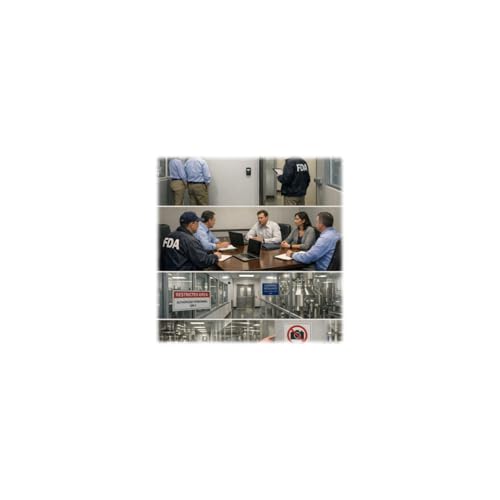
  • Obstructing FDA inspections
    Feb 10 2026

    This episode outlines official FDA guidance regarding the specific behaviors that constitute the obstruction of drug or device inspections. Under federal law, if a facility delays, denies, limits, or refuses an inspection, the products manufactured there are legally considered adulterated. Prohibited actions include failing to schedule pre-announced visits, withholding records, and restricting access to operational areas or photography. While the agency considers legitimate justifications for certain disruptions, such as safety protocols or language barriers, it maintains broad authority to ensure regulatory compliance.

    #FDA #RegulatoryCompliance #FDAInspection #Pharma #MedicalDevices #FDALaw #QualityAssurance #AuditReady #LifeSciences #Compliance

    Afficher plus Afficher moins
    15 min
adbl_web_anon_alc_button_suppression_c
Aucun commentaire pour le moment