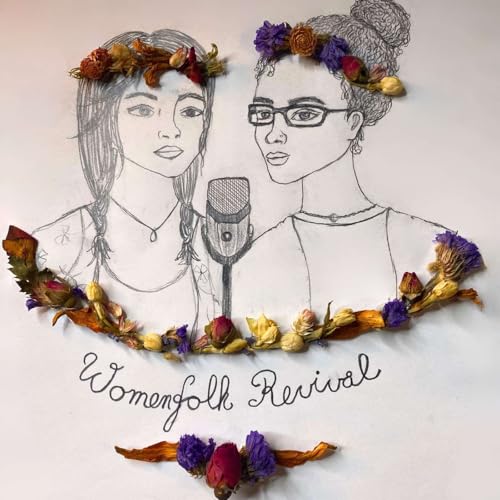
Couverture de Womenfolk Revival

Womenfolk Revival

Womenfolk Revival

De : Maggie and Meara
Écouter gratuitement

Offres de saison | 0,99 € par mois pendant les 3 premiers mois

5,99 €/mois par la suite. Des conditions s’appliquent. Annulation mensuelle possible.
Womenfolk Revival Deeply Rooted. Wildly Intentional. Womenfolk Revival is a podcast for women longing to step away from the noise of modern life and return to what matters most. Join lifelong friends Maggie and Meara for honest conversations about slow living, homemaking, motherhood, natural health, homesteading, traditional skills, ancestral wisdom, and creating peaceful homes rooted in intention. Whether you're baking bread from scratch, growing herbs, raising children, restoring your health, or simply longing for a slower, more meaningful life, you'll find practical encouragement and thoughtful conversations that remind you you were made for more than rushing through your days. Womenfolk Revival is a welcoming, non-denominational space that honors the Creator while embracing women from every background and season of life. New episodes every Wednesday.Copyright © 2026 Womenfolk Revival Sciences sociales
Épisodes
  • “You’re Too Young. You Don’t Even Have Land.” She Started Anyway. | Hailey Marcionette
    Sep 29 2026
    ’You're too young. You don’t even have land.”Hailey Marcionette heard the doubts and started anyway.In this episode of Womenfolk Revival, we sit down with Hailey of Biting Flower Farms for a raw, honest conversation about homesteading before you own the homestead, building a slower life in a fast-paced world, and preparing for the future long before everything is perfectly in place.Hailey started her business at 19 and has spent the years since learning, building, saving, and creating a life that reflects what matters most to her. She and her fiancé are working toward the dream of owning a future farm where they hope to grow flowers and herbs, keep bees, produce essential oils, preserve food, and build a more intentional, land-connected way of life.But one of the biggest parts of Hailey’s story is that she is not waiting for the farm to begin.She is learning the skills now.In this conversation, we talk about what it really means to start where you are, whether that means cooking from scratch, learning to preserve and can food, growing what you can in a small space, supporting local farmers, learning from older generations, finding mentors, or simply changing the way you think about what a homestead has to look like.Hailey also shares how being homeschooled shaped the way she learned, explored creativity, and thought differently about work and life. She reflects on growing up around rural life, watching neighbors raise animals, and how those early experiences helped form the dream she is building today.We also talk honestly about being underestimated.Hailey has heard people question why she is thinking about homesteading before she owns land. She has been told she should wait, that she may change her mind, and that she is too young to know what she wants.Instead of waiting for permission, she kept learning.That is one of the biggest themes of this episode: you do not have to have acreage, animals, or the perfect farmhouse to begin living more intentionally.Homesteading can begin in a townhouse.It can begin with a deck garden.It can begin with learning how to preserve food.It can begin with making dinner from scratch, meeting local farmers, growing herbs, learning an old skill, or deciding that you want your future family to live differently.Hailey also opens up about her hopes for future motherhood and the kind of childhood she wants to create one day, one that feels real, present, connected, family-centered, and close to the natural world.We talk about children being included in daily life, family meals, letting kids get dirty, learning by doing, spending time outside, and carrying forward the kinds of skills and traditions that were once simply part of everyday life.Her business, Biting Flower Farms, has become part of that larger vision.What began with candles and wax melts has grown into a clean home scent and skincare business with a deeper purpose behind it. Hailey shares how the business developed, why she became interested in cleaner products and herbs, and how Biting Flower Farms is now helping her move toward the long-term dream of land, farming, and a more self-sufficient life.We also talk about the financial reality of that dream.Buying land is expensive, especially where Hailey lives, and she and her fiancé are working toward a major savings goal to make their future farm possible. Instead of pretending that slow living is always simple or inexpensive, we talk about what it looks like to build toward a dream patiently, one step at a time.This episode is for anyone who has ever thought:“I want to homestead, but I don’t have land.”“I want a slower life, but I don’t know where to start.”“I want to learn traditional skills, but I didn’t grow up doing them.”“I want to live more intentionally, but my life doesn’t look like that yet.”“I’m too young.”“I’m too late.”“I don’t know enough.”“I’ll start someday.”Hailey’s story is a reminder that someday does not have to be the starting line.You can learn now.You can build now.You can begin where you are.Sometimes the life you want starts long before the land does.In this episode, we talk about:• Homesteading without owning land• Building a slow and intentional life• Starting a small business at a young age• Being underestimated and continuing anyway• Homeschooling and how it shaped Hailey’s outlook• Learning traditional and practical skills before owning a farm• Cooking from scratch• Food preservation and canning• Small-space and deck gardening• Supporting and learning from local farmers• Finding mentors and community in the homesteading world• Preparing for a future farm• Bees, flowers, herbs, and essential oils• Raising future children with more connection to family and nature• Building a business around a bigger life vision• Saving for land and working toward a long-term dream• Why you do not need to wait until everything is perfect to beginABOUT HAILEY ...
    Afficher plus Afficher moins
    46 min
  • Marriage Changes. So Do We. | What It Means to Keep Choosing Each Other
    Sep 23 2026
    Marriage does not stay the same after the wedding.People change. Bodies change. Families grow. Careers shift. Faith deepens. Stress builds. Children arrive. Hormones change. Financial pressure happens. Grief happens. Sometimes two people who deeply love one another can look across the room and barely recognize the version of the person standing in front of them.In this episode of Womenfolk Revival, Meara and Maggie sit down for an honest conversation about what marriage looks like beyond the wedding day and what it really means to continue choosing one another through different seasons of life.This is not a conversation about having a perfect marriage.It is about real marriage.The kind where there are seasons when you look at your husband and think, I would choose you all over again, and other seasons when you look at the same person and wonder, Who are you exactly?Because marriage changes as the people inside of it change.Meara and Maggie talk openly about their own marriages, including difficult seasons, communication problems, becoming emotionally disconnected, feeling more like roommates than husband and wife, navigating blended families, cultural differences, motherhood, stress, faith, work, changing identities, and learning how to understand a spouse who may not be the same person they were when the marriage began.One of the biggest questions in this conversation is:Can you keep learning your spouse as they change?And just as importantly:Can your spouse continue learning you?Meara shares how her marriage required learning how to live together after years of being physically separated by different countries, cultures, expectations, and circumstances. She talks about raising children together, surviving periods where marriage felt more like simply getting through the day, and learning how communication, listening, trust, boundaries, and emotional openness can slowly change a relationship.Maggie shares her own experience of looking back at difficult periods in marriage and realizing that sometimes the person standing in front of you is dealing with much more than what is happening in that single moment.Childhood experiences, trauma, military service, grief, family history, stress, parenthood, work, and personal struggles can all affect the way someone responds inside a marriage.That does not mean harmful behavior should be excused.But understanding the whole person can sometimes change the way a husband and wife approach a difficult conversation.We also talk about what happens when marriage becomes a roommate relationship.Children need you.Work needs you.The house needs you.Bills need to be paid.Somewhere between parenting, schedules, exhaustion, family responsibilities, and everyday life, two people can forget that they actually enjoy one another. Many couples eventually have to learn how to find each other again.Sometimes that looks like date nights.Sometimes it looks like sitting together on the couch after the children go to bed.Sometimes it is simply learning how to talk again without trying to win the conversation.Marriage also requires learning new versions of one another.Pregnancy changes women. Motherhood changes women. Hormonal changes change women.Perimenopause can affect mood, sleep, patience, energy, anxiety, intimacy, and emotional regulation.Men change too.Work stress, grief, responsibility, aging, fatherhood, faith, family expectations, health changes, and life experiences can reshape the person someone becomes over time.The person you married ten years ago may not exist in exactly the same way today.And neither do you.That does not automatically mean something has gone wrong.Sometimes it simply means the relationship has entered another season.One of the most important parts of this episode is understanding the difference between a hard season in marriage and an unsafe relationship. Those are not the same thing. A difficult marriage season may include frustration, exhaustion, communication problems, emotional distance, disagreements, or feeling disconnected from one another.But fear, intimidation, threats, manipulation, control, degradation, coercion, or abuse should not be dismissed as simply part of marriage.If you are trying to understand what is happening in your own relationship, some important questions may be:Are you safe?Are you respected?Can you communicate honestly?Can both of you admit when you are wrong?Are both of you willing to work on the relationship?Can boundaries be expressed and respected?Are you allowed to disagree without fearing what will happen afterward?A terrible week does not necessarily mean you have a terrible marriage.A difficult season does not automatically mean the relationship is over.And choosing your spouse does not always look romantic.Sometimes it means apologizing.Sometimes it means setting a boundary.Sometimes it means learning to listen differently.Sometimes it means giving your spouse space.Sometimes it means asking for help.Sometimes it ...
    Afficher plus Afficher moins
    33 min
  • Edit - When Your Parents Start Aging | How to Prepare Before a Caregiving Crisis with Nicole Hilgenkamp
    Sep 22 2026
    There was a time when growing old was simply part of family life.Grandparents lived nearby. Children grew up alongside their elders. Families noticed the small changes because they were close enough to see them. Caring for aging parents wasn’t something most people suddenly had to learn in the middle of a crisis it was woven into everyday life.Somewhere along the way, that changed.In this episode of Womenfolk Revival, we sit down with Nicole Hilgenkamp, founder of Your Parents Keeper, to talk about what happens when the people who once cared for us begin to need care themselves and why so many families feel completely unprepared when that moment comes.Nicole created Your Parents Keeper after caring for her own mother through dementia and realizing how much she wished she had known earlier. Her work helps adult children understand the stages of caregiving, prepare before emergencies happen, navigate care options, ask better questions, and make difficult decisions with more information and less guesswork. Your Parents Keeper offers education, practical guides, coaching, community support, and resources for families navigating aging parents.Together, we talk about:• Why so much caregiving knowledge used to be learned simply by living close to our elders• The early signs families often miss• How to talk with parents about aging without making them feel like they’re losing their independence• What adult children should know about their parents’ health, medications, wishes, and important documents• Why waiting until a fall, hospitalization, or diagnosis can leave families scrambling• Nicole’s seven stages of caregiving from the first worry through the final season and life after loss• The difference between home care, assisted living, memory care, and skilled nursing• How to begin preparing for end-of-life wishes while our parents are still able to tell us what they want• How to preserve dignity and connection even as roles begin to change• Why caregiving truly does take a villageOne of the biggest things we took away from this conversation is that preparing for our parents to age is part of caring for them.It means knowing their wishes, understanding their health, and having the hard conversations before a crisis forces them on us.And maybe rebuilding connection with our elders doesn’t have to mean returning to the way families once lived.Maybe it simply means being more present now knowing what matters to them, what they want, and how they hope to be cared for as life changes.That kind of preparation can make a difficult season less confusing for everyone.Learn More From NicoleYour Parents Keeperhttps://yourparentskeeper.com/Nicole’s resources include a free caregiver checklist, a seven-stage caregiving quiz, practical Caregiver Compass guides, community support, coaching, and education for families caring for aging parents.Your Parents Keeper on Facebookhttps://www.facebook.com/YourParentsKeeper/directory_contact_infoStart Here / Find Your Caregiving Stagehttps://yourparentskeeper.com/start-here.htmlFree Checklist + Supporthttps://yourparentskeeper.substack.com/Nicole works virtually with families across the United States through video and phone.Worldwide Caregiver Resource GuideNicole also reminded us how important it is to know what aging and caregiver resources exist where you live.Because Womenfolk Revival is growing into a community that reaches beyond one state and beyond the United States we created a Worldwide Caregiver Resource Guide with aging, eldercare, caregiver, and community resources families can use as a starting point.You can find the guide inside our Womenfolk Revival Facebook community.Join the Womenfolk Revival CommunityIf this conversation made you think about your own parents, grandparents, or someone you love, come continue the conversation with us.Our Facebook community is where we share more personal conversations, resources, questions, and things that don’t always fit into a podcast episode.Join Womenfolk Revival here:https://www.facebook.com/share/g/1fRiFeUwhy/And if someone in your life needs this conversation, share this episode with them too.Important Caregiving Resource NoteA few details discussed in this episode can vary depending on location, insurance plan, diagnosis, and individual circumstances.For Original Medicare, skilled nursing facility coverage generally requires a qualifying 3-day inpatient hospital stay. Time spent under observation status typically does not count toward that requirement, although some Medicare Advantage plans and certain programs may have different rules.Falls are also a serious health risk for older adults, but outcomes vary widely depending on the individual, the injury, and the circumstances.This episode and the resources shared here are for education and general information. They are not a substitute for medical, legal, financial, or insurance advice specific to your family.When making care decisions, ...
    Afficher plus Afficher moins
    47 min
adbl_web_anon_alc_button_suppression_t1
Aucun commentaire pour le moment