Épisodes

  • Breaking the Perfection Myth: Real Talk for Graduate Students
    Feb 16 2026
    Are you a graduate student feeling the constant pressure to be flawless? Have you found yourself chasing impossible standards, believing that only perfect grades or perfect work will help you succeed? If this sounds familiar, you're not alone—and the new episode of "Victors in Grad School" is here to reassure and empower you. In a powerful conversation between Dr. Juanita Tookes and Dr. Christopher Lewis, Dr. Tookes shares a presentation about the Perfection Myth and dives deep into the experiences that graduate students face around perfectionism. The discussion is honest, validating, and filled with practical advice and heartfelt encouragement. Dr. Juanita Tookes shares her personal experience as a "recovering perfectionist," normalizing the struggle and reminding listeners that striving for perfection is a common—but ultimately unrealistic—desire. She explains that perfection is a constantly shifting, subjective concept defined by societal standards, cultural expectations, and comparison (especially in the era of social media). The elusive chase for perfection can leave students feeling anxious, burnt out, and always "less than," which is neither healthy nor sustainable. The podcast also digs into the impact of perfectionism on the brain, highlighting how a constant drive for flawlessness keeps students in a heightened state of fear and anxiety. This mindset, as Dr. Juanita Tookes explains, can deprive you of celebrating your achievements, push you toward burnout, and even negatively impact your mental and physical well-being. Listeners will appreciate the practical discussion of perfectionist behaviors—like overworking, fearing mistakes, avoiding help, and linking self-worth to performance. Dr. Christopher Lewis and Dr. Juanita Tookes reinforce that these behaviors are understandable in high-pressure environments like graduate school, especially when finances and career prospects are at stake, but they urge listeners to challenge these patterns for their own health and happiness. As the episode wraps up, you'll find wisdom in reframing mistakes as essential for growth, embracing imperfection as courageous, and celebrating persistence over unattainable perfection. There are even valuable resources recommended, including Brene Brown's "The Gifts of Imperfection." If you want to feel seen, inspired, and equipped to tackle grad school without the chains of perfectionism, this episode is a must-listen. Tune in and start your journey toward a more balanced, fulfilling academic life! TRANSCRIPT Dr. Christopher Lewis [00:00:01]: Welcome to Victors in Grad School, where. Dr. Christopher Lewis [00:00:03]: We have conversations with students, alumni, and. Dr. Christopher Lewis [00:00:06]: Experts about what it takes to find success in graduate school. Hello, everyone. Dr. Christopher Lewis [00:00:13]: Welcome. Really excited that you're here today, and I really appreciate you spending some time with us as we continue our student development series and partnership with our CAPS office on campus. And every term, I love being able to identify new topics that we can talk with you on to help you in the journey that you're on. And tonight I'm really excited because Dr. Juanita Tookes is back with us. And this topic, the topic that we're talking about tonight, is a really important one because a lot of times when I talk to graduate students, I hear many times that there are concerns and there's this feeling that you have to be perfect, that you have to get that a. That you always have to be at your best. And sometimes you can't always be at your best. Dr. Christopher Lewis [00:00:59]: Sometimes you have to be willing to be okay where you're at. And, you know, the myth of being able to be perfect all the time is definitely that it's just a Myth. So today, Dr. Tooks is going to talk about the perfection myth and how as graduate students, you can reframe and rethink about things in a little bit different way. And so I'm really excited to have her here and to have her talk with us tonight. To Tactor Tooks, I'll turn it over to you. Dr. Juanita Tookes [00:01:27]: Hello, everyone. I am so happy to be here again. As Dr. Lewis mentioned, this is a very valued partnership between the CAPS office and graduate studies. I love working with grad students, and a big part of my heart for grad students is because I remember being a grad student. I remember how hard it was. I am also recovering perfectionist. I don't know how many years in that I met that I'm at, but I will be the first to say that I suffer very badly with perfection. Dr. Juanita Tookes [00:01:57]: And we're going to get into kind of what that looks like, how it can show up in your graduate student experience. But what I hope that you can get from this ultimately is feelings of validation. If you have gone through any of the things that we've talked about, I assure you you are not the only one. That's why I was the first to raise my hand. And I encourage you ...
    Afficher plus Afficher moins
    56 min
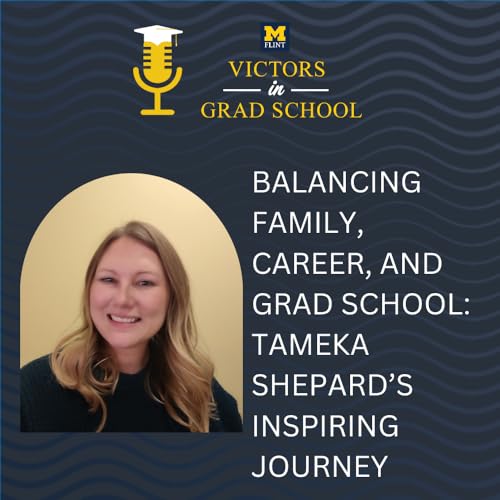
  • Balancing Family, Career, and Grad School: Tameka Shepard's Inspiring Journey
    Feb 9 2026
    Are you thinking about taking the leap into graduate school, or are you already on that journey and looking for reassurance and advice? In the latest episode of the "Victors in Grad School" podcast, host Dr. Christopher Lewis sits down with Tameka Shepard, Academic Advisor and Business Programs Recruiter at the University of Michigan-Flint, to explore her powerful story of balancing family, career, and her pursuit of an MBA. From the start, Tameka Shepard is candid about her motivations: a desire to give her children an example of lifelong learning, and a vision to one day open her own coffee shop. With a background in social work, she offers a unique perspective on how diverse educational experiences can complement each other—highlighting the value of understanding people in the business world. When it came to picking her MBA program, Tameka Shepard describes how flexibility was key. Western Governors University's online, self-paced structure made it possible for her to manage graduate school alongside raising kids, working full-time, and supporting a traveling spouse. Time management and setting boundaries were crucial tools for her success. Tameka Shepard shares how she carved out early mornings and late nights for study, and how open conversations with her family helped them support her goals—reminding listeners that prioritizing your education sometimes means missing out on other events, but the long-term benefits are worth it. The episode doesn't shy away from the challenges of grad school. Tameka Shepard bravely discusses facing imposter syndrome and struggling through a difficult class, ultimately persisting to show her children (and herself) the importance of not quitting. She highlights the freedom to take breaks to avoid burnout, and encourages others to listen to themselves—reminding us that there's no one "right" timeline for finishing a degree. Perhaps most valuable are Tameka Shepard's reflections on what she wishes she'd known: the importance of networking, communicating effectively, and not feeling guilty about progressing at your own pace. Her story is a compelling mix of practical advice, honest emotion, and hope for others who are considering or pursuing graduate education. Ready to be inspired by real-life experiences and actionable tips for success? Listen to the full episode with Tameka Shepard and let her journey motivate you to take the next step in yours. TRANSCRIPT Dr. Christopher Lewis [00:00:01]: Welcome to Victors in Grad School, where we have conversations with students, alumni and experts about what it takes to find success in graduate school. Welcome back to Victors in Grad School. I'm your host, Dr. Christopher Lewis, Director of Graduate programs at the University of Michigan, Flint. Really excited to have you back again this week. As always, every week we are on a journey together. And I call it a journey because it truly is a journey. Every person, every individual that is thinking about graduate school goes through a journey that is very unique to themselves, depending on the program, depending on who they are, where they are in their life. Dr. Christopher Lewis [00:00:40]: And no matter if you are just at the very beginning, just starting to think about graduate school, or if you have already applied or if maybe you've been accepted or you're in graduate school, doesn't matter, you're still on that journey. And we're on that journey together. That's why this podcast exists every week. I love being able to talk to you about ways in which you can find success in this graduate school journey that you're on. And I love introducing you to new people that have gone to graduate school before you that can give you some perspectives and some thoughts about what they had to do in that time in their own life. So today we have another great guest. Tameka shepherd is with us today, and Tameka is an academic advisor and business programs recruiter for the University of Michigan, Flint's School of Management. He's. Dr. Christopher Lewis [00:01:28]: And I am really excited to be able to have her here and to talk to her about her own journey in graduate school and to welcome her to the show. Thanks so much for being here, Tamika. Tameka Shepard [00:01:37]: Thank you for having me. Dr. Christopher Lewis [00:01:38]: It is my pleasure. I really appreciate that you are here today and I always love starting the show by taking you back in time. So I know that you did your undergraduate work at Spring Arbor University and then you graduated, you graduated, you went, you started work. And at some point between that time an undergraduate student and as you were going and working, you made a decision. You made a decision that you weren't done going to college, you wanted to continue your education and you decided to go back and get a graduate degree. Take me back to that point where you were starting that process for yourself. What made you decide that that was the right time in your...
    Afficher plus Afficher moins
    16 min
  • How Many Graduate Programs Should I Apply To? Expert Advice for Grad School
    Feb 2 2026
    Welcome to Victors in Grad School, where we have conversations with students, alumni, and experts about what it takes to find success in graduate school. Welcome back to Victors in Grad School. I'm your host, Dr. Christopher Lewis, Director of Graduate Programs at the University of Michigan, Flint. Really excited that you're back again this week. And today I don't have a guest. I am talking to you about some of the questions that I have gotten from over the time that we've been doing this podcast and over the years to try and help to answer some of your questions. And today, the question that we're going to be answering is, how many graduate programs should you apply to? If you've started researching graduate school, there's a moment that almost always happens. At first, it's exciting — you're exploring programs, imagining the possibilities, picturing yourself in a new career or stepping into a leadership role. You start bookmarking program pages, saving "how to apply" checklists, and telling yourself, Okay… I'm really doing this. And then… reality hits. You realize there are a lot of graduate programs out there. A LOT. You might find yourself asking: "Should I apply to just one program?""What if I only apply to two and don't get in?""What if I apply to ten and burn out halfway through?""What's the smart number?""What do people normally do?" If that's you — first, take a deep breath. You're not behind. You're not doing it wrong. And you're definitely not the only person trying to solve this puzzle. Today we're going to walk through this question together: How many graduate programs should you apply to? And I'll give you a clear recommendation — but even more importantly, I'll help you choose the right number for you. The honest answer: it depends… but not as much as you think I know "it depends" can be the most annoying answer ever, so let me say this upfront: Most prospective graduate students should apply to between 3 and 6 programs. That's not just a random number — it's the sweet spot where you: give yourself strong options,reduce risk of not getting in anywhere,and avoid overwhelming yourself with too many applications. But of course, there are reasons to apply to fewer… or more. So instead of giving you a number and sending you on your way, I want to help you decide: What's realistic for your time and energyWhat's appropriate for your fieldWhat's strategic for your goalsWhat gives you the best chance at admission and the best chance at success once you're in Because here's what I tell students all the time: Getting accepted matters… but choosing the right program matters more. Start with this: What kind of graduate applicant are you? Before we get into numbers, I want to ask you a question. When you picture applying to grad school, are you someone who: 1) Wants a clear, simple plan You want 2–3 strong options, you want to focus, and you want to avoid the stress of "too many choices." 2) Wants options and flexibility You want to be strategic, apply broadly, compare offers, and decide later. 3) Is feeling uncertain and trying to "make sure" You're not totally confident yet — and applying to more programs feels like a way to protect yourself. There's no wrong answer here. But knowing which one you are helps you choose your best number. A helpful framework: Dream, Fit, and Safe One of the best ways to build your graduate school list is to include three categories: Dream Programs These are highly competitive or highly selective. You would LOVE to get in — but you know it's not guaranteed. Fit Programs These are strong matches. Your academic background, experience, and goals align well. Safe Programs These are programs where you have a strong likelihood of admission. You'd still be happy attending — and they reduce anxiety. Now here's the magic: A strong grad application plan includes a mix of all three. That way you avoid the two biggest mistakes applicants make: applying only to the most competitive programsapplying randomly without a strategy So… how many programs should you apply to? Let's break it into realistic options. Option 1: Apply to 1–2 programs This is okay if… You are geographically limited (family, job, caregiver responsibilities)You are applying to a very specific program that only a few schools offerYou are already connected to a faculty member or advisorYou are 100% sure this is the right program for youYou have a backup plan if you don't get in This can work. But I'll be honest — the risk is higher. Because even strong applicants get denied sometimes for reasons that have nothing to do with them. Examples include: limited cohort sizefunding availabilityfaculty capacitytoo many qualified applicants So if you're applying to only one program, I encourage you to ask: "If I don't get in this cycle… what's my plan B?" If you have a good answer, applying to 1–2 programs can absolutely be a ...
    Afficher plus Afficher moins
    12 min
  • The Art of Grad School: Michael Sevick's Story of Education and Achievement
    Jan 26 2026
    Embarking on graduate school is more than a simple academic step—it's a deeply personal journey, one that evolves and reshapes your goals, expectations, and life direction. The latest episode of the "Victors in Grad School" podcast welcomes Michael Sevick, Professor Emeritus from the University of Michigan-Flint, to share his inspiring story of growth, perseverance, and transformation through higher education. From his beginnings at what is now Mott Community College to earning a Bachelor of Fine Arts at the University of Michigan, and ultimately achieving an MFA—the terminal degree in his field—Michael Sevick's trajectory is a testament to resilience and purposeful planning. He didn't take the straightest course: after his associate's degree, he paused his education to pursue music, returning later with renewed commitment to finish his bachelor's and then move into graduate study. A key theme in this episode is the importance of intentionality and adaptability. Michael Sevick discusses applying to several graduate schools, carefully weighing family, work, and personal responsibilities—all while keeping his professional and creative aspirations in focus. His approach underscores the value of aligning educational pursuits with life circumstances and long-term goals. The conversation with Dr. Christopher Lewis pulls back the curtain on the real challenges of graduate education: managing transitions, facing imposter syndrome, and adapting to higher expectations. Michael Sevick shares candid moments of doubt and anxiety—especially as he moved straight from being a student to teaching others. His experience highlights the necessity of support networks, mentorship, and self-advocacy in maintaining balance during demanding times. Listeners will also take away practical advice on time management, perseverance, and leveraging campus resources. Michael Sevick urges students to seek out help, use support systems, and remember that most people you meet in graduate programs genuinely want you to succeed. Whether you're considering graduate school, already on your way, or simply in need of motivation, this episode is packed with valuable lessons and heartfelt encouragement. Michael Sevick's journey reminds us that roadblocks can become stepping stones, and that with the right mindset and support, graduate school can be a profoundly rewarding adventure. Tune in and be inspired by a story of perseverance, community, and lifelong learning. Begin your own journey toward becoming a victor in grad school! TRANSCRIPT Dr. Christopher Lewis [00:00:01]: Welcome to Victors in Grad School, where we have conversations with students, alumni and experts about what it takes to find success in graduate school. Dr. Christopher Lewis [00:00:11]: Welcome back to Victors in Grad School. I'm your host, Dr. Christopher Lewis, Director of Graduate programs at the University of Michigan, Flint. Really excited to have you back again this week. You know, every week I love being able to talk to you about the journey that you are on. And I call it a journey because every student that's thinking about graduate school and goes on a journey, whether you're at the very beginning and you're just starting to think about this, you've maybe you've applied, maybe you've gotten accepted, maybe you're in graduate school. Throughout this entire process, you're going to be going through a personal journey toward the goals that you've set for yourself. That's why this show exists. Dr. Christopher Lewis [00:00:48]: This show is here to be able to help you to find ways that you can be successful in that graduate school journey. That's why every week I love being able to have different people with different experiences that can talk to you about the journey that they went on. And then you can learn a little bit for yourself and take what you hear, set it aside, doesn't matter, learn from them, and hopefully be able to find some tips, some tools, some tricks, some things that you can do to help you on the journey that you personally will have. Today we have another great guest. Mike Sevik is with us today. And Mike is a professor emeritus from the University of Michigan, Flint. He was an associate professor of art for many years at the University of Michigan, Flint. We're going to be talking to him about his journey from starting at a community college to moving to a bachelor's, to a master's and then to teaching. Dr. Christopher Lewis [00:01:45]: So really excited to be able to have him here and for us to learn from him and his own journey. Mike, thanks so much for being here today. Michael Sevick [00:01:52]: Thanks for having me. I hope this helps. Dr. Christopher Lewis [00:01:54]: Well, I really appreciate you being here. And I'm going to turn the clock back in time. I want to go all the way back. I want to go back to. Let's go back to the beginning in the sense of you started your undergraduate work at Mott Community College. It wasn't called Mott ...
    Afficher plus Afficher moins
    20 min
  • From First-Gen Student to Professor: Dr. Lisa Lapeyrouse's Grad School Journey
    Jan 19 2026
    If you're considering graduate school, feeling uncertain about your career direction, or wondering how to overcome obstacles along the way, the latest episode of Victors in Grad School is an inspiring must-listen. In this candid conversation, Dr. Christopher Lewis welcomes Dr. Lisa Lapeyrouse—faculty member at the University of Michigan-Flint and Director of the Inclusive History Project—to share her remarkable journey from first-generation college student to tenured professor. Themes of Resilience and Self-Discovery One of the strongest themes throughout the episode is the importance of self-discovery and adaptability. Dr. Lisa Lapeyrouse describes how she began her academic journey with aspirations to become an engineer, drawn by the promise of a lucrative career. However, after facing academic challenges and realizing her passion for humanities, she boldly changed her major to Women's Studies with a minor in Native American Studies. Her honest reflection on the embarrassment and fear of changing majors—and the eventual pride in pursuing a path she loved—serves as a powerful reminder that the undergraduate years are a time for self-discovery. As Dr. Lisa Lapeyrouse puts it, "undergrad is really about self-discovery and figuring out what you are passionate about and what you're good at." Finding Your 'Why' and Keeping Education a Priority The podcast explores the critical importance of understanding your motivation, or "why," when pursuing graduate education. Facing academic probation early on, Dr. Lisa Lapeyrouse shares how establishing her goals helped her prioritize her studies over distractions. She emphasizes the necessity of delayed gratification, citing how sacrifices made in the present can lead to future rewards. For anyone balancing work, school, and life, her advice resonates: "To do well and achieve at a high level, education can't be your side hustle. It needs to be your primary focus." Mentorship, Support, and Building Community A standout lesson is the value of seeking help and building a support network. Dr. Lisa Lapeyrouse encourages students to engage with faculty, campus resources, and mentors—even those who may not share similar backgrounds. She credits her success to mentors who pushed her with compassion and honesty, reminding listeners that real growth comes from accountability and empathy. Navigating Change and Overcoming Challenges From moving across states, adapting to new cultures, and overcoming imposter syndrome as a first-generation student, Dr. Lisa Lapeyrouse shares how each experience built the resilience necessary for graduate school and beyond. Her candid stories about culture shock, isolation, and finding her community in Michigan are both relatable and motivating for anyone facing similar transitions. Final Takeaway This episode of Victors in Grad School offers invaluable insights on overcoming setbacks, embracing change, and building meaningful connections. Dr. Lisa Lapeyrouse's journey is a testament to persistence and the lasting rewards of pursuing a path that aligns with both passion and purpose. If you're navigating your own educational journey, tune in for encouragement, practical advice, and inspiration to keep going—no matter where you start or what challenges you face. TRANSCRIPT Dr. Christopher Lewis [00:00:01]: Welcome to Victors in Grad School, where we have conversations with students, alumni, and experts about what it takes to find. Dr. Lisa Lapeyrouse [00:00:08]: Success in graduate school. Dr. Christopher Lewis [00:00:11]: Welcome back to Victors in Grad School. I'm your host, Dr. Christopher Lewis, Director of Graduate Programs at the University of Michigan, Flint. Really excited to have you back again this week. And as always, every week, I love being able to talk to you about the journey that you're on. And it is a journey. Each person that is thinking about graduate school will go through a different experience and will be on their own journey as that leads them to a specific program, a specific degree, and then beyond the program into the world of work and what you plan to do with that degree itself. And every week, I love being able to bring you different people with different experiences that can share some of the journeys that they've been on, whether they are currently in graduate school, graduated a while back, or whatever their journey was. Dr. Christopher Lewis [00:01:02]: But each person can share with you something a little bit different. So today I'm really excited to be able to introduce you to a new guest. Dr. Lisa Laperouse is with us today. And Dr. Laparouse is a faculty member at the University of Michigan, Flint, but she's also also the director of the Inclusive History Project at the University of Michigan, Flint. And she has her own graduate school journey that led her from being in California to Arizona to Michigan and being here at the University of Michigan, Flint. And I'm really excited for her to be able ...
    Afficher plus Afficher moins
    29 min
  • From Community College to PhD: Dr. George White's Inspiring Academic Journey
    Jan 12 2026
    Are you considering graduate school or seeking inspiration for your academic journey? This week's episode of the "Victors in Grad School" podcast is a must-listen. Hosted by Dr. Christopher Lewis, Director of Graduate Programs at the University of Michigan-Flint, the show features a rich conversation with Dr. George White, Professor of Strategic Management and Director of the Doctorate in Business Administration Program at UM-Flint. The episode opens with Dr. George White sharing his unique educational path, beginning as the first in his family to attend college. Coming from a rural, modest background, his story starts with working night shifts and attending a community college in Alabama. He highlights how determination and hard work paved his way to the University of Alabama and later, a life-changing exposure to Asian history and culture. A key theme of the podcast is the role of inspiration and mentorship. Dr. George White recalls the professors who encouraged his academic curiosity and opened doors to opportunities abroad, including studying in Taiwan and teaching English in Asia. This global perspective led him to pursue a law degree, and later, an LLM in International Commercial Law. Throughout the interview, listeners hear about the importance of having a clear plan and passion for your studies. Dr. George White emphasizes that success in graduate school isn't about being the smartest person in the room — it's about hard work, dedication, and being genuinely excited about what you're learning. He also opens up about his experiences consulting and teaching in China, which inspired him to further pursue an MBA and a PhD in International Business. The episode is filled with actionable advice for prospective graduate students: develop a five- or ten-year plan, engage with your professors, and choose a program that aligns with your interests and career goals. Time management and perseverance are repeatedly highlighted as essential ingredients for success. If you're seeking inspiration from someone who's charted a truly international, interdisciplinary career — leveraging degrees in history, law, and business — this episode is sure to motivate you. Tune in to "Victors in Grad School" and learn how passion, planning, and relentless hard work can help you thrive on the path to academic and professional achievement. Ready to be inspired? Listen now and prepare to embark on your own journey as a victor in grad school! TRANSCRIPT Dr. Christopher Lewis [00:00:01]: Welcome to the Victors in Grad School. Dr. Christopher Lewis [00:00:03]: Where we have conversations with students, alumni, and experts about what it takes to find success in graduate school. Dr. Christopher Lewis [00:00:11]: Welcome back to Victors in Grad School. I'm your host, Dr. Christopher Lewis, Director of Graduate Programs at the University of Michigan, Flint. Really excited to have you back again this week. As always, every week we have an opportunity. We have an opportunity to work together to help you define success in this journey that you're on. And it is a journey. Every person that is thinking about graduate school, that is in graduate school, has a unique journey that you will follow for yourself as you move forward and through that experience. Dr. Christopher Lewis [00:00:42]: And though it may be unique, there are commonalities that most every person goes through as they go through that graduate school journey that you can start planning for right now. And that's what this podcast is all about. It's all about helping you to find ways to be able to be successful in this journey and find tips, tactics, et cetera, things that can help you to find success sooner. That's why every week I love being able to have different people, new people on, to share their own experience. And today we have another great guest. Dr. George White is with us. And George is a professor at the University of Michigan, Flint. Dr. Christopher Lewis [00:01:24]: He's a professor of Strategic Management and the director of the Doctorate in Business Administration Program here at the University of Michigan, Flint. And he's at a unique path through his own education that has led him to where he is today. So we're going to be talking to him about his own journey. George, thanks so much for being here today. Dr. George White [00:01:40]: Hi, Chris. Thanks for having me. Dr. Christopher Lewis [00:01:41]: Well, I really am excited to have you here today, and I know that your journey has been one that is unique, and you have had many curves along the path. So I want to take you back in time. And I know you did your undergraduate work at the University of Alabama and you got a Bachelor of Arts degree in history. And at some point, either in your undergraduate work or after, when you started working and getting some experience, you made a decision to go back to graduate school and to get a law degree. And I'm really interested, first and foremost, for us to ...
    Afficher plus Afficher moins
    24 min
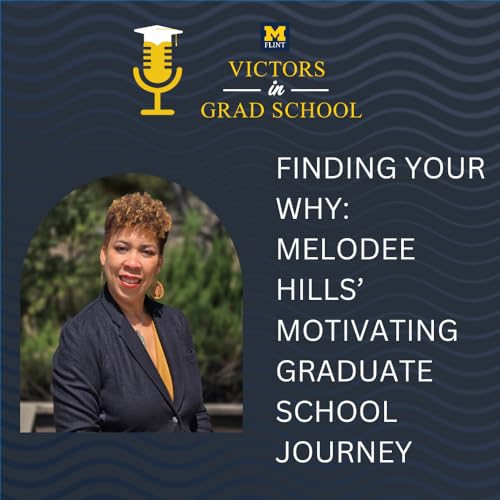
  • Finding Your Why: Melodee Hills' Motivating Graduate School Journey
    Jan 5 2026
    Are you thinking about graduate school, wondering how others have navigated the challenges and triumphs of advanced education? The latest episode of "Victors in Grad School" is a must-listen for anyone considering the journey. Host Dr. Christopher Lewis sits down with Melodee Hills, a driven lifelong learner who shares her honest, inspiring path from undergraduate degrees through an MBA and now towards a Doctorate of Business Administration (DBA) at the University of Michigan-Flint. From the outset, Melodee Hills opens up about what first inspired her to continue beyond her bachelor's degree. She shares how she found a passion for learning while balancing a full-time job and recognized the importance of momentum—"school isn't getting any cheaper, and I'm not getting any younger," she notes. Her story is a powerful reminder that sometimes the best time to push ahead is when you're already in motion. The conversation dives deep into the "why" behind going to graduate school—a recurring theme in the episode. Melodee Hills encourages listeners to identify their core reason for considering graduate studies, emphasizing that a clear sense of purpose will carry you through the tough times. "Once I focused on my why, all of that other stuff just flew out the window," she shares, recounting how filtering out "noise" from naysayers and self-doubt allowed her to stay committed, even when balancing demanding work periods and academic deadlines. Another key takeaway from the episode is the importance of adaptability and self-reflection. Melodee Hills offers practical strategies for managing the ever-shifting landscape of graduate school, highlighting the need for boundaries, constant adjustment, and supportive communication with loved ones and mentors. She also touches on battling imposter syndrome—a challenge many graduate students face—and how building relationships with both peers and professors helped her find her footing in a new academic environment. This episode isn't just about hardship; it's about growth and transformation. Melodee Hills shares how her approach to problem-solving has evolved—from impulsive reactions to thoughtful research and big-picture thinking. Whether you're contemplating graduate studies or are already on the path, the wisdom and encouragement you'll hear in this episode will help you clarify your goals, anticipate challenges, and find actionable advice for success. Don't miss the full conversation—listen to the latest "Victors in Grad School" episode and get inspired to find your own path forward! TRANSCRIPT Dr. Christopher Lewis [00:00:01]: Welcome to the Victors in Grad School. Dr. Christopher Lewis [00:00:03]: Where we have conversations with students, alumni. Dr. Christopher Lewis [00:00:06]: And experts about what it takes to find success in graduate school. Dr. Christopher Lewis [00:00:11]: Welcome back to Victors in Grad School. I'm your host, Dr. Christopher Lewis, Director of Graduate programs at the University of Michigan, Flint. Really excited to have you back again this week. You know, as always, every week, I love being able to talk to you about the journey that you're on. And it is a journey because every individual that is thinking about going to graduate school, maybe you're in graduate school, maybe you're already through partially and seen that light at the end of the tunnel. No matter where you are, you are on a journey. And at each point in that journey, there are things that you can do to be able to find success sooner. Dr. Christopher Lewis [00:00:45]: That's why this podcast exists. This podcast exists to help you to find some tips, some strategies, some. Some hints from people that have gone forth before you, that might be in graduate school now, that may have gone to graduate school in the past and can share some of what they learned along the way with you. That's why every week, I love being able to bring you different people with different experiences that can share those experiences with you. And today we've got another great guest. Melody Hills is with us. And Melody is a member of the. And Melody is a DBA student at the University of Michigan, Flint. Dr. Christopher Lewis [00:01:20]: And she has already gone through a graduate degree once. Now she's doing it again for a different degree. And we're going to talk about that journey that she went on from getting that bachelor's degree, going to a master's, now going for a doctorate degree and talking to you about some of the things that she's learned along the way. Melody, thanks so much for being here today. Melodee Hills [00:01:40]: I am happy to be here. Dr. Christopher Lewis [00:01:41]: It is my pleasure. Love being able to have you here and to talk about your journey and what I really want to do. First and foremost, that I want to take you back in time. So I know you did your bachelor's degree at Ashford University, and at some point, at some point during that time when you were at Ashford...
    Afficher plus Afficher moins
    18 min
  • Maximizing Grad School: Time, Money & Mindset with Abigail Weycker
    Dec 29 2025
    Graduate school is often described as a journey—one full of unique challenges, opportunities, and moments of growth. In the latest episode of the "Victors in Grad School" podcast, host Dr. Christopher Lewis sits down with Abigail Weycker, a double master's degree student at the University of Michigan-Flint, to unpack what it takes to thrive as a grad student. Unlocking Opportunities: Dual Degrees and Joint Programs One of the main themes Abigail discusses is the value of joint degree programs, such as the university's Four-Plus-One track. Many don't realize these programs exist until someone points them out, as was Abigail's experience. By strategically double-counting certain courses, she's able to fast-track her journey, save both time and money, and ultimately earn an MBA alongside an MS in Leadership and Organizational Dynamics (MSLOD). Dr. Lewis emphasizes the importance of investigating whether your institution offers such programs, as they can offer incredible opportunities for growth and advancement. Transition and Mindset: Embracing the Graduate Challenge Transitioning from undergraduate coursework to graduate-level expectations requires more than just academic skill—it's about shifting your mindset. Abigail shares how meticulous planning and using a color-coded planner has been crucial for her success, along with meeting consistently with academic advisors. Their guidance ensures she's on track, understands course sequencing, and discovers new opportunities—like adding her second master's—she might otherwise have missed. Making the leap from "just another day of school" to treating graduate work as an investment in her future, Abigail highlights how "taking it day by day, or even minute by minute" can help manage stress and keep you moving forward. Building Relationships and Community Another powerful theme from this episode is the importance of building relationships—both with faculty and fellow students. Abigail explains that being proactive about connecting with professors and staff transformed her experience. It not only made learning easier but also enriched her network, opening doors she never expected. Advice for Future Grad Students "Dip your toe in and try," Abigail encourages future grad students. Go at your own pace, build connections, and remember: your journey is unique. The support you cultivate, both academically and personally, can make all the difference. For anyone considering graduate school—or currently navigating it—this episode is packed with practical wisdom, honest reflections, and encouragement. Listen to the full conversation to get inspired and equipped for your own grad school journey. TRANSCRIPT Dr. Christopher Lewis [00:00:01]: Welcome to Victors in Grad School, where we have conversations with students, alumni, and experts about what it takes to find. Abigail Weycker [00:00:08]: Success in graduate school. Dr. Christopher Lewis [00:00:11]: Welcome back to Victors in Grad School. I'm your host, Dr. Christopher Lewis, Director of Graduate programs at the University of Michigan, Flint. Really excited to have you back again this week. As always, every week, I love being able to talk to you about this journey that. That you're on. And I call it a journey because it truly is a journey. You are looking at graduate school. Dr. Christopher Lewis [00:00:32]: Maybe you are. You've already applied to graduate school. Maybe you're already in graduate school. No matter where you are, there are things that you can do today, right now that will help you to be able to find success in that journey. And that's why this podcast exists. This podcast is here to help you to be able to learn from other people, other people that are currently going through the graduate school, that have gone through graduate school. Maybe they've been out of graduate school for some time, but they can still provide you with some of those building blocks, some of those things that they learned along the way that can help you as well. Today we got another great guest. Dr. Christopher Lewis [00:01:08]: Abigail Weycker is with us. And Abigail is a student at the University of Michigan, Flint. She is actually in two different master's degrees at the same time. Dr. Christopher Lewis [00:01:19]: And she started the first master's degree while she was an undergraduate student. So we're going to be talking to her about the journey that she has been on toward where she's going, and I'm really excited to be able to introduce her to you today. Abigail, thanks so much for being here. Abigail Weycker [00:01:33]: Yeah, no problem. Thanks for having me. Dr. Christopher Lewis [00:01:35]: It is my pleasure. And I guess one of the things that I want to do first and foremost is I want to go back in time. I know that you were a undergraduate student at the University of Michigan, Flint, and at some point in time, you had something in your head that said to you, I want to go further. I want to go beyond the ...
    Afficher plus Afficher moins
    23 min