Épisodes

  • Episode 397: When We Stop Seeing - The Loss of Our Humanity
    Feb 10 2026
    This episode is part 1 of a 3 part dialogue. We begin with a quiet but dangerous shift happening in our lives and in the world around us: the gradual loss of our ability to truly see one another as human beings. What begins as small, reasonable judgments can slowly turn people into categories, stories into assumptions, and neighbors into abstractions. Through everyday examples and honest reflection, this episode explores how easily fear, certainty, efficiency, and distance can shape the way we perceive others and ourselves. As you well know, this is a podcast centered around faith. So it should come as no surprise that what we're exploring is not a political or social problem, the conversation names it as a spiritual one. At the heart of Christian faith is the incarnation, God choosing to be known through human life. When we forget that truth, we risk losing sight of the image of God in one another. The episode invites listeners to consider what is shaping their vision, how spiritual disciplines help us remain attentive and grounded, and why seeing others as children of God does not require agreement but does require dignity, care, and love. The conversation also emphasizes that accountability and compassion are not opposites. Accountability does not require cruelty, and faithfulness never asks us to erase another person's humanity. As the episode concludes, listeners are invited into a simple yet demanding practice: to remember who they are as beloved children of God and to extend that same recognition to every person they encounter. This kind of seeing may not solve every problem, but it keeps us rooted in love and faithful to who we are created to be.
    Afficher plus Afficher moins
    35 min
  • Episode 398: God with Skin On - Jesus and the Restoration of Sight
    Feb 10 2026

    **Episode 398: God With Skin On – Jesus and the Restoration of Sight**

    In Episode 398, Tim and Sara continue the conversation from Episode 397 by returning to the center of our faith: the incarnation. Christianity does not begin with ideas about God. It begins with God choosing to become human. God puts "skin on" and comes close, not as an abstract concept, but as presence. Vulnerable. Woundable. Near.

    This episode explores how the incarnation restores our sight. If we want to learn how to see one another again, we look at how God chose to see us, not from a distance or above, but from within human life. Jesus meets people in real places, with real stories, and he does it with attention and humility. He asks questions, slows things down, and honors dignity in a world that keeps pushing for speed and efficiency.

    Tim and Sara reflect on the story of Bartimaeus (Mark 10), where Jesus stops, turns toward the one the crowd tries to silence, and asks, "What do you want me to do for you?" Before healing, Jesus restores dignity. The episode invites us to notice God's priorities: presence before outcomes, people before efficiency, relationship before order.

    As you listen, you'll be challenged to consider what it means to live the incarnation daily. To see each day as a mission trip. To resist reducing people to what they need, what they do, or how they are perceived. Faithful discipleship is not about having all the answers. It is about being present in the way Jesus is present, becoming the human touch of God's love wherever you live, work, and play.

    Afficher plus Afficher moins
    20 min
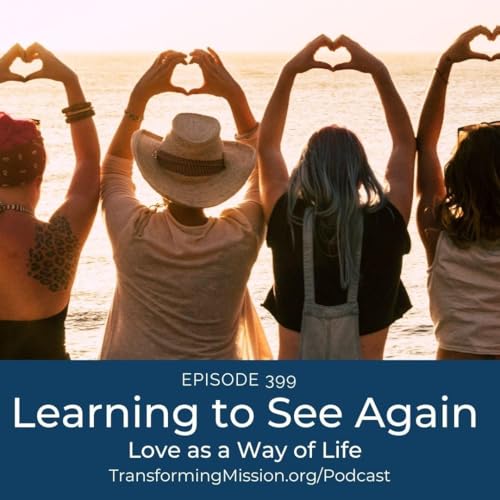
  • Episode 399: Learning to See Again - Love as a Way of Life
    Feb 10 2026
    Episode 399: Learning to See Again – Love as a Way of Life In the final episode of this three-part series, Tim and Sara turn toward a simple but demanding invitation: to learn how to see again and to live love as a way of life. Building on the previous conversations about losing our ability to see one another as human and returning to the heart of the faith in the incarnation, this episode asks what it looks like to practice seeing every day, especially when it is difficult, uncomfortable, or costly. This conversation names love not as a feeling, but as a discipline that shapes how we pay attention, the stories we tell ourselves about others, and the way we speak when people are not present. Drawing from scripture and lived experience, Tim and Sara reflect on how accountability, boundaries, and truth matter, while insisting that love must always protect dignity and never give way to cruelty. Learning to see again is framed as formation, becoming people who instinctively look for the image of God rather than evidence to justify fear or certainty. Through story, scripture, and honest reflection, the episode explores how love holds communities together across difference, how perfect love casts out fear by refusing to let fear be in charge, and why choosing love often means choosing curiosity, presence, and dignity when reduction would be easier. As the series comes to a close, listeners are invited to ask a daily question: what is the most loving thing I can do here? This kind of love is not flashy or sentimental. It is faithful, practiced one encounter at a time, and it is how the world begins to change.
    Afficher plus Afficher moins
    21 min
  • Podcast Update
    Feb 3 2026
    The next three episodes will come your way on February 10th. You'll have the opportunity to listen to a larger conversation in those three episodes we'll be back with episode 400 to start the Lenten journey with a podcast on February 24th. So today we have a setup for our next three episodes. So here's why we're dropping all three episodes at once. You might call it a little mini series. One of the quiet dangers of our time is not simply fear, but how easily fear is reshaping people's vision. What we're seeing in the world is that people become categories, lives become labels, humanity gets flattened into conclusions, and when that happens, something essential is lost. Not only about others, but about ourselves. Scripture though calls us back to a different way of seeing before we're defined by our work, our opinions, or our circumstances. We are named and claimed as children of God. This identity isn't earned. It's received. And when we trust that truth about ourselves, we're free to honor it in others. Jesus models for us a way of life that refuses to separate dignity from accountability. He holds people responsible without stripping them of their worth. He confronts harm without denying humanity. Love in the way of Jesus never requires cruelty. So the next three episodes are going to invite us to look again, to see ourselves with honesty and with grace to see the person at the crosswalk in the checkout line or across the table. Not as a problem to solve, but as someone deeply loved by God in a world eager to divide and reduce, choosing to see one another as children of God becomes a faithful act of resistance and of hope. Seeing every person, including ourselves as a child of God, changes how we speak, how we act, and how we faithfully follow Jesus. So over the course of three episodes, we're going to explore what happens when we stop seeing and our loss of humanity, who Jesus is, God with skin on, and how Jesus helps us to restore our sight. And then finally learning to see again, following love as a way of life. So you'll hear back from us next week with those three episodes. And then as Tim already mentioned, we'll see you again on February 24th, or you'll hear us again on February 24th. Bye for now.
    Afficher plus Afficher moins
    3 min
  • Episode 396: Discernment as a Way of Discipleship
    Jan 27 2026
    This week, explore what it means to live and lead with truth that can be trusted. In a culture shaped by reaction, urgency, and "truth-ish" sound bites, they reflect on discernment as a spiritual practice rooted in relationship with Jesus, not impulse or opinion. This conversation invites leaders and congregations to recover holy pause, reflect deeply, and live up to the name Christian by embodying truth with integrity, humility, and grace.
    Afficher plus Afficher moins
    29 min
  • Episode 395: A Holy Tension
    Jan 20 2026
    In this episode of Transforming Mission's podcast, Tim and Sara explore what it means to live faithfully in the tension between what is and what can be. In a polarized, fast-paced world that trains us to react, they reflect on Scripture, identity, and presence as essential practices for Christ-centered discipleship. Drawing from Hebrews 11 and Romans 8, this conversation invites listeners to consider how hope is formed not by escaping discomfort, but by remaining grounded in Jesus, cultivating trust, and practicing faithful presence with one another.
    Afficher plus Afficher moins
    33 min
  • Episode 394: Truth That Holds Us
    Jan 13 2026
    In a time when opinions are loud and certainty comes quickly, Episode 394 of the Transforming Mission Podcast offers a quieter and deeper invitation. This conversation explores what it means to trust truth not as information to defend, but as a relationship rooted in Jesus, who says, "I am the way, the truth, and the life." If you are longing for discernment, grace, and a more faithful way to engage difficult conversations, this episode creates space to slow down, listen, and reflect.
    Afficher plus Afficher moins
    22 min
  • Episode 393: The Teacher is Here
    Dec 23 2025
    As we close our Advent series, we turn to Joseph in Matthew 1:18–25, a quiet figure whose actions teach us about faithful leadership. Joseph does not speak, yet his choices reveal a deep, lived righteousness. When Joseph learns of Mary's pregnancy, he chooses mercy before he has answers. He plans to protect her from humiliation, showing us that righteousness is not rigid rule keeping, but compassion in action. Only later does the angel appear, speaking words leaders often need to hear, "Do not be afraid." Joseph's fear is not dismissed, but he is invited to trust that God is at work in ways he cannot yet see. Joseph is entrusted with two names for the child, Jesus, meaning "the Lord saves," and Emmanuel, "God with us." These names remind us that God's saving work happens through presence. God comes near, stepping into ordinary and complicated lives. When Joseph wakes, he acts. He takes Mary as his wife and names the child, publicly aligning his life with what God is doing, even at personal cost. Compassion moves from intention to action. For leaders today, Joseph reminds us that courage and compassion belong together. You cannot carry every burden, but you can ask who God is placing in front of you. Leadership can feel lonely, yet Emmanuel assures us that God is with us, right in the middle of uncertainty. As you lead this week, consider where fear may be holding you back and where God is inviting you to respond with compassion. The teacher is here, not from a distance, but present with you as you lead.
    Afficher plus Afficher moins
    16 min