Couverture de The Tyler Woodward Project

The Tyler Woodward Project

The Tyler Woodward Project

De : Tyler Woodward
Écouter gratuitement

À propos de ce contenu audio

The Tyler Woodward Project is a weekly show about the way technology, science, and culture actually collide in real life, told through the lens of an elder millennial who grew up alongside the internet and watched it get corporate. Each episode breaks down the systems, tools, and ideas shaping how we work, communicate, and live, without the buzzwords, posturing, or fake hype. Expect smart, grounded conversations, a bit of sarcasm, and clear explanations that make complex topics feel human and relevant.

© 2026 tylerwoodward.me

Science Sciences sociales
Les membres Amazon Prime bénéficient automatiquement de 2 livres audio offerts chez Audible.

Vous êtes membre Amazon Prime ?

Bénéficiez automatiquement de 2 livres audio offerts.
Bonne écoute !
    Épisodes
    • Why Smart TVs Track You And How To Stop It
      Feb 16 2026

      Your TV is not just a screen. It’s an ad tech computer with a giant display, hungry for your viewing data. We pull back the curtain on how smart TVs fingerprint what’s on screen with automatic content recognition, log app usage and button presses as telemetry, and stitch together identities with advertising IDs, emails, and payment details. From the moment a setup wizard pushes Wi‑Fi and account creation, the platform begins shaping your living room into a marketplace optimized for ads, promoted content, and ongoing monetization.

      We unpack the core mechanics in plain language. ACR can recognize what you watch even over HDMI, from cable boxes to game consoles, while microphones for voice search add risk when paired with unclear settings and always-on connectivity. We connect the dots to the business model: thin margins on panels, real money in platforms. That’s why opt-out toggles are buried, renamed, or reset after updates, and why meaningful consent often feels like a scavenger hunt. The Vizio settlement shows these concerns aren’t hypothetical, and we explain why Roku’s simplicity still comes with frustrating limits on true opt-out and persistent attempts to re-enable personalization.

      Then we get practical. The most reliable fix is structural, not menu-based: keep the TV offline. Treat the panel as a screen and move streaming to a separate, replaceable device where you control updates, permissions, and ad personalization. If you must connect the TV, isolate it on a guest network or VLAN, and use tools like Pi-hole or NextDNS to reduce tracking traffic, understanding that DNS blocks are partial and platforms adapt. The goal is leverage: unplug the smart part when it gets creepy, swap a small box instead of a big screen, and stop household profiling at the network boundary.

      If this resonated, subscribe for more hands-on privacy strategies, share the episode with a friend who just bought a “deal” of a TV, and leave a quick review to help others find the show.

      Send me a text message with your thoughts, questions, or feedback

      Support the show

      If you enjoyed the show, be sure to follow The Tyler Woodward Project and leave a rating and review on Apple Podcasts or your favorite podcast app—it really helps more people discover the show.

      Follow the show on Threads or Bluesky. Get in touch on the official Matrix Space for the podcast.

      All views and opinions expressed in this show are solely those of the creator and do not represent or reflect the views, policies, or positions of any employer, organization, or professional affiliation.

      Afficher plus Afficher moins
      14 min
    • Speed Or Storage: How To Choose The Right Drive
      Feb 9 2026

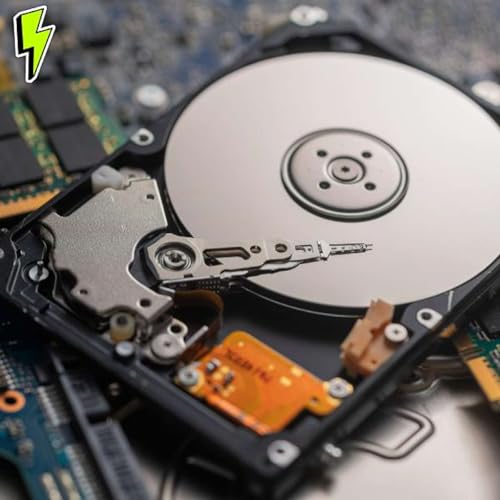
      Your laptop shouldn’t feel like it’s wading through syrup. We unpack the storage acronyms that confuse buyers, HDD, SSD, NVMe, and M.2, and show how each one affects real-world speed, from boot times to game loads to timeline scrubbing. As a broadcast engineer and daily Linux tinkerer, I translate the tech jargon into a simple framework you can use to make smart upgrades that actually feel fast.

      We start by separating the layers most people mix up: HDD versus SSD is the technology, mechanical versus solid state; SATA versus NVMe is the interface that sets the speed ceiling; M.2 is the physical shape, not a performance guarantee. With that clarified, we walk through common scenarios: the brand-new but slow laptop that secretly ships with an HDD, the gamer jumping from long loading screens to quick starts, and the creator who needs smooth playback and faster exports. You’ll hear where NVMe’s high-throughput design truly shines, and when a solid SATA SSD already delivers instant-feeling performance.

      If you’ve ever stared at a spec sheet wondering whether “M.2 SSD” means fast, you’ll learn how to spot the important words, NVMe or PCIe, and how to avoid paying premium prices for SATA-limited hardware. We also cover upgrade paths for desktops and laptops, moving drives into external enclosures for long-term value, and a practical rules-of-thumb cheat sheet so you can decide in minutes. The result is a clear plan: buy the upgrade that changes how your computer feels, not the one that only looks good on paper.

      Enjoy the breakdown? Follow along for more practical tech guides. Subscribe, share with a friend who’s shopping for a laptop, and leave a quick review to help others find the show.

      Send me a text message with your thoughts, questions, or feedback

      Support the show

      If you enjoyed the show, be sure to follow The Tyler Woodward Project and leave a rating and review on Apple Podcasts or your favorite podcast app—it really helps more people discover the show.

      Follow the show on Threads or Bluesky. Get in touch on the official Matrix Space for the podcast.

      All views and opinions expressed in this show are solely those of the creator and do not represent or reflect the views, policies, or positions of any employer, organization, or professional affiliation.

      Afficher plus Afficher moins
      13 min
    • Trust The Process, Verify The Output
      Feb 2 2026

      Forget the hype cycle and the hot takes, let’s make AI make sense. We break “AI” into three parts you can actually use: the broad umbrella of intelligent software, machine learning that learns from examples, and generative AI that creates text, images, audio, and code. Then we zoom into large language models like ChatGPT, Claude, Gemini, and Copilot, explaining how they predict tokens to produce fluent language and why that fluency isn’t the same as truth. The result is a practical mental model you can apply to your work today.

      We talk about the real differences between chat and search, and why treating a chatbot like a fact engine sets you up for mistakes. Instead, we focus on task fit and risk: drafting a cover letter, summarizing a dense PDF, clarifying a messy email thread, or comparing gear with the exact specs you provide. You’ll hear where these tools shine, lowering activation energy, turning chaos into structure, coaching like a tutor, and where they fail, from quiet hallucinations to polished but ungrounded answers. Along the way, we dig into verification habits, sources, and the subtle ways confident tone can mislead.

      To make this actionable, we share a five-point checklist: define role and quality, add constraints, use drafts over final authority, learn red flags, and protect sensitive data. We also call out privacy implications and when to get a qualified human involved, especially for legal, medical, or financial decisions. By shifting trust from tone to verifiability and choosing the right assistant for the job, you’ll get faster outcomes with fewer errors and a lot less frustration.

      If this helped you rethink how you use AI, subscribe, leave a review, and share the episode with a friend who still asks which chatbot is “smartest.” Your support helps more curious folks find the show.

      Send me a text message with your thoughts, questions, or feedback

      Support the show

      If you enjoyed the show, be sure to follow The Tyler Woodward Project and leave a rating and review on Apple Podcasts or your favorite podcast app—it really helps more people discover the show.

      Follow the show on Threads or Bluesky. Get in touch on the official Matrix Space for the podcast.

      All views and opinions expressed in this show are solely those of the creator and do not represent or reflect the views, policies, or positions of any employer, organization, or professional affiliation.

      Afficher plus Afficher moins
      14 min
    Aucun commentaire pour le moment