Épisodes

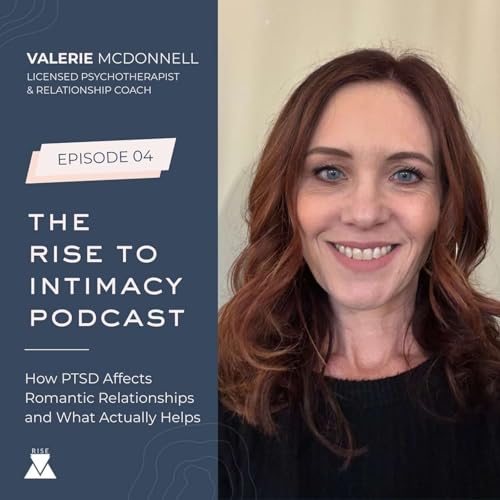
  • How PTSD Affects Romantic Relationships and What Actually Helps
    Feb 3 2026

    When difficult conversations with your partner feel overwhelming, when you need to resolve things right away or you need space to process, when a look or a tone shift sends your nervous system into overdrive, that's often PTSD showing up in your relationship. It doesn't mean you're broken or that you're the problem in the relationship.

    There's a learnable process for managing your symptoms so they don't manage you. You can find the moment between what triggers you and how you respond. You can stay connected to your partner even when your nervous system wants to fight, flee, or freeze.

    In this episode of The RISE to Intimacy, I'm walking through what happens in your body when you're triggered, why PTSD impacts romantic relationships the way it does, and the specific steps that help you notice and name emotions before they take over. I'm also sharing how my partner and I have learned to navigate this together. This is about taking ownership of your healing and learning practical regulation skills that actually work.

    1:45 – ​​How my PTSD symptoms show up in the context of romantic relationships

    4:16 – Why PTSD impacts romantic relationships (and a quick disclaimer before diving deeper)

    5:46 – Common PTSD triggers that cause the nervous system to go into survival mode

    7:40 – How learning to slow down internally can transform relationship conflict patterns

    9:49 – The difference between character flaws and nervous system survival responses

    13:09 – The moment between the stimulus and the response and how to find it

    14:35 – What it really means to “feel your feelings” without being consumed by them


    Mentioned In How PTSD Affects Romantic Relationships and What Actually Helps

    Rise to Intimacy Free 30-Minute Consult

    Leave a rating and review

    Afficher plus Afficher moins
    19 min
  • Fixing a Sexless Relationship Starts with Emotional Regulation
    Jan 27 2026

    When couples stop having sex, they usually assume it's about laziness, manipulation, or lack of attraction. But sexual disconnection is actually a signal that something deeper needs attention—usually safety, repair, and attunement. Your nervous system, emotional dysregulation, and unspoken resentment all play a part in creating sexless relationships.

    In this episode of The RISE to Intimacy, I walk through the critical difference between consent and coercion, avoidance and control, protection and rejection. I explain how unresolved emotional dysregulation keeps couples stuck in cycles of shutdown and escalation, and why communication alone isn't enough without the ability to stay present in your body.

    1:06 – ​​Why sexless relationships are about more than frequency

    3:43 – The subtle difference between withholding and self-protection

    6:53 – How safety (not desire) often determines sexual availability

    9:36 – The unseen role emotional dysregulation plays in disconnection

    12:18 – What must be restored before intimacy can return


    Mentioned In Fixing a Sexless Relationship Starts with Emotional Regulation

    Rise to Intimacy Free 30-Minute Consult

    Leave a rating and review

    Afficher plus Afficher moins
    19 min
  • What Actually Happens in Sex Therapy?
    Jan 27 2026

    When most people hear "sex therapy," they assume it's about technique or performance. It's not. Sex therapy is about understanding how your nervous system, past experiences, and attachment patterns show up in intimacy.

    For years, I only associated sex with pressure and duty. I sabotaged a relationship I cared about because my body was screaming no, and I had no idea how to restore safety after my own trauma. That experience is why I do this work, and why I never separate trauma from sexual healing.

    In this episode of The RISE to Intimacy, I walk you through what actually happens in a sex therapy session, who it's for, and why so many people struggle to stay present during physical intimacy. If you've ever felt disconnected from your body during sex, this episode will show you why healing starts with safety, not performance.

    1:26 – ​​What sex therapy actually looks like behind closed doors

    2:57 – Who sex therapy is for and the common issue of desire discrepancy

    4:08 – How my childhood trauma led to a career as a sex therapist

    5:22 – Why sex therapy and trauma therapy are connected

    6:25 – Example of how trauma can quietly reshape desire, safety, and connection

    7:41 – Reframe of sex as something that can heal, not harm


    Mentioned In What Actually Happens in Sex Therapy?

    Dr. Vicki Van Cleave, PSC

    Rise to Intimacy Free 30-Minute Consult

    Leave a rating and review

    Afficher plus Afficher moins
    10 min