Épisodes

  • How to Spot a Good or Bad Financial Adviser
    Feb 18 2026

    Pete and Roger reveal how to spot a good financial adviser from a bad one. Learn the red and green flags—from transparent fees to pressure tactics—and the key questions to ask before committing. Essential listening for anyone considering financial advice.

    Shownotes: https://meaningfulmoney.tv/session609

    Everything You Need To Know

    04:00 - life vs product

    05:18 - listens vs talks

    06:40 - behaviour vs numbers

    08:25 - clear vs vague

    09:38 - plain English vs jargon

    11:21 - transparent fees vs evasive costs

    13:12 - probabilities vs certainties

    14:48 - evidence based vs secret 'sauce'

    16:15 - calm vs urgent

    17:46 - facts first vs opinions first

    19:50 - "I don't know" vs blagging

    20:44 - written rationale vs 'trust me'

    21:41 - respects advisers vs criticises advisers

    23:40 - growth & protections vs chasing returns

    25:31 - professional vs sloppy

    Cheatsheet: https://meaningfulmoney.tv/adviser-checklist

    Everything You Need To Do

    29:18 - ignore unsolicited approaches

    31:58 - verify they're legit

    33:48 - get fees and scope in writing before committing

    36:36 - first meeting questions

    43:40 - pressure test

    Afficher plus Afficher moins
    49 min
  • QA39 Listener Questions, Episode 39
    Feb 11 2026
    Pete and Roger answer six listener questions covering Coast FIRE strategies with GIAs, US 401(k) tax implications in the UK, record keeping for IHT-exempt gifts, Australian pension taxation for UK residents, pension contributions to avoid the £100k tax trap, and managing a £2M portfolio as Power of Attorney. Shownotes: https://meaningfulmoney.tv/QA39 01:17 Question 1 Hi Pete and Roger, I'm 29 and working towards Coast FIRE within the next 2–3 years so I can begin a digital nomad lifestyle — working remotely while knowing my long-term retirement is taken care of. Right now, I've got: - £45k in a Stocks & Shares ISA - £25k in a workplace pension (via salary sacrifice) - A Lifetime ISA for a future house deposit (or later retirement) - A fully funded emergency fund I've already maxed out my ISA for this tax year and plan to continue doing that every year. But I have more money to invest now, and I know that to reach Coast FIRE on my timeline, I need to start using a General Investment Account (GIA). Here's where I'm stuck: I want to keep things simple and tax-efficient, but I feel a bit nervous about GIAs. I keep hearing about the "bed and ISA" strategy but don't really understand how it works in practice or how to implement it over time. Could you explain: - How best to use a GIA alongside an ISA when working towards FIRE? - How to manage capital gains and dividend tax efficiently? - And how the bed and ISA approach actually works — especially for someone trying to keep things simple? Thank you both so much — your podcast has been an incredible resource and a big part of why I've been able to take control of my finances. Warmly, Pauline 12:22 Question 2 Hello Pete & Roger I am very late convert to the podcast but have been ploughing through the Q&A for a few days now. I think I only have another 592 episodes to get through so should be up to date by the end of the week !! I am not sure whether this has been covered or not. I have a 401K plan that has been hibernating in the USA for 20 years. I have only recently started looking at it and now need to understand the tax implications. I have tried to read HMRC guidelines on tax treaties etc but get even more confused than before. My current belief is that the provider will pay this money out by means of US issued cheque (not a problem) but withhold 30% tax (a problem). How will HMRC treat this? The usual sources http://unbiased.co.uk for one run for the hills on finding information about this, is this an area you can provide guidance, but obviously not advice as I know you cannot through the podcast. Regards, Stephen 16:10 Question 3 Hi Pete & Roger, Like so many people I am really impressed, not just with your knowledge and great communication skills, but that you put out such life changing content. You're providing us with the means to help ourselves in this financial world as well as letting us know when to seek professional help. On to my question: we're (wife and I) retired (late-60s) and are lucky enough to have more than enough to comfortably live on, thanks to DB & state pensions, house price inflation etc. Not really through any financial planning but just having been born at the right time! So we do now have an IHT liability. We have a joint second death Whole Of Life policy (in trust) in place for potential IHT and have given help with house deposits for our children. We also are gifting to the kids out of our excess income and would like your thoughts on the type of record keeping needed for this. We have letters stating the intention to give the gifts, recording who to etc. We keep completed IHT403 forms which we update annually. We also have a monthly/annual spreadsheet of income/expenses which demonstrates our surplus and keep track of expenses with the MeMo transaction tracker (thanks for that). These are all in our 'WID' file (again thanks to you for that). What we're not sure about is any documentation that might be needed to evidence the figures. Income is straightforward with P60s, statements of interest/dividends. However, what is required for expenses? Can't really keep all supermarket receipts etc and even bank/credit card statements would be quite bulky over several years. Not sure if we're overthinking but don't want to leave a difficult task for our kids when we're gone. Thank you both again for all the good you are doing Simon 20:33 Question 4 Brian (in Australia) Thank you for all your podcasts and videos but I think I may have to sign up to the academy to fully get my head around all the UK rules. We are looking to move to the UK from Australia - we have no UK govt pension entitlements but are retired with personal Australian private superannuation account pensions. The pension income payments and withdrawals are all tax free in Australia but will the UK government apply a tax on these pension payments once we are UK residents? Thanks again for all your useful information. Regards, Brian 22:55...
    Afficher plus Afficher moins
    36 min
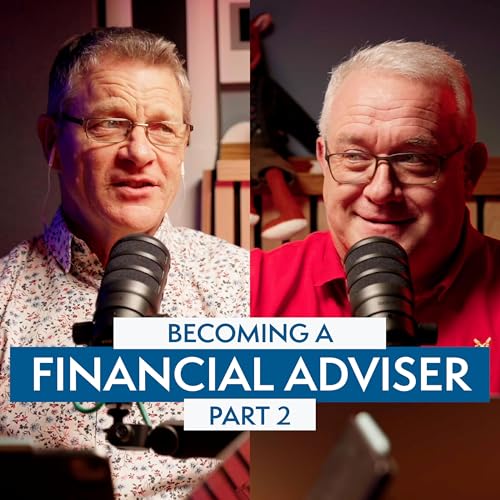
  • Becoming A Financial Adviser - Part Two: The SOFT Stuff
    Feb 4 2026

    This week we finish off our two-parter on how to become a financial adviser. In this session, we cover the 'softer' part of the job, the human side which is arguably MUCH more important than the hard numbers…


    Shownotes: https://meaningfulmoney.tv/session607

    02:18 - Why Financial Planning Is Not About Money

    05:30 - Planning vs Product

    14:38 - The Core Human Skills of Great Advisers

    25:50 - Behavioural Coaching (The Real Job)

    33:15 - Judgement, Responsibility, and Pressure

    38:31 - Ethics and Integrity in the Real World

    47:57 - Who Thrives on the SOFT Side

    50:05 - Bringing the Hard and Soft Together

    Afficher plus Afficher moins
    56 min
  • How To Become A Financial Adviser, Part 1
    Jan 28 2026

    This week, Roger and I discuss the answer to a frequently-asked question - how does one become a financial adviser? Clearly Roger and I make it look like a sexy profession, but as you can imagine, we have lots to say on the subject…


    Shownotes: https://meaningfulmoney.tv/session606


    01:47 - What People Think Financial Advisers Do (and Why That's Incomplete)

    07:25 - The Structure of a Modern Advice Firm

    17:29 - Career Progression

    22:31 - Qualifications and Regulation (The Reality, Not the Myth)

    29:14 - Routes Into the Profession

    37:20 - The Economics of Advice (High-Level)

    46:39 - Who the HARD Side Will Appeal To

    Afficher plus Afficher moins
    51 min
  • Listener Questions, Episode 38
    Jan 21 2026
    It's another Meaningful Money Q&A, taking in the £100k tax trap, splitting pensions on divorce, safely switching investment platforms and much more! Shownotes: https://meaningfulmoney.tv/QA38 01:59 Question 1 Hi Roger and Pete, Long time listener, first time questioner. My wife and I have both earned in excess of £100k for a few years now, meaning I am acquiring a peculiar set of skills on the various ways to use pension contributions, rollover allowances, gift aids, etc to keep us both below the (entirely bananas) £100k cliff-edge each year. My question is on the £60k pension annual allowance. Does it only apply to the amount of pension savings in a given year which can be made without paying a tax charge, or does it also count as the maximum amount of pension deduction which can be taken to calculate net adjusted income as part of completing our tax returns? The (slightly over-simplified) situation in my mind is that if I earned £160,500 in a given year, I would prefer to pay £61k into a pension, thereby reducing my net adjusted income to £99,500 to stay below the cliff-edge, even if I had to pay 40% tax on the extra £1000 above the pension annual allowance. As a fun aside, I asked this to my preferred AI - and I leave a link to see if you agree with it's answer or not - https://g.co/gemini/share/8c23e91cb658 Stephen 07:58 Question 2 Hello Pete & Roger Listen and enjoy all your podcasts regularly but every now and again you get one that addresses specific points to the individual listener. For me it was Podcast QA18. A really great podcast. 1. The 2015 changes to pensions made significant differences to pensions and most financial experts have rightly advised using your pension as one of the best places to put savings. It does seem unfair that you plan your savings and pensions well in advance for retirement based on government rules. and then you you find you are likely to have a sizeable IHT bill. At 78 it is difficult to turn the ship around quickly. Many more people will be affected by this over the next decade. The main reason however for my question relates to ways to reducing the effects of this IHT change. The general allowances and the 7 year rule are all clear. However the main exemption that could help is the little used Gifts form Excess Income. I have read up as much as I can and the whole system seems rather vague and many things open to interpretation, even by financial experts. There is no clear and precise set of rules whereby you can be certain something is capital or income. Your executor will have to understand all this and have all the back up documentation to convince HMRC that the gifts are justified. I do have excess income and spent significant time over the past weeks analysing all our expenditure and income sources ending up totally confused and with a severe migraine. Any advice on how best to handle this can of worms would be appreciated. 2) So many of us these days have children living in different countries with their families. All with different citizenship and residency situations in different countries. There seems to be very little information about IHT and general tax issues in relation to gifts and inheritance of money and pensions for children and grandchildren in this situation. Best regards, Peter 16:52 Question 3 Hello Roger and Pete, Thanks for a great series of podcasts. Some of them confirm what I already know and some give me insights, ideas and an understanding I didn't have. You provide a great service. My wife and I are 54 and 55. We are getting divorced. The divorce is amicable and we want to share everything evenly. I take home £5k/month and she takes home £2.3k. We will split this evenly as long as we both work. Our pension funds are not of equal value. I have DCs and SIPPs worth £800k and ISAs worth £100k. I also have a small DB pension that will pay out about £3k/year in today's money at age 67. My wife has a DC pension worth £210k and ISAs worth £220k. She has a DC pension that will pay about £2.5k/year in today's money at age 67. As you can see, the majority is in my name. This makes sense as I have worked whereas she has taken time off to raise our children. We have equal claim to the money in my mind. I think the ISAs are straight forward. We can balance the value by selling some of hers and investing more in my name. The DC pensions are more difficult. By right I should give her £295k to make them of equal value but how do we do this? We want to avoid expensive solicitors and accountants but are not sure if we can DIY this. Please share any advice you can give. Regards, Jay 25:43 Question 4 Hi Pete and Roger, Thanks so much for what you do with the podcast. It's completely changed my approach to my finances, especially over the last year which has felt even more important after the birth of my son. I have a question about investment platforms. I currently have about £70,000 invested in passive ...
    Afficher plus Afficher moins
    46 min
  • Understanding RISK
    Jan 14 2026

    This is an important episode. Here, Roger and Pete dive deep into one of the most important subjects for anyone looking to improve their finances to understand - RISK. It's misunderstood and it's misrepresented, but risk can be your friend if you treat it right.


    Shownotes: https://meaningfulmoney.tv/session604


    Get the PDF emailed to you - Risk Lens Guide: https://meaningfulmoney.tv/risklens

    02:18 Everything you need to KNOW

    04:17 - Market & investment risks (the ones everyone worries about)

    08:37 - Inflation & purchasing power risk (the silent wealth killer)

    13:35 - Behavioural risk (where most damage is actually done)

    18:31 - Planning risks – when the structure is wrong

    23:31 - Life risks that derail even the best plans

    26:06 - The risk nobody talks about: building the wrong life

    29:35 Everything you need to DO

    29:42 - Get clear what the money is for

    32:28 - Match risk to time, not emotion

    33:43 - Build shock absorbers before chasing returns

    35:56 - Diversify like you mean it

    38:03 - Design for behaviour, not brilliance

    40:27 - Protect the foundations

    42:32 - Review — don't react

    44:49 - Spend intentionally — now and later

    47:25 The Meaningful Money Risk Lens

    51:15 Summary

    52:42 This week's reviews

    Afficher plus Afficher moins
    54 min
  • Listener Questions, Episode 37
    Jan 7 2026
    Welcome to the first podcast of 2026 where Roger and Pete answer more of your varied and interesting questions, covering everything from what to do when you've maxed out your pension and ISA, to whether you should borrow on your mortgage to invest! Shownotes: https://meaningfulmoney.tv/QA37 01:30 Question 1 Hello to Roger and his trusty sidekick Pete, Only kidding Pete, but it will make Roger feel good briefly. I must credit the pair of you for your continued dedication and commitment to educating the wider population on all things financial. I have gone from strength to strength in planning my retirement with the guidance and abundance of free information you have provided, the books you have written Pete, as well as signing up to the Meaningful Academy Retirement Planning and now planning to retire several years earlier than originally intended. Using the information provided and learnt, I have got my finances in order but more importantly, that decision is to align my future life (and that of my wife) to the finances we need and when our needs are likely to be met, hence the realisation retirement is not as far away as we had originally perceived, so I really appreciate what you have done for me and my family. My question maybe very simple, but it was sparked during a previous Q&A session Listener Question – episode 20 - 30th July – Question 2 – The question surrounded company Shares. I am employed by BAE and I purchase company shares each month, partially as a sensible Tax saving being a higher rate tax payer (purchase them pre Tax) but also for the first £75 worth each month I buy each month, the company will match, so effectively £150 worth of shares which technically costs less than £50 in real money each month. Now whilst I do sell some shares along the way (after the 5-year maturity to avoid tax payment), I continue to have a reasonable amount invested (£35k subject to tax relief period on some). A statement you made during the above session was "as a sideline issue we tend to say to people that investing in shares for the company you work for is a bad idea at any scale, thus to avoid backing one horse and it's not a good idea to hold onto shares for a company you work for." Now I thought I was onto a winner and being tax efficient and building an amount of money which I tap into on an occasional basis as well as additional source of income once retired, but are you implying, as you did to that listener, I might consider cashing some in and transferring the money else where? Perhaps in this instance it is suffice leaving it there, as the examples you gave were for smaller companies (in comparison) that folded, whereas BAE one of the larger Defence industry companies, doesn't appear to be going anywhere soon? I do have a Royal Naval DB pension already paying out, as well as a part DB and part DC pension with BAE (continuing to build), so I'm not reliant upon the money, which is another factor why I've not considered moving them away or am I doing myself a bad deal, id value your opinions (not advice ha ha)? Thank you for your time Regards, John 08:02 Question 2 I'm 39, a basic rate taxpayer and I have a Lifetime ISA and a SIPP with HL. Can I save for retirement in my Lifetime ISA and invest in the same funds as my Pension after receiving the 25% bonus to achieve similar growth. Then at age 60, withdraw all that money tax free and pay it into my pension (up to my allowances and possibly using previous years) to gain the 20% tax relief just before I draw the pension? I would also save some money on platform fees as the LISA is 0.25% vs the SIPP at 0.45%. I know I can get cheaper platforms elsewhere but I find HL easy, intuitive, and feel like I can trust them with my money, which really encourages me to save in the first place. Thanks, Robert 13:40 Question 3 Hi Pete and Roger, Longtime fan and listener, thanks for all the great work you do! I'm 40 years old and a member of the LGPS DB pension scheme, which I've been paying into since my early 20s. My partner is also in a DB scheme (Central Government). We have no debt other than our mortgage. We currently live in a modest home we bought for £89k, but are thinking about upgrading to a bigger property for more space and comfort (no plans to have children). That said, we've enjoyed the low cost of living here. We've built up around £160k in savings, split roughly 40% in a Stocks & Shares ISA and 60% in Premium Bonds and cash. I've tried to keep the ISA intact as a form of flexibility/security around retirement, potentially to retire early or reduce hours in the future. The dilemma is: 1. Do we spend most of the savings on a better house and accept working longer? 2. Or do we stay where we are, keep our financial flexibility, and potentially one of us works less or retires earlier? 3. Or is there a sensible middle ground, spending some of the cash to improve our living situation while still preserving part of our ...
    Afficher plus Afficher moins
    45 min
  • Christmas Episode 2025
    Dec 24 2025

    Join Roger and Pete for a 2025 retrospective where we look into the kind of year it's been and a little bit ahead to 2026. MERRY CHRISTMAS!


    Shownotes: https://meaningfulmoney.tv/session602


    02:04 Meaningful Money - Podcast, YouTube, Academy
    12:05 Antidote to the noise.
    16:40 Bank of Dad
    22:39 Jacksons
    31:18 Personal Reflection
    45:18 Thanks To...


    Meaningful Money Podcast on YouTube: https://www.youtube.com/@MeaningfulMoneyPodcast

    Meaningful Money Youtube Channel: https://www.youtube.com/@meaningfulmoney

    Meaningful Academy: https://meaningfulacademy.com

    Jacksons: https://jacksons.life

    Afficher plus Afficher moins
    49 min