Couverture de The Kicker

The Kicker

The Kicker

De : Columbia Journalism Review
Écouter gratuitement

À propos de ce contenu audio

The Kicker is a podcast on the media and the world today. It comes out twice a month, hosted by Josh Hersh and produced by Amanda Darrach for the Columbia Journalism Review. It is available wherever you get your podcasts, including Apple Podcasts and Spotify.

© 2026 Columbia Journalism Review

Politique et gouvernement
Les membres Amazon Prime bénéficient automatiquement de 2 livres audio offerts chez Audible.

Vous êtes membre Amazon Prime ?

Bénéficiez automatiquement de 2 livres audio offerts.
Bonne écoute !
    Épisodes
    • A Veteran of the Pittsburgh Post-Gazette—and its Long Strike—Prepares for What’s Next
      Jan 29 2026

      At first, January 7 felt to Bob Batz Jr. like a triumphant day. The U.S. Supreme Court had declined to consider an appeal from Batz’s longtime employer, the Pittsburgh Post-Gazette, the latest in a long string of legal victories for the paper’s union. After more than three years on strike, Batz and twenty-four colleagues returned to work in late November. Now, the P-G was legally obligated to reinstate the workers’ previous health plan, plus reimburse costs accrued when management failed to bargain in good faith.

      A few hours after rejoicing over the Supreme Court news, though, elation turned to mourning. Citing 350 million dollars in losses over twenty years, the P-G’s owner, Block Communications, announced it would shut down the paper — one of the oldest in the country — effective May 3. The company took no questions from its employees.

      The three weeks since have brought a flurry of activity designed to save some version of the Post-Gazette. Batz and his colleagues have been meeting multiple times a week — sometimes with potential funders, sometimes alone — to figure out the best path forward. This morning, a group of them announced the launch of the Pittsburgh Alliance for People-Empowered Reporting (PAPER), which is raising money to research “worker-owned and non-profit models as well as the potential for a truly independent Post-Gazette.” Forty-nine of their coworkers who didn’t strike, meanwhile, are working to overthrow union leadership in hopes of negotiating with Block Communications. Seemingly everyone in Pittsburgh’s large philanthropic world seems to be chattering about the potential for a nonprofit model.

      For this week’s episode of The Kicker, I talked to Batz about the highs and lows of his thirty-plus years at the P-G and his three years on strike, from his job editing the strikers’ award-winning newspaper, to the friendships that ended as a result of the battle, to the efforts to build something new.


      SHOW NOTES

      Pittsburgh Alliance for People-Empowered Reporting (PAPER)


      Host: Megan Greenwell

      Producer: Amanda Darrach

      Afficher plus Afficher moins
      45 min
    • How the Gawker Trial Was the Gateway to Trump: Examining a political legacy, ten years on.
      Jan 22 2026

      In 2007, Valleywag, Gawker’s gossip column devoted to Silicon Valley, published a short piece about a then-little-known venture capitalist and tech founder, under the headline “Peter Thiel is totally gay, people.” Thiel’s sexuality wasn’t a secret, nor was the piece mocking. “Peter Thiel, the smartest VC in the world, is gay,” it read. “More power to him.” But it was the first time this information was made public, and Thiel didn’t welcome the attention. He vowed privately to get revenge on Valleywag, which he described as “the Silicon Valley equivalent of al Qaeda,” a “Manhattan-based terrorist organization” that was apparently terrifying tech bros into conformity. It took him almost a decade for his quest to succeed. In March 2016, a lawsuit against Gawker brought by Hulk Hogan over the publication of a leaked sex tape resulted in its bankruptcy. Hogan, like everyone else, only discovered the identity of his mysterious and dedicated benefactor after the trial.

      The Gawker trial was a turning point, both for Thiel personally and for perceptions about the tech industry. His friends would say that, without the Gawker trial, Thiel’s early endorsement of Donald Trump that same year was unthinkable. To others, Thiel’s readiness to simply shut down an online publication that he did not like revealed, perhaps more than any other event up to that point, the authoritarian tendencies of the tech industry and how hollow its commitments to “free information” were. The outlook for digital journalism was ominous.

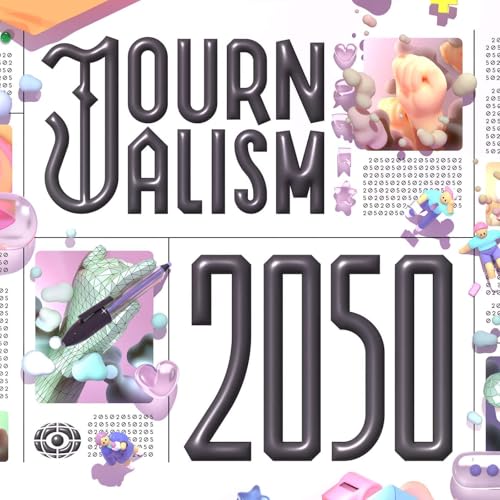
      What are the lessons from the Gawker trial, ten years later? What is its political legacy? And how can digital journalism build a safe future in the face of such severe threats? In this episode of Journalism 2050, Emily Bell is joined by three guests. Maria Bustillos is a journalist, editor, and self-described “information activist” who reported from the courtroom during the Gawker trial. Samuel Earle is the author of Tory Nation: The Dark Legacy of the World’s Most Successful Political Party and a PhD candidate at Columbia Journalism School. Marine Doux is the cofounder and editorial director of Médianes and a research fellow at the Tow Center for Digital Journalism at Columbia Journalism School.


      SHOW NOTES:

      Hulk Hogan is the Donald Trump of ‘sports entertainment,’” Maria Bustillos, Popula

      Conspiracy: Peter Thiel, Hulk Hogan, Gawker, and the Anatomy of Intrigue, Ryan Holiday

      Editorial Independence Means Technological Independence,” Owen Huchon, CJR

      Médianes Studio—A European Partner for Independent Media


      Producer: Amanda Darrach

      Production Coordinator: Hana Joy

      Research: Samuel Earle

      Art Director: Katie Kosma

      Illustrator:

      Afficher plus Afficher moins
      1 h et 20 min
    • Defector’s Jasper Wang and His Unvarnished Truth
      Jan 15 2026

      Annual reports are generally pretty boring documents, bogged down with numbers taken out of context and marketing-speak about “thriving in the face of unprecedented challenges.”

      Not Jasper Wang’s. At the end of 2025, the cofounder and vice president of revenue and operations at Defector—the pioneering worker-owned sports site that grew from the ashes of Deadspin—managed to reinvent the genre, writing a riveting six-thousand-something first-person words containing not only full transparency on the company’s revenue and costs, but also a meditation on the past, present, and future of worker-owned co-ops. “When Defector staffers speak to journalists interested in starting their own publications, with some frequency we sense that they are naively imagining worker ownership as a panacea to the ills of their previous workplaces, and treating meaningful subscription revenue as a foregone conclusion,” he wrote. “But the truth is that launching your own business is hard, and much harder today than it was five years ago.”

      As I started thinking about what The Kicker could sound like with me in the host chair, I knew immediately that I wanted to interview Jasper first. Narratives about exciting new business models like worker ownership often get flattened; rooting for them to thrive can sometimes mean talking less than honestly about the challenges as well as the triumphs. Despite Defector’s innumerable triumphs, Jasper never falls into that trap. Listen to his wisdom wherever you get your podcasts.

      SHOW NOTES
      Defector Annual Report, September 2024–August 2025


      Host: Megan Greenwell

      Producer: Amanda Darrach

      Afficher plus Afficher moins
      45 min
    Aucun commentaire pour le moment