Épisodes

  • Replacing Your Air Conditioner MAY Be Illegal!
    Apr 22 2026

    That’s right, in many California cities you MUST replace a broken air conditioner condenser with a dual-purpose heat pump.

    These Reach Codes — also known as AC2HP Requirements — are currently in effect in Los Gatos, Saratoga, Los Altos, Los Altos Hills, Palo Alto, Sunnyvale, Menlo Park, Mountain View and Alameda.

    Barry’s guest on this week’s Energy Show is nationally-known HVAC expert Nate Adams, “The House Whisperer.” Nate and Barry provide a no-BS breakdown of what’s changing, relative costs and savings, and how you can make the smartest decision when your AC is no longer cool.

    Episode Highlights:

    • Why cities are forcing AC 2 Heat Pump upgrades
    • The REAL upgrade costs: it’s complicated
    • Why heat pumps are now outselling traditional AC systems
    • How a heat pump will make your home more comfortable, efficient and safer
    • The best ways to find a contractor that knows new AC2HP requirements
    Afficher plus Afficher moins
    48 min
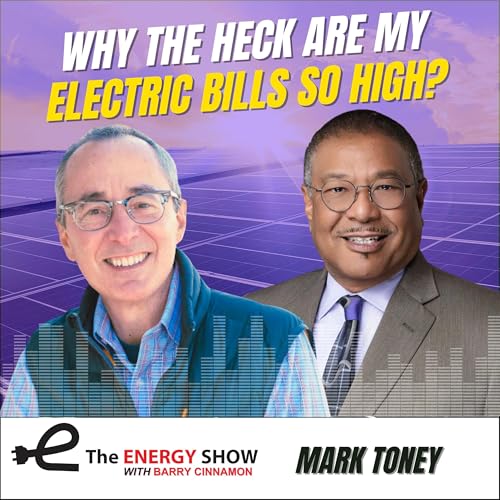
  • Why the Heck Are My Electric Bills So High?
    Apr 15 2026

    In this episode of The Energy Show, Barry Cinnamon talks with Mark Toney, Executive Director of The Utility Reform Network (TURN), about the growing energy affordability crisis in California and across the U.S.

    Despite increasing costs for homeowners and businesses, utility companies continue to raise rates—while reporting strong profits.

    So what’s really driving these high electricity bills?

    This episode covers:

    • Why utility rates keep increasing year after year

    • The hidden structure behind utility profits

    • How regulation (or lack of it) impacts your bill

    • Why some public utilities charge HALF the cost of others

    • The role of wildfire costs, infrastructure spending, and policy

    • How distributed energy (solar + batteries) can reduce costs

    • What legislation is being proposed to fix the system

    Like, Subscribe and Share!

    Host: Barry Cinnamon

    Director: Gary Mull

    Producer: Jessica Montes

    #energycrisis #electricityprices #utilityrates #cleanenergy #solarenergy #energystorage #renewableenergy #energyindependence #PGandE #TheEnergyShow #BarryCinnamon #CinnamonEnergySystems

    Afficher plus Afficher moins
    45 min
  • I’m Electrifying! How Do I Upgrade My Solar System?
    Apr 8 2026

    When you electrify your home – with a heat pump HVAC system, EV charger, induction cooktop or heat pump water heater – your demand for electricity will go up. Duh. Or as Tim Allen would say: “I need more power.”

    Incentives as part of the Inflation Reduction Act (IRA) help reduce the "upfront" costs of these electrification upgrades. But the only way to reduce the "operating" costs of these new electrical appliances is with more solar power on your roof.

    But upgrading an old solar system is not for the faint of heart. New solar inverters and panels are unlikely to be compatible with your existing system. Your utility may restrict the number of panels you can add. And sometimes your electrical service may require an upgrade to handle the higher power output from your upgraded solar system.

    Keep in mind these three recommendations. First, it is relatively easy to add a battery to an existing system. Second, seriously consider replacing the entire system if it is over 15 years old. And third, work with an experienced solar installer who’s familiar with older equipment.

    For the nitty gritty details about upgrading your existing solar system, please tune into this week’s Energy Show.

    Afficher plus Afficher moins
    26 min
  • My AC Broke - Is a Heat Pump Cool?
    Apr 1 2026

    Yes, definitely. Heat pumps are literally and figuratively cool. And without a doubt, the best time to consider installing a heat pump is when your AC (or furnace) dies.

    Heat pumps do double duty, providing both heating and cooling. They offer significant savings and improved comfort -- which I confirmed first hand after my old outdoor air conditioner compressor died. Replacing both my old AC and gas furnace with a heat pump was one of the best home improvements I’ve ever made. The system operates almost silently, has better temperature control throughout my house, and my heating and cooling bills are down significantly.

    New heat pump models use inverter-based variable speed compressors with efficiencies in excess of 350%. These high system efficiencies mean that your total heating and cooling costs will almost always be lower with a heat pump than an ordinary AC and gas furnace. And from a comfort standpoint, with mini-split models you can even heat/cool individual rooms in your house!

    Sure, a basic AC replacement might seem cheaper initially. But keep in mind, federal tax credits and state rebates (part of the Inflation Reduction Act) will bring down the cost of your heat pump installation by $2k-$10k. So in most cases it makes sense to price out a heat pump when your AC fails in the summer, or your furnace fails in the winter.

    Want to learn more? Tune in to the full podcast at EnergyShow.Biz and discover why heat pumps are the smart choice when your AC can longer stand the heat.

    Afficher plus Afficher moins
    15 min
  • Energy Uncertainty Is Unnecessary
    Mar 18 2026

    Since our worldwide economy depends on a steady supply of fossil fuels — oil, gasoline, natural gas, LNG, jet fuel — even the mere threat of disruption can cause a large and long-term increase in energy costs. Especially energy that is generated from burning hydrocarbon molecules, which have to be physically transported in pipelines and tankers. But not so much for energy that is generated from photons (I bet you know where I’m going with this).

    During the first two weeks in March, 2026, Iranian drones set ablaze four oil tankers with a combined total of about 750,000 barrels of petroleum products. That’s less than 1% of the world’s daily petroleum consumption. Nevertheless, the price of oil went up by 40%. Not because of a real supply shock, but because of the new uncertainty about future oil supplies and prices.

    No one really knows how long Iran will be able to threaten shipping and energy production throughout the Persian Gulf. Until there is peace in that region there will be uncertainty about fossil fuel energy prices. But there are ways to reduce this uncertainty and avoid energy price spikes.

    In this episode:

    • Why U.S. fuel prices rise in the U.S. even when we are the biggest oil producer in the world. Hint: the solar and battery tax credits (still available) were a quid pro quo for fossil fuel exports.

    • How global oil and natural gas markets determine prices — not political jawboning.

    • How rising natural gas prices affect electricity and food costs.

    • Why solar, batteries, and electric vehicles reduce exposure to fossil fuel volatility.

    To cap it all off, we’ll explain what you can do to isolate your home and business from skyrocketing energy costs.

    Afficher plus Afficher moins
    20 min
  • What's up with residential solar?
    Mar 4 2026

    In this week’s episode of The Energy Show, Barry Cinnamon talks with Sean Gallagher (Senior VP of Policy, SEIA) about the new market reality after recent federal changes. As well as the financing tools, state policies, and grid programs that can help homeowners and installers move forward.

    In this episode:

    • How installers are adapting to the end of the residential tax credit with leases, PPAs, and newer financing structures

    • What to ask a financing provider before you sign (risk, Fair Market Value, payment timing, working capital, Approved Vendors List)

    • Why state-level policies are now the biggest lever: permitting automation, interconnection streamlining, and VPP/DPP programs

    • The real promise of plug-in / balcony solar — and the UL standards challenge

    • Data centers + electrification: why local solar + storage is the fastest and cheapest way to meet data center power demands

    Like, Comment & Subscribe Today!

    Like, Comment & Subscribe Today!

    Afficher plus Afficher moins
    48 min
  • 10 Solar Mistakes Homeowners Make
    Feb 25 2026

    After more than four decades in the solar industry, Barry Cinnamon breaks down the most common mistakes made by solar installers and homeowners and how to avoid them to ensure long-term performance, savings, and peace of mind.

    In this episode of The Energy Show, you’ll learn:

    • The installation mistakes that can cause leaks or system failures

    • Why some systems are oversized or undersized

    • How shading, roof orientation, and design affect performance

    • The truth about solar loans, leases, and payment escalators

    • How to compare quotes using price per watt

    • What to look for in a reliable solar installer

    • How to avoid high-pressure sales tactics

    If you want solar that delivers maximum savings and reliability for 25+ years, this episode is essential.

    Like, Comment & Subscribe Today!

    Afficher plus Afficher moins
    24 min
  • Will a Trillion Trees Stop Global Warming?
    Feb 18 2026

    In this episode of The Energy Show, Barry Cinnamon breaks down the science, economics, and practicality behind the proposed Trillion Trees Act — and asks the big question: Will it actually make a meaningful difference?

    Trees absolutely help remove carbon from the atmosphere through natural carbon sequestration. But when you look at the numbers — global CO₂ emissions, land requirements, cost, and timing — the reality becomes clear: planting trees alone won’t solve the climate crisis.

    • How trees absorb and store carbon (carbon sequestration explained)

    • How much CO₂ a trillion trees would actually remove

    • How much land and money the plan would require

    • Why the timeline (decades) matters for climate action

    • The unintended risks, including increased logging and land-use conflicts

    • The solutions that make the biggest impact right now

    The bottom line: Trees are valuable — but the fastest, most effective climate solution is reducing fossil fuel use and accelerating clean energy.

    Like, Comment & Subscribe Today!

    Afficher plus Afficher moins
    20 min