Épisodes

  • Ep. 116 - New World Screwworm in Texas, The Future of Veterinary Care, and Rural Vet Shortages
    Jun 18 2026

    What happens when a livestock threat once thought eradicated begins moving north toward Texas?

    On this episode of Texas Talks, host Brad Swail sits down with Dr. Lori Teller, licensed veterinarian and Executive Director of the Texas Veterinary Medical Association (TVMA), to discuss the growing concern surrounding New World screwworm, the state of veterinary medicine in Texas, rural veterinarian shortages, telemedicine, and the future of animal health.

    Dr. Teller explains how New World screwworm infestations threaten livestock, wildlife, pets, and even humans, and why state and federal agencies are working urgently to prevent its spread throughout Texas and the United States.

    The conversation covers:

    • What New World screwworm is and how it spreads
    • Why the threat has returned after decades of containment
    • Sterile fly programs and eradication efforts
    • The potential impact on Texas agriculture and food production
    • How pet owners should respond to suspicious wounds
    • State and federal coordination to contain outbreaks
    • Rural veterinarian shortages across Texas
    • Student debt and workforce challenges in veterinary medicine
    • The Rural Veterinarian Incentive Program
    • Veterinary telemedicine and its limitations
    • Artificial intelligence in veterinary practice
    • Priorities for the upcoming Texas legislative session

    Dr. Teller also discusses how veterinary medicine extends far beyond dogs and cats, encompassing livestock, wildlife, public health, food safety, and emergency response efforts that are critical to Texas' economy and agricultural sector.

    The discussion explores the challenges of attracting veterinarians to rural communities, where shortages can impact ranchers, farmers, and animal owners across large geographic regions.

    The episode concludes with a look at how technology, telemedicine, and artificial intelligence are beginning to transform veterinary care while reinforcing the importance of maintaining strong veterinary networks throughout Texas.

    00:00 — Intro + Meet Dr. Lori Teller
    01:44 — Veterinary specialties and career paths
    03:44 — What is New World screwworm?
    06:50 — Why screw worm has returned
    09:52 — Sterile fly facilities and containment efforts
    11:30 — Worst-case scenarios for Texas agriculture
    14:00 — State and federal response efforts
    16:13 — Current screwworm cases in Texas
    17:52 — What pet owners should do
    20:15 — Rural veterinarian shortages
    24:18 — The Rural Veterinarian Incentive Program
    29:16 — Veterinary telemedicine explained
    37:58 — Artificial intelligence in veterinary medicine
    41:11 — Priorities for the next legislative session
    41:48 — Closing thoughts

    Watch Full-Length Interviews: https://www.youtube.com/@TexasTalks

    Follow us on social media

    X: @Texas_Dispatch

    Instagram: thetexasdispatch

    LinkedIn: The Texas Dispatch

    TikTok: texas_talks_podcast

    Find more at The Texas Dispatch

    Your source for state news, policy, and investigative journalism.

    https://thetexasdispatch.com

    Afficher plus Afficher moins
    43 min
  • Rural Attorney Shortages, Elder Fraud, and a Texas Statewide Prosecutor w/Rep. Mitch Little
    Jun 11 2026

    How should Texas address rising property taxes, growing concerns about public safety, and the challenges facing the state's criminal justice system?

    On this episode of Texas Talks, host Brad Swail sits down with State Representative Mitch Little, who represents Texas House District 65 in southern Denton County, for a wide-ranging discussion on criminal justice policy, government regulation, property tax reform, and the priorities shaping the next legislative session.

    Little, an attorney and member of the Texas House Committee on Criminal Jurisprudence, shares insights from recent interim hearings and discusses how lawmakers are evaluating issues ranging from rural attorney shortages and elder fraud to prosecutorial accountability and public safety.

    The conversation covers:

    • Rural attorney shortages and the concept of “legal deserts”
    • Law school debt, workforce incentives, and market-based solutions
    • Elder fraud and cryptocurrency kiosk scams targeting seniors
    • Regulatory challenges surrounding cryptocurrency transactions
    • Public safety and criminal justice reform priorities
    • Rogue district attorneys and prosecutorial accountability
    • Governor Abbott’s proposal for a statewide prosecutor
    • Judicial discretion, bail policy, and repeat offenders
    • Property tax reform and school finance
    • Government spending and affordability concerns
    • Priorities for the 90th Texas Legislature

    Little also explains why he believes many public policy debates should focus on underlying market realities rather than government subsidies, particularly when addressing workforce shortages in rural communities.

    The discussion explores broader concerns about law enforcement, prosecutorial discretion, judicial accountability, and the balance between local control and state oversight in Texas’ criminal justice system.

    Looking ahead, Little identifies property tax relief as one of the most significant issues facing Texas families and outlines his perspective on how lawmakers can reduce the burden on homeowners while maintaining essential public services.

    00:00 — Intro + Meet Rep. Mitch Little
    01:50 — Representing Texas House District 65
    03:00 — What interim hearings accomplish
    06:00 — Rural attorney shortages and legal deserts
    08:39 — Law school debt and workforce incentives
    12:15 — Are rural legal shortages really a crisis?
    14:01 — Comparing attorney and physician shortages
    19:20 — Market solutions versus government subsidies
    20:24 — Elder fraud and cryptocurrency scams
    23:07 — Why crypto kiosks are being scrutinized
    25:33 — Should Texas regulate or ban crypto kiosks?
    29:13 — Rogue district attorneys and lawlessness concerns
    32:42 — Governor Abbott’s statewide prosecutor proposal
    34:02 — Elections, appointments, and accountability
    37:42 — Property taxes and legislative priorities
    39:26 — How Texas could fund property tax relief
    41:00 — Final thoughts and where to follow Mitch Little

    Watch Full-Length Interviews: https://www.youtube.com/@TexasTalks

    Follow us on social media

    X: @Texas_Dispatch

    Instagram: thetexasdispatch

    LinkedIn: The Texas Dispatch

    TikTok: texas_talks_podcast

    Find more at The Texas Dispatch

    Your source for state news, policy, and investigative journalism.

    https://thetexasdispatch.com

    Afficher plus Afficher moins
    41 min
  • Uvalde, School Safety & Texas Law Enforcement w/Rep. Don McLaughlin
    Jun 4 2026

    What lessons did Texas learn from the tragedy in Uvalde—and how are lawmakers working to prevent a similar failure from happening again?

    On this episode of Texas Talks, host Brad Swail sits down with State Representative Don McLaughlin, who represents Texas House District 80 and previously served as mayor of Uvalde during one of the most difficult periods in the city’s history.

    McLaughlin discusses House Bill 33, the Uvalde Strong Act, which was passed unanimously during his first legislative session and is designed to improve coordination, training, leadership, and preparedness among law enforcement agencies responding to active shooter situations.

    The conversation covers:

    • The lessons learned from the Robb Elementary School tragedy
    • House Bill 33 and active shooter preparedness reforms
    • Law enforcement recruitment and retention challenges
    • Mental health support for first responders
    • Rogue district attorneys and accountability proposals
    • Border security and immigration enforcement concerns
    • The New World screwworm threat and Texas agriculture
    • Property taxes, water policy, and education reform priorities
    • Key issues facing the 90th Texas Legislature

    The discussion also explores broader challenges facing Texas law enforcement, including officer shortages, training standards, public support for policing, and ways to improve recruitment while maintaining professional standards.

    Looking ahead, McLaughlin shares his perspective on the major issues likely to dominate the next legislative session, including property tax relief, water infrastructure, border security, and public education.

    Throughout the episode, he emphasizes the importance of practical solutions, local experience, and ensuring Texas communities have the resources needed to remain safe and prosperous.

    00:00 — Intro + Rep. Don McLaughlin joins
    01:00 — From businessman to Uvalde mayor
    03:11 — House Bill 33 and the Uvalde Strong Act
    05:31 — What went wrong during the Robb Elementary response
    08:11 — Early implementation of HB 33
    10:16 — Mental health support for first responders
    11:52 — Updates from recent public safety hearings
    13:37 — Measuring success for school safety reforms
    14:10 — Law enforcement recruitment and retention challenges
    21:19 — Rogue district attorneys and accountability
    23:10 — State prosecutor proposal discussion
    24:25 — Police hiring standards and recruitment
    25:57 — Childcare, support systems, and officer retention
    27:45 — Border security and immigration concerns
    30:40 — The New World screwworm threat
    33:21 — Property taxes, water, and education priorities
    35:15 — Looking ahead to the 90th Legislature
    35:53 — Closing thoughts

    Watch Full-Length Interviews: https://www.youtube.com/@TexasTalks

    Follow us on social media

    X: @Texas_Dispatch

    Instagram: thetexasdispatch

    LinkedIn: The Texas Dispatch

    TikTok: texas_talks_podcast

    Find more at The Texas Dispatch

    Your source for state news, policy, and investigative journalism.

    https://thetexasdispatch.com

    Afficher plus Afficher moins
    36 min
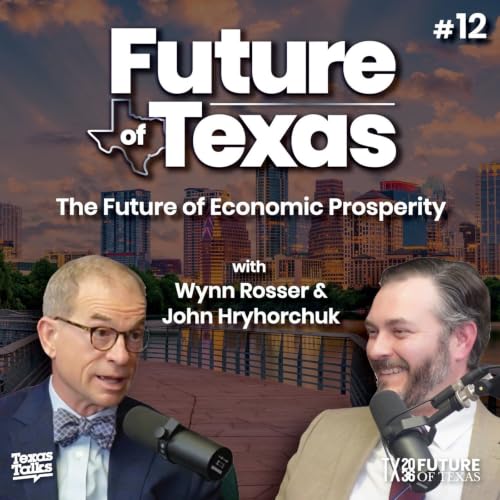
  • The Future of Economic Prosperity
    May 26 2026

    As part of the Future of Texas series in partnership with Texas 2036, this episode explores how education, workforce development, and economic opportunity intersect to shape Texas’ future prosperity.

    Through the Future of Texas podcast series, Texas 2036 brings together diverse perspectives as we explore the opportunities and challenges facing our state over the next ten years. The views expressed in this program are those of the individual speakers and do not necessarily reflect the views of Texas 2036, its staff or its Board of Directors.

    Host Brad Swail is joined by Dr. Wynn Rosser, Commissioner of Higher Education and Chief Executive Officer of the Texas Higher Education Coordinating Board, and John Hryhorchuk, Senior Vice President of Policy and Advocacy at Texas 2036, for a discussion on how Texas can prepare more students for meaningful careers while sustaining one of the fastest-growing economies in the world.

    The conversation examines the state's evolving approach to education and workforce development, including dual-credit programs, credentials of value, outcomes-based funding, affordability, and strategies for connecting students with high-demand careers.

    Major topics include:

    • Texas’ position as the world’s eighth-largest economy
    • The importance of credentials of value and workforce alignment
    • Expanding dual-credit opportunities in high school
    • Community college reform and House Bill 8
    • Outcomes-based funding for higher education
    • Career and technical education pathways
    • Workforce shortages in healthcare, construction, and skilled trades
    • College affordability and manageable student debt
    • My Texas Future and career planning resources
    • Data-driven policymaking and economic development
    • Preparing Texas’ workforce for the industries of the future
    • The path toward Texas’ 2036 goals

    The discussion highlights how decades of education reforms have expanded access to postsecondary opportunities and why policymakers are increasingly focused not only on college completion, but on ensuring students earn credentials that lead to strong labor market outcomes.

    Rosser and Hryhorchuk also discuss the role of economic development, community colleges, universities, workforce training programs, and career education in preparing Texans for emerging industries ranging from advanced manufacturing and healthcare to semiconductors, aerospace, and energy.

    Looking toward 2036, both guests argue that Texas’ continued success will depend on aligning education systems, workforce needs, and economic opportunities so that every Texan has a pathway to prosperity.

    00:00 — Intro + The Future of Economic Prosperity
    01:17 — Meet Wynn Rosser and John Hryhorchuk
    03:53 — Why Texas’ future is still being written
    05:01 — The opportunity gap and workforce challenges
    06:43 — Why the education pipeline starts earlier
    09:09 — Dual-credit success stories in Texas
    12:02 — Can every student graduate with college credit?
    15:45 — Credentials of value and workforce readiness
    17:21 — Innovative education partnerships across Texas
    19:10 — Beyond the traditional four-year degree
    23:01 — Changing perceptions about career pathways
    24:49 — Lifelong learning and workforce adaptability
    26:22 — High-demand careers and earning potential
    29:16 — Community college reform and House Bill 8
    34:04 — College affordability and manageable debt
    38:51 — My Texas Future and student planning tools
    40:07 — Expanding higher education opportunities
    42:53 — What Texas could look like in 2036
    46:35 — Measuring progress toward Texas’ goals
    48:11 — Legislative priorities and future reforms
    52:02 — Final advice for students and families
    53:46 — Closing thoughts on Texas opportunity

    Watch Full-Length Interviews: https://www.youtube.com/@TexasTalks

    Follow us on social media

    X: @Texas_Dispatch

    Instagram: thetexasdispatch

    LinkedIn: The Texas Dispatch

    TikTok: texas_talks_podcast

    Find more at The Texas Dispatch

    Your source for state news, policy, and investigative journalism.

    https://thetexasdispatch.com

    Afficher plus Afficher moins
    54 min
  • Texas Policy Update: Summer Camps, AI Deregulation & Prosecutor Power w/Brad Swail
    May 21 2026

    No guest this time — just host Brad Swail breaking down three major Texas public policy issues affecting families, businesses, and local governments across the state.

    In this episode of Texas Talks, Brad examines the fallout from Texas’ new summer camp safety rules, the state’s new AI-powered regulatory efficiency platform, and Governor Greg Abbott’s proposal to create a statewide prosecutor’s office.

    The episode covers:
    • Texas’ summer camp licensing crisis after the Heaven’s 27 Camp Safety Act
    • Why fiber optic internet requirements became a major point of controversy
    • Texas’ new AI tool “Sam” and the push to cut red tape
    • How AI could reshape regulatory review and permitting
    • Abbott’s proposed statewide prosecutor and the debate over local control
    • The balance between public safety, accountability, and county-level authority

    Together, these stories highlight a broader question: how can Texas respond to real problems without creating new ones through overregulation, bureaucracy, or excessive centralization?

    00:00 — Intro + three major Texas policy issues
    00:27 — Texas summer camp safety crisis
    01:24 — Heaven’s 27 Camp Safety Act explained
    02:16 — New camp licensing and safety requirements
    03:42 — Fiber optic mandate and camp lawsuit
    05:04 — Camp Mystic and broader compliance challenges
    06:26 — Impact on kids, families, and Texas camps
    08:17 — Texas launches AI-powered regulatory review
    10:05 — Texas Regulatory Efficiency Office and “Sam”
    11:28 — Vulcan Technologies and agent AI
    13:16 — Balancing deregulation with safety protections
    15:35 — Abbott’s statewide prosecutor proposal
    17:25 — Travis County prosecution deadline controversy
    18:45 — Constitutional and local-control concerns
    20:33 — Reactions from supporters and critics
    22:05 — What this could mean for Texas criminal justice
    22:52 — Closing thoughts

    Watch Full-Length Interviews: https://www.youtube.com/@TexasTalks

    Follow us on social media

    X: @Texas_Dispatch

    Instagram: thetexasdispatch

    LinkedIn: The Texas Dispatch

    TikTok: texas_talks_podcast

    Find more at The Texas Dispatch

    Your source for state news, policy, and investigative journalism.

    https://thetexasdispatch.com

    Afficher plus Afficher moins
    23 min
  • Policies that Deliver
    May 19 2026

    As part of the Future of Texas series in partnership with Texas 2036, this episode explores what separates effective public policy from policies that simply sound good.

    Through the Future of Texas podcast series, Texas 2036 brings together diverse perspectives as we explore the opportunities and challenges facing our state over the next ten years. The views expressed in this program are those of the individual speakers and do not necessarily reflect the views of Texas 2036, its staff or its Board of Directors.

    Host Brad Swail is joined by Laura Arnold, co-founder of Arnold Ventures, and David Leebron, President and CEO of Texas 2036, for a wide-ranging discussion about evidence-based policymaking, education reform, workforce development, philanthropy, and the long-term future of Texas.

    The conversation focuses on a central question: how can policymakers create systems that produce measurable, long-term results instead of temporary political wins?

    Arnold and Leebron explain why data, accountability, and long-term thinking are critical to solving some of Texas’ biggest challenges — from higher education and workforce readiness to housing affordability, infrastructure, criminal justice, and childcare.

    Major topics include:
    • What makes a policy actually “work”
    • Why data and accountability matter in government
    • Community college reform and “credentials of value”
    • Connecting education pathways to workforce needs
    • The role of philanthropy in shaping public policy
    • Why Texas lawmakers need trusted nonpartisan data
    • Housing affordability and infrastructure challenges
    • Permitting reform and economic growth
    • Criminal justice reform and public safety
    • Childcare data gaps and workforce participation
    • The importance of long-term thinking before problems emerge
    • Building opportunity and economic mobility in Texas

    The episode also highlights several major initiatives supported by Arnold Ventures and Texas 2036, including reforms to Texas community college funding and investments in student support systems designed to improve graduation and career outcomes.

    A major theme throughout the discussion is the belief that good policy making should be judged not by ideology or political messaging, but by measurable outcomes that improve people’s lives.

    Looking toward 2036, both guests argue that Texas’ future success will depend on whether leaders can stay focused on evidence, opportunity, and practical solutions that operate at scale.

    00:00 — Intro + Future of Texas overview
    01:44 — Laura Arnold and David Leebron introductions
    04:02 — Focus, scale, and long-term policy impact
    05:21 — Why Arnold Ventures tackles systemic problems
    07:26 — What makes a policy actually work
    08:41 — Community colleges and “credentials of value”
    11:01 — Workforce readiness and education reform
    14:23 — Why government needs better data
    17:34 — Helping lawmakers make better decisions
    20:31 — The role of philanthropy in public policy
    27:12 — San Jacinto College partnership explained
    31:18 — Housing, infrastructure, and permitting reform
    33:27 — Criminal justice reform and public safety
    34:35 — Raising families and the future of Texas
    37:10 — Opportunity, long-term planning, and 2036 vision
    39:35 — Final thoughts on evidence-based policymaking

    Watch Full-Length Interviews: https://www.youtube.com/@TexasTalks

    Follow us on social media

    X: @Texas_Dispatch

    Instagram: thetexasdispatch

    LinkedIn: The Texas Dispatch

    TikTok: texas_talks_podcast

    Find more at The Texas Dispatch

    Your source for state news, policy, and investigative journalism.

    https://thetexasdispatch.com

    Afficher plus Afficher moins
    41 min
  • Texas Schools, AI & the Future of Public Education w/Chairman Brad Buckley
    May 14 2026

    What’s really driving declining enrollment in Texas public schools — and how will AI reshape classrooms in the years ahead?

    On this episode of Texas Talks, host Brad Swail sits down with Chairman Brad Buckley, Chair of the Texas House Public Education Committee, for a wide-ranging conversation about the future of public education in Texas.

    Buckley discusses the major challenges facing schools across the state, from demographic shifts and declining birth rates to school funding pressures, learning loss, and the growing role of artificial intelligence in education.

    A major focus of the conversation is the surprising decline in enrollment across traditional Texas public school districts. According to testimony discussed during a recent House Public Education Committee hearing, Texas public schools have seen approximately 76,000 fewer students enrolled for the 2025–2026 school year.

    The discussion covers:
    • Why Texas public schools are seeing declining enrollment
    • Birth rates, housing affordability, and demographic changes
    • The growth of homeschooling, virtual education, and charter schools
    • Why some districts continue growing while others shrink
    • Education Savings Accounts (ESAs) and their potential future impact
    • How school funding formulas struggle with declining enrollment
    • The long-term implications of lower birth rates nationwide
    • AI in classrooms and concerns about age appropriateness
    • Why Buckley believes teachers — not AI — should drive learning
    • The risks of AI replacing “productive struggle” in education
    • Data privacy, ethics, and accuracy concerns surrounding AI
    • Pandemic learning loss and ongoing struggles in mathematics

    The episode also explores major testing reforms coming to Texas schools, including the planned replacement of the STAAR test beginning in the 2027–2028 school year.

    Additional topics include:
    • Replacing one large test with shorter progress-monitoring assessments
    • Reducing testing anxiety for students and teachers
    • Providing real-time instructional feedback to educators
    • Why middle school outcomes are becoming a growing concern
    • Workforce readiness and the push toward higher-value technical credentials
    • Career training in engineering, cybersecurity, and STEM fields
    • Reducing administrative burdens and compliance mandates on schools

    Buckley argues that Texas must continue modernizing public education while remaining focused on core fundamentals like literacy, mathematics, and strong classroom instruction.

    The takeaway: the future of Texas education will depend on balancing innovation, accountability, and flexibility while ensuring students still receive deep, meaningful learning experiences.

    00:00 — Intro + Chairman Brad Buckley joins
    02:45 — Declining enrollment in Texas schools
    05:37 — Housing costs, homeschooling, and demographic shifts
    09:09 — ESAs and school funding impacts
    13:25 — Long-term effects of declining birth rates
    19:32 — AI in classrooms and education policy
    21:51 — Why teachers should still drive learning
    23:52 — Age-appropriate use of AI in schools
    26:16 — Replacing the STAAR test
    27:06 — Pandemic learning loss and math struggles
    31:19 — Middle school outcomes and workforce readiness
    34:05 — New testing models and real-time assessments
    38:03 — Reducing school compliance burdens + closing

    Watch Full-Length Interviews: https://www.youtube.com/@TexasTalks

    Follow us on social media

    X: @Texas_Dispatch

    Instagram: thetexasdispatch

    LinkedIn: The Texas Dispatch

    TikTok: texas_talks_podcast

    Find more at The Texas Dispatch

    Your source for state news, policy, and investigative journalism.

    https://thetexasdispatch.com

    Afficher plus Afficher moins
    39 min
  • Future of Energy
    May 12 2026

    As part of the Future of Texas series in partnership with Texas 2036, this episode explores the region powering not just Texas — but increasingly the global economy: the Permian Basin.

    Through the Future of Texas podcast series, Texas 2036 brings together diverse perspectives as we explore the opportunities and challenges facing our state over the next ten years. The views expressed in this program are those of the individual speakers and do not necessarily reflect the views of Texas 2036, its staff or its Board of Directors.

    Host Brad Swail is joined by Tracee Bentley, President and CEO of the Permian Strategic Partnership, and Jordan Wat, Director of Government Affairs at Texas 2036, for a wide-ranging conversation about the future of energy, workforce growth, infrastructure, and community development in West Texas.

    The discussion begins with a striking reality: if the Permian Basin were its own country, it would rank as the fourth-largest energy producer in the world — behind only Russia, Saudi Arabia, and Iran.

    But this conversation goes far beyond oil production alone.

    Bentley and Wat explain how the Permian Basin has become one of the most strategically important economic regions in the United States, supporting everything from electricity reliability and manufacturing to public education funding and technological innovation.

    The discussion covers:
    • Why the Permian Basin produces more than 50% of U.S. oil and gas
    • How drilling technology and AI transformed energy production
    • Why Texas energy production continues hitting record levels
    • The growing electricity demand driven by AI and data centers
    • Pipeline, transmission, and grid infrastructure bottlenecks
    • Natural gas, LNG, and Texas grid reliability after Winter Storm Uri
    • The role of the Permian in stabilizing global energy markets
    • Workforce shortages and the need for 176,000 additional workers by 2040
    • Housing affordability challenges in Midland and Odessa
    • Health care access and specialty care shortages in West Texas
    • Water scarcity, produced water, and future recycling technologies
    • Career and technical education investments tied to workforce needs
    • Why literacy and workforce readiness remain major long-term concerns

    The episode also highlights how public-private partnerships are reshaping the region. Bentley explains how the Permian Strategic Partnership has invested more than $200 million into infrastructure, education, workforce development, and health care — leveraging those investments into billions more through state and federal collaboration.

    A major takeaway is that the future of the Permian Basin is no longer just an “energy story.” It is increasingly a story about building sustainable communities capable of supporting long-term economic growth.

    Looking toward 2036, both guests argue that Texas’ continued success depends on whether the state can match energy growth with investments in roads, schools, workforce training, housing, water infrastructure, and grid reliability.

    The message is clear: the future of Texas is deeply tied to the future of the Permian Basin.

    00:00 — Intro + Future of Energy overview
    01:35 — Why the Permian Basin matters globally
    03:22 — Record energy production and drilling technology
    05:04 — Jobs, workforce growth, and the Texas economy
    07:18 — Education funding and workforce pipelines
    09:09 — Innovation, AI, and modern energy production
    13:26 — Electricity demand, LNG, and grid reliability
    16:24 — Infrastructure bottlenecks and pipeline capacity
    22:04 — Global energy markets and the Permian’s role
    25:15 — Community life in Midland and Odessa
    26:57 — Roads, schools, healthcare, and housing challenges
    32:32 — Career training and workforce development
    35:33 — Public-private partnerships and long-term planning
    37:42 — Literacy, workforce readiness, and recruitment
    45:06 — Water challenges and produced water innovation
    47:22 — Looking toward 2036 + closing thoughts

    Watch Full-Length Interviews: https://www.youtube.com/@TexasTalks

    Follow us on social media

    X: @Texas_Dispatch

    Instagram: thetexasdispatch

    LinkedIn: The Texas Dispatch

    TikTok: texas_talks_podcast

    Find more at The Texas Dispatch

    Your source for state news, policy, and investigative journalism.

    https://thetexasdispatch.com

    Afficher plus Afficher moins
    49 min