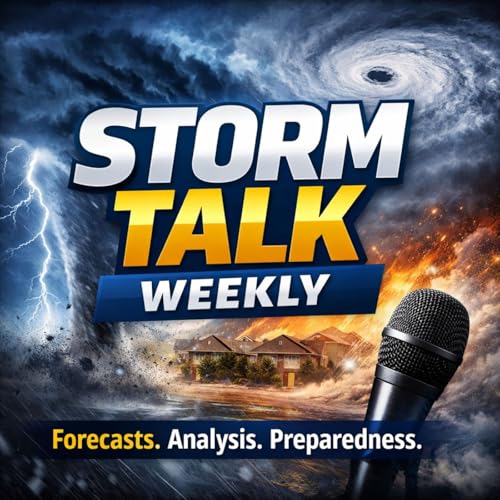
Couverture de Storm Talk Weekly - Forecasts, Analysis, Preparedeness

Storm Talk Weekly - Forecasts, Analysis, Preparedeness

Storm Talk Weekly - Forecasts, Analysis, Preparedeness

De : Adidas Wilson
Écouter gratuitement

À propos de ce contenu audio

Storm Talk Weekly breaks down the weather stories shaping your week — from powerful storms and severe weather threats to the science behind changing climate patterns. Each episode goes beyond the forecast, explaining why storms happen, what they mean, and how they could impact your daily life. Hosted with a clear, conversational style, Storm Talk Weekly turns complex weather events into easy-to-understand insights. Whether it’s tornado outbreaks, winter systems, hurricanes, heat waves, or unusual atmospheric trends, you’ll get smart analysis without the technical jargon. Perfect for commuters, weather enthusiasts, and anyone who wants to stay informed, Storm Talk Weekly delivers reliable updates, expert explanations, and real-world preparedness tips — all in one weekly briefing. Know the forecast. Understand the storm. Stay ahead of the weather. 🌩️

Disclaimer:
Weather information discussed on Storm Talk Weekly is for informational purposes only and should not replace official forecasts or emergency warnings from the National Weather Service or local authorities.Copyright Author Adidas Wilson
Science Sciences de la Terre Sciences sociales
Épisodes
  • Severe Weather, Including Threat Of Strong Tornadoes And Flooding Rain, Forecast Friday In Plains, Midwest
    Apr 17 2026
    Forecasters are tracking a dangerous storm system set to impact the central United States on April 17, 2026, bringing threats of strong tornadoes, massive hail, and extreme winds. This weather event follows a week of intense activity and spans a massive geographic area from the Southern Plains to the Upper Midwest. Meteorological conditions, including high humidity and significant wind shear, have created a "textbook" environment for supercell thunderstorms that will eventually merge into high-speed wind lines. Because previous storms have already soaked the ground, catastrophic flash flooding is a secondary major concern for residents in states like Oklahoma, Kansas, and Wisconsin. Experts urge millions of people in the path of these storms to maintain constant vigilance and prepare for potential infrastructure damage or power outages.

    Storm Talk Weekly delivers weekly weather analysis, storm tracking, and real-world preparedness insights to help you stay informed and ready. Subscribe and follow so you never miss an important weather update.
    Afficher plus Afficher moins
    45 min
  • Strongest Storm on Planet Bearing Down on U.S. Islands in Western Pacific
    Apr 13 2026
    The episode details the approach of Super Typhoon Sinlaku, a record-breaking storm set to strike Guam and the Northern Mariana Islands in April 2026. This massive weather system intensified rapidly due to unusually warm Pacific waters and a rare atmospheric phenomenon known as a twin cyclone. The report emphasizes the severe risks posed to the 170,000 residents and critical U.S. military installations in the region, including extreme winds, flooding, and storm surges. Historical comparisons to past disasters like Typhoon Yutu highlight the potential for catastrophic infrastructure damage and long-term recovery efforts. Consequently, local and federal authorities have mobilized emergency preparations to mitigate the impact on these strategically vital American territories.

    Storm Talk Weekly delivers weekly weather analysis, storm tracking, and real-world preparedness insights to help you stay informed and ready. Subscribe and follow so you never miss an important weather update.
    Afficher plus Afficher moins
    38 min
  • Tropical Cyclone Narelle Crosses Australia
    Mar 29 2026
    The episode details the unprecedented 5,500-kilometer journey of Severe Tropical Cyclone Narelle, a historic storm that struck three Australian jurisdictions in March 2026. This Category 5 system originated in the Coral Sea and maintained its intensity while traversing the continent from east to west, eventually dissipating in the Southern Ocean. While the cyclone caused catastrophic structural damage to airports and homes and decimated agricultural sectors in Western Australia, there were remarkably no reported deaths. The narrative emphasizes how warming sea temperatures contributed to the storm’s rapid intensification and massive physical expansion. Ultimately, the report serves as a case study on community resilience and the evolving challenges of managing extreme weather events in a changing climate.

    Storm Talk Weekly delivers weekly weather analysis, storm tracking, and real-world preparedness insights to help you stay informed and ready. Subscribe and follow so you never miss an important weather update.
    Afficher plus Afficher moins
    59 min
Aucun commentaire pour le moment