Épisodes

  • Sad Francisco's Toshio Meronek, Part 2 (S8E12)
    Feb 19 2026
    In Part 2, we pick up where we left off in Part 1. Toshio talks about those chess players at Powell and Market and other early impressions of The City before they moved here. Having grown up in Orange County, with its underfunded public transit system, Toshio always wanted to live somewhere that had a subway. Being able to walk was important, too, in contrast with SoCal, where you pretty much need a vehicle to get anywhere. SF and The Bay checked those boxes. Like Part 1, this episode is rife with sidebars. I guess that's just what happens when you get two people together who both like to talk. The first one in Part 2 is about running any sort of independent media within the larger framework of late-stage capitalism, especially when the content you create is inherently anti-capitalist. You know, light stuff. I try to get us back to Toshio's story of moving to San Francisco, then I can't help myself—another sidebar, this time about Craigslist, which of course Toshio used to help find a place to live in San Francisco. They were able to get work, as we've mentioned, but finding housing was much harder. Their first two places were in the Mission. They left the first one after only one month, thanks to a fire. Their next spot was at 24th and Bartlett, close to BART. Toshio splinters off to talk about some of the other spots they looked at and open houses they went to. "Oof," they say. In 2013, they were able to move into a below-market-rate apartment near Civic Center (the very home where we recorded this episode, in fact). Toshio is their own landlord, something I congratulate them on. Sometime after they moved in, they met their boyfriend. They also got exposed to more and more leftist politics in SF during this time. They talk about coming to terms with the fact that the world they want to see will probably not come about in their lifetime. That's a hard pill to swallow, but it's probably best to accept that and then fight like hell to overcome it. Toshio's light-green living magazine job afforded them the opportunity to write for further left-leaning publications like Truthout. When Al Jazeera opened its US office in The City, they got work there. They've also written for Them and Vice. It all served as background for Toshio to launch their own outlet—Sad Francisco. We go on a sidebar about the corporate takeover of the news, and how local outlets and indie operations like our own have stepped in to try to fill that void. Toshio mentions some newer publications that they're excited about, including Bay Area Current, The Phoenix Project, and Coyote Media. (Ed. note: Look for an upcoming episode with Coyote Collective founding member Soleil Ho.) Sad Francisco started (and continues) as an effort to fill the massive gaps left by said corporate media in the Bay Area. Toshio was curious about the podcast medium, and kicked things off reading and riffing on versions of 2,000-word pieces they had already written for traditional media. They mention that we're at a point now where every journalist, no matter the medium or the employer, should probably be diversifying the distribution of their work. I couldn't agree more. Sidenote: I've been witnessing Toshio's move to self-facing camera reels, with them laying out whatever issue is on their mind, then expounding on it. It's a delivery mechanism I see more and more of, in my limited social media consumption. My wife, Erin (of Bitch Talk Podcast), has begun doing more of these as well, and they seem to resonate with folks. I haven't yet decided whether or when to do them myself for Storied. But I digress … Toshio feels that in 2026, people are looking for authenticity. They don't care so much if your media product is polished. They're more interested in substance, which would be a gain for society, if true. When I ask them how folks can find, follow, and support Sad Francisco, Toshio mentions the podcast's Patreon page. Follow them on Instagram @sadfrancis.co. And check out their website, sadfrancis.co. They're also available on most podcast apps and YouTube. Another sidebar here about how much I used to love Twitter (RIP). We end the episode with my asking Toshio how they do it, how they report so well and so relentlessly on the vast amounts of sketchy shit going down in San Francisco and The Bay. Their answer involves their various journalistic jobs and gigs over the years, and how that work trained them to package up complex ideas and explain incredibly complicated scenarios in a simple, easy-to-understand way. Then Toshio and I indulge in a lovefest for 48Hills.org before wrapping.
    Afficher plus Afficher moins
    30 min
  • Sad Francisco's Toshio Meronek, Part 1 (S8E12)
    Feb 17 2026
    Toshio Meronek's parents met at a bar. In this episode, meet and get to know Toshio. Today, they do Sad Francisco, a really fucking amazing project that reports on and holds truth to power around here. I first became aware of Sad Francisco a few years ago and right away, I was struck by the deep reporting on and understanding of the many complex relationships and goings on in San Francisco and The Bay. And so I sat down with my fellow podcaster to get to know the human behind those efforts. Toshio's story starts with their parents. That bar where they met was in Los Angeles. Shortly after meeting, the couple moved to Germany, where Toshio's dad had found work at a major German tech company. But after getting pregnant with Toshio, the young couple came back to Southern California—Orange County to be exact, where Toshio was born. Some of Toshio's earliest memories involve not really digging that infamous SoCal heat. We'll get into this more later in Part 1, but Toshio picked Portland for college in part because of its more temperate, albeit wetter, climate. Born in 1982, Toshio did most of their growing up in the Nineties. When I ask them what kinds of things they were into as a kid, they immediately say, "zines." Making zines, collecting zines, living and breathing zines. We hop on a short sidebar about Riot Grrrl, a Nineties feminist punk-adjacent movement that seeped into both our lives at different points—mine early in the decade, and Toshio's toward the end of the Nineties. Riot Grrrl arrived in the typically and generally conservative Orange County later than a lot of other parts of the country and the world. But arrive it did, and it had an outsize impact on Toshio's young life. Zines were huge in that subculture, too. To expound on their interests as a kid, Toshio was generally into media, curious about how others live, and also sci-fi and fantasy (think D&D). Toshio was around 13 or 14 when they started writing their own zines. Here we go on a sidebar about one of my favorite pet topics—Kinko's (RIP). IYKYK. Eventually, Toshio eschewed the ubiquitous copy+print shop and had their zines printed on newsprint paper. It was part of a deliberate attempt to appear legitimate, more like "the establishment," something I find fascinating. They wanted people to take them seriously, and that just makes a lot of damn sense. Music was very much a part of the Riot Grrrl movement Punk rock music to be specific. And Toshio's early publications covered that. In fact, topics ran the gamut from music and politics to culture and community. We turn to the topic of Toshio's surroundings when they were a teenager. Record stores, zine shops, cafes that also had live music. They dabbled in the SoCal rave scene as well. They settled into the Candy Kids rave subculture and talk a little about that. There's another short sidebar where we talk about how amazing youth activism is, and how much we always need it. As much as young Toshio was part of these communities and subcultures, they also describe this time in terms of being a loner. They also experienced a lack of self-confidence, lots of acne, therapy to work through their being Japanese and white, or hafu (another term for "hapa"), being gay. Though Toshio has grown past those struggles, they consider them powerfully formative. Then came time to relocate and go to college. Besides Portland having more desirable weather, Toshio chose it in part because of the Northwest's grunge legacy. College life started right around 9/11, and they started going to protests. Lots of protests. College lasted four years, and after that, Toshio stayed behind in Portland. They got work at a magazine covering ecology for K–12 kids. They were also in bands (they play guitar, ish, sing, and play tambourine). "It felt like everybody was in an alt-country band," they say. And then, in 2006, they left Portland for … San Francisco. An editing job brought Toshio here. The publication was a so-called "light-green living" outfit, targeted, as it said, to yoga moms who drive their hybrid SUVs to Whole Foods. I ask Toshio if the job was editing words, and then mention that it's been my profession for a long-ass time. And we go on a sidebar about how important the work is. I'll add that everyone (including editors!) needs an editor. Sorry (not sorry), AI. That leads to yet another sidebar (can you tell we're both podcasters?)—this one from Toshio about the nature of the "yoga mom" publication. They grew disillusioned with their work there, suffice to say. We end Part 1 with Toshio's early memories of visiting San Francisco, before they moved here. They involve the older men who used to be found daily playing chess off Powell and Market. Check back Thursday for Part 2 with Toshio Meronek. We recorded this episode at Toshio's home at the confluence of The Transgender District, Tenderloin, UN Plaza, and Civic Center in January 2026. Photography by Jeff Hunt
    Afficher plus Afficher moins
    31 min
  • Danielle Thoe, Sara Yergovich, and Rikki's, Part 2 (S8E11)
    Feb 5 2026

    In Part 2, we hear the story of how Danielle and Sara met and eventually acted on the totally bananas (but shouldn't be) idea of opening a women's sports bar. Sara and her partner had just landed in San Francisco and fell right into a supportive community. Not that they didn't have that back in the UK. But their friends there were starting to settle down and have kids, and that life wasn't for them.

    Then we turn to the story of how Danielle and Sara met, on a soccer field, of course. An SF Spikes soccer field to be exact. Danielle was a leader in the queer nonprofit organization at the time, a role she fell into somewhat by accident, but she did manage to make some needed updates. One of those was to bring in more women and non-binary folks. And she considers her time in leadership successful in part because she was able to hand it off and step away.

    Shortly after their first meeting came the idea to open a women's sports bar. Danielle had been putting together watch parties for women's sports championship games for a few years. It involved calling around to see what bars would air the game in question. Not easy. Eventually, she mentioned to a friend the idea of opening her own place. Sara overheard this and chimed in, "I wanna do that!" Neither of the two had any experience opening and operating a place like Rikki's. They did both work service jobs when they were younger. But what they did have under their respective belts was important—building community.

    Danielle's time with the Spikes also served her well as far as things like budgets and taxes are concerned. The watch parties Danielle had organized became more and more of a thing, and started happening regularly at SF spots like Standard Deviant. In addition to offering space, folks from the brewery helped them with financial stuff. Getting wildly differing advice from various sources helped Sara and Danielle learn more about themselves and the two as a team.

    Opening Rikki's around the time that the Golden State Valkyries' inaugural season was starting didn't hurt matters.

    Danielle describes Rikki's early days, being at capacity. She'd walk the line of folks outside and let them know the situation. She even offered neighboring bars that might have Valkyries games on. She talks about being struck by the amount of people who stayed there anyway, watched the game on their phones, and eventually made their way into San Francisco's women's sports bar.

    We rewind a little to talk about Sara and Danielle's decision to name the bar Rikki's, after Rikki Streicher. Back in the day, Streicher owned lesbian bars such as Maude's and Amelia's. We sidebar to hear some of Sara and Danielle's name ideas that didn't make it. Diva Dribble Dive might be my favorite. But back to Rikki …

    They wanted a name that resounded with and was relevant to San Francisco. They went through lists of historic lesbian and women's bars, and kept seeing Rikki's name listed as an owner. They dug deeper on this mysterious character to find that Rikki had a very strong connection to local sports in addition to the bars she ran. She was one of the first sponsors of the Gay Games. The woman part was there. The sports part was there. And the queer part was there. Check, check, check.

    Then we go back to opening the bar. They announced the location on New Year's Day 2025 and opening day was … sometime in mid-June. Because they're still in their first year as a business, every holiday or event either is or feels brand-new. And because they got started amid the Valkyries' rise, they're finding new ways to utilize the space. That includes trivia nights, live music and DJs (eventually; it's all being applied for), other theme and game nights, and soon, the Olympics.

    We end the episode hearing what surprised Danielle and Sara about opening San Francisco's women's sports bar.

    Photography by Marcella Sanchez

    Afficher plus Afficher moins
    28 min
  • Danielle Thoe, Sara Yergovich, and Rikki's, Part 1 (S8E11)
    Feb 3 2026
    San Francisco has a women's sports bar! In this episode, meet Danielle Thoe and Sara Yergovich. Together, they own and operate Rikki's, a women's sports bar on Market in the Castro. We'll hear from Danielle and Sara about their early lives and how they made their way to San Francisco and became friends. We'll also hear the story of why and how they opened The City's first women's sports bar, as well as the incredible woman they named it for. Most importantly, both Sara and Danielle (and me, Jeff) are Libras 😉. We start with Danielle. She grew up in Plymouth, Michigan, a suburb of Detroit. Born in 1990, her earliest memories are mid-Nineties, and she was around 10 when Y2K happened. Soccer was huge in Danielle's life, starting around age 6. She sites the US Women's Team winning the World Cup in 1999 as a profound influence in her life. It was the first time she'd seen women's sports generate that level of excitement, and she was hooked. She continued playing into her high school years, and says that it was around this time that she started noticing how good some of the other players in her soccer club had gotten. Because Danielle's high school was so large (6,000 or so students), she set her sights on a "big" university. It was between Michigan and Indiana universities, and she choose Indiana, whose state college is in Bloomington. In her college years, Danielle didn't really play soccer. Instead, dorm life because a central focus. She landed in the Collins Living-Learning Center, which she describes as "a weird, niche, hippie place," and she loved it. There was space for many different kinds of people and activities, including pottery and bicycle racing, something Danielle took up in her time at college. I've never lived in a college dorm, and probably never will. But this place sounds rad. The dorm also allowed young Danielle a certain freedom she hadn't yet experienced. I'd call it freedom of expression today. Back then, it was the ability to be as weird as she wanted. There would always be someone nearby a little more "out there," no matter what. After Indiana, Danielle returned to her home state and went to grad school at the University of Michigan. While Ann Arbor, and through friends, she met and started dating someone from San Francisco. After Danielle got laid off from a job in Michigan, she decided to join her long-distance partner and move to The Bay. It was 2015. June 25 to be exact. We know this because the very next day was when the United States Supreme Court issued its Obergefell v. Hodges ruling, legalizing same-sex marriage throughout the country. We turn to Danielle's business partner, Sara, to hear her life story and how she got to San Francisco. Sara grew up in Benicia, across The Bay. Her parents met at the University of Kansas in Lawrence. After college, her dad joined the Navy and got stationed in Vallejo, where the young couple moved. Some years later, they settled in nearby Benicia and had five kids. Sara is their youngest. She's also her parents' only daughter. All her older siblings are boys. She owes getting into "all of the sports" to that fact. Her mom signed Sara up for soccer when she was three. Through some kind of odd accident, her mom also inadvertently became the coach. Sara also played volleyball, basketball, baseball, tennis, golf … she was a jack of all trades, master of none," as she puts it. But Sara's mom always put her on boys' teams to make her more competitive, or so the thinking went. When her mom tried to put young Sara on a football team, though, she drew a line. In her high school years, being the only girl on a team came with specific sexist challenges. But for all the jerks who gave her shit, she was able to find boys who were cool, who had her back. She also eventually got a taste of revenge. The coach's son was particularly nasty, but his dad was cool and paired Sara up with the kid for catch before a game. Sara wound up and threw the baseball so hard, the kid cried. We Libras strive for balance. Sara came to San Francisco regularly as a kid, especially when out of town family visited. Eventually, her oldest brother (16 years older) moved to The City and she came to see him a lot. Another brother moved in with him and they lived in several apartments all over town. Sara shares her earliest memory of visiting SF. She remembers a high-rise penthouse and going to Chinatown. We end Part 1 with the time Sara left The Bay—to go to college, first in Santa Barbara, then for her last semester in Kent in England. Check back Thursday for Part 2 with Sara and Danielle. We recorded this episode at Rikki's in The Castro in January 2026. Photography by Marcella Sanchez
    Afficher plus Afficher moins
    29 min
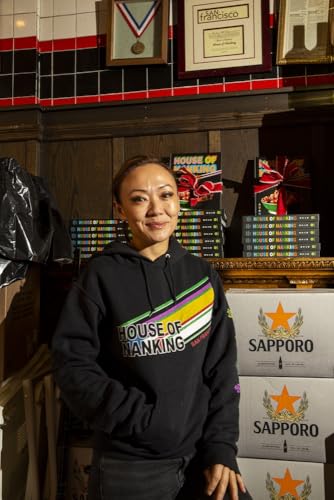
  • Kathy Fang, Part 2 (S8E10)
    Jan 22 2026
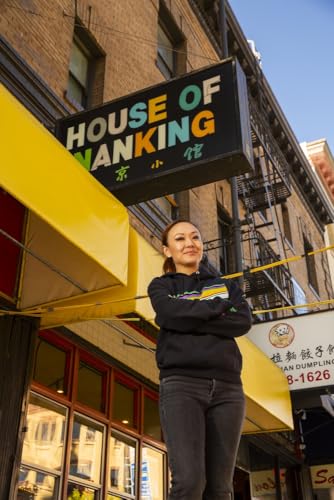
    In Part 2, we pick up where we left off in Part 1. Kathy left her hometown of San Francisco for the first time to go to college at USC. Originally, she wanted to major in science. There was and perhaps still is a prevailing expectation in her culture to go into some sort of lucrative career. Surely, no one would want to go into the food business intentionally, so the trope goes. So Kathy set out to make her parents proud. Soon enough, though, she realized she doesn't like science, and switched to becoming a business major. She earned a bachelor's in entrepreneurship and operations and soon got a job in the corporate world at the stock brokerage Merrill Lynch. A short time later, not too happy, she moved to Johnson and Johnson, another job that ended up boring her. Despite this, she was getting more and more used to LA and wasn't thinking necessarily of coming back. Still in her Twenties, the idea of joining her parents at their restaurant started to grow on her, and she took the plunge. She moved back to San Francisco and lived with Lily and Peter for a time. She'd been bringing college friends to her hometown for a while, parading them around to ride cable cars or eat at places like Taddich Grill. They'd explore San Francisco neighborhoods and restaurants with Kathy as their guide. Her friends loved it here. Duh. Returning home felt good for Kathy. Her husband had lived in Hawaii and Georgia and would sometimes urge to go other places. But Kathy is a city girl, an SF girl. "It's always good to be back." Her first year back, she worked with Peter and Lily at House of Nanking every day. She aimed to prove to her dad that she was serious about restaurant work. After that year, Kathy went to culinary school. When she graduated, Peter lovingly let her know that three is a crowd at his eatery and asked his daughter what she wanted to do. "I kinda wanna open another restaurant," she told him. He'd resisted opening a second location for House of Nanking. The idea of Kathy branching out, however, offered an opportunity to do a second restaurant, but have it be unique and distinct from his own place. Because the new joint would be father/daughter (vs. the husband/wife structure at House of Nanking), it provided space for Kathy's dishes, Peter's dishes, and menu items featuring collaborations between the two. The scaffolding was there, and it was solid. But right away, Kathy found herself the victim of outdated stereotypes of what it means to be a chef. Some even felt that the operation was nepotistic, that Kathy was just riding her dad's coattails. They couldn't imagine that she'd because a great chef in her own right. People, amirite? I ask Kathy whether it's an apt metaphor to say that House of Nanking gave birth to Fang. She agrees. She uses this topic as a springboard to describe physical differences between the two restaurants. House of Nanking feels older, more disheveled, with dim lighting. Fang is newer, cleaner-feeling, brighter. I was sitting there that day at House of Nanking, talking with Kathy, and I couldn't help wonder whether Anthony Bourdain had eaten there. She wasn't sure on the spot that day, but I looked it up. I'm almost certain he did not, but I can't help but believe he eventually would've made it. House of Nanking is just "like that." Kathy seizes on the opportunity to share celebrities who have been to her parents' restaurant, and tells the story of a recent mention by comedian and writer John Mulaney. She was in London when Mulaney performed in SF. On stage in The City, he mentioned loving House of Nanking and wishing it was open after his show. Kathy made a few phone calls from across the Atlantic and had food delivered to him. The next night, Kathy Griffin basically said the same thing. And Kathy Fang once again came through, having food brought to the comic actor. Griffin let it be known that House of Nanking is on an unofficial "comedy circuit," meaning a group of comedians who share tips about various cities and what to do and eat there. We start to wind down the conversation by talking about the book that Kathy wrote. Along with her dad, Kathy's new book, The House of Nanking Cookbook, is something that's been in the works for a while. Folks kept asking them to share their recipes, and Peter resisted. But then the show Chef Dynasty: House of Fang came out on Food Network. After her dad saw the show (and he's in it, mind you), he changed his tune. He wanted there to be a record of everything they'd accomplished. Kathy convinced Peter that a book was the best way to do just that. The book is written in both Peter's and Kathy's voices. So it's got the story of opening and carrying on all those years. But it also has Kathy's perspective, growing up in the restaurant and eventually becoming a chef in her own right. After doing research and seeing a dearth of Chinese-American cookbooks, getting her family's recipes out there became even more important for Kathy. The House of Nanking ...
    Afficher plus Afficher moins
    28 min
  • Kathy Fang, Part 1 (S8E10)
    Jan 20 2026
    Kathy Fang was born in the Chinese Hospital in Chinatown in San Francisco. In this episode, meet and get to know Kathy. These days, she's the co-owner (with her dad) and chef at Fang restaurant in South of Market. She's also joined her parents in running their restaurant, the legendary House of Nanking. But her story starts with Lily and Peter (her mom and dad). We'll get to Lily and Peter's story, of course. But Kathy begins by talking about her unique position being born just up the hill from her parents' restaurant, and essentially growing up at House of Nanking. She sees herself as perfectly positioned not only to continue their story but also to share it widely. This podcast serves exactly that purpose. Prior to emigrating from China, neither Lily nor Peter had any professional kitchen experience. They came to the United States having been educated and were looking for good jobs and a better life. But they landed and reality hit. They needed money. Besides a lack of funds, there was the language barrier. Getting jobs in Chinatown restaurants proved the path of least resistence. Time spent behind the scenes in restaurants helped them learn English. Kathy describes her mom as the "risk-taker" of the pair. Lily started noticing that the folks who owned the places they worked in and ate at owned homes, had cars, sent their kids to private schools … that sort of thing. Opening a restuarant was her idea. After convincing her husband to pivot away from his plan to become a realtor, Lily's dad (Kathy's grandfather) found the location on Kearny Street, almost at Columbus, that became House of Nanking. With no experience running a business, let alone a restaurant, the Fangs opened in 1988. When they first welcomed diners, Peter was cooking traditional Shanghainese food, something fairly new to San Francisco at the time. Peter saw right away that they needed to make food for more than the 10 or so folks who knew their cuisine. He saw how incredible the locally grown and raised food in Northern California was, and soon sought to incorporate those ingredients into his dishes. One example was replacing the pork in a bun (bao) with fresh zucchinis and peas, to be accompanied by a side of peanut sauce. It was an instant hit. If Lily is the risk-taker of the couple, Peter is the creative force. From a young age, in a family with four kids total, he was always interested in food. He read cookbooks and watched his mom closely while she made food. She was always one to put her own spin on things, and that carried through to her son many years later. Though he obviously never fully pursued it, Peter did dabble in real estate. But between that and opening his restaurant, he had little time for administrative work. His young daughter, Kathy, started answering his calls when she was six. She repeated his requested message verbatim, doing her best to sound like an answering machine (remember those?). Kathy is pretty sure he never sold a single house. Success for House of Nanking wasn't immediate. After some time, Peter realized he needed to pivot away from Shanghainese food. But they needed some luck, too. And they got it when Peter Kaufman, the son of moviemaker Phillip Kaufman, showed up outside the restaurant with the daughter of famed Chinese actress Bai Yang, who lived in Shanghai. The daughter insisted that they try the restaurant because it smelled "like home." Peter Kaufman loved the food Peter Fang had made him so much that he told his dad, who soon came back with food critic Patty Unterman. Unterman's review of House of Nanking appeared in the Sunday paper—the Bible for folks in the days before the internet. That review appeared next to a column about a little place called French Laundry. Both restaurants got three stars—but their affordability dollar signs were dramatically different. The next day of service at House of Nanking saw the first of its now trademark long lines to get in. We turn at this point in the conversation to talk about Kathy and her life. From her earliest memories, she recalls just being in her parents' restaurant all the time. It was an exciting time in San Francisco—the late Eighties/early Nineties. Broadway and its liveliness were basically next door. Life was colorful for young Kathy. She knew her life was atypical. "Sometimes I wish I could (be like the other kids and) go to sleep at a decent time," she says looking back. She sometimes slept in the restaurant. But she also go to eat at North Beach restaurants with her parents after they closed up their own eatery for the night. I ask Kathy to name drop names of places they went—New City (the best Alfredo) and Basta Pasta (veal piccata) stand out. Kathy didn't do quote-unquote normal kid things until middle school. Up to that point, it was all restaurant, all the time. One notable exception was seeing Chinese movies at the Great Star Theater, another thing kids didn't normally do. At my prompting, Kathy rattles off the San ...
    Afficher plus Afficher moins
    27 min
  • Jake Rosenberg's "Epicenter" (S8 bonus)
    Jan 13 2026

    Listen in as I chat with return guest Jacob Rosenberg about his latest book, Epicenter. The photobook beautifully captures the skateboarding scene at the Embarcadero from 1990 to 1993.

    The accompanying IRL photo exhibit for Epicenter has been extended through Sunday, Jan. 25, at 201 Jackson St. More info here.

    Here's the last episode we did with Jake, all about his previous book, Right Before My Eyes:

    • Jacob Rosenberg and the Bay Area Hip-Hop + Skateboarding Scenes of the Nineties

    We recorded this podcast over Zoom in December 2025.

    Photo of Jovantae Turner by Jacob Rosenberg

    Afficher plus Afficher moins
    34 min
  • Artist Hollis Callas, Part 2 (S8E9)
    Jan 8 2026
    In Part 2, we pick up where we left off in Part 1. The "bootcamp" post-college and early career experience Hollis had at Creative Circus was interesting—she found herself seemingly taking it more seriously than many who'd come right out of a four-year program. She also balanced getting engaged and married in this time. Every year, Hollis's grad school organized portfolio reviews with advertising agencies in either New York or San Francisco. Luckily for all of us, the year it was her turn, Creative Circus took students to The City. Once here, they met folks from big firms, including one that offered her an internship. It was Hollis's first visit to San Francisco. And on that first time, I have to give her credit here—she went to North Beach, had drinks at Gino and Carlo's and pizza next door at Golden Boy. I may or may not have spent New Year's Day in a similar way last week. Just sayin'. Hollis's takeaway from that first impression? "This is a really beautiful town." We go on another sidebar at this point about the very San Francisco phenomenon of the sun blinding us (I call it "lasers"), probably because of the hills here, right? It was 2016. Her husband was working back in Georgia, but she called him up and told about the internship offer, which would last three months. He was in a meeting back East where he learned that his company's West Coast salesperson was about to quit, and he was tapped to take over. The Universe, again, spoke. The newlywed couple packed up their four-runner and headed west with their stuff and their dog. Ahead of the drive, which would end in her husband's first visit to SF, Greg's grandma told him he had an aunt in The Bay, in Walnut Creek. Aunt Suzy's house was their landing spot, from which they'd take BART into The City to look for a place of their own. Hollis had a friend from college who keyed her in on the Inner Richmond as a potential place to live. We go on yet another sidebar, this one about how Hollis grows actual vegetables at her Inner Richmond home. They found a studio on Seventh Avenue and Lake Street and moved in with their dog, Mamut. A couple years later, they moved on up to a one bedroom, where they live to this day. Hollis's internship got extended six months, which was fortunate. Her husband's job paid a Georgia salary. IYKYK. That internship became a job, and so they were able to stay, something the couple wanted to do. Her husband got a job based here, and it all worked out. I try my hardest to forget what chronology is and jump ahead, but Hollis brings us back to pre-pandemic times. Her design job was corporate-y, but she enjoyed it nonetheless. She got an animation put up in Times Square in this era. Still, owing to the buttoned-up, corporate nature of the job, she was burning out. The Creative Circus invited her back to talk to students. But yet again, Hollis ended up one-on-one with a recruiter from REI. She respected the company and gave in. A trip to Seattle, to REI HQ, later, the company offered Hollis a job on their brand team. She wasn't thrilled to be leaving her adopted home in San Francisco, but it was a good opportunity. It was January 2020. Fast-forward to March that year, and the movers were ready. Jobs were quit. Hollis and Greg had just returned to SF from a backpacking trip when REI told them that the movers were not coming, and that her job would start remotely a couple weeks out. Do y'all remember March 2020? How the lockdown was supposed to last "only" until April 1 (dude)? Yeah, so REI told Hollis that her job would be a little different than what they hired her to do. And then they told her, "Psych! JK. No job for you." (I'm paraphrasing.) Hollis did what any sane San Franciscan would do. She drove to Baker Beach, screamed at the Pacific Ocean, and came home and made a plan. She'd had a going-away party already, for fuck's sake. It was brutal. The world was upside-down. And it all turned out to be the kick in the pants she needed. Hollis started her own company. We then go into the story of the open call for art to adorn San Francisco's "I voted" stickers. The contest had come across her radar, and she filed it away for later. Then a relative sent it to her along with the suggestion that she give it a try. It turns out there were more than 600 applicants (in her estimation). The SF Department of Elections had a panel that narrowed that down to 10. And then it went to The People to decide. I remember all of this vividly. Needless to say, Hollis's design won. Hollis is also integral to the Clement Street Art Walk, which she runs with Fleetwood's Nico. The next one will be on March 19. Fall this year will see the next Clement Street Art Fair. As of our recording, she didn't have any art shows, but please browse Hollis's website of beautiful work and buy some (and sign up for her newsletter). Follow Hollis on Instagram. Or just walk down Clement Street on any given day and chances are high you'll see her. (I learned as we shot ...
    Afficher plus Afficher moins
    30 min