

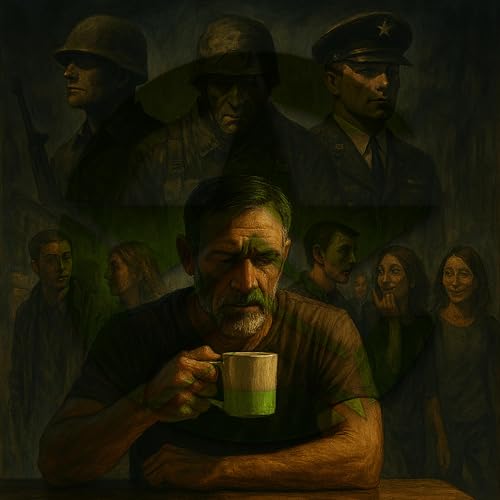
Season 4: Episode 2: Civilians are Watching
Impossible d'ajouter des articles
Échec de l’élimination de la liste d'envies.
Impossible de suivre le podcast
Impossible de ne plus suivre le podcast

Season 4: Episode 2: Civilians are Watching
-
Lu par :
-
De :
À propos de ce contenu audio
Movies, television, and social media have created familiar images of Veterans — the unstoppable warrior, the haunted survivor, or the flawless patriot. While often meant to honor service, these portrayals can quietly shape how civilians view and interact with Veterans in everyday life. In this episode, featuring guest host Goose, the conversation explores how media-driven perceptions follow Veterans into workplaces, homes, and communities. The goal is not to criticize storytelling, but to highlight how simplified narratives can create unrealistic expectations for a diverse and complex community.
From Screen to Reality
Pop culture often presents Veterans as one-dimensional characters defined by strength, trauma, or unwavering duty. While compelling, these portrayals rarely capture the full spectrum of Veteran experiences. Veterans return to civilian life as parents, coworkers, students, entrepreneurs, and community leaders, each carrying unique personalities and life goals.
These portrayals influence how Veterans are treated professionally and socially. Some workplaces automatically view Veterans as natural leaders, while others may hesitate due to misconceptions about emotional stability. Within families, loved ones may walk on eggshells, unsure how to communicate or offer support. In public settings, well-meaning appreciation can sometimes be paired with misunderstandings shaped by fictionalized narratives.
Community Impact and Support
Organizations likeFreedomSystem.org and InVets frequently see the ripple effects of these perceptions. Many Veterans express interest in support services but delay seeking assistance, often believing they must handle challenges independently or avoid reinforcing stereotypes.
At the same time, public respect for military service can open positive opportunities through employment initiatives and community programs. Education and open dialogue remain essential in helping civilians better understand the transition process and the varied realities Veterans face after service.
Changing the Narrative
Breaking stereotype cycles begins with authentic storytelling. Encouraging Veterans to share their experiences — through writing, conversation, or creative expression — helps preserve history while strengthening connections between Veterans and civilians. How these stories are shared matters just as much as why they are shared, ensuring conversations remain honest, respectful, and meaningful.
Reintegration is not solely a Veteran responsibility. Strong communities grow when both Veterans and civilians listen, learn, and support one another through real human experiences rather than scripted assumptions.
The next episode will continue exploring life after service by examining identity changes, personal challenges, and the unexpected realities Veterans encounter when rebuilding civilian lives through reflection, philosophy, and lived experience.
We are the Common Veterans.
Clink.
Sponsor: Winter Oak Studios

Vous êtes membre Amazon Prime ?
Bénéficiez automatiquement de 2 livres audio offerts.Bonne écoute !