Épisodes

  • NAMM 2026: An interview with Sam Butler and Joe Plazak
    Feb 28 2026

    At the 2026 NAMM Show, we interviewed representatives from the businesses in our field of music notation software and related technology.

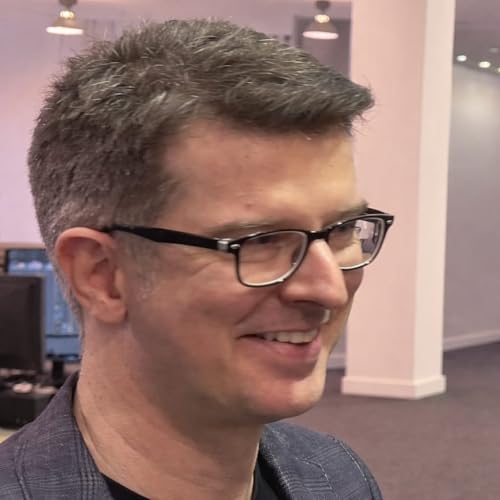
    In this interview, we talk with Sam Butler, Avid’s vice president of product management, and Joe Plazak, Sibelius product owner and senior principal software developer at Avid, to reflect on the philosophy behind Sibelius’s recent development approach, how user feedback shapes prioritization, and where they believe users should most clearly feel progress compared to a year ago. We also talk about automation and AI in notation, the realities of cross-platform and mobile workflows, and what Avid wants musicians to understand about its long-term commitment to Sibelius.

    Be sure to check out our other conversations from the NAMM Show from earlier this month. And as always, if you like this podcast episode, there’s plenty more for you from Scoring Notes — be sure to follow us right in your podcast player.

    More about the 2026 NAMM Show from Scoring Notes:

    • NAMM 2026: On the scene
    • NAMM 2026: Piascore’s bet on interactivity
    • NAMM 2026: John Barron opens the door to Dorico’s future
    • NAMM 2026: Sounding out the inputs with klang.io’s Sebastian Murgul
    • NAMM 2026: Getting into a Fender-bender with Chris Swaffer
    • NAMM 2026: An avid Sibelius discussion with Sam Butler and Joe Plazak
    • NAMM 2026: An interview with John Barron
    • NAMM 2026: An interview with Sebastian Murgul
    • NAMM 2026: An interview with Chris Swaffer
    Afficher plus Afficher moins
    37 min
  • NAMM 2026: An interview with Chris Swaffer
    Feb 21 2026

    At the 2026 NAMM Show, we interviewed representatives from the businesses in our field of music notation software and related technology.

    In this interview, we talk with Chris Swaffer, senior product manager of software at Fender, about how he thinks about Notion’s current phase in its lifecycle, what the Fender name signals to users today, and how decisions around refinement, continuity, and cross-platform consistency get made in practice. We also dig into under-the-radar improvements, accessibility as a core product principle, direct transfer between Notion and Fender Studio Pro, and how intelligent assistance can support — rather than replace — human musical judgment.

    Come back next week for more conversations from the NAMM Show. And as always, if you like this podcast episode, there’s plenty more for you from Scoring Notes — be sure to follow us right in your podcast player.

    More about the 2026 NAMM Show from Scoring Notes:

    • NAMM 2026: On the scene
    • NAMM 2026: Piascore’s bet on interactivity
    • NAMM 2026: John Barron opens the door to Dorico’s future
    • NAMM 2026: Sounding out the inputs with klang.io’s Sebastian Murgul
    • NAMM 2026: Getting into a Fender-bender with Chris Swaffer
    • NAMM 2026: An avid Sibelius discussion with Sam Butler and Joe Plazak
    • NAMM 2026: An interview with John Barron
    • NAMM 2026: An interview with Sebastian Murgul
    Afficher plus Afficher moins
    29 min
  • NAMM 2026: An interview with Sebastian Murgul
    Feb 14 2026

    At the 2026 NAMM Show, we interviewed representatives from the businesses in our field of music notation software and related technology.

    In this conversation, we speak with Sebastian Murgul, co-founder and CEO of klang.io, to talk about a category that sits just adjacent to music notation — and yet increasingly intersects with it in practical, unavoidable ways: music transcription. Sebastian explains what klang.io’s tools are designed to do — and just as importantly, what they are not. We talk about why AI-based transcription has reached a point of practical usefulness now, where the hardest musical problems still lie, and how klang.io thinks about accuracy as something musicians can trust and build on, rather than a promise of perfection. We also discuss interoperability with notation software via formats like MIDI and MusicXML, real-world use cases that have surprised him, and the broader anxieties musicians understandably have around automation and AI.

    Come back the next few weeks for more conversations from the NAMM Show. And as always, if you like this podcast episode, there’s plenty more for you from Scoring Notes — be sure to follow us right in your podcast player.

    More about the 2026 NAMM Show from Scoring Notes:

    • NAMM 2026: On the scene
    • NAMM 2026: Piascore’s bet on interactivity
    • NAMM 2026: John Barron opens the door to Dorico’s future
    • NAMM 2026: Sounding out the inputs with klang.io’s Sebastian Murgul
    • NAMM 2026: Getting into a Fender-bender with Chris Swaffer
    • NAMM 2026: An avid Sibelius discussion with Sam Butler and Joe Plazak
    • NAMM 2026: An interview with John Barron
    Afficher plus Afficher moins
    33 min
  • NAMM 2026: An interview with John Barron
    Feb 7 2026

    At the 2026 NAMM Show, we interviewed representatives from the businesses in our field of music notation software and related technology.

    In this conversation with John Barron, international product specialist at Steinberg, John reflects on Dorico’s current development phase, how its underlying design principles continue to guide day-to-day decisions, and where users should most clearly feel progress compared to a year ago. We also talk about under-the-radar features, user feedback, interoperability with broader music-production workflows, playback and realism, and how automation can support — rather than supplant — notational intent.

    Come back the next few weeks for more conversations from the NAMM Show. And as always, if you like this podcast episode, there’s plenty more for you from Scoring Notes — be sure to follow us right in your podcast player.

    More about the 2026 NAMM Show from Scoring Notes:

    • NAMM 2026: On the scene
    • NAMM 2026: Piascore’s bet on interactivity
    • NAMM 2026: John Barron opens the door to Dorico’s future
    • NAMM 2026: Sounding out the inputs with klang.io’s Sebastian Murgul
    • NAMM 2026: Getting into a Fender-bender with Chris Swaffer
    • NAMM 2026: An avid Sibelius discussion with Sam Butler and Joe Plazak
    • NAMM 2026: An interview with Sebastian Murgul
    Afficher plus Afficher moins
    43 min
  • Perfect Pitch: Unlocking Jacob Collier’s musical brilliance
    Dec 6 2025

    We’re very pleased to bring you this episode, and more to come in the future, thanks to our friends at Twenty Thousand Hertz, a podcast that tells the stories behind the world’s most recognizable and interesting sounds.

    People with perfect or “absolute” pitch hear every single sound as precise musical notes. Is this extraordinary talent a blessing or a curse? In this episode, our friends at Twenty Thousand Hertz dive into the neuroscience, pluses, and pitfalls of absolute pitch. Featuring neuroscientist Daniel Levitin and Grammy-winning musician Jacob Collier.

    Art by Mafalda Maia.

    Music featured in this episode:

    Hide and Seek by Jacob Collier Light It Up On Me by Jacob Collier Down the Line by Jacob Collier To Sleep by Jacob Collier All I Need by Jacob Collier Bakumbe by Jacob Collier Hideaway by Jacob Collier Colrain by Marble Run Sky Above by Jacob Collier Moon River by Jacob Collier A Noite by Jacob Collier Connect by Steven Gutheinz Count the People by Jacob Collier

    Twenty Thousand Hertz is produced out of the studios of Defacto Sound, and hosted by Dallas Taylor.

    Afficher plus Afficher moins
    32 min
  • A Scoring Notes holiday shopping trip
    Nov 22 2025
    ‘Tis the season to be thankful for all of the products and services in the world of music notation software and related technology, and for the Scoring Notes audience who tunes in to hear us opine on them! We show our appreciation by bearing good tidings and do a little shopping to find some Black Friday deals and make a few recommendations for fun and productivity. Black Friday 2025 deals for music notation software and related tech post coming on Monday, November 24 Show notes: Scoring Notes Product Guide, with links to posts about Dorico, Sibelius, and MuseScore updates from the past year Black Friday products and deals: Steinberg Cyber DealsMakeMusic discounted crossgrade to DoricoAvid Black Friday SavingsMuseScoreSheet Music DirectSheet Music PlusNewzikNotation Central, Notation Express, Scoring Express, MTF Fonts, NorFontsRogue AmoebaPDF Expert Black Friday dealsElgatoAudio production deals on RedditAdobe Creative CloudSetappCleanMyMacDropzoneCleanShotSoulverForkliftAffinity by CanvaPopCharTRMNLGlance LEDLogitech B100 Wired Mouse
    Afficher plus Afficher moins
    1 h et 2 min
  • Cleo Huggins, the designer of the first music font [encore]
    Nov 1 2025

    We talk a lot about fonts on the Scoring Notes podcast. But there was a time when there were no music fonts. And then, there was one.

    Cleo Huggins, on the staff of Adobe in 1986, designed Sonata, the very first music font. It’s hard to imagine today, but it was revolutionary at the time, and a leading industry publication called it the “Music Product of the Year”. Sonata provided the blueprint for the core music fonts later created for use in Finale and Sibelius, but it may surprise you to learn that Sonata was created without any one particular music software product in mind.

    Cleo tells Philip Rothman and David MacDonald about her early studies with some of the great typographic experts of the 1970 and 1980s, and how her work in graphic design, 3-D animation, background as a violinist, and a key meeting with Steve Jobs about the launch of the first Macintosh computer all led to her taking responsibility for creating Sonata. Cleo discusses the revolution in PostScript technology and the introduction of the laser printer, and how that made it possible for her to create a high quality music font that was unconstrained by limitations of bitmapping.

    She recalls the various sources of inspiration and research she did — everything from Bach’s manuscript to the Music Writer, to Notaset dry transfer sheets — and the process of regularizing beautiful calligraphy without losing the distinctive elements of music notation. She also recalls thinking about all the minute details from careful placement to the key mapping of each character, and the feedback received from early music software pioneers eager to incorporate Sonata into their programs.

    Cleo’s career moved on from Sonata to a variety of endeavors, all propelled by a deep curiosity and propensity to good, and we talk about that too — and ask her if she’d ever come back to the world of music fonts, with all of the progress that has taken place in the nearly four decades since her groundbreaking work transformed the history of music notation.

    More on Scoring Notes:

    • Music Type Foundry fonts newly revised and re-released
    • Download and install all Finale fonts on Mac and Windows
    • MuseScore Studio 4.6 adds full SMuFL support, other engraving and playback updates
    • Cantorum, a plainchant font for Dorico
    • Introducing Lelandia, a new suite of music fonts for Sibelius
    • Daniel Spreadbury on music fonts: past, present, and future
    • Music fonts and open standards with Daniel Spreadbury
    • A brief history of music notation on computers
    • Back to the future of music notation on computers
    • How to make a SMuFL font
    • A fount of fonts at Notation Central
    • Introducing the Norfolk and Pori chord symbol fonts for Sibelius — and an angled slash variant

    From the Finale Blog:

    • Meet Steve Peha, creator of Petrucci, Finale’s first music font
    • A brief history of Finale fonts
    Afficher plus Afficher moins
    59 min
  • The lowdown on updates
    Oct 4 2025

    Recent updates abound in Dorico, MuseScore Studio, Sibelius, and across the Apple operating systems. Whether you use all of these products or just one of them, we help you get current with the latest features and improvements, so that you can make the most of the notation software and the operating systems they run on.

    More from Scoring Notes:

    • Music notation software and macOS Tahoe
    • Dorico 6.1: Select more
    • MuseScore Studio 4.6 adds full SMuFL support, other engraving and playback updates
    • Sibelius 2025.7 brings note spacing control, UI updates
    • Sibelius updated to 2025.8

    File system tools mentioned:

    • Onyx
    • CleanMyMac
    Afficher plus Afficher moins
    1 h et 7 min