

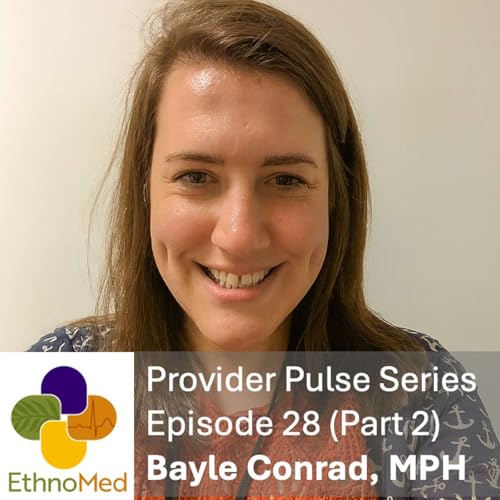
Provider Pulse Ep. 28: Bayle Conrad, MPH (Part 2) - Finding Agency in the Work
Impossible d'ajouter des articles
Échec de l’élimination de la liste d'envies.
Impossible de suivre le podcast
Impossible de ne plus suivre le podcast

Provider Pulse Ep. 28: Bayle Conrad, MPH (Part 2) - Finding Agency in the Work
-
Lu par :
-
De :
À propos de ce contenu audio
Send us a text
After her crisis of conscience in Kenya, Bayle Conrad made a decision: no more international work. But finding her place in global health wasn't that simple.
In this second part of our conversation, Bayle returns to Seattle with an MPH degree and more questions than answers. She turns down international jobs she's qualified for, takes a microfinance position that still involves those same power dynamics, and eventually stumbles into refugee resettlement work at the International Rescue Committee—a job she wasn't sure she could do.
What follows is six years of transformation. The anxious teenager who couldn't speak up becomes a caseworker handling crisis interventions. The student who questioned her right to help finds meaningful work here in Seattle. And the questions that nearly made her quit? They become her greatest asset.
This episode tackles the practical realities of refugee healthcare: Why "just pick up your prescription" isn't simple. How systemic barriers compound trauma. What happens when a care conference becomes an exercise in power dynamics. And most importantly, how providers can create space for agency rather than accidentally undermining it.
We end with Bayle's hard-won advice for students navigating uncertainty, anxiety, and the messy path toward meaningful work.
Topics covered:
- Transitioning from international to domestic work
- Refugee resettlement and casework at the IRC
- Navigating power dynamics in helping professions
- Barriers to healthcare for refugee populations
- Working with interpreters and cultural brokers
- Practical guidance for providers
- Advice for anxious, shy, or questioning students
- Finding your strengths in unexpected places
Perfect for: Healthcare providers working with refugees, public health professionals, students questioning their career path, anyone navigating the tension between helping and perpetuating harm, and those learning that their sensitivity might actually be their strength.
Visit EthnoMed.org for additional resources. Follow us on YouTube and Instagram @EthnoMedUW

Vous êtes membre Amazon Prime ?
Bénéficiez automatiquement de 2 livres audio offerts.Bonne écoute !