Épisodes

  • Ep. 63 - Ukraine’s Frontline Truths, Drones, & the Fight for Freedom w/JP Lindsley
    Jun 18 2026

    What happens when an American journalist spends four years reporting from the front lines of Europe’s largest war since World War II?

    In this episode of Peace and Power Ukraine, host Gary Marx is joined by JP Lindsley, editor of Under Fire News and one of the only American journalists to report daily from Ukraine throughout the full-scale war. Speaking shortly after leaving Ukraine for the first time since 2022, Lindsley reflects on the personal challenges of reporting from a war zone, the resilience of the Ukrainian people, and the lessons the West still has yet to learn from the conflict.

    Drawing on years of firsthand experience in Kyiv, Kharkiv, and across Ukraine, Lindsley offers a unique perspective on the war, the information battle surrounding it, and the evolving relationship between Ukraine, Europe, and the United States.

    The conversation covers:

    • Leaving Ukraine after four years of wartime reporting
    • The psychological impact of living under constant missile attacks
    • Translating Ukraine’s experience for American audiences
    • Russian propaganda and misconceptions about Ukraine in the United States
    • The role of conservative media and political narratives surrounding the war
    • Ukraine’s growing drone dominance and military innovation
    • Russia’s vulnerabilities and the future of the conflict
    • Crimea’s strategic importance and the changing battlefield
    • NATO, Romania, and Russia’s testing of Western resolve
    • Why Kharkiv remains one of Ukraine’s most important cities
    • What Americans and Europeans can learn from Ukraine’s resilience

    Lindsley also discusses how Ukrainian innovators are reshaping modern warfare through rapid adaptation, drone technology, and battlefield feedback loops that are increasingly influencing military thinking in Washington and across NATO.

    The discussion explores the importance of language, messaging, and public understanding in wartime, including how narratives can shape support for Ukraine both in the United States and abroad.

    Throughout the episode, Lindsley argues that Ukraine’s greatest strength is not simply its military capability, but the determination of its people to remain free despite years of relentless attacks.

    The episode concludes with a powerful reflection on Kharkiv, a city located just miles from the Russian border that continues to embody the resilience, independence, and spirit of the Ukrainian people.

    00:00 — The psychological cost of war
    00:23 — Intro + JP Lindsley joins
    01:18 — Leaving Ukraine after four years
    04:01 — Processing life outside a war zone
    08:05 — Translating Ukraine for American audiences
    10:36 — Russian propaganda and American politics
    13:34 — The Hunter Biden narrative and Ukraine skepticism
    16:25 — Winning the information war
    18:22 — Russia’s major attack on Kyiv
    20:18 — Ukraine’s battlefield advantages
    23:25 — Why Ukraine must avoid complacency
    24:08 — “The cards” debate and political messaging
    26:51 — Crimea, drones, and changing warfare
    31:08 — Drone dominance and military innovation
    37:12 — Russia, NATO, and the Romania incident
    39:22 — Concerns about future Baltic threats
    41:16 — Why Kharkiv matters
    45:52 — What the West can learn from Ukraine
    46:58 — Closing thoughts

    Watch Full-Length Interviews: https://www.youtube.com/@PeacePower_FNW

    Follow us on social media

    X: @PeaceAndPower_

    Instagram: peaceandpower_ukraine

    LinkedIn: Peace & Power Podcast

    TikTok: peace.power.ukraine

    Find more at Washington Signal

    Your source for policy, national security, and investigative journalism.

    https://washingtonsignal.com/

    Afficher plus Afficher moins
    47 min
  • Ep. 62 - Why Putin Is Losing Despite Four Years of War w/Steven Moore
    Jun 11 2026

    Is Vladimir Putin actually winning the war in Ukraine—or does the reality look very different from the headlines?

    In this episode of Peace and Power Ukraine, host Gary Marx welcomes back Steven Moore, founder of the Ukraine Freedom Project and a leading advocate for Ukraine’s fight for freedom, for a wide-ranging discussion from Kyiv on the state of the war, Russia’s mounting challenges, and the resilience of the Ukrainian people.

    Moore provides updates from the ground in Ukraine, discusses recent Russian attacks on Kyiv, and explains why he believes the war is increasingly exposing weaknesses within Russia despite the Kremlin’s efforts to project strength.

    The conversation covers:

    • Russia’s latest missile and drone attacks on Kyiv
    • Ukraine’s growing ability to strike targets inside Russia
    • Why Moore argues Putin is losing the war
    • The economic and military costs Russia has incurred
    • The role of drones in reshaping modern warfare
    • Poland’s growing importance to European security
    • NATO, European defense spending, and energy dependence on Russia
    • The Ukraine Freedom Project and advocacy efforts
    • The continuing success of the Faith Under Siege documentary series
    • Russia’s persecution of religious communities in occupied Ukraine
    • The destruction of churches and religious sites across Ukraine
    • Life in Kyiv during wartime

    The discussion also revisits Faith Under Siege, the documentary project that has reached millions of viewers by highlighting the experiences of Ukrainian Christians living under Russian occupation and documenting attacks on religious communities throughout the war.

    Throughout the episode, Moore argues that many Western audiences remain unaware of Ukraine’s successes inside Russia, including strikes against military targets far beyond the front lines, and that these developments are changing the strategic balance of the conflict.

    The episode concludes with reflections on Ukraine’s resilience, the importance of faith during wartime, and an unexpectedly spirited discussion about Ukraine’s surprisingly impressive gas station food culture.

    00:00 — Putin’s costs after four years of war
    00:32 — Intro + Steven Moore joins from Kyiv
    01:26 — Life in Ukraine during wartime
    03:03 — Updates on the Ukraine Freedom Project
    03:59 — Faith Under Siege reaches millions
    05:21 — Faith under Russian occupation
    07:02 — Churches destroyed across Ukraine
    09:13 — Russia’s weaponization of religion
    10:10 — Massive attacks on Kyiv
    13:07 — Ukraine strikes back inside Russia
    15:08 — The drone war and Russia’s vulnerabilities
    17:48 — Russia, Iran, and security concerns
    20:00 — Why Moore says Putin is losing
    23:05 — Poland’s growing strategic importance
    25:03 — NATO, Europe, and Russian energy
    27:44 — Ukraine’s famous gas station hot dogs
    29:18 — Final thoughts and closing remarks

    Watch Full-Length Interviews: https://www.youtube.com/@PeacePower_FNW

    Follow us on social media

    X: @PeaceAndPower_

    Instagram: peaceandpower_ukraine

    LinkedIn: Peace & Power Podcast

    TikTok: peace.power.ukraine

    Find more at Washington Signal

    Your source for policy, national security, and investigative journalism.

    https://washingtonsignal.com/

    Afficher plus Afficher moins
    30 min
  • Ukraine, China, NATO, & America’s Global Leadership w/Leon Panetta
    Jun 4 2026

    What are the biggest threats facing democracy today—and what role should the United States play in confronting them?

    In this episode of Peace and Power Ukraine, host Gary Marx is joined by Leon Panetta, former Director of the CIA, former U.S. Secretary of Defense, former White House Chief of Staff, and longtime member of Congress, for a wide-ranging discussion on Ukraine, China, NATO, Iran, and the future of American leadership in an increasingly dangerous world.

    Drawing on more than five decades of public service, Panetta reflects on the global security challenges facing the United States and its allies, the lessons of history, and why democratic nations must remain united against authoritarian aggression.

    The conversation covers:

    • President Trump’s China summit and U.S.-China relations
    • Xi Jinping, Vladimir Putin, and authoritarian partnerships
    • Lessons from Ukraine’s resistance against Russia
    • Why Panetta believes Putin cannot be trusted
    • Taiwan and deterrence in the Indo-Pacific
    • The future of NATO and allied cooperation
    • U.S. support for Ukraine and bipartisan backing in Congress
    • Drone warfare and the lessons of modern conflict
    • Iran, nuclear negotiations, and the Strait of Hormuz
    • Chernobyl, nuclear security, and international cooperation

    Panetta also discusses the work of the Panetta Institute for Public Policy, his efforts to encourage young Americans to pursue public service, and why he believes compromise and effective governance remain essential to the health of American democracy.

    Throughout the discussion, he argues that the United States must continue leading from a position of strength, maintain strong alliances, and remain engaged in world affairs if it hopes to preserve stability and security in the decades ahead.

    The episode closes with a reflection on America’s 250th anniversary and why Panetta believes the nation’s greatest strength ultimately lies not in Washington, but in the resilience, character, and dedication of the American people.

    00:00 — Leon Panetta on today’s global dangers
    00:20 — Intro + Leon Panetta joins
    04:42 — The Panetta Institute and public service
    08:25 — Reflections on 50 years in government
    09:57 — Trump’s China summit and Xi Jinping
    12:45 — China, Russia, Iran, and global security threats
    13:11 — Lessons from Ukraine’s resistance
    16:25 — What the U.S. should learn from Ukraine
    18:03 — Taiwan and deterrence in the Indo-Pacific
    19:03 — Iran, nuclear negotiations, and the Strait of Hormuz
    21:01 — U.S. aid to Ukraine and congressional support
    22:07 — Drones and the future of warfare
    24:04 — Chernobyl and nuclear security
    25:59 — NATO’s future and allied cooperation
    29:07 — America at 250 years: Panetta’s final message
    30:31 — Closing thoughts

    Watch Full-Length Interviews: https://www.youtube.com/@PeacePower_FNW

    Follow us on social media

    X: @PeaceAndPower_

    Instagram: peaceandpower_ukraine

    LinkedIn: Peace & Power Podcast

    TikTok: peace.power.ukraine

    Find more at Washington Signal

    Your source for policy, national security, and investigative journalism.

    https://washingtonsignal.com/

    Afficher plus Afficher moins
    31 min
  • Ep. 60 - Russia’s Abducted Children: The 20,000 Teddy Bear Protest w/Julian Hayda & Katya Pavlevych
    May 28 2026

    How do you make people truly understand the scale of Russia’s abduction of Ukrainian children?

    In this episode of Peace and Power Ukraine, host Gary Marx is joined by Julian Hayda, Associate Director of Public Engagement at Razom for Ukraine, and Katya Pavlevych, Advisor on Children’s Issues at Razom for Ukraine and policy advisor with the American Coalition for Ukraine, for a powerful discussion about Russia’s forced deportation and indoctrination of Ukrainian children.

    The conversation centers around Razom’s massive National Mall installation featuring 20,000 teddy bears — each representing a Ukrainian child abducted by Russia since the full-scale invasion began. The guests explain how the exhibit was designed, assembled, and displayed directly in the shadow of the U.S. Capitol to force public attention back onto the issue.

    Major topics include:

    • The 20,000 teddy bear installation on the National Mall
    • Russia’s abduction and indoctrination of Ukrainian children
    • Why the issue became central to Putin’s war crimes accusations
    • The challenges of documenting abducted children safely
    • Melania Trump’s involvement in advocating for returned children
    • Congressional attention and new U.S. funding initiatives
    • Rehabilitation efforts for returned children
    • Historical parallels between past and present Russian policies
    • Why the guests believe the war cannot truly end until the children return

    The episode also explores the emotional and psychological dimension of the issue, including how volunteers spent hundreds of hours assembling the installation and why the campaign resonated so deeply with both Ukrainian-Americans and broader American audiences.

    Hayda and Pavlevych discuss the difficulty of communicating a crime that is often invisible to the public eye, especially when many children’s identities must remain protected to avoid jeopardizing rescue operations.

    The conversation closes with a broader reflection on freedom, self-determination, family, and why both guests believe the issue of abducted children sits at the moral center of Russia’s war against Ukraine.

    00:00 — “The war is not over until the kids come home”
    00:19 — Intro + the abducted children crisis
    01:10 — Meet Julian Hayda and Katya Pavlevych
    02:09 — The 20,000 teddy bear installation explained
    03:42 — Why Razom created the display
    06:07 — Media coverage and public reaction
    07:13 — The message behind the installation
    08:22 — Putin, war crimes, and abducted children
    10:09 — Why the issue faded from public attention
    12:28 — Melania Trump’s involvement in the issue
    15:29 — Children reunited with families after years
    17:27 — Stories of abducted Ukrainian children
    20:02 — Why the guests call it cultural annihilation
    21:14 — Plans to take the installation nationwide
    23:29 — Volunteers and assembling 20,000 teddy bears
    25:00 — U.S. funding for abducted children programs
    28:36 — Why Julian Hayda joined the fight
    31:27 — Katya Pavlevych’s personal story
    34:11 — Final thoughts + “How can you not be involved?”

    Watch Full-Length Interviews: https://www.youtube.com/@PeacePower_FNW

    Follow us on social media

    X: @PeaceAndPower_

    Instagram: peaceandpower_ukraine

    LinkedIn: Peace & Power Podcast

    TikTok: peace.power.ukraine

    Find more at Washington Signal

    Your source for policy, national security, and investigative journalism.

    https://washingtonsignal.com/

    Afficher plus Afficher moins
    35 min
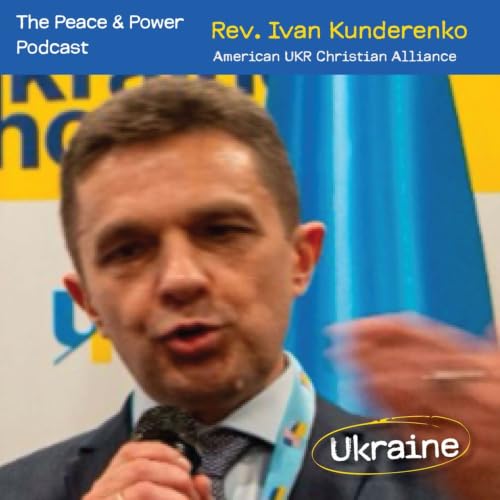
  • Ep. 59 - Faith Under Fire & Ukraine’s Spiritual Resistance w/Rev. Ivan Kunderenko
    May 21 2026

    What happens to faith communities when war deliberately targets churches, pastors, and places of worship?

    In this episode of Peace and Power Ukraine, host Gary Marx is joined by Ivan Kunderenko, pastor, educator, and member of the American Ukrainian Christian Alliance, for a powerful discussion on religious freedom, spiritual resilience, and the deliberate targeting of churches during Russia’s war against Ukraine.

    Kunderenko shares firsthand insight into Ukraine’s growing prayer breakfast movement, interfaith cooperation, and the role churches continue to play in supporting communities under the pressures of war.

    A major focus of the episode is the recent precision-guided bomb strike on a Baptist church in Zaporizhzhia — an attack Kunderenko argues was deliberate, not accidental.

    The discussion covers:
    • Ukraine’s growing interfaith prayer breakfast movement
    • “Spiritual diplomacy” and faith-based advocacy
    • The deliberate strike on a Baptist church in Zaporizhzhia
    • Russia’s broader repression of religious communities
    • Rebuilding churches and communities during wartime
    • What spiritual resilience actually looks like in Ukraine
    • Putin’s propaganda, historical narratives, and the war’s moral dimension

    The episode also explores the emotional and spiritual realities of life during wartime, including trauma, grief, perseverance, and the role churches continue to play in preserving community and hope.

    A major takeaway from the conversation is that Ukraine’s religious communities are not simply surviving — they are actively rebuilding, organizing, and strengthening civil society even amid ongoing attacks.

    The episode closes with a reflection on why many Ukrainians view the defense of their country not only as a national struggle, but as a moral and spiritual responsibility tied to freedom, dignity, and the ability to worship openly.

    00:00 — Intro + Ivan Kunderenko joins
    01:33 — Ukraine’s nationwide prayer breakfast movement
    04:08 — Interfaith cooperation during wartime
    05:47 — Experiencing missile alerts in Kyiv
    07:32 — Ukraine’s next National Prayer Breakfast
    09:44 — “Spiritual diplomacy” explained
    11:15 — The church strike in Zaporizhzhia
    13:07 — Why the attack appeared deliberate
    15:41 — Russia’s repression of churches in occupied areas
    19:15 — Rebuilding the destroyed church
    21:25 — Ukrainian resilience and rebuilding communities
    22:27 — What “spiritual strength” really means
    25:25 — Putin, propaganda, and Victory Day narratives
    30:08 — Why Ukraine chose to fight back
    32:01 — Closing thoughts

    Watch Full-Length Interviews: https://www.youtube.com/@PeacePower_FNW

    Follow us on social media

    X: @PeaceAndPower_

    Instagram: peaceandpower_ukraine

    LinkedIn: Peace & Power Podcast

    TikTok: peace.power.ukraine

    Find more at Washington Signal

    Your source for policy, national security, and investigative journalism.

    https://washingtonsignal.com/

    Afficher plus Afficher moins
    33 min
  • Ep. 58 - Drone Warfare, Kherson & Ukraine’s Frontline Reality w/Denver Riggleman
    May 14 2026

    What does modern warfare actually look like on the front lines in Ukraine?

    In this episode of Peace and Power Ukraine, host Gary Marx is joined by former Congressman, Air Force intelligence officer, and filmmaker Denver Riggleman to discuss his new documentary Drone Hunters of Kherson — a firsthand look at the brutal reality of drone warfare in southern Ukraine.

    Riggleman shares what he witnessed while traveling through Kherson, Mykolaiv, and Odessa alongside Ukrainian drone-hunting teams tasked with defending civilians and soldiers from constant Russian drone attacks.

    The conversation explores how the war in Ukraine has evolved into a terrifying hybrid of trench warfare and advanced technological combat — where small drone teams armed with rifles, machine guns, electronic warfare tools, and soon potentially lasers are reshaping the battlefield.

    The discussion covers:
    • The making of Drone Hunters of Kherson
    • How Ukrainian teams shoot down Russian drones in real time
    • Why modern drone warfare looks like “Terminator meets World War I”
    • Fiber optic drones and why traditional jamming no longer works
    • Why Ukraine has become the global leader in drone warfare
    • How quickly battlefield technology is evolving
    • The future of laser and directed-energy weapons
    • Why the U.S. military risks falling behind in drone combat
    • The strategic importance of Kherson and southern Ukraine
    • Agriculture, mines, and protecting Ukraine’s food supply
    • What life looks like for civilians near the front lines
    • The psychological reality of constant drone attacks

    The episode also explores the broader geopolitical picture surrounding the war, including recent U.S. military aid, Russia’s ongoing offensives, and the long-term importance of supporting Ukraine.

    Additional topics include:
    • The latest U.S. aid package for Ukraine
    • Chernobyl and repairing damage caused by Russian attacks
    • Why Riggleman believes stronger U.S. support was needed earlier
    • The similarities between the Ukraine war and America’s Civil War
    • The human side of Ukrainians fighting relatives and former friends across the border

    A major takeaway from the conversation is that Ukrainians are not fighting out of hatred — but out of necessity. Riggleman recounts a moment in Mykolaiv where a Ukrainian told him: “We don’t hate Russians. We just want them to leave us alone.”

    The episode highlights both the human cost of the war and the rapid transformation of warfare itself — lessons that will shape military strategy for decades to come.

    00:00 — Intro + Denver Riggleman joins
    03:55 — Military background and why Ukraine matters
    05:56 — Drone Hunters of Kherson documentary
    08:21 — Frontline drone teams and combat reality
    09:14 — Fiber optic drones and evolving tactics
    11:20 — Why Ukraine leads the world in drone warfare
    12:07 — Kherson battlefield update and trench warfare
    13:56 — Where to watch the documentary
    15:11 — Learning to shoot down drones
    16:47 — Future laser weapons and directed-energy warfare
    20:06 — Why Kherson matters strategically
    22:25 — U.S. aid and support for Ukraine
    24:06 — Chernobyl, Russia, and nuclear risks
    27:13 — Personal reflections from Ukraine
    29:16 — Ukraine, Russia, and Civil War comparisons
    31:01 — Closing thoughts

    Watch Full-Length Interviews: https://www.youtube.com/@PeacePower_FNW

    Follow us on social media

    X: @PeaceAndPower_

    Instagram: peaceandpower_ukraine

    LinkedIn: Peace & Power Podcast

    TikTok: peace.power.ukraine

    Find more at Washington Signal

    Your source for policy, national security, and investigative journalism.

    https://washingtonsignal.com/

    Afficher plus Afficher moins
    31 min
  • Ep. 57 - Drone War, Russia’s Weakness & Ukraine’s Path to Victory w/Oleksii Reznikov
    May 7 2026

    Who is really winning the war in Ukraine — and how has the battlefield changed in ways few predicted?

    In this episode of Peace and Power Ukraine, host Gary Marx is joined by Oleksii Reznikov, former Minister of Defense of Ukraine (2021–2023), for a strategic deep dive into the current state of the war and what comes next.

    Reznikov offers a firsthand assessment of a conflict that has fundamentally transformed modern warfare — where traditional assumptions about manpower, territory, and military strength no longer apply.

    A major theme of the conversation is the shift from industrial-era warfare to technology-driven combat, where drones, precision strikes, and scalable systems now define success on the battlefield.

    The discussion covers:
    • Why the war has stabilized — and what that actually means
    • Russia’s “crawling offensive” and limitations on the battlefield
    • How drones and unmanned systems created a massive “gray zone”
    • Why large-scale troop movements are no longer effective
    • The shift from manpower advantage to technological competition
    • How Ukraine turned the war onto Russian territory
    • Why Russia struggles to defend against low-cost drone attacks
    • The growing importance of deep-strike capabilities
    • Why Ukraine has become a “laboratory” for modern warfare
    • The failure of early predictions that Kyiv would fall in days
    • How Ukraine mobilized civilians into a modern fighting force

    The conversation also explores the broader geopolitical picture, including Russia’s weakening alliances, NATO’s evolving role, and Ukraine’s increasing importance as a global security partner.

    Additional topics include:
    • How Ukraine’s battlefield experience is shaping NATO strategy
    • Why Europe may now need Ukraine more than Ukraine needs NATO
    • Russia’s economic strain and long-term sustainability challenges
    • The impact of global conflicts, including Iran, on the war
    • Ukraine’s growing role in international security and defense

    Reznikov also shares his perspective on potential pathways to ending the war, suggesting that a ceasefire or “freeze” scenario could emerge — even if a full peace agreement remains unlikely in the near term.

    The episode underscores a key takeaway: this is no longer a conventional war — and understanding its outcome requires rethinking how modern conflicts are fought, sustained, and ultimately resolved.

    00:00 — Intro + Oleksii Reznikov joins
    00:54 — Battlefield update: stabilization and “crawling offensive”
    04:14 — Drone warfare and the new “gray zone”
    08:20 — Why technology is replacing manpower
    11:22 — Ukraine’s mobilization and shifting the battlefield
    13:01 — Who is winning the war?
    16:25 — NATO, alliances, and Ukraine’s global role
    19:58 — Can peace talks happen? 2026 outlook
    22:44 — Russia’s economy and weakening position
    23:56 — Europe, NATO, and future security risks
    26:02 — Key battlefield innovations (artillery + drones)
    28:09 — Leadership and Ukraine’s long-term strategy
    30:00 — Closing

    Watch Full-Length Interviews: https://www.youtube.com/@PeacePower_FNW

    Follow us on social media

    X: @PeaceAndPower_

    Instagram: peaceandpower_ukraine

    LinkedIn: Peace & Power Podcast

    TikTok: peace.power.ukraine

    Find more at Washington Signal

    Your source for policy, national security, and investigative journalism.

    https://washingtonsignal.com/

    Afficher plus Afficher moins
    30 min
  • Ep. 56 - NATO Strains, Iran War Fallout & Ukraine’s Fight w/Gerlinde Groitl
    Apr 30 2026

    As global crises collide — from Ukraine to Iran — how resilient is the transatlantic alliance, and what does it mean for the future of the war?

    In this episode of Peace and Power Ukraine, host Gary Marx speaks with Gerlinde Groitl, political scientist and founder of the ISS Institute, for a wide-ranging discussion on NATO tensions, European policy divisions, and the broader geopolitical consequences of the Iran conflict.

    Groitl explains how the Iran war exposed deep fractures within the transatlantic alliance, with European leaders divided on how to respond and frustrated by a lack of coordination with the United States. She argues that these divisions come at a critical moment — when unity is essential to sustaining support for Ukraine and countering Russia’s long-term strategy.

    A major focus of the conversation is how the Iran conflict has reshaped the strategic landscape for Ukraine. While both Ukraine and Russia have seen short-term effects, Groitl makes the case that Russia has benefited more — particularly through increased energy revenues and by exploiting political divisions within NATO.

    The discussion also covers:
    • How the Iran conflict strained U.S.–Europe relations
    • Why NATO unity is critical to Ukraine’s success
    • How Russia exploits divisions within the West
    • The short-term vs long-term outlook for Russia’s economy
    • Why Russia’s strategy is opportunistic rather than coherent
    • Ukraine’s growing ability to strike targets deep inside Russia
    • How Ukraine is shifting from aid recipient to security partner
    • What NATO is learning — and mislearning — from the war
    • Germany’s defense buildup and the “Zeitenwende” shift
    • Why European defense spending is rapidly increasing
    • The political challenges of financing long-term support for Ukraine
    • EU funding debates and the limits of joint debt solutions
    • Hungary’s role in blocking aid and internal EU divisions
    • Ukraine’s outreach to the Middle East and strategic partnerships
    • Why the war ultimately comes down to a “contest of wills”

    Groitl also emphasizes that while Russia faces long-term structural decline, its ability to exploit short-term Western divisions remains a serious threat to Ukraine’s position.

    The episode closes with a broader reflection on the future of the transatlantic alliance: despite current tensions, Groitl argues that the United States and Europe remain each other’s most important partners — and that preserving unity will be essential in an increasingly unstable global environment.

    00:00 — Intro + Gerlinde Groitl joins
    00:33 — Background and ISS Institute overview
    02:13 — Translating U.S.–Europe policy perspectives
    04:55 — Iran conflict and transatlantic tensions
    06:23 — Germany’s shifting position on Iran
    07:44 — NATO unity under pressure
    08:50 — Policy missteps and alliance friction
    09:06 — Iran war impact on Ukraine
    11:13 — Why Russia benefits from Western divisions
    13:14 — Energy markets and Russia’s short-term gains
    14:17 — Long-term outlook for Russia’s economy
    16:25 — Russia’s opportunistic war strategy
    17:41 — Ukraine’s growing military innovation
    19:15 — Western support and “contest of wills”
    21:26 — Ukraine as a future security partner
    23:15 — Lessons (and limits) from Ukraine’s battlefield
    24:46 — Germany’s military rebuild and defense spending
    27:01 — NATO spending increases and long-term shift
    27:49 — EU funding challenges and Ukraine aid
    29:31 — Joint debt debate and political friction
    31:15 — Hungary, EU divisions, and aid obstacles
    32:12 — Ukraine’s Middle East outreach and partnerships
    33:40 — Final thoughts: future of the transatlantic alliance
    35:15 — Closing

    Watch Full-Length Interviews: https://www.youtube.com/@PeacePower_FNW

    Follow us on social media

    X: @PeaceAndPower_

    Instagram: peaceandpower_ukraine

    LinkedIn: Peace & Power Podcast

    TikTok: peace.power.ukraine

    Find more at Washington Signal

    Your source for policy, national security, and investigative journalism.

    https://washingtonsignal.com/

    Afficher plus Afficher moins
    36 min