Épisodes

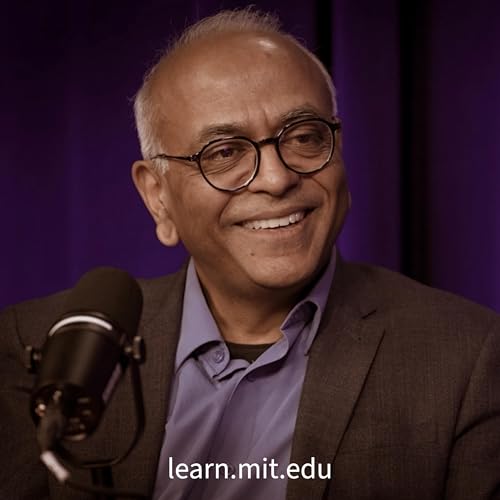
  • The Electrical Grid and Beyond with David Hsu
    Jun 8 2026

    Dr. Daniel Braconnier discusses with Dr. David Hsu about the importance of understanding the electrical grid and its role in the future of energy systems. It explores the complexity of the grid, its historical development, and the challenges and opportunities it presents. This Why THIS Matters episode highlights the inter-dependencies between different energy sources and the need for a coordinated approach to managing the grid. It also addresses common misconceptions about the grid, such as thinking it is a unitary object or separate from other systems. The episode concludes by emphasizing the significance of the grid in the context of climate change and the need for a comprehensive understanding of how the grid is built and how it can be changed to achieve future goals. Why THIS Matters is an MIT Learn Podcast, continue to learn more at: https://learn.mit.edu/

    Afficher plus Afficher moins
    47 min
  • Inside the Cell: Why Pathogens are the World’s Best Cell Biologists with Becky Lamason
    Jun 1 2026
    Description:Understanding how bacteria evade our immune systems and cause disease is vital for developing better treatments and diagnostics. In this MIT Learn Beyond Biology episode, MIT professor Becky Lamason shares her insights on bacterial pathogens, their interaction with human cells, and the future of infectious disease research. This discussion reveals not only the complexity of microbes but also how innovative science can uncover new paradigms in host-pathogen interactions. Stay to the end to learn more about Becky’s personal path to the lab.Resources:MIT Learn online cell biology coursesVideo of this episodeMIT Department of Biology Profile of Becky LamasonKey topics:How bacterial pathogens break the rules of survival and adaptationExamples of bacterial infections and the dangers they pose—Listeria, Rickettsia, Salmonella, VibrioThe unique strategies bacteria use to invade and persist inside human cellsThe difference between bacterial, viral, fungal, and parasitic pathogensAntibiotic resistance: development, implications, and the importance of proper useHow bacterial size and shape compare to human cellsMechanisms of bacterial entry into cells via force or protein tricksThe obligate dependence of certain bacteria like Rickettsia on living inside host cellsThe tick transmission cycle and how bacteria jump from vectors into humansCell-to-cell spread of bacteria and the importance of intracellular movementThe role of modern tools—genetics, microscopy, genome editing—in understanding pathogen biologyFuture directions: expanding research to environmental vectors, developing broad-spectrum diagnostics, and leveraging new technologiesTimestamps:00:00 - The unpredictability of pathogens and their survival strategies00:24 - Introduction to Becky Lamason and the importance of bacterial pathogens01:08 - Common bacterial pathogens and infections in daily life01:33 - Food recalls and bacterial contamination in the environment02:13 - Focus on Listeria monocytogenes and clinical implications02:41 - Other bacteria like Rickettsia and their deadly potential03:15 - Symptoms of spotted fevers caused by Rickettsia03:20 - The range of bacterial disease symptoms and severity04:01 - Categorizing pathogens: bacteria, viruses, fungi, and parasites04:28 - Bacteria’s size relative to other microbes and complexity05:04 - The diversity within bacterial pathogens and their unique features05:20 - Treatment options for bacterial infections and antibiotic sensitivity05:48 - Antibiotic resistance: evolution, biology, and clinical impact06:26 - Practical advice: importance of completing antibiotic courses08:02 - The analogy of pathogens as cell biologists and their survival tactics08:41 - Bacteria’s ability to break rules of host cell biology11:25 - Comparing bacterial size to human cells; visualization of scale12:19 - How bacteria enter human cells through force or mimicry12:33 - The dependency of certain bacteria on living inside host cells15:28 - Transmission cycles involving ticks and environmental reservoirs17:28 - Mechanisms of bacterial cell spreading and invasion strategies19:00 - The concept of acute infection phases and bacterial proliferation20:14 - The ultimate goal of bacteria: replication and dissemination21:28 - Safety measures in the lab working with pathogenic bacteria23:33 - Connecting basic research to clinical applications and diagnostics25:09 - The power of microscopy and visual data in understanding infection27:38 - Memorable discoveries and unexpected breakthroughs in the lab29:28 - Future tech: genome editing, large-scale genetic analysis, and new directions31:33 - The significance of bacteria targeting host cell organelles like ER and nuclei33:01 - Becky’s journey, switching questions and embracing multidisciplinary work35:41 - Building community and embracing the unknown in scientific research37:25 - From high school curiosity to MIT professor: Becky’s personal story39:56 - Balancing real-world jobs and academic pursuits42:12 - The future of bacterial research: new tools and broader applications44:02 - Final thoughts and encouragement to explore and collaborate
    Afficher plus Afficher moins
    45 min
  • Systems Thinking with Bruce Cameron
    May 25 2026

    On today's episode, we're joined by Dr. Bruce Cameron. He's the director of the system architecture group, a senior lecturer, and the faculty director for MIT's Architecture and System Engineering Online Certificate Program.

    In this episode, we'll explore the world of systems thinking, what it really means to see the connections between events, why the decisions you make early in any complex system can determine everything that follows, and how organizations consistently undermine themselves by optimizing the wrong things. From NASA to Amazon to Meta, Bruce has seen systems succeed and fail at the highest levels, and he's here to share what he's learned, including some surprises along the way.

    Mentioned links:

    • Architecture and Systems Engineering: Models and Methods to Manage Complex Systems
    • MIT Learn

    Afficher plus Afficher moins
    45 min
  • Half-Million Miles to Your Door: Supply Chains with Chris Caplice
    May 18 2026

    From the products on our shelves to the packages arriving at our doors, supply chains quietly shape our everyday lives. We sat down with Chris Caplice to unpack how these complex systems actually work behind the scenes. Dr. Caplice serves as the Executive Director of the MIT’s Center for Transportation & Logistics (CTL) where he is responsible for the planning and management of the research, education, and corporate outreach programs for the center. He created and currently serves as Director of MIT’s online program in Supply Chain Management. He shares insights into how supply chains are designed, where they break down, and why understanding them has become more important than ever.

    Watch the episodes on video: https://bit.ly/scienceofeverydaylife

    Chris Caplice : https://caplice.mit.edu/

    Learn more at learn.mit.edu

    MicroMasters Program in Supply Chain Management https://micromasters.mit.edu/scm/

    Afficher plus Afficher moins
    45 min
  • Automation in Manufacturing with Ben Armstrong
    May 11 2026

    Dr. Daniel Braconnier chats with Dr. Ben Armstrong about the importance of manufacturing in the context of innovation and competitiveness. This conversation highlights the need for a balance between precision and flexibility, emphasizing that while some manufacturing focuses on producing identical products (often referred to as "copy exactly" manufacturing), there is also a need for continuous improvement and adaptability. This discussion includes examples like Tesla's approach to innovation and flexibility in production processes. Why THIS Matters is an MIT Learn Podcast, continue to learn more at: https://learn.mit.edu/

    Afficher plus Afficher moins
    43 min
  • Unlocking Brain Plasticity: Treating Blindness in India with Pawan Sinha
    May 4 2026

    In this episode, MIT Professor Pawan Sinha delves into the science of vision, brain plasticity, and the transformative power of scientific innovation in addressing global health challenges. Discover how research on early visual deprivation has shaped our understanding of neural development, and explore the inspirational journey of his nonprofit, Project Prakash, transforming lives in India.

    In this episode:

    • The historical context of the 1981 Nobel Prize on critical periods in vision development
    • The mechanisms of visual processing in the brain, as discovered by Hubel and Wiesel
    • The role and surprising findings from the monocular deprivation studies in kittens
    • How William James' description of a newborn's sensory experience relates to visual development
    • The personal story of Darius, Professor Sinha's son, and its impact on his research
    • The global challenge of childhood blindness, especially in India, and the potential for treatment
    • The surgical process and scientific opportunities provided by early intervention in cataract cases
    • The experimental insights into how dynamic perception plays a crucial role in visual development
    • The founding, achievements, and ongoing work of Project Prakash over the past 21 years
    • The educational impact of immersive global experiences for MIT students in India
    • A discussion on autism, sensory sensitivities, and the link with visual processing differences
    • The importance of challenging received wisdom and embracing scientific curiosity for advancing knowledge

    MIT Learn: MIT’s hub for a growing collection of lifelong learning experiences

    Project Prakash: To learn about Pawan Sinha's ongoing work in India

    Afficher plus Afficher moins
    46 min
  • Misinformation, AI, & Science Photography
    Mar 5 2026
    Science photographer Felice Frankel is acclaimed for the striking beauty of her images, which have been displayed in museums, published in multiple books, and even featured in the background in one of Ang Lee’s films. Yet she insists that she doesn’t think of herself as an artist. Her academic background is in biology, she began her working life doing cancer research at Columbia University, and she doesn’t see her photographic work as a form of self-expression. Instead, the subtle decisions she makes in setting up a composition, taking the photo, cropping it, and so on, are all in the service of creating an image that will communicate vital facts about the phenomenon she’s capturing. That doesn’t mean she doesn’t also want her images to be visually gripping and aesthetically appealing, but for her, the science always comes first, and any manipulations that obscure the truth are unacceptable. In this episode, Frankel talks with host Sarah Hansen about stumbling into a career as a science photographer, about sparring with researchers over photographic design decisions, and about what happened when she attempted to use AI to duplicate one of her images. Check out the Video version of this interview on YouTube ... and check out her most recent work on OCW, Generative AI and Science Photography, here ➟ https://www.youtube.com/watch?v=0I8S6diyDjw Relevant Resources: MIT OpenCourseWare The OCW Educator portal Felice Frankel’s personal website Felice Frankel on Wikipedia RES.10-001 Making Science and Engineering Pictures: A Practical Guide to Presenting Your Work on MIT OpenCourseWare Phenomenal Moments (book) Video version of this interview on YouTube Music in this episode by Blue Dot Sessions Connect with UsIf you have a suggestion for a new episode or have used OCW to change your life or those of others, tell us your story. We’d love to hear from you! Call us @ 617-715-2517On our siteOn FacebookOn XOn InstagramOn LinkedInStay CurrentSubscribe to the free monthly "MIT OpenCourseWare Update" e-newsletter. Support OCWIf you like Chalk Radio and OpenCourseware, donate to help keep these programs going! CreditsSarah Hansen, host and producer Brett Paci, producer Dave Lishansky, producer Jackson Maher, producerShow notes by Peter Chipman
    Afficher plus Afficher moins
    46 min
  • Special Episode: Collaborating with Community Colleges
    Jan 15 2026

    MIT OpenCourseWare has been one of the pioneers of open education, leading the way by offering free materials from MIT courses as early as 2001, when no other institutions were pursuing comparably ambitious initiatives. But in subsequent years, there’s been an explosion of activity in open education, led by faculty members, instructional designers, and librarians at institutions throughout the United States and worldwide. In this episode, we hear from senior manager of MIT Open Education collaborations, Dr. Shira Segal, who talks about MIT’s efforts to team up with and learn from open education practitioners at the Maricopa County Community College District in Arizona, whose energetic promotion of open educational resources has saved students over $270 million in textbook costs, and College of the Canyons in California, a leader in the Zero Textbook Cost movement. We also hear excerpts from interviews with four instructors from those colleges, who talk about the potential benefits and unexpected challenges of using open educational resources in general, and about what they learned from their experiences in adapting OCW materials for use in their own classes.

    Relevant Resources:

    MIT OpenCourseWare

    The OCW Educator Portal

    More on MIT OpenCourseWare’s collaboration with community colleges

    Maricopa County Community College District

    College of the Canyons

    Maricopa Community Colleges Save Students $270M in Textbooks

    OER and Zero Textbook Cost at College of the Canyons

    Music in this episode by Blue Dot Sessions

    Connect with Us

    If you have a suggestion for a new episode or have used OCW to change your life or those of others, tell us your story. We’d love to hear from you!

    Call us @ 617-715-2517

    On our site

    On Facebook

    On X

    On Instagram

    On LinkedIn

    Stay Current

    Subscribe to the free monthly "MIT OpenCourseWare Update" e-newsletter.

    Support OCW

    If you like Chalk Radio and OpenCourseware, donate to help keep these programs going!

    Credits

    Sarah Hansen, host and producer

    Brett Paci, producer

    Dave Lishansky, producer

    Jackson Maher, producer

    Show notes by Peter Chipman

    Afficher plus Afficher moins
    34 min