Épisodes

  • Would Jesus Use AI? Faith, Technology, and the Future of Meaningful Work
    Jan 28 2026

    Just for fun this a 3rd person article but written by me

    In a world racing toward artificial intelligence, automation, and unprecedented technological power, a provocative question is quietly unsettling leaders, entrepreneurs, and everyday workers alike: If Jesus were here today, would He use AI in his work and business?

    That question sits at the heart of a recent episode of The Jesus Entrepreneur Experience, a weekly exploration that looks at the life and leadership of Jesus not only as a spiritual figure — but as a model for meaningful, mission-driven entrepreneurship.

    Hosted by veteran broadcaster and business performance coach Stan Hustad, the program challenges listeners to rethink success, work, and contribution in an age where technology increasingly shapes the marketplace.

    Rather than offering simplistic answers, the episode invites careful reflection. Jesus built his mission without exploiting supernatural shortcuts. He worked within human limits, relied on relationships, gathered people, developed leaders, and focused relentlessly on purpose. His approach resembles an entrepreneurial model grounded in wisdom, restraint, and human dignity.

    The episode acknowledges both the promise and peril of AI. Used wisely, it can enhance creativity and productivity. Used recklessly, it can erode meaning, displace workers, and magnify harm.

    If Jesus were here today, the program suggests, He would not reject AI out of fear nor embrace it uncritically. He would study it carefully, seek wise counsel, and ask whether it contributes to human flourishing. Above all, He would pray.

    The episode reminds listeners that meaningful work is deeply human — craftsmanship, service, risk, and responsibility. Entrepreneurs are challenged to examine whether their businesses truly help people flourish or merely function as rackets.

    In an era of rapid change, The Jesus Entrepreneur Experience offers realism, wisdom, and hope by reminding us that the most important questions are still worth asking.

    This is an AI based quick summary that the video program that I did that goes into far more details about Jesus and the AI and if you'd like to watch that program just click the link below.

    https://youtu.be/f-ghCLyteVU

    Afficher plus Afficher moins
    18 min
  • Seven Words to Think About During the Storm
    Jan 23 2026

    The storm is coming.

    You can feel it—not just outside, but everywhere. Schools closing. Churches canceling. Flights disappearing from the board like magic tricks gone wrong. We're all being gently (or not so gently) told: stay home, stay put, stay warm.

    Which is exactly what I'm doing—sitting in my little radio studio, which also happens to be a television studio, a video studio, and a worldwide broadcasting station. No tower. No transmitter building. No million-dollar equipment. Just a good microphone, a decent camera, an internet connection, and a lifetime spent loving radio.

    I started in the kind of radio that had mystery and majesty—big towers, humming transmitters, and studios that felt like sacred ground. There was romance in it. There still is. Old radio guys even swap pictures of their favorite towers now, like proud grandparents showing photos of the grandkids. Guilty as charged.

    But radio has changed.

    And in some wonderful ways, it's come home.

    Now, during a snowstorm, you can sit in your own house and be on the radio. You can speak to the world from a spare bedroom, a basement, or a corner of the living room—just like I'm doing right now. And that matters, because a lot of people have something to say, something to sing, something to teach, or some wisdom worth sharing. They just needed permission and a microphone.

    Which brings me to the storm—and the pause it gives us.

    When weather forces us to slow down, it also gives us space to think. To read. To pray. To wonder a little about the life we're living… and the life we still want to live.

    I've made a commitment that 2026 is going to matter. I want it to be significant—for my family, my community, and the people kind enough to listen in on my life and work. And as I was sitting here waiting for the storm, seven simple words came to mind.

    Not fancy words. Not complicated words. Just honest ones.

    Here they are. Don't rush past them. Let each one ask you a question.

    Better.

    What, exactly, do you want to be better at this year?

    Beautiful.

    What do you want more of that brings beauty into your life—or that you bring into the world?

    Bright.

    Not smarter—brighter. More alive. More visible. More you.

    Bolder.

    Where have you been playing it safe when you know you're meant to step forward?

    Braver.

    What fear are you finally ready to face?

    Richer.

    Yes, maybe financially—but also richer in relationships, meaning, gratitude, and joy.

    Smarter… and Wiser.

    Not the same thing. Smarter fills your head. Wiser shapes your life.

    And then there's the one underneath them all:

    Matter.

    We all want to matter. We were made for meaning. We were designed to make a difference. That's not ego—that's wiring.

    So while the snow falls and the world quiets down a bit, maybe these seven words are worth sitting with. Let your mind talk to your heart. Let your heart speak to your future.

    As I often ask:

    Are you living the life you want—or just the life you've got?

    Storms have a way of clarifying things.

    Stay safe. Stay warm. Comfort one another. And maybe—even in the middle of the storm—find a little comfort and joy.

    All the best and blessings,

    Stan

    Things to Remember

    - Storms slow us down so reflection can catch up

    - You don't need a tower to have a voice

    - Meaning often shows up in simple words

    Things to Share

    - The seven words that resonated most with you

    - This question: Which one am I ignoring?

    - The idea that 2026 is still wide open

    Things to Take Note Of (and Act On)

    - Write the seven words down

    - Circle the one that scares you a little

    - Take one small step toward it—after the storm

    Snow days are good for productivity too. ❄️🎙️

    Afficher plus Afficher moins
    16 min
  • If Jesus were in the IDF today... What kind of soldier or man do you think he would be?
    Jan 21 2026

    In a culture crowded with slogans, outrage, and instant opinions, a recent radio program in The Jesus Entrepreneur Experience does something surprisingly rare: it asks people to stop, imagine, and think.

    The program poses a single, provocative question—not to shock or inflame, but to awaken reflection:

    If Jesus were here today—now, in our time and place—and if He were a young man living in Israel, what kind of man would He be if required to serve in the Israeli Defense Forces?

    The result is a thoughtful, TED-Talk-length exploration that bridges history, faith, entrepreneurship, and the human condition—without preaching, ranting, or political positioning.

    Making Jesus Real—Not Distant

    At the heart of the program is a simple but profound concern: Jesus is real, but too often He feels unreal to modern people.

    For many, Jesus exists only in stained glass, ancient texts, or distant history—long ago, in a far-away land. The broadcast challenges that distance by re-anchoring Jesus in real life: born into political oppression, raised in an occupied land, a refugee as a child, a working tradesman and small-business owner, and a man without elite credentials, yet deeply competent and respected.

    Rather than asking the worn question "What would Jesus do?", the program reframes it in a more personal and practical way:

    What would Jesus do if He were you?

    The Thought Experiment: Jesus and the IDF

    In modern Israel, military service is not hypothetical. It is a reality of citizenship and survival. If Jesus were living there today as a young man, He would almost certainly be required to serve.

    The broadcast carefully avoids spectacle or sensationalism. There are no images of Jesus firing weapons or raging in battle. Instead, listeners are invited to imagine Him as calm, centered, and courageous—fully human, facing fear and duty.

    The question is not what position He would take, but what kind of man He would be.

    Character Over Certainty

    Rather than offering conclusions, the program offers mirrors. By refusing to answer the question for the audience, the program creates space for honest self-examination.

    The Entrepreneurial Connection

    Jesus spent nearly two decades as a working tradesman before beginning His public ministry. In modern terms, He lived most of His life as a small-business owner—serving clients, mastering skills, managing work, and earning trust.

    From this perspective, the term Jesus Entrepreneur is not irreverent—it is illuminating.

    Things to Remember
    - Jesus was fully real—historically, socially, economically.
    - Character is revealed under pressure.

    Things Worth Sharing
    - Thoughtful questions invite deeper conversations than fixed positions.
    - Understanding people is the foundation of influence.

    Things to Take Note Of and Act On
    - Examine what your assumptions say about you.
    - Practice leading with conscience, not just competence.

    Closing Challenge

    If Jesus were here today—walking our streets, facing our pressures—what kind of man would He be? And what kind of person are you becoming?

    For more information about The Jesus Entrepreneur Experience or working with Stan Hustad, reach out and continue the conversation.

    Afficher plus Afficher moins
    20 min
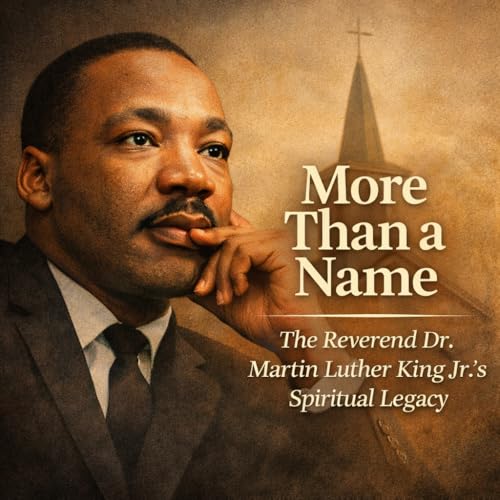
  • More Than a Name: The Title of the Man and the Faith Behind Dr. King's Legacy
    Jan 19 2026

    In this special birthday-commemoration edition of Inconvenient Ideas, broadcaster Stan Hustad invites listeners to pause, reconsider, and remember something easily overlooked in the story of one of America's greatest heroes: the full and formative identity of the Reverend Dr. Martin Luther King Jr.

    The program opens with a light, affectionate nod to radio history and the marvel of modern podcasting—how a single voice can now circle the globe without towers, transmitters, or billion-dollar budgets. From there, the focus turns to the meaning of this national holiday and to the man it honors.

    The heart of the episode centers on a deceptively simple but surprisingly powerful idea: "Dr. Martin Luther King Jr." was not his complete title. His full and proper designation was the Reverend Dr. Martin Luther King Jr. That distinction matters.

    Listeners are reminded that King was not merely a civil-rights strategist, political activist, or moral philosopher—though he was all of those. First and always, he was a Christian minister. His authority flowed from the pulpit to the people and into the public square. His sermons, marches, and moral clarity were not parallel tracks; they were one unified calling rooted in faith.

    With warmth and candor, the program reflects on the shock of King's assassination, the brutality of the moment, and the lasting imprint it left on a generation. From there, the story widens to reveal an often-missed spiritual lineage behind King's philosophy of nonviolence.

    That path leads to missionary-evangelist E. Stanley Jones, whose writings on Mahatma Gandhi deeply influenced King's thinking. Through Jones's work, King encountered a practical theology of nonviolent resistance—one he embraced, embodied, and ultimately gave his life to defend.

    Along the way, the program maintains a gentle, conversational tone—personal anecdotes, naming stories, and moments of humor included—while never losing sight of the central message: to honor Dr. King fully, we must acknowledge the spiritual foundation that shaped his life and leadership.

    Things to Remember
    • Dr. King's full title—the Reverend Dr. Martin Luther King Jr.—tells a deeper story than "Dr." alone.
    • His faith was not an accessory to his work; it was its source.
    • King's commitment to nonviolence was shaped by Christian conviction and global spiritual influence.

    Things to Share
    • King's sermons and public actions were one integrated calling.
    • The civil-rights movement drew strength from theology, not just strategy.
    • Faith-driven leadership can reshape nations without resorting to violence.

    Things to Take Note Of (and Act Upon)
    • Language matters: how we name people reflects how we understand them.
    • Spiritual roots are often edited out of public memory—but they still matter.
    • Nonviolence is not weakness; it is disciplined moral courage.

    A Closing Challenge

    As you listen to this program, consider the ways we simplify history to make it more comfortable—or less demanding. The Reverend Dr. Martin Luther King Jr. challenges us not only to remember his dream, but to reckon with its source.

    What might change in our own lives, leadership, or communities if conviction once again shaped courage—and faith informed action?

    26

    Blessings on his memory, his family, and all who continue the work of justice, courage, and nonviolent love.

    Afficher plus Afficher moins
    17 min
  • Why are the Democrats and the ICEers trying to get Donald Trump and his team elected and have more power
    Jan 16 2026

    Protest Backfires: The Inconvenient Politics of Noise, Power, and Human Nature

    In this episode of Inconvenient Ideas, veteran broadcaster Stan Hustad poses a question that at first sounds almost absurd—and then increasingly unavoidable:

    Why do the loudest opponents of Donald Trump and ICE often end up strengthening the very people they oppose?

    It's a question rooted not in partisan rhetoric, but in something deeper and far more uncomfortable: human behavior, perception, and unintended consequences.

    A Radio Man Sounds the Alarm

    Drawing on more than four decades in broadcasting, Hustad opens the program the old-fashioned way—with a "sounder," a classic radio cue meant to signal urgency. In the golden age of radio, it meant one thing: stop what you're doing—this matters.

    And what matters here is not simply immigration policy, protest movements, or the presidency of Donald Trump. What matters is how people think, how they react, and how often they misjudge the impact of their own actions.

    The Minority Illusion

    At the heart of the episode is a simple but inconvenient insight: people routinely overestimate how many others agree with them.

    Hustad illustrates this with stories from business, publishing, and event marketing—where passionate creators are shocked to discover that enthusiasm does not automatically translate into widespread support.

    Protest, Power, and Perception

    The episode examines protests against immigration enforcement actions carried out by U.S. Immigration and Customs Enforcement. Hustad does not argue policy details as much as outcomes.

    When protests disrupt daily life or escalate into chaos, many observers don't blame the administration—they recoil from the protesters. Instead of weakening Trump's political position, such actions may solidify support for him and those aligned with his agenda.

    Things to Remember
    • Passion does not equal majority support
    • Noise can repel as easily as it attracts
    • Methods often matter more than messages

    A Final Inconvenient Thought

    This episode isn't ultimately about immigration or Trump. It's about the human condition—our tendency to confuse conviction with consensus and noise with power.

    If you want to change minds, you must first understand how people actually think.

    Afficher plus Afficher moins
    15 min
  • Six Dollars for a Newspaper
(An Inconvenient Idea Worth Thinking About)
    Jan 14 2026

    What kind of person pays six dollars for a newspaper in 2026?

    Apparently, I do.

    In this short episode of Inconvenient Ideas, I tell a simple story that turns out not to be simple at all—from being a 12-year-old paperboy delivering six days of news for 35 cents, to standing in a store today holding a weekend paper that costs more than I used to make in a week.

    Along the way, we talk about old-school radio, standing up to do a broadcast, dressing for the job even when no one can see you, and why some things that feel inconvenient—like slowing down, paying attention, or holding real paper in your hands—might actually be more valuable than ever.

    This isn't really about newspapers.
    It's about how we judge value, why inconvenient ideas often matter most, and why the things we're tempted to dismiss are sometimes the very things that help us think better, live better, and do better business.

    If you've ever wondered whether the "old ways" still have something to teach us—or whether inconvenient ideas are worth the trouble—this one's for you.

    Pull up a chair.
    Or better yet, stand up and listen.

    Afficher plus Afficher moins
    19 min
  • A lot of people are destroying their destiny these days. Please be different!
    Jan 12 2026

    This is a radio program that also happens to have the studio camera on. But it's a radio show and it is about an inconvenient idea... And that's about my concern that a number of friends and others are not being careful about how they are living right now and they are in effect possibly destroying their destiny, perhaps not doing what they were truly made for and what would give them some deep gladness, ... Maybe more later.

    Most people don't wake up in the morning planning to ruin their future. And yet, according to this brief but pointed episode from the Inconvenient Ideas series, that may be exactly what's happening—slowly, subtly, and often unconsciously.

    In just a few minutes, this radio reflection confronts a troubling pattern of modern life: the quiet erosion of destiny through distraction, drift, fear, and unexamined habits. It's not a rant. It's not an alarm bell. It's more unsettling than that—it's a calm, clear mirror.

    The program poses a simple but unsettling thought: many people are not losing their way because of catastrophe, but because of neglect. Destiny isn't usually destroyed in a moment; it's surrendered over time.

    With a light but serious touch, the message invites listeners to pause, reflect, and choose a different path—one marked by intentionality, courage, and responsibility for the life they are shaping every day.

    This episode stands well on its own as a reflection, but its real power comes when you take a few uninterrupted minutes to listen all the way through. It doesn't overwhelm. It nudges. And sometimes, a nudge is exactly what's needed.

    Things to Remember
    - Destiny is rarely destroyed by one bad decision—it's more often worn down by many small ones.
    - Drift feels comfortable, but it always has a direction.
    - Being "busy" is not the same as being faithful to your calling.

    Things to Share
    - With a friend who feels stuck but can't quite explain why.
    - With someone at a transition point—career, retirement, recovery, or reinvention.
    - With anyone who values clarity over comfort.

    Things to Notice
    - Where you may be postponing decisions that deserve attention.
    - Habits that quietly shape outcomes more than intentions do.
    - The difference between reacting to life and actively choosing it.

    Things to Take Action On
    - Pause long enough to ask: Where is my life actually headed?
    - Identify one small course correction you can make this week.
    - Commit to being intentional where you've been casual.

    Final Thought
    The most inconvenient idea of all may be this: no one else is responsible for the destiny you are living into. The good news? That also means you can choose differently—starting now.

    Sometimes the shortest programs ask the biggest questions. This one is worth your time.

    Afficher plus Afficher moins
    13 min
  • When "Minnesota Nice" Gives Way to "Minnesota Vice" and Hard Questions;
    Jan 12 2026

    Reflections on Culture, Power, and the Cost of Ignoring Inconvenient Ideas In this edition of Inconvenient Ideas, veteran broadcaster and performance coach Stan Hustad draws on decades of lived experience in Minnesota to explore a troubling question:

    How did a state long known for "Minnesota Nice" find itself at the center of one of the largest fraud scandals in recent American history? This is not a political rant, nor is it a partisan argument. Instead, Hustad offers a reflective, sometimes uncomfortable examination of how cultural drift, failed assimilation, technological dominance, and institutional hesitation can combine to produce damaging outcomes—not just in Minnesota, but anywhere.

    A Personal Lens, Not a Political Agenda Hustad's perspective is shaped by time and proximity. He studied at the University of Minnesota, taught in its public schools, built a career there, and raised a family connected deeply to the state. His reflections come not from distance, but from familiarity. From the outset, he emphasizes that this conversation is about money, culture, and systems, not political parties or personalities.

    The fraud that eventually came to light was not an isolated event—it was the result of long-standing conditions that were ignored or mishandled for years. Technology, Media, and the Loss of Guardrails Drawing on the work of cultural critic Neil Postman, Hustad reminds listeners that societies can become so captivated by technology and efficiency that they surrender moral and cultural frameworks in the process. When technology becomes dominant, efficiency and power replace wisdom, responsibility, and character.

    Assimilation Deferred,

    Consequences Multiplied Minnesota's welcoming posture toward immigrants was morally commendable, Hustad argues, but assimilation challenges were often left unresolved. Cultural clarity and shared civic expectations were avoided in the name of being "nice," creating parallel systems rather than a unified public culture. Culture Always Wins One of Hustad's central lessons is familiar to organizational leaders: culture eats strategy.

    No amount of policy or funding can overcome a deteriorating culture. When culture turns unhealthy, surface-level fixes are not enough—deep structural renewal is required.

    The Cost of Avoiding Inconvenient Conversations Declining educational outcomes, civic disengagement, and population flight are not sudden developments, Hustad suggests. They are cumulative consequences of long-term avoidance of difficult truths.

    A Closing Reminder Cultures can be rebuilt, but only when leaders and citizens confront inconvenient ideas early. When culture is neglected, nice can turn into vice faster than anyone expects. Things to Remember

    • Culture shapes outcomes more powerfully than policy.- Technology without moral guardrails reshapes societies.- Avoided conversations create compounded consequences.

    Things to Share

    • Welcoming people and integrating shared values are not the same task.- Media and technology influence culture whether acknowledged or not.- Institutional failure is usually gradual, not sudden.

    Things to Take Note Of — and Act Upon

    • Healthy cultures require clarity and accountability.- Leadership means addressing problems early.- Communities that preserve shared norms are better positioned to thrive.
    Afficher plus Afficher moins
    18 min