Couverture de Impact Pricing

Impact Pricing

Impact Pricing

De : Mark Stiving Ph.D.
Écouter gratuitement

À propos de ce contenu audio

The Impact Pricing Podcast will help you win more business at higher prices by teaching you about pricing and value. Once you understand how your buyers perceive the value of your product, you can build, market and sell products that win at higher prices. Pricing is really about creating, communicating and capturing value.Impact Pricing 2022 Economie Marketing et ventes
Les membres Amazon Prime bénéficient automatiquement de 2 livres audio offerts chez Audible.

Vous êtes membre Amazon Prime ?

Bénéficiez automatiquement de 2 livres audio offerts.
Bonne écoute !
    Épisodes
    • From $500 to $20,000 a Month: What This Pricing Jump Reveals About Value with Alex Shartsis
      Feb 9 2026

      Alex Shartsis is a pricing and go-to-market advisor who helps founders charge what their products are actually worth. He is the CEO of Silverwood and Skyp, working with early- and growth-stage companies on pricing discipline, packaging, and monetization.

      This episode explores why charging too little early is one of the most expensive mistakes founders make, including the story of raising a customer from $500 a month to $20,000. Mark and Alex discuss when to raise prices, how early sweetheart deals quietly damage businesses, and why price often signals quality in AI and SaaS markets.

      Why You Have to Check Out This Episode:

      • Understand why early underpricing creates long-term trauma in customer bases, teams, and investor conversations.
      • Learn when to raise prices (and when not to) especially with early customers and pilots.
      • See why price often acts as a signal of quality in markets where buyers can't easily judge value (AI, software, experimentation budgets).

      "If you can charge for value early and be disciplined about it, you'll have a much better journey—you'll look better to investors, and you'll be running a more viable business much sooner."

      — Alex Shartsis

      Topics Covered:

      02:00 – From $500 to $20,000: A Pricing Wake-Up Cal. Alex shares the deal that pulled him into pricing—and why willingness to pay is often far higher than founders expect.

      06:10 – Founder Discounts and Early Pricing Mistakes. How "sweetheart deals" happen, why they feel harmless early on, and how they quietly break pricing discipline.

      10:45 – Should You Raise Prices on Early Customers?A nuanced discussion on fairness, trust, investor expectations, and when price increases actually make sense.

      15:30 – Building NRR Into Pricing (Without Repricing Customers). Why limits, packaging, and expansion paths matter more than simply charging more later.

      18:45 – AI Changes the Cost and Pricing Equation. Why the old "software has no marginal cost" mindset no longer holds in AI-driven businesses.

      22:30 – Price as a Signal of Quality. When buyers use price to infer value—and why this shows up strongly in AI and experimental products.

      26:15 – Credit-Based Pricing: Temporary Fix or Long-Term Problem?. A candid debate on credits, customer confusion, and what it signals about unresolved value models.

      29:10 – Final Advice: Charge for Value Earlier. Alex's closing guidance for founders—and why pricing discipline creates better businesses, not just higher revenue.

      Key Takeaways:

      "If you can charge for value early and be disciplined about it, you'll have a much better journey—you'll look better to investors and you'll be running a more viable business sooner." — Alex Shartsis

      "Most early-stage founders charge too little, and it quietly creates problems that don't show up until much later." — Alex Shartsis

      "Price often becomes a signal of quality when buyers can't easily judge value—especially in AI and software." — Alex Shartsis

      People & Resources Mentioned:

      • Carta – Carta's ERP for private capital combines software and services to deliver connected clarity and control across equity, fund, and portfolio management.
      • Google Maps – Example of usage-based pricing evolution
      • Tesla – Used as an example of starting high and expanding market access over time
      • Porsche – is referenced as a real-world analogy for how premium pricing shapes belief, not because Porsche has radically different parts, but because the brand and price tell a story buyers trust.excellence.
      • Kyle Poyar - is referenced in the context of "reasonable use" pricing.
      • Steven Forth - comes up during the discussion on credit-based pricing models, especially in AI-driven products.

      Connect with Alex Shartsis:

      • LinkedIn: https://www.linkedin.com/in/shartsis/
      • Skyp: https://skyp.ai
      • Silverwood: https://silverwood.ai

      Connect with Mark Stiving:

      • LinkedIn: https://www.linkedin.com/in/stiving/
      • Email: mark@impactpricing.com

      Afficher plus Afficher moins
      31 min
    • Blogcast: Pricing AI: Outcome-Based Pricing – The Holy Grail for AI
      Feb 6 2026

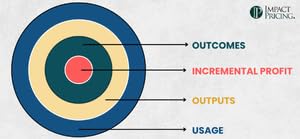
      This is an Impact Pricing Blog published on December 1, 2025, turned into an audio podcast so you can listen on the go.

      Read Full Article Here: https://impactpricing.com/blog/pricing-ai-outcome-based-pricing-the-holy-grail-for-ai/

      If you have any feedback, definitely send it. You can reach us at mark@impactpricing.com.

      Now, go make an impact.

      Connect with Mark Stiving:

      • Email: mark@impactpricing.com
      • LinkedIn: https://www.linkedin.com/in/stiving/

      Afficher plus Afficher moins
      6 min
    • "You're Wrong" — A Friendly Pricing Debate on Buyer Context with Steven Forth and Mark Stiving
      Feb 2 2026

      This episode takes a slightly different approach than the usual Impact Pricing conversation.

      Instead of teaching a finished framework, Mark brings an early draft of his upcoming book to the table and asks Steven to react to it as a thoughtful pricing peer.

      Steven Forth, co-creator of ValueIQ, largely agrees with the direction of the book, but pauses on a key point: how buyer context is defined, and whether the argument separates value and willingness to pay too cleanly.

      Mark jokingly tells Steven he's "wrong," setting the tone for what follows: a calm, constructive discussion that explores where the ideas hold up and where they still need work.

      What unfolds is a straightforward, unscripted book review in progress. The ideas are tested against real examples, refined through debate, and shaped in real time.

      For listeners who care about pricing theory and how it actually gets formed, this episode offers a transparent look at how those ideas evolve before they're finalized and published.

      Why you have to check out today's podcast:

      • Why buyer context is trickier than it sounds and where pricing frameworks often oversimplify it.
      • How value and willingness to pay diverge in real buying decisions using practical examples.
      • What this debate changes about how you think about pricing before ideas turn into rigid rules.

      "Most pricing books don't really deal with buyer context. That's why this conversation matters."

      — Steven Forth

      Topics Covered:

      01:11 – Steven's career update, transition from being a CEO.

      08:54 – Why this episode is different. Mark brings an unfinished book draft to the conversation, setting up a rare moment where ideas are explored, challenged, and shaped before they're finalized.

      10:40 – The core question the book has to answer. A turning point in the review as Steven pushes on whether context affects only willingness to pay or fundamentally changes value itself.

      17:13 – Testing the argument with real examples. They pressure-test the book's ideas using real buying scenarios where value stays the same but willingness to pay shifts dramatically.

      22:10 – Where theory meets real buyer constraints. A discussion of budget limits, framing effects, and mental ceilings that complicate clean pricing logic and challenge how the book explains buyer behavior.

      25:45 – How this feedback shapes the final book. Mark reflects on what this debate changes in the manuscript and why early, honest pushback is essential before pricing ideas turn into published frameworks.

      Key Takeaways:

      "Value didn't change, context did." — Steven Forth

      "I agree that context influences willingness to pay, but I'm not convinced it doesn't also influence value." — Steven Forth

      People Mentioned:

      • Michael Mansard - referenced for his Compass Framework and ongoing work on pricing, value, and attribution.
      • Edward Wong - Mentioned in the context of collaborative work on value attribution and pricing research.
      • Karen Chiang - Mentioned as leading the services side of Ibbaka as Steven transitions away from CEO roles.
      • Tom Nagle - Referenced in discussions around economic value, willingness to pay, and foundational pricing theory.

      Connect with Steven Forth:

      • LinkedIn: https://www.linkedin.com/in/stevenforth/
      • Email: steven@ibbaka.com

      Connect with Mark Stiving:

      • LinkedIn: https://www.linkedin.com/in/stiving/
      • Email: mark@impactpricing.com

      Afficher plus Afficher moins
      27 min
    Aucun commentaire pour le moment