Épisodes

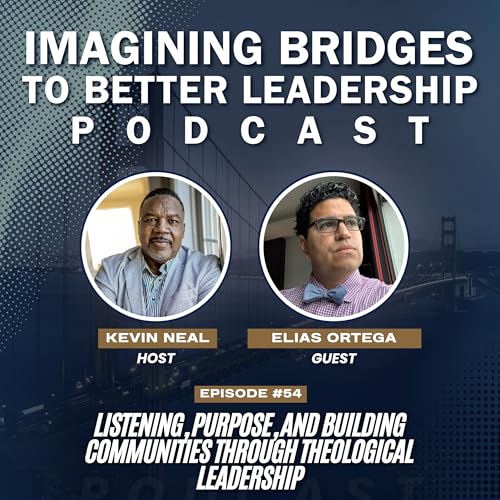
  • Elías Ortega: Listening, Purpose, and Building Communities Through Theological Leadership
    Mar 5 2026

    About Elías Ortega:

    Dr. Elías Ortega is committed to building organizational systems in which people, especially those underrepresented in our society, can thrive. He uses the lenses of religious ethics, spirituality, and theological reflection to foster change in higher education, non-profit organizations, and religious institutions. His academic and community work is shaped by the aspiration that centering the lives of those most impacted by systems of oppression is necessary for liberation. Dr. Ortega believes that lifting the Universalist heritage can inspire us to do the necessary work to realize a better tomorrow. Currently, he serves as the president of Meadville Lombard Theological School in Chicago and Professor of Religion, Ethics, and Leadership.


    In this episode, Kevin and Elías Ortega discuss:

    • Listening as a leadership superpower
    • The role of mentorship in shaping character and career
    • Leading institutions through crisis and cultural change
    • Stewardship, fundraising, and ethical responsibility
    • Rehumanizing relationships in a digital age

    Key Takeaways:

    • Listening is more than a communication skill—it’s a discipline that allows leaders to respond thoughtfully instead of reacting impulsively.
    • Purpose is often discovered gradually; transferable skills and curiosity can guide a leader across different roles without losing their core identity.
    • Mentorship doesn’t just open doors—it shapes character, teaches professional ethics, and prepares leaders for environments they haven’t yet entered.
    • Social change moves at the speed of relationships, not urgency, and sustainable transformation requires patience, trust, and generational thinking.
    • Institutions carry both a justice-centered mission and an ethical obligation to steward the trust and resources placed in their care.


    "Social change is generational. It takes time, and social change happens really at the speed of our relationships." – Elías Ortega


    Connect with Elías Ortega:

    LinkedIn: https://www.linkedin.com/in/elias-ortega-phd/


    Connect with Kevin Neal:

    Website: https://drkdneal.com

    Book: https://www.amazon.com/gp/aw/d/B0C47RZDSS

    https://www.amazon.com/Guided-Greatness-Mentorship-Developing-professionals-ebook/dp/B0FGBH1VNS

    Email: coachkd63@gmail.com

    LinkedIn: https://www.linkedin.com/in/coachkd63

    Afficher plus Afficher moins
    52 min
  • Ted Sun: Reengineering Leadership Education for Real-World Impact
    Feb 26 2026
    About Ted Sun:Dr. Ted Sun holds two doctorates—one in psychology and one in business—equipping him to develop transformational leaders and innovative organizations worldwide. A global speaker and educator, he has taught at institutions such as the University of Liverpool, The Ohio State University, and UIBE in China, and has addressed audiences of thousands across Asia while advising government leaders in Africa, the EU, and Asia.Known for spotting systemic flaws and designing new models of human development, Dr. Sun has been featured by major media in the U.S. and Ghana and was highlighted by Forbes in 2021 as a leadership expert. His recent work focuses on building systems for high-growth companies (including IPO readiness), creating individualized, impact-driven leadership programs, and transforming HR—spanning learning and development, onboarding, and skills-based organization design.In this episode, Kevin and Ted Sun discuss:Systems thinking vs. band-aid leadership solutionsWhy higher education resists innovation and accountabilityMeasuring ROI in “soft skills” like leadership and emotional intelligenceAI’s impact on organizations and the dangers of poor dataBreaking down silos to create integrated, future-ready institutionsKey Takeaways:Many organizations fix symptoms instead of root causes. True leadership requires systems thinking—designing preventative structures that reduce recurring problems, rather than reacting with short-term “band-aid” solutions.Education without accountability produces low retention and shallow impact. When learning is directly applied to real-world challenges and measured for outcomes, knowledge becomes practical, retained, and transformative.“Soft skills” must be tied to hard metrics. Leadership, active listening, and emotional intelligence can—and should—be quantified through indicators like conflict reduction, idea generation, early problem detection, and improved performance.AI is only as powerful as the data behind it. Without comprehensive, multi-dimensional organizational data (including people and systems), AI can hallucinate, reinforce flawed assumptions, and misdirect strategic decisions.Innovation dies in silos. Sustainable change demands cross-department integration, systemic awareness, and leaders who think beyond isolated functions—whether in universities, corporations, or AI initiatives."AI will never tell you I don't have the data to make this decision. AI will never tell you that. That's the huge danger." – Ted SunConnect with Ted Sun:LinkedIn: https://www.linkedin.com/in/dr2tedsun/ Website: https://tc-university.org/about-transcontinental-university/faculty/ted-sun/ Schedule an Appointment: https://tc-university.org/schedule-an-appointment/ Promotional Links: https://tc-university.org/endless-organizational-problems/ For more articles: https://tc-university.org/articles/ Connect with Kevin Neal:Website: https://drkdneal.com Book: https://www.amazon.com/gp/aw/d/B0C47RZDSS https://www.amazon.com/Guided-Greatness-Mentorship-Developing-professionals-ebook/dp/B0FGBH1VNSEmail: coachkd63@gmail.com LinkedIn: https://www.linkedin.com/in/coachkd63
    Afficher plus Afficher moins
    38 min
  • Yolanda W. Page: Leading Institutions With Vision, Resilience, and Purpose
    Feb 19 2026
    About Yolanda W. Page:Yolanda W. Page, Ph.D., is the eighth president of Stillman College, West Alabama's only four-year HBCU, a role she has held since July 2023. With more than 30 years of higher education experience, she brings transformational leadership focused on growth, innovation, and student success.Under her leadership, Stillman has increased enrollment and fundraising, improved student retention, and earned designation as a National Center of Academic Excellence in Cyber Defense. Dr. Page has forged strategic partnerships with organizations including Google, the United Way of West Alabama, Getty Images, and SodexoMagic, and launched initiatives such as AI certification for students and the first charter school hosted by an Alabama HBCU. She has also helped bring major HBCU athletic tournaments and workforce and community programs to West Tuscaloosa.Previously, Dr. Page served as Provost at Savannah State University and as Vice President of Academic Affairs at Dillard University, where she helped secure more than $40 million in grants, guided new graduate programs, and led successful accreditation efforts. She holds a Ph.D. in English Literature from Louisiana State University and serves on several boards, including the UNCF Board of Directors and the Tuscaloosa County Economic Development Authority. She is married to David D. Page and is the mother of two children, William and Brooke.In this episode, Kevin and Yolanda W. Page discuss:Leadership challenges and opportunities in today’s higher education landscapeThe vital role of HBCUs in serving first-generation and first-in-family college studentsHow resilient institutions navigate uncertainty, funding pressures, and changeCreating flexible, non-linear pathways to student success beyond traditional timelinesLeading with trust, accountability, and servant leadershipKey Takeaways:Resilient institutions are built on purpose, not circumstance. Organizations that endure through decades of change do so because their mission remains clear and deeply connected to the people they serve, even in seasons of uncertainty and disruption.Leadership in higher education requires seeing students as individuals, not timelines. When institutions recognize that each student’s path may be direct or indirect, access and persistence increase without lowering expectations or standards.Strong leadership depends on humility and ownership. Acknowledging mistakes, addressing gaps in information, and being willing to pivot builds trust within teams and models accountability across the organization.Sustainable impact comes from shared leadership. Inviting diverse perspectives into decision-making strengthens outcomes, reduces blind spots, and keeps institutions aligned with both their mission and community needs.“You look for a diversity of personalities at the table with you. Because when you are thinking through a problem or a scenario, you want people who are going to see it from different angles, from different aspects of it.” – Yolanda W. PageConnect with Yolanda W. Page:Website: https://stillman.edu/ LinkedIn: https://www.linkedin.com/in/yolanda-w-page-7ab5a74b/ Facebook: https://www.facebook.com/yolanda.w.page Connect with Kevin Neal:Website: https://drkdneal.com Book: https://www.amazon.com/gp/aw/d/B0C47RZDSS https://www.amazon.com/Guided-Greatness-Mentorship-Developing-professionals-ebook/dp/B0FGBH1VNSEmail: coachkd63@gmail.com LinkedIn: https://www.linkedin.com/in/coachkd63
    Afficher plus Afficher moins
    27 min
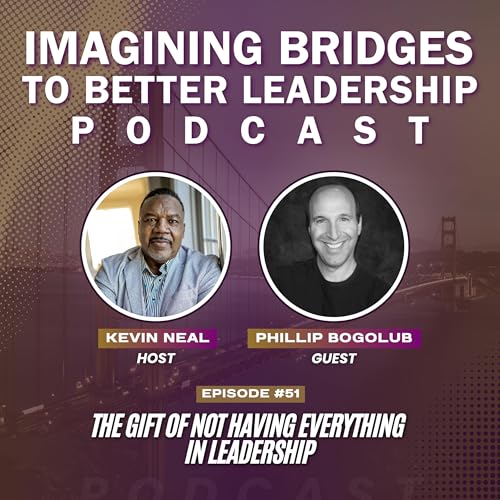
  • Phillip Bogolub: The Gift of Not Having Everything in Leadership
    Feb 12 2026

    About Phillip Bogolub:

    Phillip Bogolub is the originator of The Mindfully Immersive Communication System of "AJANOI"(Ahjha-noy). As a one-man powerhouse with an engineering degree and an MBA, Phillip has developed a unique mindful imaging technique that empowers individuals to find answers within themselves. Ideal for companies invested in their people's well-being, Phillip incorporates music, sound, singing, and colored spectrums of light into his unique training, providing a holistic approach to corporate wellness. Delivering mindfully immersive employee engagement to create the change-maker leaders and millions of employees worldwide are looking for.


    In this episode, Kevin and Phillip Bogolub discuss:

    • The gift of not having everything in life and leadership
    • Gratitude for simple necessities over material excess
    • Scarcity as a catalyst for creativity and innovation
    • Using imagination, faith, and vision to move through uncertainty
    • Surrounding yourself with supportive people and collaborative mentors

    Key Takeaways:

    • Not having everything can be a gift. Scarcity forces us to look at what we already have and discover how much we can create from limited resources.
    • Gratitude for simple things changes how we lead. Noticing basics—health, shelter, relationships—shifts focus from constant comparison to grounded contentment.
    • Constraints are catalysts for creativity. When money, tools, or support are limited, leaders are pushed to innovate, adapt, and see new possibilities.
    • Vision and faith sustain you when the path is unclear. Imagination, prayer, and inner conviction help leaders keep moving even when plans fall apart.
    • The right people make the journey possible. Surrounding yourself with encouraging, values-aligned partners and mentors helps you persist when progress feels slow.


    "Surround yourself with positive people. Surround yourself with the supportive people… Seek out the people that you need, and it's all going to be working out for you." – Phillip Bogolub


    Connect with Phillip Bogolub:

    LinkedIn: linkedin.com/in/bogolubrecords

    Website: https://www.lightpipe.media/


    Connect with Kevin Neal:

    Website: https://drkdneal.com

    Book: https://www.amazon.com/gp/aw/d/B0C47RZDSS

    https://www.amazon.com/Guided-Greatness-Mentorship-Developing-professionals-ebook/dp/B0FGBH1VNS

    Email: coachkd63@gmail.com

    LinkedIn: https://www.linkedin.com/in/coachkd63

    Afficher plus Afficher moins
    48 min
  • Bradley Barrick: “And Me” Leadership, Culture, and Community
    Feb 5 2026

    About Bradley Barrick:

    Dr. Bradley Barrick is the seventh president of Montcalm Community College, where he leads with a commitment to access, excellence, and community impact. But his leadership doesn’t stop at the campus gates. He also serves as an Army National Guard officer, bringing a disciplined, mission-driven mindset shaped by service to something bigger than himself.


    In addition to that, Dr. Barrick wears another critical hat as the Executive Director of Communications and Executive Director of Government and Military Relations—operating at the intersection of influence, advocacy, and alignment. Whether he’s shaping institutional voice, strengthening partnerships, or navigating complex systems, his work reflects a deep understanding that leadership is about trust, clarity, and responsibility.


    In this episode, Kevin and Bradley Barrick discuss:

    • Championing culture as a core leadership responsibility
    • Translating military leadership principles into civilian institutions
    • Breaking down silos through shared equity leadership
    • Keeping students at the center of organizational decisions
    • Leading with service, humility, and long-term vision

    Key Takeaways:

    • Culture does not change through words alone. Leaders shape culture by modeling behaviors, building trust, and consistently reinforcing values through everyday decisions rather than mission statements or slogans.
    • Leadership becomes more effective when power is shared intentionally. Inviting diverse voices into decision-making strengthens accountability, reduces silos, and creates a sense of ownership across teams and departments.
    • Student-centered leadership requires constant realignment. When organizations lose sight of why they exist, blame and fragmentation grow, but returning to mission helps teams move forward together.
    • The most meaningful leadership impact often happens quietly. Investing in people, mentoring future leaders, and opening doors for others creates transformation that outlasts titles, rankings, and short-term wins.


    "Part of my success is talent development, and so I'm really investing in my team, and really there's that next generation of leaders." – Bradley Barrick


    Connect with Bradley Barrick:

    LinkedIn: https://www.linkedin.com/in/bradleybarrick/

    Instagram: https://www.instagram.com/dr.bradleyjbarrick/

    Facebook: https://www.facebook.com/montcalmccpresident/


    Connect with Kevin Neal:

    Website: https://drkdneal.com

    Book: https://www.amazon.com/gp/aw/d/B0C47RZDSS

    https://www.amazon.com/Guided-Greatness-Mentorship-Developing-professionals-ebook/dp/B0FGBH1VNS

    Email: coachkd63@gmail.com

    LinkedIn: https://www.linkedin.com/in/coachkd63
    Afficher plus Afficher moins
    45 min
  • Lisa Burgess: Leading with Listening and Kindness in STEM Education
    Jan 29 2026

    About Lisa Burgess:

    Lisa Burgess is the Dean of STEM at Bucks County Community College with over 25 years of experience in STEM pedagogy, curriculum development, program assessment, faculty development, student success initiatives, and strategic leadership. Previously, she served in multiple roles at Broward College, including professor of biological and physical sciences and Coordinator of Faculty Development at the Greene Center for International Education, supporting faculty at 14 international centers. She later became Assistant Director for the Center for Teaching & Learning at Boston University, where she worked with faculty on evidence-based teaching, SoTL, and integrating AI into instruction. An accomplished lecturer, Burgess has presented on generative AI, academic integrity in online science courses, and co-authored Everyday Biology: #WhatsThePoint (2018). A first-generation community college graduate, she holds an A.S. from Broward College, a B.S. in Biological Sciences from Florida Atlantic University, an M.S. in Pharmaceutical Sciences from the University of Florida, and an M.S. in Biotechnology and Molecular and Cell Biology from Johns Hopkins University.


    In this episode, Kevin and Lisa Burgess discuss:

    • Leading through active listening and kindness
    • Nonlinear paths into leadership
    • Supporting today’s students in a high-pressure world
    • Helping students discover rather than dictating their paths
    • Practical wisdom for life and career growth


    Key Takeaways:

    • Listening is a core leadership superpower. Stepping out from behind the desk, removing distractions, and reflecting back what you hear builds trust and helps people feel genuinely heard.
    • Nonlinear paths still lead to meaningful leadership. Lisa’s journey—from dropping out of high school to becoming a Dean of STEM—shows that setbacks and detours can become the very experiences that prepare you to lead.
    • Education works best when it’s expansive, not transactional. Students benefit when colleges expose them to multiple disciplines, support exploration, and connect them with resources like career and internship services.
    • Kindness and curiosity reduce the gap between students and institutions. Approaching students and colleagues with empathy, open dialogue, and an assumption of good intent helps navigate generational differences and systemic pressures.


    "I just really believe sometimes we get a little caught up in what we think it should be, and we don't really give people an opportunity to do what it is they want to do." – Lisa Burgess


    Connect with Lisa Burgess:

    LinkedIn: linkedin.com/in/lisa-burgess-0b4816b


    Connect with Kevin Neal:

    Website: https://drkdneal.com

    Book: https://www.amazon.com/gp/aw/d/B0C47RZDSS

    https://www.amazon.com/Guided-Greatness-Mentorship-Developing-professionals-ebook/dp/B0FGBH1VNS

    Email: coachkd63@gmail.com

    LinkedIn: https://www.linkedin.com/in/coachkd63

    Afficher plus Afficher moins
    28 min
  • Natasha Skolny: Leading with Curiosity and Self-Awareness
    Jan 22 2026
    About Natasha Skolny:Natasha Skolny is the founder of The Leadership Cabin, a coaching and development practice dedicated to empowering women leaders to lead with authenticity, clarity, and purpose. Drawing from her diverse background as a competitive figure skater, NCCP-certified skating coach, corporate leadership trainer, and certified wellness coach, Natasha combines emotional intelligence, performance psychology, and strategic leadership to help clients navigate high-pressure environments with confidence.Through The Leadership Cabin, Natasha offers private coaching, workshops, and team development programs designed to help leaders connect with their inner strengths, overcome limiting beliefs, and cultivate resilient, high-performing teams. Her approach emphasizes self-awareness, effective communication, and intentional action, enabling leaders to define success on their own terms.With experience across various industries, including financial services, insurance, construction, and IT, Natasha understands the unique challenges faced by women in leadership roles. In this episode, Kevin and Natasha Skolny discuss:Curiosity as a foundational leadership skillHelping women lead with authenticity and clarityThe connection between self-awareness and sustainable leadership growthRedefining success beyond external expectationsCreating space to pause, reflect, and lead with intentionKey Takeaways:Curiosity creates the pause leaders often avoid. In a fast-paced world that rewards constant motion, asking deeper questions slows things down but ultimately leads to better decisions, stronger relationships, and more meaningful leadership growth.Leadership development doesn’t start with skills alone. Real change happens when leaders first explore who they want to become, what they value, and why their work matters—then build skills that align with that deeper clarity.Self-awareness is an ongoing practice, not a one-time reflection. Tracking emotional responses, noticing patterns of frustration or excitement, and asking what unmet needs are present help leaders respond intentionally instead of reacting on autopilot.Redefining success can feel uncomfortable—but it’s essential. When leaders replace inherited definitions of success with values-based ones, energy increases, resentment fades, and work becomes a source of fulfillment rather than exhaustion.“If you want to have a bigger impact and leave the legacy that you want to leave, then it requires you to step up and be more present.” – Natasha SkolnyConnect with Natasha Skolny:Website: https://www.theleadershipcabin.com/ Instagram: https://www.instagram.com/theleadershipcabin/ LinkedIn: www.linkedin.com/in/natashaskolny YouTube: http://www.youtube.com/@TheLeadershipCabin Connect with Kevin Neal:Website: https://drkdneal.com Book: https://www.amazon.com/gp/aw/d/B0C47RZDSS https://www.amazon.com/Guided-Greatness-Mentorship-Developing-professionals-ebook/dp/B0FGBH1VNSEmail: coachkd63@gmail.com LinkedIn: https://www.linkedin.com/in/coachkd63
    Afficher plus Afficher moins
    30 min
  • Greg Hedgepeth: Communication, Storytelling, and Discovering Your Purpose
    Jan 15 2026

    About Greg Hedgepeth:

    Greg Hedgepeth is the Director of Marketing and Communications for the NC State University Graduate School and President & CEO of Substantial Media, an award-winning platform amplifying the voices and stories of Black and Brown communities. With over 16 years of experience in higher education marketing and communications, Greg is also a certified digital marketing professional, professor at Shaw University, and passionate social entrepreneur. A proud first-generation college graduate from Halifax County, NC, he holds degrees from East Carolina University and Webster University, and is currently pursuing doctoral studies in Learning and Organizational Change. Greg is a sought-after speaker and facilitator, recognized nationally for his service in education and community empowerment.


    In this episode, Kevin and Greg Hedgepeth discuss:

    • Why communication and true connection are a leader’s greatest superpowers
    • Using storytelling to shape culture, preserve history, and build community
    • Finding your “why” and not wasting time or opportunities
    • The difference between managing by title and leading through influence
    • Overcoming imposter syndrome and refusing to let your job title define your identity


    Key Takeaways:

    • Communication is a leader’s superpower. It is not just talking, but truly connecting, meeting people where they are, and building real relationships through words.
    • Your full story is your strength. When you embrace both the polished and unpolished parts of your journey, you create authenticity, credibility, and a deeper connection with others.
    • Prepared people maximize opportunities. Saying yes to new roles, projects, and collaborations, while doing the quiet work of research and groundwork, opens doors you may not expect.
    • Real leadership goes beyond titles. Shifting from managing by position to leading with influence, humility, and self-awareness helps you combat imposter syndrome and expand your impact.


    "There's no passion to be found playing small for settling for a life that is less than the one that you are capable of living." – Greg Hedgepeth


    Connect with Greg Hedgepeth:

    Substantial Magazine: https://www.substantialmagazine.com/

    LinkedIn: https://www.linkedin.com/in/greg-hedgepeth/

    Instagram: https://www.instagram.com/mrsubstantial2u

    Facebook: https://www.facebook.com/gregory.hedgepeth.1


    Connect with Kevin Neal:

    Website: https://drkdneal.com

    Book: https://www.amazon.com/gp/aw/d/B0C47RZDSS

    https://www.amazon.com/Guided-Greatness-Mentorship-Developing-professionals-ebook/dp/B0FGBH1VNS

    Email: coachkd63@gmail.com

    LinkedIn: https://www.linkedin.com/in/coachkd63

    Afficher plus Afficher moins
    49 min