Épisodes

  • Ram Ramanathan on what we need: "I call it societal transformation"
    Aug 7 2026

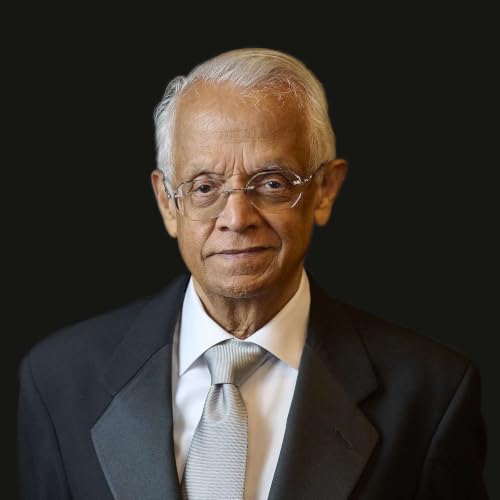
    In this episode, Catherine Du, a rising sophomore at Hunter College High School in NYC, interviews Veerabhadran "Ram" Ramanathan, a pioneer of climate science and Emeritus Distinguished Professor of Climate Sciences and Physical Oceanography, Scripps Institution of Oceanography, UC San Diego.

    Dr. Ramanathan added crucial understanding to the science of climate change with his discovery, in 1975, of the greenhouse effect of chlorofluorocarbons (CFCs). Continuing his groundbreaking research in aerosol pollution in later decades, he has also advised governments and global leaders, including the Governor of California and two Popes, on the urgent need for effective worldwide climate policies.

    Dr. Ramanathan's goal now is to create a million climate champions, focusing on young people between the ages of 15 and 35, to help lead solutions throughout the world. With this intention he led the development of the interdisciplinary climate program for the University of California campuses, Bending the Curve.

    From his profile at UCSD/Scripps Institution of Oceanography:

    "Ramanathan was honored as the science advisor to Pope Francis’ holy see delegation to the historic 2015 Paris climate summit and advised California Gov. Jerry Brown. He was named the U.N. Climate Champion in 2013; has been elected to the U.S. National Academy and the Royal Swedish Academy which awards the Nobel prizes. Foreign Policy named him a thought leader in 2014; In 2018, he (with James Hansen) was named Tang Laureate for sustainability science."

    Dr. Ramanathan's profile on Wikipedia

    https://en.wikipedia.org/wiki/Veerabhadran_Ramanathan

    Dr. Ramanathan is a recipient of the 2026 Crafoord Prize from the Royal Swedish Academy of Sciences:

    https://www.crafoordprize.se/news/crafoord-prize-laureate-showed-that-many-factors-affect-the-climate/


    Send us Fan Mail

    Afficher plus Afficher moins
    35 min
  • Morgan Phillips: repairing an individualistic society
    Jun 21 2026

    "Individualism is an ideology. It has gone hyper and is causing great personal, social and environmental harm. If you are feeling this and want to fight back, The Miracle Inn is here for you."

    Dr. Morgan Phillips worked at the NGO Global Action Plan for 6.5 years, developing a climate curriculum for the school system in the UK. He recently launched his own initiative, The Miracle Inn, to apply ideas he's developed over more than a decade of work on the social basis of climate communications and democracy.

    https://www.themiracleinn.org/

    In this episode, produced and edited by Catherine Du, he is interviewed by Catherine, Helena Rambler, and David Case, three students at Hunter College High School in NYC.

    Send us Fan Mail

    Afficher plus Afficher moins
    37 min
  • NYC high school students describe their lack of climate education
    Jun 13 2026

    In this introduction to our upcoming series of interviews on the role of education in a democracy, Catherine Du interviews four of her ninth grade classmates at Hunter College High School in New York City to find out what they think of the education on climate change they've received so far.

    Send us Fan Mail

    Afficher plus Afficher moins
    2 min
  • Jyoti Mishra: mindfulness, climate, and social connection
    Apr 7 2026

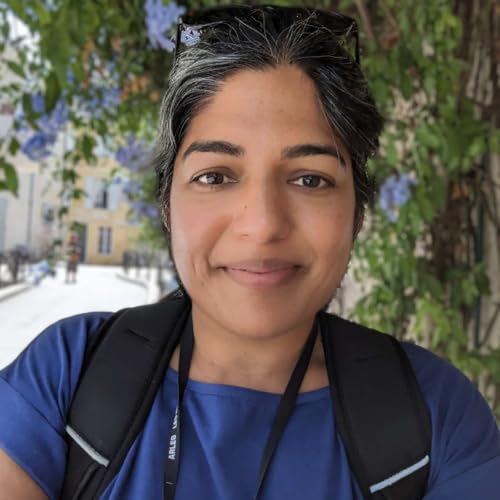
    Dr. Jyoti Mishra is an associate professor in the Department of Psychiatry at the University of California, San Diego, and in this episode she describes how we may reshape society to cope with the climate crisis.

    We learned about Dr. Mishra's work first from an article she co-authored in Nature, "A mental health focus to amplify climate resilience actions" (for which her co-authors are Hahrie Han and Veerabhadran Ramanathan).

    In our interview, Dr. Mishra describes how society is integral in climate transformations, and is influenced by everyone's individual, unique lived experiences. Climate education and action are deeply intertwined. Collective efficacy in solutions builds as we begin with baby steps and work up through awareness, to learning about solutions, and then to taking action. Dr. Mishra has also focused on transforming the medical system, and has hosted a climate change and mental health seminar for healthcare workers.

    This interview is conducted by Helena Rambler, Hunter College High School Class of 2026, and edited by Catherine Du, Hunter College High School Class of 2029.

    Send us Fan Mail

    Afficher plus Afficher moins
    34 min
  • Eugene Kirpichov on building a regenerative economy
    Dec 1 2025

    Eugene Kirpichov, a former software engineer at Google, describes why he and his colleague Cassandra Xia left their positions at Google to create Work on Climate, a rapidly growing nonprofit aimed at mobilizing the talent that can build a regenerative green economy.

    Kirpichov calls for redesigning the economy so that all activities will contribute to the health of the entire system. For those seeking ways to join the effort, Kirpichov explains that opportunities don't only come from companies that are already focused on climate. Since every industry has to change, there are a wide range of jobs where someone may make greater impact through bringing new ideas to roles that once may not have been 'climate-focused.' Kirpichov challenges the notion that the climate crisis is about saving nature, instead describing global destabilization as an existential threat to human civilization.

    This interview is conducted by Marie Fadeyeva, a recent Columbia graduate in computer science.

    https://workonclimate.org/

    Transcript: https://newyork.thecityatlas.org/cityatlas-guests-interviews/eugene-kirpichov/

    Send us Fan Mail

    Afficher plus Afficher moins
    48 min
  • Mark Gongloff: what it's like writing about climate change on Wall Street's top financial platform
    Oct 30 2025

    Mark Gongloff is a Bloomberg Opinion editor and columnist covering climate change. He previously worked for Fortune.com, the Huffington Post and the Wall Street Journal.

    Every week his climate column sends a stark, realistic viewpoint on the urgency of climate change action through the world’s 355,000 Bloomberg Terminals, the principal trading tool for people working in finance.

    New York City high school seniors Helena Rambler, Pierce Siegel, and Giulia Di Vincenzo interviewed Mark at Hunter College High School, and were joined at the end of the interview by their physics teacher, Ross Pinkerton. This interview took place on October 8, 2025.

    https://www.bloomberg.com/opinion/authors/APR88DH6QO0/mark-gongloff

    https://newyork.thecityatlas.org/people/mark-gongloff/

    Send us Fan Mail

    Afficher plus Afficher moins
    1 h et 10 min
  • Georgia Silvera Seamans: nature in the center of NYC
    Oct 15 2025

    Georgia Silvera Seamans, an urban forester, and Giulia Di Vincenzo, a high school student, explore the treescape of Washington Square Park, a public park in New York City that has been famous as a cultural center and gathering place for over a century.

    Georgia gives Giulia a tour of the trees, giving insights on ecological and social benefits of nature in cities.

    For this episode, video clips for the following trees are available at the link below:

    Ginkgo Osage, Northern Catalpa, Bald Cypress, Willow Oak, American Sweetgum

    https://newyork.thecityatlas.org/people/georgia-silvera-seamans/

    Georgia writes and teaches in New York City, and her work can be seen here:

    https://www.wspecoprojects.org/

    https://www.georgiasilveraseamans.com/

    “I write stories about people’s relationships with plants and narratives that connect people to trees.”


    Send us Fan Mail

    Afficher plus Afficher moins
    46 min
  • Sam Stephenson: the goal of a Cambridge PhD
    Aug 12 2025

    Dr. Sam Stephenson has just completed his PhD in Energy, Climate, and Net Zero Policy in the Department of Engineering, Cambridge University.

    In this episode, Sam describes a benchmark report from the UK government-funded research group he worked with at Cambridge, known as UK FIRES. The report, Absolute Zero, and others from UK FIRES can be downloaded here:

    https://ukfires.org/impact/publications/reports/

    Absolute Zero has been downloaded 178,000 times since it was published in 2019, and was written by more than a dozen researchers drawn from five universities: Cambridge, Oxford, Imperial, Bath, and Strathclyde.

    The top line finding in the report is that the UK should begin to reduce energy demand to 60% of the current usage in order to match the predicted available supply from zero carbon sources. This transition can be completed by 2050 in compliance with the net zero goal that is part of UK law without depending on carbon capture technologies that don’t yet exist (and may not yet exist at scale by 2050), but requires an immediate public discussion about a reduction in energy use. Reducing demand makes the zero carbon target more achievable. Missing the target impairs global cooperation that makes reducing emissions possible, and thus causes an increase in climate impacts.

    In brief: continuing to miss emission reduction targets will cause an increase in preventable climate impacts.

    Sam also describes his current research and how he initially chose climate change as his focus, which first led to a masters in environmental economics and now to his PhD.

    We’re at an inflection point in history; at the time we post in August, 2025, a heat wave hovers over Europe, where southern France is expected to reach 109°f/43°C, and the northeast United States remains under a summer-long plume of smoke from wildfires in Canada. IPCC co-chair Robert Vautard reports that extreme heat waves are doubling in frequency on a ten-year basis, meaning 2035 will experience double the number of this year.

    Pierce Siegel, a rising high school senior in New York City, Cindy Ye, about to begin her first year of college, and Ahana Pairee, moving from India to begin graduate school in the UK, each draw Sam out with questions about what the future is likely to hold and how to make it work best for everyone: with collective understanding, realism, optimism and determination.

    Additional references for this interview are included at the foot of the transcript at this URL:

    https://newyork.thecityatlas.org/people/sam-stephenson/

    Pratibha Priya, David Case, and Helena Rambler also contributed to the questions for Dr. Stephenson; moderation and post production by Cindy Ye.

    Send us your thoughts about Bridging the Carbon Gap at podcast@thecityatlas.org.

    Send us Fan Mail

    Afficher plus Afficher moins
    1 h et 8 min