Épisodes

  • The Psychology Behind High-Stakes Decisions: Lessons from the CIA with Mike Mears, Part 2
    Feb 23 2026
    Can you believe that small moments of trust and safety matter more than any sales technique? In this second of two parts with Mike Mears, we shift the focus directly into sales, leadership, and the psychology behind real influence. We explore what Mike has learned throughout his career, including why one-way communication fails and how dialogue reveals what leaders often miss. The discussion quickly moves into how assumptions quietly damage sales performance, why curiosity consistently outperforms pressure, and how traits can shape success in sales. As the episode continues, we get into the path of safety, trust, clarity, and challenge, plus why skipping any step undermines everything that follows. We unpack social pain, how easily it's triggered, and why the brain remembers it longer than physical injury. Mike explains why trust is fragile, how consistency outweighs charisma, and how even small facial expressions can create lasting damage. Mike leaves us by talking about how steady course correction beats dramatic intervention when it comes to motivating teams and driving growth. Topics covered during this episode include: How short, focused messaging followed by dialogue creates stronger organizational alignment.What employee involvement reveals about decision-making, ownership, and long-term performance.How leadership behaviours directly influence sales environments.Why making assumptions about sales performance shortcuts understanding and limits improvement.How curiosity functions as a skill that can be developed rather than a fixed trait.What safety, trust, clarity, and challenge look like as a natural psychological sequence.How unfairness, exclusion, or uncertainty can instantly derail productive sales conversations.The importance of avoiding unintentional social pain in everyday customer interactions.How small gestures, consistency, and "free gifts" establish psychological safety and trust.What reciprocity reveals about human behaviour across psychology and anthropology.Why trust depends on credibility, reliability, intimacy, and minimized self-interest.How subtle facial expressions can damage trust long after the moment passes.Why visual storytelling and metaphors make messages more memorable. Uncover the unseen forces influencing trust, motivation, and performance in this episode! Mike Mears on LinkedIn: https://www.linkedin.com/in/mike-mears-leadership-theoretician-4627a889/ The Check-in Cheat Code: https://piscari.com/wp-content/uploads/2026/01/Checkin-Cheat-Sheet.pdf The 15 Powerful Intrinsic Rewards: https://piscari.com/wp-content/uploads/2026/01/Intrinsic-Rewards.pdf
    Afficher plus Afficher moins
    29 min
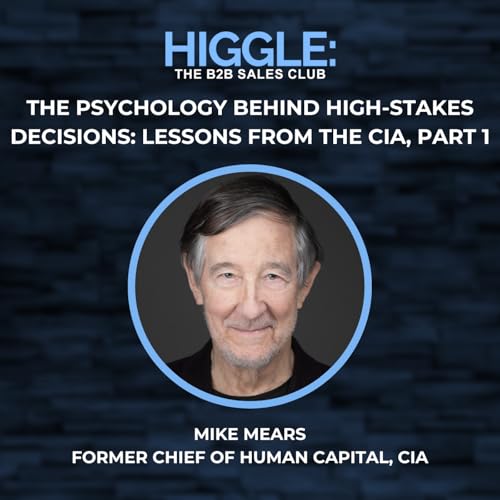
  • The Psychology Behind High-Stakes Decisions: Lessons from the CIA with Mike Mears, Part 1
    Feb 16 2026
    How do trust, certainty, and human behaviour decide outcomes when the stakes are extreme? In this first part of a two-part conversation, I'm welcoming Mike Mears, a former Chief of Human Capital at the CIA, to explore the hidden mechanics of leadership and human behaviour under immense pressure. We start with his unlikely path from West Point and Harvard Business School into covert intelligence work, and how that experience exposes patterns most people never get to see. From working undercover in dangerous environments to later building the CIA Leadership Academy, Mike shares stories that reveal how trust, fear, and certainty quietly drive human decisions before logic enters the picture. We examine how leaders influence behaviour when authority alone doesn't work, and why clarity matters more than motivation. Mike explains how the CIA studies cognitive bias, uncertainty, and insight moments in the brain, along with why those discoveries matter far beyond espionage. We also look into how certainty is created, why people hesitate even when solutions look obvious, and how small behaviours can shift outcomes in high-stakes situations. Topics covered during this episode include: How covert and overt roles inside the CIA create radically different leadership pressures.What operating in "denied areas" reveals about stress, risk, and decision-making under threat.Mike's transition into building the CIA Leadership Academy from first principles of human nature.How leadership training shifts when behaviours replace abstract values and traits.The importance of psychological safety as the foundation for trust and clarity.How cognitive bias influences judgment, even among highly trained intelligence analysts.The recruiting cycle of spotting, assessing, developing, and recruiting human assets.Why relationship development matters more than persuasion in high-risk commitments.How insight moments form in the brain outside logical, analytical thinking.Why certainty reduces perceived threat and unlocks forward movement.How reciprocity builds trust through consistent, meaningful exchanges.The limitations of traditional leadership levers like metrics and authority.Why simple human needs quietly mould engagement, motivation, and commitment. Listen now to explore how certainty and trust influence outcomes long before logic does! Mike Mears on LinkedIn: https://www.linkedin.com/in/mike-mears-leadership-theoretician-4627a889/ The Check-in Cheat Code: https://piscari.com/wp-content/uploads/2026/01/Checkin-Cheat-Sheet.pdf The 15 Powerful Intrinsic Rewards: https://piscari.com/wp-content/uploads/2026/01/Intrinsic-Rewards.pdf
    Afficher plus Afficher moins
    34 min
  • Why Sales-Ready Leads Are No Longer Enough with Freya Ward
    Feb 9 2026
    Why is mass personalization with AI actually making it harder to win deals? I sit down with Freya Ward, Associate Managing Director at Headley Media, for her second appearance on the show to unpack how the B2B buying journey has fundamentally changed...and why so many sales strategies are now misaligned with reality. We dig into the shift toward long, independent research cycles and the rise of "hidden buyers" who shape decisions without ever speaking to sales. We explore why awareness, familiarity, and internal justification matter more than pushing for sales-ready leads, especially when buying committees are larger, risk-averse, and under pressure to justify decisions internally. We also get into the impact of AI, personalization, and data on trust. We examine why mass personalization often backfires, how buyer fatigue is quietly eroding confidence, and why more content doesn't always mean more influence. Freya breaks down the differences between first-party and zero-party data, how explicit intent changes engagement, and why true personalization still requires human effort. Topics covered during this episode include: The shift toward buyers completing most research independently before engaging sales teams.How elongated buying cycles now stretch from months into years for complex B2B purchases.Why hidden buyers like procurement, finance, legal, and HR influence decisions earlier.The growing size and complexity of B2B buying committees and internal decision dynamics.How trust and brand familiarity reduce perceived risk during internal justification stages.Why sales and marketing alignment becomes essential in modern buying environments.How AI enables scale but often creates noise instead of meaningful personalization.The erosion of buyer confidence caused by overwhelming content and generic outreach.What first-party data really represents in a remote, multi-device buying world.Why zero-party data provides clearer intent through explicit buyer-provided information.The role of content in supporting buyers during long research and evaluation phases.How ecosystem-based selling gains advantage through shared relationships and alignment.The importance of multi-channel presence across calls, email, social, and communities. Listen now to uncover what's quietly shaping buying decisions long before sales ever gets involved! Freya Ward on LinkedIn: https://www.linkedin.com/in/freya-ward/
    Afficher plus Afficher moins
    31 min
  • How Short Books Build Big Credibility in B2B Sales (and How AI Can Help) with Julie Trelstad
    Feb 2 2026
    Can a fairly short book really build authority faster than years of content marketing? Julie Trelstad, Head of US Publishing at Amlet.ai, joins me this week to unpack how books quietly remain one of the most powerful tools for building authority and trust. Julie shares insights from her decades of publishing experience to explain why a book doesn't need to be long or traditional to be impactful. We talk about narrow points of view, short-format books, and why speed to market often matters more than prestige. She shares how credibility is baked into authorship itself, and how professionals can carve out a "category of one" by publishing focused, practical ideas instead of overwhelmingly long reads. We then explore the real mechanics behind publishing today, including self-publishing, hybrid models, and why discovery almost never happens on Amazon. Julie also gives advice on how AI can support the writing process without replacing the author's voice, and why emerging ideas around digital rights and content licensing may redefine how expertise is monetized. Topics covered during this episode include: What defines a differentiated point of view within crowded business publishing categories.How shorter books deliver clarity, speed, and higher practical impact.Why worrying about redundancy often prevents experts from publishing at all.How AI tools can analyze existing content to uncover unique perspectives.The importance of writing with a specific reader clearly in mind.How professional editors can be utilized to convey your thoughts in business-focused books.The differences between self-publishing, traditional, and hybrid publishing models.Why Amazon works as distribution, but not as discovery.How email lists consistently outperform other book sales channels.What pricing strategies make low-friction book purchases more effective.How advertising only works once book pricing crosses certain thresholds.The practical cost ranges for editing and proofreading short-format books.How AI supports outlining, cleanup, and clarity without replacing authorship.The emerging value of licensing content for AI training and data usage.Why publishing now creates future revenue opportunities beyond book sales. Check out the incredible insights in this chat to discover how a short, focused book can instantly elevate credibility and open new opportunities! Julie Trelstad on LinkedIn: https://www.linkedin.com/in/julietrelstad
    Afficher plus Afficher moins
    30 min
  • Why Lazy Sales No Longer Works and What to Do Instead with Mike Fantis
    Jan 26 2026
    What actually cuts through when buyers ignore almost every email and call? I'm welcoming Mike Fantis, VP Managing Partner at DAC Group/London, to unpack what's really happening in modern sales and why so much outreach simply doesn't work anymore. We talk about how digital convenience has created lazy habits, from bulk emails to hollow personalization, and why buyers have learned to tune it all out. He explains that tactics are not as important as the fundamentals: value, relevance, and understanding how businesses actually operate. Mike explains why long-term relationship building, pipeline thinking, and showing insight before there's ever a brief are extremely important. We get into how pitches are really won before anyone enters the room, why chemistry and clarity matter more than volume, and how agencies lose by trying to be everything to everyone. Mike also shares insights on omnichannel disconnects, retail blind spots, and why answering today's brief isn't enough without planning for tomorrow's business reality. Topics covered during this episode include: How digital measurement created shortcuts and encouraged lazy sales behavior.Why bulk emails and mass outreach fail to create meaningful engagement.How buyer skepticism increases as personalization becomes automated.The reality of inbox overload and diminishing attention windows.Why building new relationships now requires long-term pipeline thinking.How existing clients and referrals drive the most reliable growth.What role intermediaries and pitch consultants play in modern briefs.How focused, research-led outreach has replaced high-volume activity.Observations about omnichannel and brand-to-local disconnects.How digital and physical teams create friction inside organizations.Why showing real-time customer insight creates immediate relevance.How pitches are shaped long before the formal presentation.The value of rehearsal, structure, and clear takeaways in presentations.Why differentiation depends on saying no and owning a clear position. Don't miss this conversation on standing out when everyone sounds alike! Mike Fantis on LinkedIn: https://www.linkedin.com/in/michaelfantis/
    Afficher plus Afficher moins
    36 min
  • The Eye-Opening Research That Questioned Modern Selling with Philip Squire, Part 2
    Jan 19 2026
    Can saying no to a perfect deal actually unlock a bigger win? I'm joined by Phil Squire, and we explore what really drives success in complex sales when trust, access, and credibility are on the line. We talk through research that shows dramatic shifts in win rates when teams focus on a small set of positive mindsets—and what changes when organizations stop chasing every opportunity. We dig into the real cost of bidding, why some tenders are unwinnable before they start, and how procurement processes can unintentionally block the very behaviors buyers say they value. Along the way, Phil shares a story that turns conventional sales logic upside down. We then move beyond stories into what's changed since the original research. I walk through how mindset can be measured, practiced, and developed over time, and why most sellers still fall short even when they think they're doing well. We explore why values are different from personality, how leaders shape behavior through systems and incentives, and why the rise of AI is raising expectations instead of lowering them. The conversation closes with a sharp look at originality, authenticity, and what it now takes to be genuinely credible in front of skeptical buyers. Topics covered during this episode include: How the research links specific sales mindsets to sharply improved win rates.The impact of choosing not to bid on deals with low probability of success.Why lack of stakeholder access makes it impossible to sell in a client-centric way.The true financial cost of pursuing large, complex tenders without relationships.The story of declining a tender and triggering a deeper buyer conversation.How early honesty reframes credibility before a formal bid even begins.What site visits can reveal that written tenders fail to capture.The hidden risks embedded in service expectations and contract structures.How insight-based feedback can reshape a tender without manipulating outcomes.The role of innovation conversations outside of formal procurement processes.What self-assessment data reveals about mindset gaps across sales teams.Why scoring well in one area fails without balance across all mindsets.How values differ from personality, and why values can change over time.The emerging tension between artificial intelligence and intellectual authenticity. Prepare to be fascinated when you hear why doing less can sometimes win you far more! Phil Squire on LinkedIn: https://www.linkedin.com/in/philipsquire/
    Afficher plus Afficher moins
    35 min
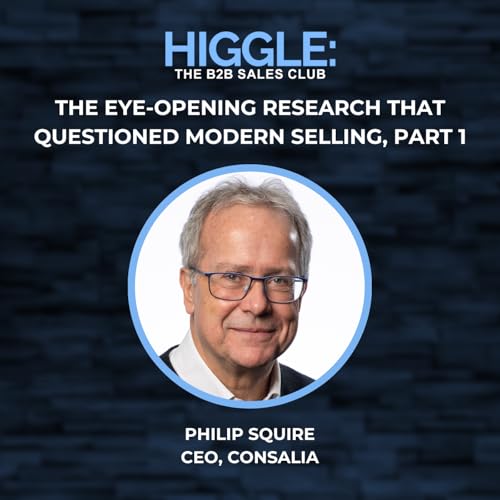
  • The Eye-Opening Research That Questioned Modern Selling with Philip Squire, Part 1
    Jan 12 2026
    Why do most sales conversations quietly fail before anyone realizes what went wrong? Today, I sit down with Philip Squire, CEO of Consalia, to explore a research journey that begins with a deceptively simple question: how do customers actually want to be sold to? In this first of a two-part series, we go back to the early interviews that sparked his doctoral research, where senior buyers openly shared stories of sales conversations that worked (and far more that didn't). We reflect on the surprising intensity of their responses, the emotional energy behind their frustrations, and how a single off-script question revealed just how few salespeople are getting it right. We follow the evolution from early data collection into a much deeper inquiry about what really drives sales behaviour, checking out why traditional competency models fail to explain buyer dissatisfaction, as well as how a pivotal shift can reframe everything around values rather than tactics. Philip finishes up part one by giving a preview of some of his findings that challenge long-standing assumptions about selling. Topics covered during this episode include: The early background behind launching a research project focused on buyer perspectives.How initial customer interviews unexpectedly evolved into a much larger academic inquiry.What senior buyers revealed when asked to share real sales success and failure stories.How emotional intensity emerges when buyers describe poor sales experiences.What percentage of sales interactions buyers consider genuinely valuable.The realization that traditional sales training fails to address buyer frustrations.What patterns emerged after dozens of in-depth qualitative buyer conversations.Why early research findings feel disappointingly obvious and incomplete.Why behavioural analysis alone fails to explain consistent buyer dissatisfaction.The shift toward examining underlying values rather than observable actions.How culture affects behaviour, while core values remain consistent globally.The introduction of negative values that damage trust early in sales conversations.The contrasting positive values buyers associate with effective sales relationships.Why creativity and boldness only work when credibility is already established. Check out this episode to hear the research that reframes what buyers really respond to! Philip Squire on LinkedIn: https://www.linkedin.com/in/philipsquire/
    Afficher plus Afficher moins
    34 min
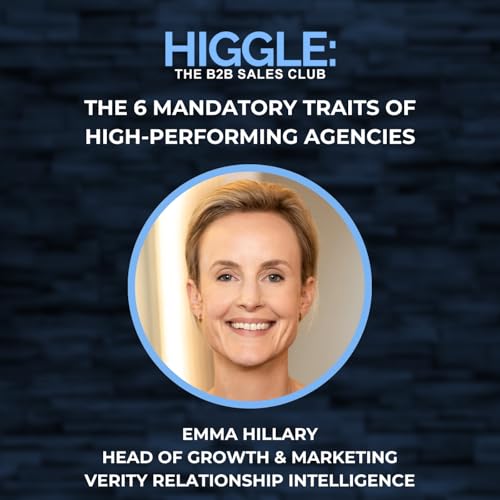
  • The 6 Mandatory Traits of High-Performing Agencies with Emma Hillary
    Jan 5 2026
    What happens when brilliant delivery is no longer enough to keep clients loyal? It's time to explore what truly drives sustainable agency growth by unpacking two decades of relationship data with Emma Hillary, Head of Growth & Marketing at Verity Relationship Intelligence. We focus on why great work alone no longer guarantees retention, even when client satisfaction appears high. Emma breaks down the findings of Verity's 2025 Relationship Report, which identifies six traits shared by high-performing agencies, challenging the assumption that results always come first. We dig into why understanding clients as humans, not just as briefs or businesses, creates a stronger foundation for trust, confidence, and long-term value. Emma explains what's happening beneath the surface of modern client–agency relationships, and we talk about efficiency complaints, post-pandemic pressure, and why relationships often become strained even when delivery improves. We examine the hidden cost of transactional behaviours, the imbalance that can form between clients and agencies, and how feedback can become a growth lever instead of a threat. Finally, we look into why team satisfaction is declining while client ratings rise, and what that tension reveals about the future of agency models. Topics covered during this episode include: How leaning into negative client feedback should uncover valuable insight instead of defensiveness.What relationship intelligence means beyond contacts, chemistry, or likability.How agencies attempt to commercialize relationships through measurement and benchmarking.Why Verity's research challenges the belief that work quality alone drives growth.How client expectations escalated after pandemic-era delivery pressures.What a confidence gap reveals about satisfaction today versus belief in the future.Why strategic vision and innovation strongly influence future client confidence.How talent shifts and "juniorization" of talent affect perceived strategic value.The importance of retention as a growth strategy rather than a defensive metric.Why organic growth is cheaper and more durable than constant new business wins.How inefficiency complaints now include emotional ease, not just process failures.What data reveals about experience outweighing output in recommendation decisions.How leadership care and recognition buffer against toxic client behaviour.The risks of parent/child dynamics forming in client relationships.How empathy, listening, and curiosity reset power imbalances. Uncover what really keeps clients committed beyond the work itself in this episode! Emma Hillary on LinkedIn: https://www.linkedin.com/in/emma-hillary-49b5aa9/
    Afficher plus Afficher moins
    37 min