Couverture de Have Toga, Will Travel

Have Toga, Will Travel

Have Toga, Will Travel

De : Emily Jusino PhD (Classics) and Cam Hawkins PhD (Ancient History)
Écouter gratuitement

À propos de ce contenu audio

A podcast exploring the Mediterranean world, ancient and modern, through the eyes of two former Classics professors. Join Emily and Cam as they chat about all things Ancient Greek and Roman and share their own adventures exploring the Mediterranean world through history, travel, literature, and film. We release new episodes on or about the 1st and 15th of every month. https://havetogawilltravel.comCopyright 2025 Emily Jusino and Cam Hawkins Sciences sociales Écritures et commentaires de voyage
Les membres Amazon Prime bénéficient automatiquement de 2 livres audio offerts chez Audible.

Vous êtes membre Amazon Prime ?

Bénéficiez automatiquement de 2 livres audio offerts.
Bonne écoute !
    Épisodes
    • The Persians and the Greeks, Part II: Darius, Great King, King of Kings
      Feb 15 2026

      Emily and Cam continue their discussion of the conflict between the Persians and the ancient Greek world. In this episode, they chat about Cyrus’ son Cambyses, about the rise to power of Darius, and about Darius’ relationships with Greeks on the western frontier of his empire.

      Visit our homepage to subscribe, to find us on social media, and to contact us by email:

      1. https://havetogawilltravel.com

      Episode Links

      1. The first episode in this series (The Persians and the Greeks, Part I: The Rise of the Persian Empire).
      2. Part I of our series on the Athens Marathon, which includes a discussion of the Battle of Marathon and the legend of Pheidippides.
      3. Wikipedia’s article on Darius’ Bisitun Inscription, which includes photos.

      Image credits:

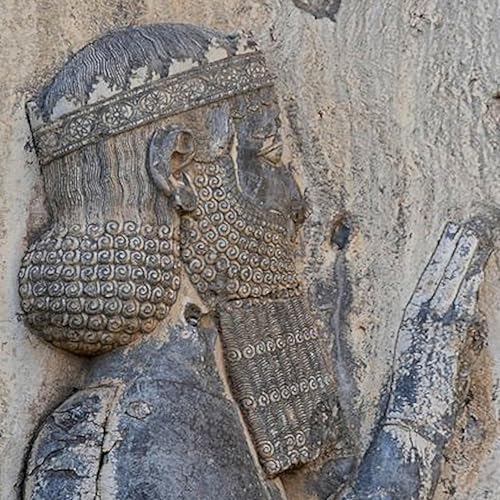
      1. Cover / instagram image adapted from a photo by Lee van Dorp (Wikimedia Commons), which shows a closeup of Darius as he is depicted on the Bisitun Inscription.
      2. Social sharing image adapted from a photo by Korosh091 (Wikimedia Commons), which shows the Bisitun Inscription's main relief.

      ----------

      00:13 - Introduction

      01:31 - Sources for the reigns of Cambyses and Darius

      1. 01:49 - Herodotus’ Persian stories
      2. 02:41 - Inscriptions and papyri documenting Persian kings

      03:01 - Cambyses, son of Cyrus: portraits of his Reign

      1. 03:27 - Herodotus’ take on Cambyses: a mad and murderous king
      2. 11:59 - A more sympathetic take: the Apis inscriptions, the Udjahorresnet inscription, and what they tell us about Cambyses

      16:35 - The Death of Cambyses and the rise of Darius

      1. 17:01 - Herodotus’ tale of the usurper Smerdis and the (Persian) Magnificent Seven
      2. 21:06 - Darius’ Bisitun Inscription and the “Official” story of his rise to power

      28:02 - Darius and the Greeks

      1. 28:41 - Darius’ Scythian Expedition and the Greeks of Ionia and Aeolia
      2. 32:01 - The Ionian Revolt and its causes: Aristagoras and Naxos, plus the problem of tyranny, tribute, and triremes
      Afficher plus Afficher moins
      46 min
    • The Persians and the Greeks, Part I: The Rise of the Persian Empire
      Feb 1 2026

      Emily and Cam talk about the ancient Persians and the growth of their empire in the first episode of a series on the conflict between the Persians and the ancient Greek world.

      Visit our homepage to subscribe, to find us on social media, and to contact us by email:

      1. https://havetogawilltravel.com

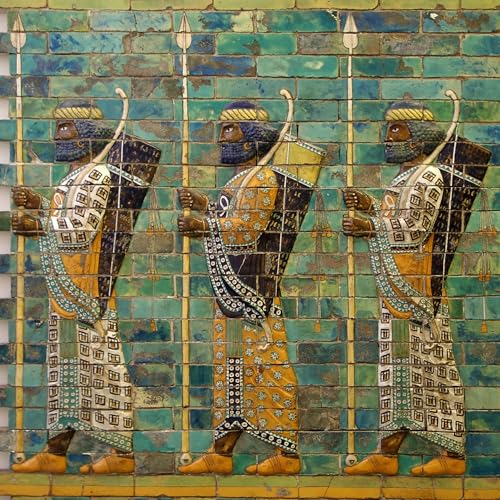
      Cover photo adapted from an image by Jakub Hałun (Persian Warriors, Pergamon University, Berlin)


      ----------

      00:12 - Introduction

      01:07 - Who were the Persians?

      1. 01:11 - The ancient Persians, the ancient Iranians, and the Indo-European dispersion
      2. 02:52 - The Old Persian language (and a digression on Persian names)
      3. 08:35 - Zoroastrianism and the religion of the ancient Persians

      13:59 - The Rise of the Persian Empire

      1. 14:23 - The Middle East in the 6th Century BCE: Persia and its neighbors
      2. 16:29 - Herodotus and the legend of Cyrus the Great
      3. 20:06 - Cyrus the Great and his conquests
      4. 24:04 - Cyrus’ successors: Cambyses and Darius
      5. 24:48 - The Persian Empire in 500 BCE

      25:12 - The Structure of the Persian Empire

      1. 25:25 - Cooperative local elites and the obligations of empire
      2. 26:35 - Satraps, provinces, and the Iranian diaspora

      28:45 - The Ideology of the Persian Empire

      1. 29:04 - Cyrus as champion of local gods in Babylon and Judah
      2. 30:49 - Darius as champion of Ahura Mazda

      32:47 - The Mechanics of Empire in the Age of Darius

      1. 32:52 - Imperial ideology and imperial violence
      2. 34:00 - Local elites and imperial entanglements: the story of Syloson of Samos

      38:04 - Wrap-up

      Afficher plus Afficher moins
      40 min
    • Aeschylus' "Persians": The OG Greek Tragedy
      Jan 17 2026

      Emily and Cam break down “The Persians”—the oldest surviving Greek tragedy, which offers a surprisingly sympathetic take on the enemies of Athens.

      Visit our homepage to subscribe, to find us on social media, and to contact us by email:

      1. https://havetogawilltravel.com

      Cover photo adapted from an image of the Salamis Soldiers' monument, by Ziegler175:

      1. https://commons.wikimedia.org/wiki/File:SalamisPaloukiaSchlacht2.jpg


      ----------

      00:10 - Introduction

      01:43 - Aeschylus and his historical context

      1. 01:56 - The subject of the play (and its peculiarity)
      2. 03:06 - The Battle of Salamis and the Persian Wars
      3. 05:10 - Aeschylus’ Career

      06:22 - The Persians in performance

      1. 06:30 - The Dionysia of 472 BCE and Aeschylus’ tetralogy
      2. 08:35 - Pericles as producer (choregos)
      3. 09:09 - A synopsis of the play
      4. 11:12 - The structure of Greek Tragedies (or, how do we know that the Persians only needs two actors apart from the chorus?)

      14:03 - Interpreting the play: sympathy for the Persians?

      1. 15:06 - The survival of the play: evidence of its popularity?
      2. 16:04 - Triumphalism vs. a recognition of common experience
      3. 17:06 - Differences between Greek and Persians in the play: archers vs. spearmen, autocracy vs. autonomy, proskynesis and lamentation
      4. 20:36 - Aeschylus argues for common experiences: the Persians as Homeric heroes, the horrors and the costs of battle, and Aeschylus’ rejection of the “effeminate Persians” trope

      26:37 - The play’s main theme: empire and hubris

      1. 27:00 - Xerxes and his bad decisions
      2. 27:56 - The gods’ desire to punish Xerxes
      3. 28:53 - The hubris of Xerxes, or the hubris of the Empire? (Featuring Emily’s rant about hubris in ancient and modern thought)
      4. 34:27 - Aeschylus, the gods, and Athenian imperialism
      5. 36:55 - The social function of tragedy: thinking through big problems
      6. 37:28 - What staging the Persians can tell us about the play

      39:12 - Wrap-up

      Afficher plus Afficher moins
      40 min
    Aucun commentaire pour le moment