Épisodes

  • What This Season Taught Me: The Lessons That Rose to the Top with the Emerging Wildlife Conservation Leaders with Crystal DiMiceli, Ep. 108
    Feb 7 2026

    Send Crystal a text letting her know what you thought about the show!

    This season of Forces for Nature featured alumni from the Emerging Wildlife Conservation Leaders community. Across very different ecosystems and roles, the same patterns kept showing up. I pull those threads together into a handful of practical lessons you can apply whether you work in conservation professionally or you just care deeply and want to be useful in whatever you’re passionate about.

    Highlights

    • Lesson 1: Listen first. Trust is needed before solutions.
    • Lesson 2: Durability comes from local ownership.
    • Lesson 3: Small wins are not small.
    • Lesson 4: Storytelling is not fluff.
    • Lesson 5: Coexistence is engineered in the details.
    • Lesson 6: The “unsexy” stuff matters.
    • Lesson 7: Civic participation is also a conservation tool.

    What YOU Can Do

    • Listen: Have one conversation with someone who is directly affected by a local issue — and do not lead with your solution.
    • Join something local. A watershed group, park friends group, community garden, citizen science effort—show up once.
    • Support: Give money to the backbone — operations, salaries, field costs — or volunteer a concrete skill you actually have.
    • Share a story: Share one episode and add one sentence about what action it made feel possible.
    • Show up civically: Bentley reminded us that public comments, specific asks, and local relationships matter. Choose one thing and do the small step.

    Resources

    • Emerging Wildlife Conservation Leaders
    • Ep. 97 with Hugo Pereira
    • Ep. 98 with Kaitlyn Bock
    • Ep. 99 with David Tucker
    • Ep. 100 with Gaby Ochoa
    • Ep. 101 with Kate Gersh
    • Ep. 102 with Alex Goetz & Justin Grubb
    • Ep. 103 with Bentley Johnson
    • Ep. 104 with Ali Abdullahi
    • Ep. 105 with Shivani Bhalla
    • Ep. 106 with Jamal Galves
    • Ep. 107 with Rhett Ayers Butler

    If you'd like to sponsor next season (or even just an episode) reach out to me and let's chat! My email is crystal@forcesfornature.com.


    Want a free guide to help you become a force for nature? Get it HERE!

    If you enjoyed this episode, be sure to subscribe, rate, and review it! This helps to boost its visibility.

    Hit me up on Instagram and Facebook and let me know what actions you have been taking. Adopting just one habit can be a game-changer because imagine if a billion people also adopted that!

    What difference for the world are you going to make today?

    Afficher plus Afficher moins
    16 min
  • The State of Conservation: What’s Changing, What’s Working, and What Comes Next with Rhett Ayers Butler, Ep.107
    Jan 12 2026

    Send Crystal a text letting her know what you thought about the show!

    For this special live conversation, Crystal sat down on stage with Rhett Ayers Butler, founder and CEO of Mongabay, one of the most trusted sources of environmental journalism in the world.

    Together, they explored the current state of conservation- from resilience and adaptation to the role of journalism, storytelling, technology, and informed optimism. The conversation also opened up to the audience, inviting questions from conservation practitioners working across ecosystems, regions, and disciplines.

    This episode was recorded live at the Emerging Wildlife Conservation Leaders (EWCL) 20th Anniversary Summit, a gathering that brought together conservation leaders and practitioners from around the world to celebrate two decades of community, collaboration, and impact.

    What emerged was an honest, nuanced dialogue about where conservation stands today, what is changing, what is working, and how we continue moving forward- together.

    Highlights

    • What are the characteristics of conservation initiatives that are scalable or replicable across the geographies?
    • How is Mongabay adapting to the challenges of distrust in science and disinformation campaigns?
    • How is Mongabay using optimism as a strategy?

    WhatYou Can Do

    • Pay attention to the stories you share. Seek out and amplify conservation stories that highlight solutions, learning, and community leadership, not just problems.
    • Build constituencies, not just projects. Think about who needs to be at the table for conservation efforts to succeed, especially local and Indigenous communities.
    • Practice informed optimism. Look for evidence of what is working, acknowledge setbacks honestly, and use both to guide action.
    • Support independent environmental journalism. Reliable, transparent reporting plays a critical role in accountability, awareness, and change.
    • Stay connected to nature and to one another. As Rhett reminds us, getting outside and nurturing community are essential for sustaining long-term conservation work.

    Resources

    • Mongabay
    • Emerging Wildlife Conservation Leaders (EWCL)
    • How to Find Optimism article
    • Rethinking How We Talk about Conservation and Why It Matters article
    • Health and Harmony (Project ASRI)

    If you'd like to sponsor next season (or even just an episode) reach out to me and let's chat! My email is crystal@forcesfornature.com.


    Want a free guide to help you become a force for nature? Get it HERE!

    If you enjoyed this episode, be sure to subscribe, rate, and review it! This helps to boost its visibility.

    Hit me up on Instagram and Facebook and let me know what actions you have been taking. Adopting just one habit can be a game-changer because imagine if a billion people also adopted that!

    What difference for the world are you going to make today?

    Afficher plus Afficher moins
    54 min
  • Manatee Rescue and Conservation with Jamal Galves, Ep.106
    Dec 9 2025

    Send Crystal a text letting her know what you thought about the show!

    This is another episode of the Emerging Wildlife Conservation Leaders program series!

    Affectionately known as the Manatee Man, Jamal Galves discovered his calling earlier than most. Growing up in the coastal village of Gales Point Manatee, he saw these gentle animals almost every day, never realizing they were endangered until a team of researchers arrived and opened his eyes to their struggle. At just eleven years old, he stepped onto a manatee research boat for the first time and that moment reshaped the entire trajectory of his life.

    Today, Jamal leads the Clearwater Marine Aquarium Research Institute’s Belize Program, home to the longest-running manatee conservation effort in the Greater Caribbean. His work blends rigorous science with the wisdom and partnership of local communities, creating a model of conservation that is as people-centered as it is wildlife-focused.

    This episode explores the heart and science behind his work from marine mammal rescue, to the shifting health of manatee populations, how he gets buy-in of his conservation efforts, and more.

    Highlights

    • How did an 11-year-old kid with no shoes talked his way onto a manatee research boat?
    • How a two-day old manatee rescued after a hurricane inspired a whole nation.
    • A first look at Belize’s new Marine Rescue & Education Center, built to heal manatees and inspire people toward action.

    What YOU Can Do

    • Be mindful on the water. When boating or visiting coastal areas, follow no-wake zones, avoid seagrass beds, and stay alert for wildlife.
    • Start young - or start now. There is no age or skill requirement to make a difference. All you need is your desire to help.
    • Volunteer for cleanups, youth programs, or community events.
    • Share stories that inspire action. Spreading positive conservation messages helps reach people who may never encounter them otherwise.
    • Practice sustainable habits at home. Small changes in waste, water use, or energy matter when many people do them.

    Resources

    • Clearwater Marine Aquarium Research Institute – Belize Program
    • Manatee Conservation Information (Greater Caribbean / Antillean Manatee)
    • Jamal’s Instagram
    • Emerging Wildlife Conservation Leaders (EWCL)
    • Clearwater Marine Aquarium – Belize Marine Rescue & Education Center Announcement


    Want a free guide to help you become a force for nature? Get it HERE!

    If you enjoyed this episode, be sure to subscribe, rate, and review it! This helps to boost its visibility.

    Hit me up on Instagram and Facebook and let me know what actions you have been taking. Adopting just one habit can be a game-changer because imagine if a billion people also adopted that!

    What difference for the world are you going to make today?

    Afficher plus Afficher moins
    35 min
  • Living With Lions in Samburu with Shivani Bhalla, Ep.105
    Nov 17 2025

    Send Crystal a text letting her know what you thought about the show!

    When you imagine lions, you probably picture big prides sprawled across open savannas.

    But in northern Kenya’s Samburu landscape, lions live a very different life, often alone, slipping quietly through a patchwork of people, livestock, and shrinking wild spaces. It is a hard place to be a lion… and an even harder place to protect them.

    For nearly two decades, Shivani Bhalla, founder of Ewaso Lions, has been working alongside Samburu communities to understand and safeguard this uniquely challenging population of lions. What started as her desire to learn why lions were disappearing has grown into a powerful example of coexistence - one where warriors, women, and even young herders play a central role.

    In this episode, we talk about the realities of living with lions, the deep cultural knowledge that makes conservation possible, the heartbreaks and wins that shape Shivani’s days, and the unexpected visitor who reminded us - mid-conversation - what coexistence looks like in real time.

    Highlights

    • Why do Samburu’s lions live so differently from the ones we see in documentaries?
    • What made young warriors shift from hunting lions to protecting them?
    • How did a group of local women convince Shivani that they could restore habitat better than anyone else?
    • Who was Nana, the lioness whose story continues to shape an entire landscape?

    What YOU Can Do

    • Spend time in nature. Reconnecting with the natural world, even in small, everyday ways, builds empathy and a desire to protect it.
    • Help others access nature. Support programs that give children and communities the chance to experience wildlife positively.
    • Speak up for local green spaces and wildlife. Your voice can influence how your community values and protects nature.
    • Support community-led conservation. Funding essentials like salaries, fuel, medical care, emergency response, and habitat work helps organizations like Ewaso Lions stay effective.
    • Champion efforts grounded in local leadership. Programs created by the community, like Warrior Watch and Mama Simbas, are the ones with real staying power.

    Resources

    • Ewaso Lions
    • Instagram
    • YouTube
    • Facebook


    Want a free guide to help you become a force for nature? Get it HERE!

    If you enjoyed this episode, be sure to subscribe, rate, and review it! This helps to boost its visibility.

    Hit me up on Instagram and Facebook and let me know what actions you have been taking. Adopting just one habit can be a game-changer because imagine if a billion people also adopted that!

    What difference for the world are you going to make today?

    Afficher plus Afficher moins
    57 min
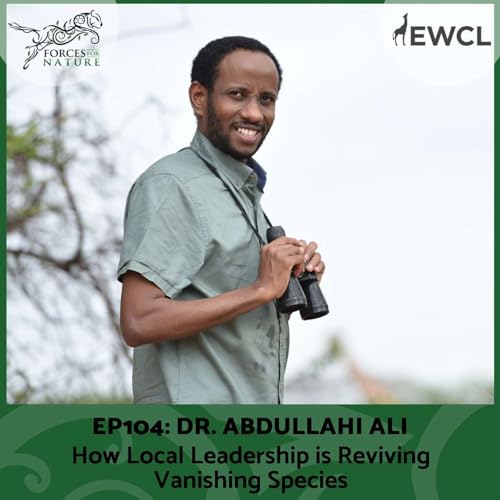
  • How Local Leadership is Reviving Vanishing Species with Dr. Abdullahi Ali, Ep.104
    Nov 7 2025

    Send Crystal a text letting her know what you thought about the show!

    Most people have heard about elephants and rhinos being in trouble. But few realize that giraffes are quietly disappearing too. And also the hirola, a graceful antelope found only along the Kenya–Somalia border, is down to fewer than 500 left on Earth.

    In this episode, Dr. Abdullahi Ali shares how his journey from a nomadic childhood to a Ph.D. in ecology led him to found the Hirola Conservation Program and the Somali Giraffe Project - two community-led efforts rewriting what coexistence looks like.

    Ali’s story is as much about people as it is about wildlife. From restoring grasslands once maintained by elephants before they were poached to helping farmers swap mango trees for lime trees to prevent conflict with giraffes, his work shows that when conservation is rooted in local knowledge, everyone thrives.

    Highlights

    • How Dr. Ali’s childhood herding goats (and occasionally getting lost doing it!) shaped his lifelong connection to nature.
    • How climate change is creating “climate refugees” - not just people, but also animals.
    • The power of community-led solutions: from adult literacy classes to wildlife-friendly livelihoods.

    What You Can Do

    • Partner with the Hirola Conservation Program and the Somali Giraffe Project.
    • Share what’s going on with giraffes and hirolas. It might be a surprise to most.
    • Look for ways to design coexistence where you live - in your garden, your community, or your workplace.
    • Remember that conservation works best when it’s collaborative between species, between people, and across borders.

    Resources

    • Facebook
    • X
    • YouTube

    If you enjoyed this episode, be sure to subscribe, rate and review it on your favorite podcasting app! This helps to boost its visibility.

    Hit me up on Instagram and Facebook and let me know what actions you have been taking. Adopting just one habit can be a game-changer because imagine if a billion people also adopted that!

    Never miss another episode! Sign up to receive email updates!

    What difference for the world are you going to make today?


    Want a free guide to help you become a force for nature? Get it HERE!

    If you enjoyed this episode, be sure to subscribe, rate, and review it! This helps to boost its visibility.

    Hit me up on Instagram and Facebook and let me know what actions you have been taking. Adopting just one habit can be a game-changer because imagine if a billion people also adopted that!

    What difference for the world are you going to make today?

    Afficher plus Afficher moins
    40 min
  • How Citizens Keep Environmental Progress Alive in Between Elections with Bentley Johnson, Ep. 103
    Oct 28 2025

    Send Crystal a text letting her know what you thought about the show!

    Federal policy might seem distant from the forests, rivers, and wildlife we care about but, as Bentley Johnson of the Michigan League of Conservation Voters explains, its impact reaches straight into our daily lives.

    From an executive order that resulted in higher(!) energy prices to bipartisan efforts that ensure the water coming from your tap is clean, Bentley reveals how political decisions ripple through ecosystems, economies, and communities alike.

    He also reminds us that our power doesn’t end at the ballot box. Between elections, we can still shape the laws that protect clean air, renewable energy, and wild spaces- by showing up, speaking out, and holding leaders accountable.

    If you’ve ever wondered how what happens in Washington affects us directly, this episode will connect those dots and help you see what you can be doing in between elections that can make a difference.

    This is another episode of the Emerging Wildlife Conservation Leaders program Series!

    Highlights

    • The real-world consequences of rolling back clean-energy and conservation laws.
    • Bipartisan success stories- from PFAS cleanup to Great Lakes restoration- that prove cooperation is still possible.
    • Why framing issues around health, cost, and community helps bridge divides.

    What YOU Can Do

    • Vote in every election, especially local ones. City and state leaders decide on wildlife corridors, pollution standards, and habitat funding. **CHECK TO SEE IF YOUR AREA IS HOLDING ELECTIONS THIS NOVEMBER 4TH.
    • Check your representatives’ environmental records. Visit your state’s League of Conservation Voters or lcv.org/scorecard.
    • Speak up between elections. Attend town halls, share your story, and comment on proposed environmental rule changes.
    • Join or support local conservation and restoration projects. The federal picture changes, but local action keeps progress alive.
    • Share success stories. Remind others that clean-energy projects, restored wetlands, and wildlife protections are working. Hope is contagious.

    Resources

    • Michigan LCV's Take Action page.
    • MLCV's Action Hub
    • Michigan LCV's Scorecard
    • Because Michigan LCV's scorecard is focused on Michigan, you may be interested in the national LCV's congressional scorecard where anyone in the country can look up their Members of Congress.
    • We also talked about the greenhouse gas emissions reporting rollback. Here is a link to take action on that (it's a national effort but this link is unique for Michigan LCV so that if people use it to make a comment, they can get credit).
    • Emerging Wildlife Conservation Leaders (EWCL) pro


    Want a free guide to help you become a force for nature? Get it HERE!

    If you enjoyed this episode, be sure to subscribe, rate, and review it! This helps to boost its visibility.

    Hit me up on Instagram and Facebook and let me know what actions you have been taking. Adopting just one habit can be a game-changer because imagine if a billion people also adopted that!

    What difference for the world are you going to make today?

    Afficher plus Afficher moins
    45 min
  • Behind the Lens: How Storytelling Shapes Conservation with Alex Goetz & Justin Grubb, Ep.102
    Oct 20 2025

    Send Crystal a text letting her know what you thought about the show!

    Wildlife filmmakers Justin Grubb and Alex Goetz have traveled from Costa Rica to Alaska capturing stories that connect people and wildlife in powerful ways. As co-founders of Running Wild Media, their work has appeared on National Geographic, PBS, Discovery+, and Disney+, and has been recognized with multiple awards and Emmy nominations.

    In this conversation, Justin and Alex share the behind-the-scenes realities of wildlife filmmaking- the challenges, the ethics, and the unexpected humor that happens along the way. From hellbenders in Appalachia to red wolves in North Carolina, they reveal how the most effective conservation stories aren’t about animals alone, they’re about people.

    You’ll also hear how they build campaigns that lead to tangible impact, why hopeful storytelling is their most powerful tool, and how each of us can use our own voice to spark change, no matter what our day job is.

    Highlights

    • From prairie dog turf wars to crocodile close calls, what it’s really like in the field.
    • The ethics of getting the perfect shot while respecting the wildlife.
    • Why the most powerful wildlife stories focus on the humans connected to the animals.

    What YOU Can Do

    Justin and Alex shared several simple yet meaningful ways listeners can help support wildlife and conservation storytelling:

    1. Tell your own story.
      Use your phone, words, art, or photos to share the nature you love. A story told with authenticity and hope can inspire others to care.
    2. Be a hopeful voice.
      Social media can get dark. Choose to amplify the good instead. Share solutions, success stories, or even small wins happening in your community.
    3. Engage locally.
      Attend or support environmental or wildlife film festivals. Ask questions, start conversations, and connect with filmmakers and advocates in your area.
    4. Support authentic conservation media.
      Donate to or share films that are fact-based and community-centered. Look for productions that give voice to both people and wildlife.
    5. Stay curious and informed.
      Fact-check what you share, know your sources, and help counter misinformation about wildlife and conservation issues.
    6. Look closer to home.
      You don’t need to go to the rainforest to find wonder. Start by noticing and appreciating the wildlife in your own backyard.

    Resources

    • Running Wild Media website
    • Hellbent (Film) – about hellbenders and the Rights of Nature movement
    • Running Wild Instagram
    • Running Wild YouTube
    • Emerging Wildlife Conservation Leaders (EWCL) program


    Want a free guide to help you become a force for nature? Get it HERE!

    If you enjoyed this episode, be sure to subscribe, rate, and review it! This helps to boost its visibility.

    Hit me up on Instagram and Facebook and let me know what actions you have been taking. Adopting just one habit can be a game-changer because imagine if a billion people also adopted that!

    What difference for the world are you going to make today?

    Afficher plus Afficher moins
    59 min
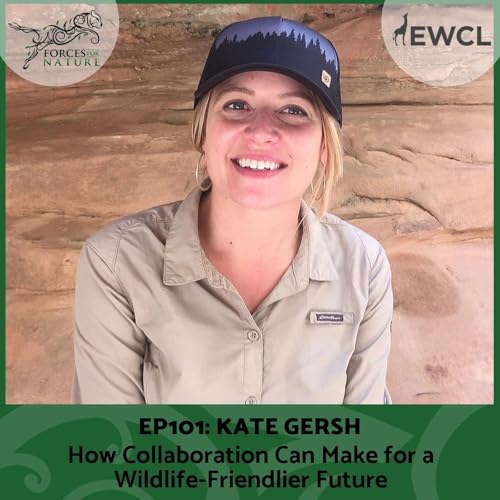
  • How Collaboration Can Make for a Wildlife-Friendlier Future with Kate Gersh, Ep.101
    Oct 10 2025

    Send Crystal a text letting her know what you thought about the show!

    This is another episode of the Emerging Wildlife Conservation Leaders program series!

    In a place where moose wander through neighborhoods and grizzlies sometimes cross backyard fences, living alongside wildlife takes creativity, cooperation, and care. The Jackson Hole Wildlife Foundation is proving that when communities come together, including volunteers, landowners, agencies, and visitors alike, they can create lasting solutions that benefit both people and wildlife.

    In this episode, Associate Director Kate Gersh shares how this small but mighty organization helps the Greater Yellowstone community coexist with the wild neighbors that make Jackson Hole so special. From pulling down old barbed-wire fences to hand-removing invasive weeds and collecting valuable wildlife data, Kate’s volunteers are showing that conservation success depends on everyone’s participation- not just scientists or professionals.

    Kate and I first met through the Emerging Wildlife Conservation Leaders program, where we worked together on a global bat conservation project. It’s been incredible to see how she continues to carry that same collaborative spirit into her work today.

    Highlights

    • How community volunteers have become the lifeblood of wildlife conservation in Jackson Hole.
    • Why collaboration among ranchers, agencies, nonprofits, and residents leads to solutions that last.
    • Why conservation needs communicators, fundraisers, and advocates just as much as biologists.

    What YOU Can Do

    Inspired by Kate’s work? Here are some simple ways to help make your own community more wildlife-friendly:

    • Volunteer your time with local conservation projects or citizen science programs.
    • Use bear-resistant trash cans and secure garbage to keep wildlife safe and wild.
    • Plant native species to support pollinators and local ecosystems.
    • Support local conservation groups- your voice, time, or donation matters.
    • Advocate for smart land-use policies that protect wildlife movement and habitat.
    • Talk about coexistence and help spread understanding of how people and wildlife can thrive together.

    Resources

    • Jackson Hole Wildlife Foundation website
    • Emerging Wildlife Conservation Leaders program, that brought Kate and me together, is accepting applications for its next class of young wildlife professionals. Apply here and tell them I sent you!
    • Jackson Hole Wildlife Foundation Facebook
    • Jackson Hole Wildlife Foundation Instagram
    • Jackson Hole Wildlife Foundation YouTube


    Want a free guide to help you become a force for nature? Get it HERE!

    If you enjoyed this episode, be sure to subscribe, rate, and review it! This helps to boost its visibility.

    Hit me up on Instagram and Facebook and let me know what actions you have been taking. Adopting just one habit can be a game-changer because imagine if a billion people also adopted that!

    What difference for the world are you going to make today?

    Afficher plus Afficher moins
    38 min