Épisodes

  • Jeremy Dicker | 10 Geopolitical Predictions For 2026
    Jan 26 2026
    • International Intrigue - Newsletter
    • My Substack (Subscribe)


    *Leave a review on Apple or Spotify* (nothing does more to help grow the show)

    ---

    Previous guests on the podcast similar to this!

    • Robert Kaplan - A World In Crisis

    Podcast Starter Packs

    • Offshore Finance/Kleptocracy & Money Laundering
    • Geopolitics/Economics/Economic Development
    • Explorers & Adventurers
    • Investigative Journalists

    ---

    Jeremy Dicker is a co-founder of International Intrigue, a daily geopolitics newsletter delivered to over 150,000 inboxes worldwide.

    Before entrepreneurship, Jeremy spent 14 years as an Australian diplomat, with postings in both Latin and North America, Peru, Mexico and LA specifically.

    International Intrigue was born during London lockdown when Jeremy and his co-founders (fellow former diplomats) jumped on the new media of newsletter’s nascent industry and decided to write to make geopolitics accessible, witty, and funny

    Jeremey boasts that the writers from ‘The Diplomat’ read the newsletter which is a huge flex given just how good that TV show is.

    Jeremy and his team published a 25 predictions for 2026 article just a few weeks ago and that’s exactly what we go through on todays episode.

    Timestamps

    00:00 - Jeremy & International Intrigue
    01:01 - Taiwan & Global Disorder
    11:35 - Prediction 1: Europe's Reliance on the US
    21:09 - Prediction 2: Cryptocurrency's Mainstream Adoption
    28:22 - Prediction 3: Nuclear Energy and Tech Giants
    33:13 - Prediction 4:AI and the Bubble Debate
    39:59 - Prediction 5: Russia Ukraine
    42:44 - Prediction 6: The Pink Tide: Shifts in Latin American Politics
    58:24 Prediction 7: Climate Change
    01:08:32 - Diplomacy and National Interests: Balancing Values and Policies
    01:09:03 - Prediction 8: BRICS vs Quad
    01:15:12 - US Foreign Policy and Global Dynamics
    01:19:11 - Diplomatic Challenges Under Trump
    01:26:12 - Prediction 9: The Future of the UN and Global Governance
    01:30:02 - Prediction 10: China's Technological Ascendancy
    01:34:53 - Australia's Role in Global Affairs

    Afficher plus Afficher moins
    1 h et 37 min
  • Nicolas Niarchos | Cobalt, China & The Congo... The Elements Of Power
    Jan 19 2026
    • The Elements of Power - Nicolas Niarchos
    • My Substack (Subscribe)


    *Leave a review on Apple or Spotify* (nothing does more to help grow the show)

    ---

    Previous guests on the podcast similar to this!

    • Nicolas Niarchos First Appearance On The Pod
    • Tim Butcher - Blood River (CLASSIC EP)
    • Adam Hochschild - King Leopold's Ghost
    • Jon Lee Anderson - New Yorker Staff Writer, A Life Of Adventure

    Podcast Starter Packs

    • Offshore Finance/Kleptocracy & Money Laundering
    • Geopolitics/Economics/Economic Development
    • Explorers & Adventurers
    • Investigative Journalists

    ---

    In this episode, New Yorker journalist Nicolas Niarchos discusses the supply chains behind the clean energy transition from child miners and Chinese-owned mega-mines to the coming global scramble for critical minerals.

    I’ve been eagerly anticipating his new book, and I reckon it is tailor made for this podcast. It’s the history of cobalt it’s extraction and it’s applications and shows how a single mineral has reshaped geopolitics, powered the rise of China’s technological superiority, and further locked millions of Congolese into one of the most brutal extraction economies on earth.

    This is a story that begins with King Leopold the second the original plunder of the Congo but then runs through Cold War dictatorships and kleptocracy, and ends with Apple, Tesla, BYD, and the race to dominate the future of energy.

    It’s Nic’s second appearance on this podcast on a similar subject, therefore we avoided to go-over all the same ground as last time. The first episode was about his New Yorker piece on artisanal mining in the Congo, his arrest in the Congo and the foundations for his worldview in covering this issue.

    Today we go into his new book. Inside the mines of Katanga, inside the rise of China’s battery empire, inside the corruption that still governs Congo’s political system, and inside the coming resource wars that will define the next half-century.

    • Eighty percent of the world’s cobalt now comes from the Congo.
    • Most of it is controlled by Chinese companies.
    • As much as 20% of it is still dug out of the ground by hand.
    • Kinshasa, Congo’s capital, is expected to have 40,000,000 people by 2050.

    And the world is about to need more of what’s beneath their feet than ever before.


    Afficher plus Afficher moins
    1 h et 18 min
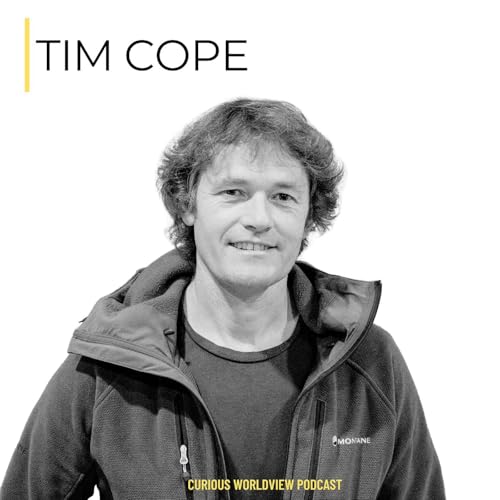
  • Tim Cope | In The Shadow Of Genghis Khan - 10,000km & 3 Years On Horseback Across The Mongol Empire's Eurasian Steppe
    Dec 22 2025

    On The Trail Of Genghis Khan - Tim Cope (Book)

    My Substack (Subscribe)

    *Leave a review on Apple or Spotify* (nothing does more to help grow the show)

    ---

    Previous guests on the podcast similar to this!

    Jack Weatherford - Genghis Khan & The Making Of The Modern World

    Robyn Davidson - Australian Living Legend. Documenter Of Nomads.

    Jon Lee Anderson - New Yorker Staff Writer, A Life Of Adventure.

    ---

    Tim Cope underwent a three year journey traversing the entire Eurasian steppe, starting in Karakorum, the old Mongolian capital, westwards through Mongolia, Kazakhstan, Russia, Ukraine and finally Hungary until he reached the Danube river.

    The journey took him three years to complete and 4 horses. He picked up a dog along the way, and his journey saw him robbed, threatened, welcomed and exposed to murderous heat and cold.

    I first wrote to Tim 4 years ago… so we’ve maintained a very spotty correspondence in anticipation for today.

    Tim Cope is is an Australian adventurer, author, filmmaker, photographer, expedition guide - a fluent Russian speaker - a bloody good writer and someone generous enough to offer me their time and invite me into their home here in rural Victoria.

    Timestamps.

    00:00 - Tim Cope
    02:50 - The Magic Of The Steppe
    10:10 - Tim's Coma & Writing
    13:15 - Tim's Backstory
    24:50 - On The Trail Of Genghis Khan
    33:01 - The Eurasian Steppe
    37:41 - The Decline Of Nomadic Cultures
    46:27 - Entering Into Kazakhstan & Finding A Dog
    1:02:55 - Tim's Growing Reputation On The Steppe
    1:10:50 - Alcoholism On The Steppe
    1:19:12 - Abandoned Goldmine For The Winter
    1:38:45 - Prostitution
    1:50:00 - Tim's Father Passing Away
    2:05:46 - Hungary
    2:12:30 - The Problem Of Fitting Back In
    2:24:50 - Success & Book Publishing
    2:31:00 - How Mongolia Has Changed
    2:44:10 - Tim's Evolving Thoughts On Both Russia & Ukraine

    Afficher plus Afficher moins
    2 h et 59 min
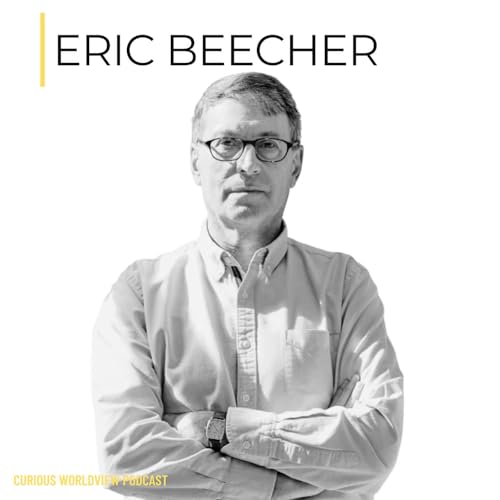
  • Eric Beecher| The Rogues Gallery Of Media Moguls & The Men Who Killed The News
    Dec 1 2025

    The Men Who Killed The News (Book)

    My Substack (Subscribe)

    * Consider leaving a review on Apple or Spotify * (nothing does more to help grow the show)

    ---

    Eric Beecher is a veteran journalist, editor and entrepreneur whose experienced first hand the dramatic evolution of the previous 40 years of media.

    From broadsheet’s to TV to the internet to facebook, podcasts, now AI. Eric has been across all these, both an employee and employer as the business models were repeatedly shaken and recast.

    And he asks, what is the cumulative damage when owners of journalism place profits and power over civic responsibility and decency.

    That book is called, ‘The Men Who Killed The News’ and series a history of media moguldom, the perennial story of power and influence chipping away ever so gradually, the role good journalism esteems in helping us make sense of the world. It’s not nostalgia for the good old days, but rather an attempt to understand how we got here, and whether there is anything that can be done about it.

    Eric was formerly the youngest editor at the Sydney Morning Herald before being recruited by Murdoch himself to run at the time, his latest media acquisition, before resigning sighting ethical differences.

    Eric runs today alongside his colleagues, Crikey, The Mandarin and SmartCompany. Eric is a major architect of modern Australian independent media, and it is my pleasure to welcome him to the podcast.

    Afficher plus Afficher moins
    52 min
  • Gareth Gore | Political Fallout & 'Smear Campaign' From Opus Dei
    Nov 17 2025

    Gareth Gore | Unveiling The Conspiracy Of Opus Dei (his first appearance)

    Gareth Gore - Opus (Amazon)

    Subscribe To The Curious Worldview Substack

    ---

    This is Gareth’s second appearance on the podcast.


    It is the political fallout from everything covered in our first episode where he told the story for how he serendipitously uncovered Opus Dei’s hidden power and financial manipulation while investigating the ruins of the Spanish bank, Banco Popular.


    It began as a routine story but evolved into the discovery of a global network of manipulation, coercive recruitment, psychological abuse, and enormous financial flows routed through myriad opaque foundations. Gareth spoke about how Opus Dei maintains a polished, benign public image, but secretly operates an inner core of numeraries—members bound by vows of obedience, chastity, and poverty—who are tightly controlled, isolated, and monitored.


    It’s systematic practices include corporal mortification, constant surveillance, abuse, both emotional and physical and the exploitation of vulnerable young women tantamount to human trafficking. Opus Dei used Banco Popular as a piggy bank for decades, funnelling money through shell foundations and offshore channels to fund their impressive global expansion.


    This is a Direct quote from Gareth’s first appearance… “This is an organisation that seeks to re-Christianize of the entire world… Opus Dei is informed by a warped, distorted, conservative, radical reading of the Bible. It embeds itself in key institutions, especially in the United States. and Despite its Vatican legitimacy, Opus Dei uses secrecy and corporate structures to evade accountability.

    Afficher plus Afficher moins
    51 min
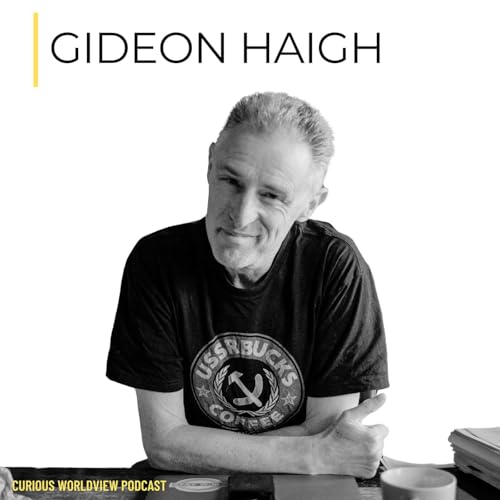
  • Gideon Haigh | The Love Of Cricket, Archives & Eclectic Curiosities - Doyen Of Cricket History & Correspondence
    Nov 6 2025

    A probe into Gideon Haigh's worldview, someone I've anticipated interviewing ever since this podcast began.

    Some highlights from the podcast.

    • On cricket: “Cricket marches backwards into the future — always haunted by its past.”
    • On Warne: “He had perfect superficiality and the gift of putting everyone at ease.”
    • On journalism: “Legacy media has become mindlessly negative. If they can’t own it, they destroy it.”
    • On new media: “It’s amazingly empowering to write something and press publish — no intermediaries, no gatekeepers.”
    • On India: “India has become the gravitational centre of world cricket — a nation full of gods, and some of them play cricket.”
    • On memory: “Memory is a slippery thing — journalists are constantly trying to pin it down, trusting it when it suits us, interrogating it when it doesn’t.”

    Gideon is a veteran journalist, author and the most eclectic cricket writer alive today. He has prolific output. He’s published more than 50 books and thousands of articles scoping a gamut of topics. Work, bureaucracy, the office, Australian crime, banks, business, scandals, cricket, cricket history, cricket politics, media, journalism, biography, memoir, and too many more to rattle off.

    Check out the video of this one (Spotify or Youtube). The decor is a very on the nose projection for Gideon's aforementioned interests. Lining opposite walls are two imposing floor to ceiling bookshelves eyeing each down for Gideons attention. Behind him a shrine to cricket and across from him a shrine to the rest.

    Gideon is also the co-host, alongside Peter Lalor, the wonderful Substack and podcast - Cricket Et Al.

    If you like Cricket than you’ll love Cricket Et Al.

    ... a few quotes from Gideon in the interview to leave you with.

    • "I've always thought journalism was a great vehicle for curiosity"
    • “Contemporaneous documentation — that which was created at the time — is the closest thing we have to truth.”
    • “Part of the romance of archives is finding them — going to see the thing that no one else has looked at.”
    • “We are too easily satisfied with low-hanging fruit. I believe strongly in delayed gratification.”
    • “An inquest is like a lightning flash — it illuminates everything in its surroundings for a moment before vanishing.”
    • “If the record spoke for itself, it wouldn’t need interpretation.”
    • “A good historian has humility. They know they can’t tell the whole thing, but they do their best.”
    • “It’s not imagination that’s rare, it’s perseverance.”
    • “I’m interested in delighting readers, not just informing them.”
    • “The minute I stop getting better, I’ll stop doing it.”
    • “Journalism should be a vehicle for curiosity, not defensiveness.”
    • “I’ve always thought the best journalism comes from knowing who really pulls the strings.”
    • “The site, the Substack — it’s a hungry beast. It requires constant replenishment.”
    • “I’m not just writing to be read. I’m writing to find out what I think.”
    • “I dislike the term ‘non-fiction’ — defining something by what it’s not.”
    • “Legacy media is in long-term decline. They can’t own new ideas — so they’d rather destroy them.”
    • “The barriers to entry have never been lower. The barriers to making a living have never been higher.”
    • “Cricket is a game that marches backward into the future — every feat echoes those that came before.”
    • “Test cricket is romantic love; T20 is carnal love.”


    Afficher plus Afficher moins
    1 h et 45 min
  • Robyn Davidson | Among Australia's Most Mythologised Lives... 'Memoir Is The Slipperiest Genre' - Unfinished Woman, Tracks & A Life Of Nomadism
    Oct 21 2025

    I've anticipated this interview for 6 years.

    Robyn Davidson has lived one of the most mythologised lives in Australian memory.

    She famously and unintentionally burst onto the scene with Tracks in 1988, which was a 2,700km camel trek across the Simpson desert. She'd never intended to write a book or document anything of it's kind from the journey, but was desperate for some money to gather supplies for the impending trip. She figured $1000 would do, and serendipitously met the National Geographic photographer who put her on the map whilst cleaning windows as a part time gig in Alice Springs.

    He said that if she wrote to National Geographic telling them about the journey, then she might get what she needed.

    They paid her $4,000 which Robyn comments 'was a fortune', and from there, the rest is history.

    Robyn has since lived between India, London and Australia but travelled most elsewhere on the map. She was with Salman Rushdie while he wrote the 'Satanic Verses', has published a series of books and articles documenting the lives of nomads, lived an 'aristocratic life' with her partner Narendra Singh Bhati in the high Himalayas and most recently published an autobiography titled 'Unfinished Woman'. Robyn say's to me that 'memoir is the slipperiest genre'.

    I have waited 6 years to do this interview with Robyn. She has a dream guest of mine since before the podcast began. We recorded earlier this year in rural Victoria.

    The interview is Robyn's life. What led up to tracks, and what happened after.

    Robyn reflects on her lifelong resistance to labels. Not a “writer,” not a “traveller,” not a “feminist icon,” but simply, as she says, “a person.” We speak about memoir, the slipperiness of memory “in retrospect, memory is imagination”.

    She speaks candidly about solitude, beauty, and depression, her family, fame, about the distortion of the famous photographs “Rick made me look like a Vogue model, that wasn’t me”, and her uneasy relationship with literary celebrity in London alongside Doris Lessing, Salman Rushdie, Christopher Hitchens, Martin Amis and more.

    “Whenever you write in the first person, you are necessarily creating a character — a doppelgänger. She is me, but she’s not quite me.”“The truth is, memory is imagination.”“I worship the phrase ‘I don’t know.’ If you don’t have ‘I don’t know,’ you can’t learn anything.”“If you have a firm identity, you’re trapped in it.”


    In this podcast you can expect the following discussion.


    The Performed Self & Identity

    • “Whenever you use the first-person pronoun, you are necessarily creating a character.”

    The Narrative Fallacy

    • “We invent neat, linear, emotionally satisfying stories to explain what happened… but the world is messy, chaotic and driven by chance.”

    Freedom, Nomadism & Refusal to Be Fixed

    • Freedom and movement — literal and intellectual — define her resistance to labels like “travel writer” or “author.”

    Chance, Fate & Serendipity

    • “On the tiniest turning point you can head off in a billion directions.”

    Depression, Nihilism & Meaning

    • “It’s a terrible pain that hovers somewhere between the physical body and the mental body.”
    • “To learn how to deal with a profoundly nihilistic view and to counter that view — that’s been the most formative moment of my life.”

    Beauty, Objectification & Subjecthood

    • “If that journey was about anything, it was about being the subject of my own life, not an object.”

    Feminism, Rebellion & the 1968 Generation

    • The spirit of the late-’60s counterculture — radical freedom, equality, and experimentation — shaped her worldview.

    Authenticity vs. Fame

    • “What I was interested in was knowledge and whether people were genuine or
    Afficher plus Afficher moins
    2 h et 16 min
  • Phil Elwood | Confessions of a Public Relations Operative
    Oct 15 2025

    “I deserved whatever the opposite of a Pulitzer is.”

    Phil Elwood is the author of All the Worst Humans, a confessional memoir from the dubious world of public relations.

    As a PR operative. He helped Qatar win the 2022 World Cup. He spun the release of the Lockerbie bomber into a “positive headline.” Had the Gaddafi family, the Assad regime and plenty more among his clients.

    Phil speaks with humility and incredible clarity about what he learned from that world. The moral grey zones, the craft behind the spin, and how media manipulation really works in practice.

    It’s a rare, honest window into an industry that prefers the shadows.

    • How propaganda and PR actually get executed behind closed doors
    • The mechanics of “first ink,” astroturfing, and reputation laundering
    • The moral compromises behind Qatar’s 2022 World Cup bid
    • Sportswashing, Liv Golf, and the new global game of influence
    • Whether the media is more easily manipulated than ever?
    • Whether AI and independent creators can break the old PR machinery


    00:00 — Who is Phil Elwood?
    04:57 — Lockerbie bomber: how he manufactured “positive press” for Libya.
    11:14 — “Opposite of a Pulitzer” treating the news like a solvable game.
    12:30 — What a PR operative really does; “infect a newsroom.”
    18:28 — First Ink masterclass: Antigua vs USA
    27:44 — Qatar 2022: going negative on the US bid
    40:15 — Is Sportswashing PR? Is it all bad?
    49:57 — “Buy the printing press”: oligarch media ownership.
    55:01 — News collapse, AI replacing reporters, and why that’s dangerous.
    57:21 — Andrew Callaghan. Do gatekeepers still matter?
    01:05:53 — “Digital fentanyl”; treat content as a public-health issue.
    01:10:27 — Rebranding Zuckerberg; persona as PR product.
    01:22:44 — Bots: PR firms pitching bot farms
    01:34:30 — Practical playbook & media-literacy plus a nice close.

    Afficher plus Afficher moins
    1 h et 39 min