Couverture de Comprehensive AP Review: Prep With Detailed Content Review & Tips

Comprehensive AP Review: Prep With Detailed Content Review & Tips

Comprehensive AP Review: Prep With Detailed Content Review & Tips

De : Edgar Evans
Écouter gratuitement

À propos de ce contenu audio

Comprehensive AP Review: Ace Every College Board AP Exam with This Complete Audiobook-Style Podcast

Struggling with dense textbooks and last-minute cramming? Welcome to Comprehensive AP Review — the ultimate AP exam review podcast and multipart audiobook series that covers every College Board AP test.

This is your flexible, high-yield AP test preparation resource designed for busy high school students. Whether you're taking AP Biology, AP Calculus AB/BC, AP US History, AP English Language & Composition, AP Psychology, AP World History, AP Chemistry, AP Physics, AP Government, or any of the 40+ AP courses, we deliver a full audio curriculum perfectly aligned with the official College Board course frameworks.

Why Students Love Comprehensive AP Review

  • Coverage of AP Exams: Dedicated multi-episode series for major AP subjects, including AP Capstone, AP Art History, AP Music Theory, AP Statistics, AP Computer Science, AP Environmental Science, AP Macroeconomics/Microeconomics, and all World Languages & Cultures. Popular courses like AP US History, AP Biology, AP Calculus, and AP English Language receive especially deep, high-yield treatment.
  • Audiobook-Style Multipart Format: Each AP course is broken into clear, sequential episodes that follow the official units and learning objectives. Enjoy expert narration covering key concepts, essential knowledge, science practices, historical thinking skills, math reasoning, and real test examples — all with helpful mnemonics and strategies.
  • Perfect for On-the-Go Studying: Listen while commuting, working out, doing chores, or reviewing at night. Auditory learning improves retention and makes college-level material far more approachable than traditional study methods.
  • Focused on Scoring a 5: Get targeted walkthroughs of free-response questions (FRQs), multiple-choice strategies, DBQ and LEQ tips, data analysis, and common pitfalls. Learn exactly what earns points on exam day.

How the Podcast Works

Every AP series is structured like a complete audiobook course:

  • Unit overviews with College Board weighting
  • Deep-dive concept explanations with examples
  • Strategy and review episodes for last-minute prep

New episodes are released regularly so you can follow along with your class or self-study at your own pace.

Who This AP Prep Podcast Is For

High school students in AP classes, self-studying learners, homeschoolers, and parents supporting college admissions goals. Teachers also use it as a supplemental classroom resource.

This is your personal 24/7 audio tutor for AP exam success.

Subscribe now to Comprehensive AP Review on Apple Podcasts, Spotify, YouTube, or wherever you listen. Just search “Comprehensive AP Review” plus your specific exam (e.g., “AP US History podcast” or “AP Biology review audiobook”).

Don’t just survive AP season — dominate it. Turn every drive, workout, and spare moment into college credit with the most comprehensive AP exam preparation podcast and audiobook available.

Top Search Keywords: AP exam review podcast, AP prep audiobook, Comprehensive AP Review, score 5 on AP exam, AP test preparation, AP Calculus review, AP US History podcast, AP Biology review, AP English Language review, AP World History prep, College Board AP study guide, on-the-go AP studying.

IASoftware
Épisodes
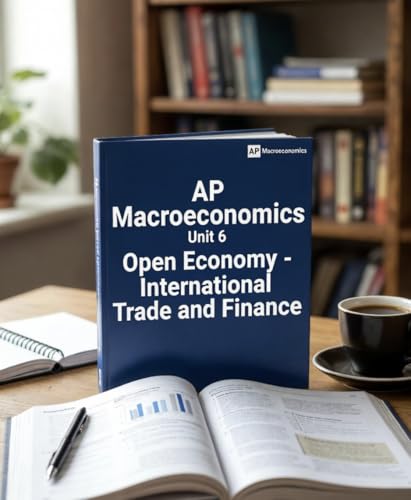
  • AP Macro Unit 6: Open Economy, BOP & Exchange Rates
    Apr 25 2026

    Dive into AP Macroeconomics Unit 6 with a detailed breakdown of open economy concepts, starting with the Balance of Payments (BOP) and exchange rates. This episode covers the current and financial accounts, trade balances, and how they always sum to zero, plus key AP exam pitfalls and mnemonics to master international trade and finance. Perfect for students prepping for the exam with clear explanations and real-world analogies.

    Key Topics Covered:
    • Balance of Payments (BOP): Comprehensive record of all transactions with the world
    • Current Account: Trade balance, services, net income, and transfers
    • Financial Account: Foreign direct investment, portfolio investment, and reserve transactions
    • Double-entry bookkeeping: Why current and financial accounts offset each other
    • Exchange rates: Appreciation/depreciation effects on trade and BOP
    • AP pitfalls: Trade deficit vs. current account deficit, and why deficits aren't always bad
    What You'll Learn:

    Master the BOP framework to tackle complex multiple-choice and FRQ questions on international economics. Learn mnemonics like "Current = Current Stuff, Financial = Future Claims" and analogies for deficits (e.g., personal overspending covered by borrowing). Understand how currency changes impact exports/imports, setting up forex market mechanics.

    Why care? Grasping Unit 6 is crucial for 10-15% of the AP exam and explains real-world issues like U.S. trade deficits and global investment flows.

    AP Macroeconomics, Unit 6, Balance of Payments, Current Account, Financial Account, trade balance, exchange rates, trade deficit, foreign direct investment, portfolio investment, AP exam review, macroeconomics prep, international trade, open economy

    Subscribe to Comprehensive AP Review: Prep With Detailed Content Review & Tips for full Unit 6 coverage and more!

    Afficher plus Afficher moins
    34 min
  • AP Macro Unit 5: Fiscal/Monetary Policies & Phillips Curve
    Apr 25 2026

    Dive into AP Macroeconomics Unit 5 with a comprehensive review of long-run consequences of stabilization policies. This episode breaks down short-run fiscal and monetary policy actions, their effects on aggregate demand, and introduces the Phillips Curve, equipping you with exam-ready graphs, multipliers, and pitfalls to avoid. Perfect for mastering FRQs and multiple-choice questions on recessionary/inflationary gaps.

    Key Topics Covered:
    • Fiscal policy: Expansionary (spending up, taxes down) vs. contractionary mechanics and multipliers
    • Monetary policy: Open market operations, money market graphs, interest rates, and AD shifts
    • Short-run effects on real GDP, unemployment, and price level
    • Policy lags, timing differences, and RIPE mnemonic for recessions
    • Phillips Curve introduction and common AP exam pitfalls
    What You'll Learn:

    Master the full chain of causation for policy actions—like Fed bond buys leading to lower rates, higher investment, and rightward AD shifts. Calculate spending (1/(1-MPC)) and tax multipliers, draw money market + AD/AS graphs side-by-side, and identify gaps to choose expansionary or contractionary tools. Avoid traps like forgetting price level rises in expansions or confusing multiplier sizes.

    Whether you're prepping for the AP exam or understanding real-world policy, this episode reveals why short-run boosts can lead to long-run trade-offs—essential knowledge for scoring 5s.

    AP Macroeconomics Unit 5, fiscal policy, monetary policy, Phillips Curve, aggregate demand, AD/AS model, spending multiplier, tax multiplier, recessionary gap, inflationary gap, open market operations, money market graph, policy lags, AP exam review, FRQ tips

    Subscribe to Comprehensive AP Review: Prep With Detailed Content Review & Tips for full Unit 5 coverage, practice questions, and more!

    Afficher plus Afficher moins
    49 min
  • AP Macro Unit 4: Financial Sector & Interest Rates
    Apr 25 2026

    Dive into AP Macroeconomics Unit 4 with this detailed review of the financial sector, starting with financial assets and the crucial distinction between nominal and real interest rates. We'll break down bonds, stocks, money, and the loanable funds market, highlighting AP exam pitfalls like the inverse bond price-interest rate relationship and the Fisher equation. Perfect for students prepping to ace multiple-choice and FRQs on these high-yield topics.

    Key Topics Covered:
    • Definition and role of financial assets as claims channeling savings to borrowers
    • The big three: money (liquidity vs. return), bonds (face value, coupons, yields), and stocks (equity, dividends, risk-reward)
    • Bond prices and interest rates: inverse relationship ("Rates Rise, Bonds Cry")
    • Loanable funds market: supply/demand driven by real interest rates
    • Nominal vs. real interest rates (Fisher equation: Real = Nominal - Inflation)
    • Common AP pitfalls: interest rate risk, confusing nominal/real rates
    What You'll Learn:

    Master the mechanics of financial markets, calculate real yields, graph loanable funds shifts, and apply concepts to Fed policy impacts. Gain exam-ready insights like why rising rates lower bond prices and how inflation erodes purchasing power, with mnemonics and real-world examples to lock in retention.

    Why listeners should care: Understanding Unit 4 equips you to analyze how interest rates shape economic growth, investment, and your future finances—key for AP success and real-life decisions.

    AP Macroeconomics Unit 4, financial assets, bonds stocks money, loanable funds market, real interest rates, nominal vs real, Fisher equation, bond prices interest rates, AP Macro review, College Board exam tips

    Subscribe to Comprehensive AP Review: Prep With Detailed Content Review & Tips for full Unit 4 coverage, practice questions, and more!

    Afficher plus Afficher moins
    37 min
Aucun commentaire pour le moment