Épisodes

  • Why Worry Never Works - Matthew 6:25-34
    Feb 15 2026

    Anxiety has reached epidemic levels in our modern world, with nearly half of Americans reporting increased stress. Jesus addressed this universal struggle in His Sermon on the Mount, specifically in Matthew 6:25-34, where He commands us three times not to worry about basic needs like food, water, and clothing.


    Using powerful illustrations from nature, Jesus demonstrates God's faithful provision through birds that neither sow nor reap, yet are fed by their Heavenly Father, and wildflowers that surpass even Solomon's glory in their beauty. He exposes worry's fundamental flaw: it never actually fixes anything or adds a single hour to our lives. Instead, worry robs us of today's peace while failing to solve tomorrow's problems.


    The solution isn't to eliminate all concerns, but to seek first God's kingdom and righteousness. This becomes practical when we ask ourselves: What does faithfulness look like to my Heavenly Father right now? We're called to be faithful, not successful - to trust rather than control. When we truly understand our identity as children of God rather than guests in His house, worry transforms into worship. Our Heavenly Father knows our needs and will provide, just as He promised.

    Afficher plus Afficher moins
    21 min
  • Are You Serving Money? - Matthew 6:19-24
    Feb 8 2026

    Our relationship with money is deeply personal and often shaped by past experiences of scarcity or the belief that more wealth will solve our problems. However, Jesus addresses this directly in Matthew 6:19-24, teaching that earthly treasures are temporary and vulnerable to destruction or theft. The key principle is that our hearts naturally follow our investments - when we focus on accumulating wealth, our hearts become consumed with financial concerns, but when we invest in God's kingdom, our hearts align with eternal purposes.


    Jesus uses the metaphor of a healthy eye to describe generous living. A generous perspective spreads to every area of our lives, creating light and joy, while stinginess breeds darkness and dissatisfaction. The fundamental issue isn't that money is evil, but that anything becoming our ultimate source of security will compete with God for our allegiance. When money becomes our master, we start viewing our relationship with God transactionally.


    The gospel reveals God's incredible generosity toward us - He gave His Son while we were still sinners, not waiting for us to prove ourselves worthy. This divine generosity should transform how we approach life, moving us from asking what's the minimum required to asking how we can generously use what God has entrusted to us. Generous living means holding our resources with open hands, ready to invest in God's kingdom rather than hoarding for our own security.

    Afficher plus Afficher moins
    32 min
  • What Makes Faith Real - Matthew 6:16-18
    Feb 1 2026

    Jesus addresses the practice of fasting in Matthew 6:16-18, revealing a fundamental truth about authentic faith versus religious performance. He doesn't condemn fasting itself but rather the hypocritical approach of religious leaders who disfigured their faces to display their spirituality publicly. These individuals received their reward in human admiration but gained nothing from God. Jesus assumes His followers will fast, using the phrase when you fast rather than if you fast, but emphasizes doing so genuinely before God alone rather than for public recognition.


    The human aversion to fake spirituality reflects our creation in God's image, as God Himself rejects the artificial and phony. This principle extends beyond fasting to all areas of spiritual life, where external religiosity can mask internal emptiness. Christianity stands apart from other religions by offering grace rather than a performance-based relationship with God. While other faiths essentially teach earning divine approval through good works, the Gospel declares that Christ has already done the work necessary for our salvation.Fasting serves multiple purposes in the believer's life: developing self-discipline, breaking free from habits, increasing appreciation for God's provisions, providing health benefits, and creating focused time for prayer. When Jesus fasted for forty days, He demonstrated complete seriousness about His mission. Similarly, believers can use fasting to show God their earnestness about specific prayer requests.


    The ultimate question becomes one of motivation: are we engaging in spiritual disciplines out of love and gratitude for what Christ has done, or merely fulfilling religious obligations? God calls us to examine our hearts and approach Him with genuine humility rather than spiritual pride.

    Afficher plus Afficher moins
    33 min
  • Is Your Prayer Life Fake? - Matthew 6:9-13
    Jan 25 2026

    In a culture obsessed with image and performance, Jesus calls us to authentic prayer that rejects the hypocritical practices of religious leaders who prayed elaborate prayers in public for show. These performers received their reward in human admiration but missed genuine connection with God. Instead, Jesus instructs us to pray privately, emphasizing that our primary prayer life should be secret conversations with our Heavenly Father rather than performances for others.


    The Lord's Prayer serves as a model revealing three crucial aspects of God's character. First, God is immanently close as our Father, a revolutionary concept that invites us into intimate relationship with the Creator. This father-child relationship provides a framework for trust when life circumstances don't make sense. Second, God is transcendently holy and sovereign, deserving our deepest respect and submission to His will. Third, God is graciously providing for our daily needs and offering forgiveness, though this forgiveness comes with the condition that we also forgive others.


    Authentic prayer requires coming to God with complete honesty rather than spiritual pretense, keeping short accounts through regular confession, and remembering that prayer is both personal and corporate as part of the church family. God desires genuine relationship over religious performance, inviting us to approach Him as beloved children rather than actors wearing masks.

    Afficher plus Afficher moins
    34 min
  • What's Your Real Motivation? - Matthew 6:1-4
    Jan 18 2026

    In a culture obsessed with public recognition and social media validation, Jesus' teaching in Matthew 6:1-4 cuts straight to the heart of our motivations. He warns against the spiritual danger of practicing righteousness before others in order to be seen by them.


    This challenge hits close to home when we consider whether we sometimes ensure others notice our giving, use our 'holy voice' when praying publicly, or serve while secretly hoping for recognition. The issue isn't the acts themselves—giving, praying, and serving are all good—but rather our underlying motivation. Are we seeking God's approval or human applause?


    Biblical giving has four key characteristics: it's responsive (flowing from the grace we've already received rather than trying to earn God's love), thoughtful (understanding needs and giving intentionally), sacrificial (trusting God to provide rather than holding back out of fear), and God-centered (bringing glory to God rather than ourselves). When Jesus speaks of giving 'in secret,' He's addressing the heart behind our giving rather than necessarily requiring all giving to be private. Secret giving means we're not motivated by the desire to be seen or acknowledged by others—our audience is God alone.


    This freedom from performing for human recognition allows us to discover that God's greatest rewards are eternal: knowing Him personally, experiencing His joy, finding freedom in Christ, and receiving abundant life. Teaching generosity to the next generation involves starting small but giving often, giving from gratitude for what we've already received, beginning with the first 10%, and making generosity about our identity in Christ rather than our possessions. Ultimately, this isn't about creating religious to-do lists but about allowing God's grace to transform our hearts from the inside out.

    Afficher plus Afficher moins
    33 min
  • Are You Carrying Excess Baggage? - Matthew 5:43-48
    Jan 11 2026

    Jesus presents a revolutionary approach to relationships by commanding us to love our enemies and pray for those who persecute us. This wasn't merely countercultural advice but a fundamental requirement for serious followers of Christ. Speaking to people under Roman occupation who faced real persecution, Jesus challenged them to turn the entire system of retaliation upside down through radical love and forgiveness.


    The Christian life is described as a marathon rather than a sprint, where many believers start with initial excitement but quit when following Jesus becomes challenging. Going the second mile means moving beyond what's required, expected, or comfortable, continuing to follow Christ even when the novelty wears off. Those who choose this path become part of the company of the second mile, understanding that spirituality without sacrifice is foreign to biblical Christianity.


    In the second mile, we discover three crucial things about our faith. First, we learn whether we've been spiritually training through disciplines like Bible study and prayer, as trials reveal how deeply our roots go into Christ. Second, we identify what excess baggage of bitterness and unforgiveness we're carrying that weighs us down. Finally, we discover whether we're truly serious about following Jesus when we hit the inevitable wall where faith becomes difficult. The only fuel sufficient for this long journey is God's grace, which becomes especially real during our darkest moments when we realize our complete dependence on Him.

    Afficher plus Afficher moins
    35 min
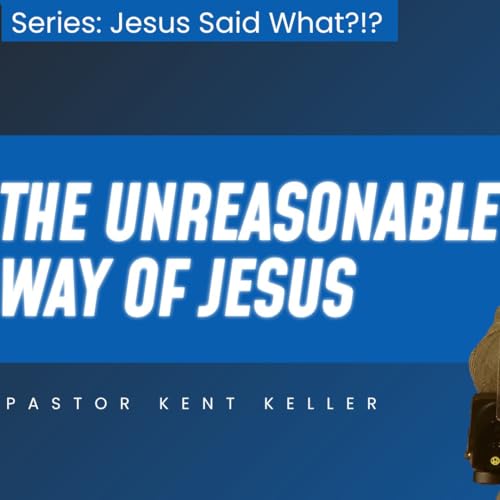
  • The Unreasonable Way of Jesus - Matthew 5:38-42
    Jan 4 2026

    The concept of going the second mile comes from Jesus' revolutionary teaching in Matthew 5:38-42, where He challenges the conventional eye-for-an-eye mentality with a radically different approach to living. This wasn't merely a suggestion but a complete departure from cultural norms that seemed almost impossible to follow. Jesus essentially introduced new principles for His followers that would set them apart from the world's expectations.


    There are three key ways to embrace second-mile living. First, we must go against what the world tells us to do by choosing grace over vengeance and forgiveness over retaliation. Historical examples like Nelson Mandela, who invited his former jailers to his presidential inauguration, and Abraham Lincoln, who appointed his harshest critics as advisors, demonstrate this principle in action. Second, we should go above what the world says to give, understanding that everything we have is a stewardship from God rather than adopting a minimal effort mentality. Third, we must go farther than expected, practicing what one restaurant owner called unreasonable hospitality - exceeding expectations in service to others.


    Jesus Himself is the ultimate example of second-mile living, having left His divine privileges to become human, live perfectly, and die sacrificially for our salvation. This week, we're challenged to join the company of the second mile by choosing grace over retaliation, doing more than what's requested when asked to help, and exceeding expectations when encountering those in need. This isn't just a nice idea but the natural response of hearts transformed by Christ's incredible grace.

    Afficher plus Afficher moins
    31 min
  • When Words Lose Their Meaning - Matthew 5:33-37
    Dec 28 2025

    In Matthew 5:33-37, Jesus challenges us to live with such integrity that our simple word carries the weight of an oath. While the Pharisees created complex systems of oath-taking with built-in loopholes, Jesus calls for radical simplicity in communication. He envisions a way of living where your reputation for truthfulness is so solid that additional legal protections become unnecessary.


    Our modern world reveals what happens when trust erodes. We sign 80-page contracts for simple activities because we can't rely on people's word. The recent pandemic highlighted how broken trust affects everything - jobs, money, and opportunities are lost when words lose their meaning. Jesus offers an alternative where your yes means yes and your no means no, without hedging or escape clauses.


    The gospel transforms this teaching from an impossible burden into beautiful freedom. We don't become truth-tellers by trying harder, but because Christ has made us people of truth. Like Michelangelo painting details no one would see because God sees them, we speak truthfully not to become truthful people, but because we are truthful people through grace. When anchored by Christ's love, we're free from image management and can communicate with simple integrity, knowing our identity is secure in Him.

    Afficher plus Afficher moins
    24 min