Épisodes

  • Marketing Has No Quick Fix
    Jul 13 2026

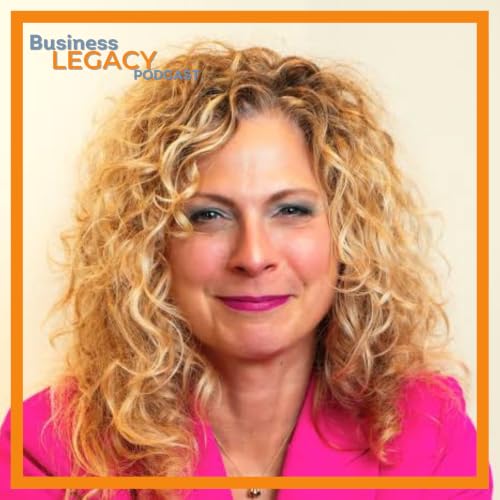
    In this episode, Paul Dio sits down with Jennifer Lehman, founder of Forward Thinking, for a conversation that starts on a golf course and ends up somewhere much deeper. A conference champion at Campbell University with a communications degree and a Class A professional status with the PGA of Canada, Jennifer built a consulting career after being told, over and over, that she was overqualified for the marketing jobs she was applying for. Twenty years in, she says she's grateful every one of them turned her down.

    The parallels between golf and business run all the way through the episode. Jennifer makes the case that both worlds are full of people selling quick fixes — the eight-hundred-dollar driver, the make-you-a-million-in-thirty-days marketing program — and neither of them work without a foundation. Her job, whether she's coaching a swing on the range or coaching a business through a growth cycle, is to build something the client can actually sustain.

    She takes Paul through some of the pivotal chapters of her career. Her very first client was a regional science fair. Her second was an inspiring insurance brokerage owner who let Jennifer push back on her marketing plan in their first working meeting — and then hired her, kept her for years, and eventually sold the business for every dollar and every employee protection she'd asked for. Jennifer also opens up about the ten-year moment when a powerful opponent decided to come after her personally, and the counselor who asked the question that reframed her career — what if you're good enough the way that you are?

    The conversation lands on legacy. Jennifer wrote two books, has been building a speaking practice, and wants to reach the entrepreneurs who are quietly listening to a little voice telling them something bigger is possible. Her definition of legacy is simple. Leave the world better for having been there. Get good information into the hands of people who can use it. Be in the trenches. Tell them, honestly, that they're closer than they think.

    Timestamps

    00:00 — Welcome and introduction

    00:45 — Campbell University, golf, and a communications degree

    02:00 — Being told she was overqualified

    03:30 — Coaching golf, the mental game, and the crossover into business

    05:00 — Why there's no quick fix in marketing

    06:30 — The regional science fair as her first client

    07:45 — Meeting the insurance brokerage owner and pushing back on the plan

    09:30 — A decade-long client relationship through to a sale

    11:00 — Balancing owner priorities, culture, and staff at exit

    12:30 — What "gratifying" actually means for Jennifer in a project

    14:00 — Evolving as a consultant and staying a student of AI

    15:30 — Niche marketing in a noisy world

    17:00 — What business owners are worried about right now

    18:30 — Financial breathing room as her first personal milestone

    19:30 — The ten-year moment and "what if you're good enough"

    21:00 — Being choosy with clients and the value of goal-oriented owners

    22:00 — Two books, a speaking practice, and what's next

    23:00 — Legacy as good information in the right hands

    24:00 — Where to find Jennifer

    Episode Resources

    Discover how Jennifer helps entrepreneurs and established business owners build sustainable marketing foundations, sharpen their positioning, and play the long game with a consultant who's been in the trenches with them for two decades: www.fwdthink.ca

    Legacy Podcast: For more information about the Legacy Podcast and its co-hosts, visit https://businesslegacypodcast.com

    Leave a Review: If you enjoyed the episode, leave a review and rating on your preferred podcast platform.

    For more information: Visit https://businesslegacypodcast.com to access the show notes and additional resources on the episode.

    Afficher plus Afficher moins
    22 min
  • Where Small Businesses Should Actually Start With AI
    Jul 6 2026

    In this episode, Paul Dio sits down with Jonathan Feldman, founder of NextCoreFlow, an automation and AI integration consultancy for small and medium-sized businesses. Jonathan is not a theorist. He's built and exited two businesses of his own — a college advertising magazine he ran across twenty markets and a planner business he grew past thirty million dollars a year on Amazon — before launching NextCoreFlow in the summer of 2025 to sit at the front edge of what he believes will be the most seismic decade of business change since the late nineties.

    Jonathan walks Paul through the "cold start" problem he sees over and over with founders — the ones who know AI matters, use it themselves, and still can't figure out where it belongs in their business. His answer is counterintuitive. The starting point isn't an AI tool. It's the operation itself. Where does work move? Where is it duplicated? Where are the workarounds nobody documented? Only after those workflows are visible does layering in automation and AI actually pay off.

    The conversation gets specific. Jonathan describes the acquisition scenario every founder-led services company should think about — the file cabinets, the extra ops headcount, the fragmented systems that quietly haircut the valuation on the way out the door. He walks through what a discovery call actually looks like, why the tokenized survey to every employee is the most valuable step in his process, and why the frontline view of the business is almost always different from the owner's.

    The episode closes on the humanity of the work. Jonathan is clear that he doesn't take engagements aimed at reducing headcount. He's after the two hours a day a producer spends creating invoices instead of writing new business, the menial layer that AI can strip out so the humans can go do what humans are best at. And he's built his engagement model around that idea — quick fixes, under ninety days, under fifteen thousand dollars, with ROI that has to justify itself.

    Afficher plus Afficher moins
    27 min
  • Turning Data Into Direction for Schools
    Jun 29 2026

    In Episode, Paul Dio sits down with Dr. Nicole Aliotto, founder and CEO of Alla Breve Consulting, for a conversation about what good education actually looks like — and why the easiest metrics to measure are rarely the ones that matter most. With nearly three decades of experience spanning higher education, K-12, and the private sector at IBM, Nicole has spent her career helping schools turn data into direction.

    Nicole walks Paul through her journey from internal practitioner to founder, the early uncertainty of stepping off on her own in 2017 with no clients lined up, and the leap of faith that turned into a thriving consulting practice. She also shares how the pandemic forced her to diversify her clientele almost overnight, and how she's now rebuilt the K-12 work that first lit her up.

    The heart of the conversation is what she calls the "in-between" measures — trust, morale, belonging, staff voice, educator well-being — the indicators that schools often ignore in favor of the easier outputs. Nicole explains how she designs survey work that actually surfaces those nuances, why most school measurement efforts go awry, and what changes when an entire district finally starts talking about success in the same language.

    The episode closes on legacy. Nicole reflects on the clients who've taken her frameworks and used them to secure millions of dollars in grant funding, the second book she has releasing at the end of May 2026, and why, after thirty years, she still gets choked up when a team tells her they're finally all moving in the same direction.

    Afficher plus Afficher moins
    25 min
  • Designing the 15 accounting practice to serve your life and make an impact
    Jun 22 2026

    Erica Goode spent her early career on the traditional accounting track — Big Four, Fortune 50 finance, the late nights and missed dinners that come standard with the path. Then she looked up at the senior leaders above her and realized she didn't want to be any of them when she grew up. That single honest moment set off a decade-long pivot that took her out of corporate, into full-time motherhood, and eventually into building the kind of accounting firm she'd never seen modeled for her.

    In this conversation with Paul Dio, Erica unpacks what it looks like to bring corporate-level skill — forecasting, cash-flow modeling, strategic finance — to the small businesses sitting right down the street. She talks about her first client, a Taekwondo studio, and how the work she'd built her career on suddenly became the thing standing between that small business and bankruptcy during the early months of COVID. The story is a quiet argument for why human accountants still matter, especially now.

    The episode also takes a hard look at the million-dollar revenue obsession that's everywhere in the consulting and accounting worlds. Erica makes the case that a business owner pulling $300K can take home almost as much as one chasing seven figures — minus the headcount, the overhead, and the burnout. Million-dollar revenue, in her words, is a vanity metric. What actually matters is what lands in your personal bank account at the end of the month, and how much of your life you got to keep along the way.

    There's also a fascinating detour into AI. Erica fed her own redacted tax return into Claude this past tax season just to see what would happen — and walked away with a 50/50 hit rate that captures exactly why human advisors still matter. The conversation lands on an optimistic note for the profession: when AI handles the rote work, accountants finally have room to be the human their clients actually need.

    Timestamps

    00:00 – Introduction and welcome

    01:00 – From Big Four to Fortune 50 to walking away

    03:30 – "I don't see anybody I want to be when I grow up"

    04:45 – Choosing to be home and not knowing there was a third path

    06:00 – Missing accounting and the first client down the street

    09:00 – The freedom of choosing your clients

    11:00 – Books worth keeping on the shelf

    13:00 – Why the Life First Accounting Firm podcast exists

    17:00 – The vanity metric of seven-figure revenue

    18:30 – Where AI can't replace the human

    20:30 – Feeding her tax return into Claude

    23:00 – Where accounting goes from here

    25:30 – The Taekwondo studio and a cash-flow story that saved a business

    30:00 – Where to find Erica

    Episode Resources

    Discover how Erica helps small business owners and entrepreneurs build profitable, life-first accounting practices through intentional forecasting, strategic finance, and client-by-client growth: www.ericagoodie.com

    Legacy Podcast: For more information about the Legacy Podcast and its co-hosts, visit https://businesslegacypodcast.com

    Leave a Review: If you enjoyed the episode, leave a review and rating on your preferred podcast platform.

    For more information: Visit https://businesslegacypodcast.com to access the show notes and additional resources on the episode.

    Afficher plus Afficher moins
    31 min
  • Why Your Business Might Not Need More AI It Might Just Need Better Thinking
    Jun 15 2026

    Most business owners hear "AI" and immediately think: we need that. Myles Harrison thinks the opposite — and he built a company around it.

    Myles is the founder of Praktikai, a boutique data and AI consulting firm whose name literally means practicality. A veteran of Big Five firms like Accenture and PwC, he now helps business owners cut through the noise and ask the real question: is technology actually your problem?

    In this episode, Myles shares why a bajillion-dollar tech investment can still fail if your people and processes aren't aligned, what it actually looks like to be a "sober, pragmatic" voice in an industry obsessed with hype, and how the best consultants don't make themselves the hero — they make their clients look good.

    We also dig into:

    • The three-part operating model that most AI projects get wrong

    • Why Myles is still waiting on the paperless office before worrying about the Terminator

    • The farming metaphor that reframes how we think about automation and knowledge work

    • What burnout on the Big Five consulting track actually taught him about limits

    • The airport moment that surprised him most about working with clients in person

    If you've ever wondered whether AI is actually the solution — or just the most expensive way to avoid fixing the real problem — this episode is for you.

    Timestamps

    00:30 Welcome and introductions

    01:15 What is Praktikai — and why "practicality" is the whole point

    02:45 From Big Five consulting to accidental entrepreneur

    04:30 How to know if you need a consultant: "what part of your job sucks the most?"

    06:15 The operating model problem: people, process, and technology

    08:10 Why complexity is not the same as excellence

    09:45 What makes consulting gratifying — and why the goal is to make clients look good

    11:30 Myles' bearish take on AI: signal vs. noise and the paperless office problem

    14:00 The farming metaphor: automation, knowledge work, and what actually disappears

    16:20 The next five years: under-promise, over-deliver, and do good work

    18:00 Finding your limits: burnout, sleep, and what fast-paced consulting actually costs

    20:30 The airport moment — what surprised Myles most about working with clients in person

    22:30 Where to find Myles and PRAKTIKAI

    Learn more about PRAKTIKAI and how Myles helps businesses cut through AI hype and focus on what actually moves the needle: prktk.ai

    Legacy Podcast: For more information about the Legacy Podcast and its co-hosts, visit https://businesslegacypodcast.com

    Leave a Review: If you enjoyed the episode, leave a review and rating on your preferred podcast platform.

    For more information: Visit https://businesslegacypodcast.com to access the show notes and additional resources on the episode.

    Afficher plus Afficher moins
    17 min
  • The LinkedIn Blind Spot Costing Executives Their Next Job
    Jun 8 2026

    When Carol Kaemmerer's 20-year consulting career was abruptly ended by a corporate restructuring, she didn't see it as an ending — she saw it as a kaleidoscope being shaken. The pieces of her experience, expertise, and skills were still all there; they just needed to form a new pattern.

    In this episode, Carol shares how she rebuilt her career by helping other senior leaders do the same. Her work sits at the intersection of strategy and story: clarifying what executives want to be known for, positioning their leadership, and building visibility that reflects who they are today — not who they were three jobs ago.

    We dig into:

    • Why "doing great work" isn't enough at the senior level

    • Her "Seen, Trusted, Chosen" framework for executive visibility

    • How a minimalist LinkedIn profile can quietly cost you the next opportunity

    • The story of a burned-out sales director who became an administrative pastor at a megachurch — and what it teaches us about transferable skills

    • Her concept of "Kaleidoscope Thinking" for career reinvention

    • Why AI agents and search engines are now part of how decision-makers find leaders

    Whether you're a C-suite executive, a director eyeing the next rung, or someone navigating an unexpected career inflection point, Carol's perspective will change how you think about your professional narrative.

    Timestamps

    03:00 — Welcome and introductions

    03:42 — The inspiration behind starting the Kaemmerer Group (hint: termination)

    05:30 — Discovering LinkedIn as a platform for personal positioning

    07:02 — "I write business stories" — finding a coherent personal brand

    09:09 — Why senior leaders lose opportunities they thought they had

    11:08 — What decision-makers are really looking for (and where they look first)

    12:20 — The "Seen, Trusted, Chosen" framework explained

    14:37 — The hidden disadvantage of a minimalist C-suite profile

    16:28 — Featured story: The burned-out sales director who became a pastor

    20:27 — The intimate work of rebuilding people at career low points

    21:01 — Kaleidoscope Thinking: career reinvention as pattern-shift

    22:41 — Where to find Carol and her book

    Episode Resources

    Discover how Carol helps senior executives take control of their personal narrative, build visibility that matches their level, and position themselves for what's next: www.carolkaemmerer.com

    Legacy Podcast: For more information about the Legacy Podcast and its co-hosts, visit https://businesslegacypodcast.com

    Leave a Review: If you enjoyed the episode, leave a review and rating on your preferred podcast platform.

    For more information: Visit https://businesslegacypodcast.com to access the show notes and additional resources on the episode.

    Afficher plus Afficher moins
    19 min
  • Building Confidence, Leadership, and Legacy Through Dance
    Jun 1 2026

    In this episode of the Business Legacy Podcast, Paul Dio sits down with Katherine Horrigan, owner and CEO of Dance Academy of Virginia, to discuss how dance became the foundation for leadership, confidence, discipline, and personal growth.

    Katherine shares her journey from professional ballet and contemporary dancer to entrepreneur, explaining how injuries led her to transition out of performing and into business leadership. After spending a decade helping scale another dance company, Katherine unexpectedly launched her own academy during the height of COVID — turning uncertainty into an opportunity to build something extraordinary.

    Over the past five years, Dance Academy of Virginia has expanded to two locations, over 1,300 students, and a growing leadership team focused on developing not just dancers, but future leaders.

    Throughout the conversation, Katherine dives into the mindset shifts required to scale a company quickly, the importance of empowering team members to think independently, and how embracing bold decisions can accelerate growth far beyond incremental progress.

    The episode also explores the emotional connection between music, performance, and identity, the balance between supporting both students and parents, and the lasting impact businesses can have when they prioritize human development over transactions.

    This conversation is a powerful reminder that leadership is ultimately about helping others see what's possible within themselves.

    Timestamps

    00:05:36 – Introduction to Katherine Horrigan
    00:06:03 – Katherine 's Career as a Professional Dancer
    00:07:38 – How Dance Builds Confidence and Leadership
    00:09:47 – Managing Parent Expectations and Student Development
    00:12:18 – The Most Rewarding Part of Building the Company
    00:13:35 – The Song That Brings Back Powerful Memories
    00:14:52 – What Katherine Is Most Excited About Next
    00:16:23 – Using AI and Technology to Scale Operations
    00:17:39 – Producing a Full-Length Nutcracker Performance
    00:20:09 – Why Compressing Timelines Accelerates Growth
    00:21:18 – Moments Katherine Surprised Herself as an Entrepreneur
    00:27:43 – Leadership, Delegation, and Teaching Teams to Think Independently
    00:31:13 – Katherine 's Thoughts on Legacy and Leadership
    00:35:22 – Where to Learn More About Dance Academy of Virginia

    Episode Resources

    Learn more about Dance Academy of Virginia:

    https://danceacademyva.com

    Legacy Podcast: For more information about the Legacy Podcast and its co-hosts, visit https://businesslegacypodcast.com

    Leave a Review: If you enjoyed the episode, leave a review and rating on your preferred podcast platform.

    For more information: Visit https://businesslegacypodcast.com to access the show notes and additional resources on the episode.

    Afficher plus Afficher moins
    31 min
  • How 180 Water Is Modernizing the Water Well Industry Through Franchising
    May 25 2026

    In this episode of the Business Legacy Podcast, Paul Dio sits down with Jack Clark, founder of 180 Water, to discuss how he transformed a traditional water well service company into a rapidly growing franchise model focused on clean, reliable drinking water across rural America.

    Jack shares his journey from growing up on a Montana ranch to building a scalable business in one of the most overlooked essential industries in the country. What started as hands-on work in the water well industry evolved into a mission-driven company helping entrepreneurs build sustainable local businesses while modernizing an aging trade.

    Throughout the conversation, Jack breaks down the operational side of scaling a service business, the importance of systems and SOPs, and how innovation often comes from empowering independent operators closest to the work. From custom-built service trucks to simplifying installation processes, 180 Water is creating efficiencies in an industry that has historically resisted change.

    The episode also explores the deeper legacy angle behind skilled trades, mentorship, and preserving institutional knowledge before an entire generation of water well professionals retires. For entrepreneurs, this conversation is a reminder that some of the greatest opportunities still exist in underserved industries where reliability, relationships, and execution matter most.

    Timestamps

    00:01:08 – Introduction to Jack Clark and 180 Water

    00:01:31 – How 180 Water Started

    00:02:03 – Choosing Franchise Locations

    00:02:49 – Jack's Background in the Water Well Industry

    00:05:45 – Why the Franchise Model Works

    00:06:06 – Building SOPs and Scalable Processes

    00:08:04 – The Importance of Trusting Your Gut in Business

    00:08:54 – The Most Rewarding Part of Building 180 Water

    00:10:07 – Franchise-Driven Innovation and Product Development

    00:11:34 – Challenges Facing the Water Well Industry

    00:13:08 – What Jack Is Most Excited About Moving Forward

    00:13:45 – How to Learn More About 180 Water

    Episode Resources

    Learn how Jack and the team at 180 Water are modernizing the water well industry through scalable systems, skilled trades, and franchise-driven innovation: https://180waterfranchising.com

    Legacy Podcast: For more information about the Legacy Podcast and its co-hosts, visit https://businesslegacypodcast.com

    Leave a Review: If you enjoyed the episode, leave a review and rating on your preferred podcast platform.

    For more information: Visit https://businesslegacypodcast.com to access the show notes and additional resources on the episode.

    Afficher plus Afficher moins
    14 min