Épisodes

  • S2 Ep: 3 - Frank Muramuzi, National Association of Professional Environmentalists, Uganda
    Apr 30 2020
    Frank Muramuzi is the Executive Director of the National Association of Professional Environmentalists in Uganda. He has over 20 years experience furthering indigenous rights and nature conservation. NAPE advocates for the rights and protection of both humans and nature, as a sustainable model of conservation based on cultural heritage. In this episode Frank talks about the threats to land rights faced by indigenous communities, many are loosing ancestral land to oil extraction, plantations and industries, resulting in the loss of cultural heritage. For indigenous people forests supply medicine, food, shelter, community and connection to ancestors - dispossession from land, and therefore culture and nature, is a death. Frank talks about community conservation which promotes environmental models which respect the indivisibility of nature and culture and challenge unsustainable investor led models which result in forests being cleared to plant non indigenous trees for export, under the banner of environmentalism. Actions which displace both people and nature. NAPE supports indigenous communities to share knowledge about environmental challenges, one of the ways that they do this is through the community green radio which serves rural areas.
    Afficher plus Afficher moins
    34 min
  • S2 Ep: 2 Violet Matiru, Zoologist, Researcher and Campaigner, Executive Director of MCDI Kenya
    Apr 26 2020
    In this episode I'm talking with Violet Matiru. Violet is a Kenyan zoologist and veteran wildlife researcher and campaigner. She has over 20 years experience as a conservationist and community educator. As Executive Director of Millennium Community Development Initiatives (MCDI) she delivers community conservation programmes which address natural resource management challenges in Kenya. Starting her career within the Kenya Wildlife Service as a researcher on the Elephant programme, she has gone on to become a consultant evaluating programmes for many intergovernmental bodies and NGO's including UNDP, UNEP, IUCN and WWF. Here, we talk about the exclusivity of access to nature and environmental governance in Kenya – through biases towards western interests within game parks, funding and organisational leadership. We discuss the failure of western funding and conservation models and the in inequity they produce, and unpick the tripartite collusion of conservation, colonialism and corporations on severing people from nature whilst creating the illusion of protection and care. Violet talks about her inspiring conservation work with local communities and reconnecting urban populations with wildlife and calls for the diaspora to reconnect with nature on the continent through culture and embracing our heritage. Violet refers to 'The Big Conservation Lie', by Dr Mordecai Ogada and John Mbaria. Themes; Human/wildlife conflict – western conservation models – colonialism – racism - guerilla war – freedom fighters - Big game – indigenous knowledge – traditional ecological knowledge – Kenya – East Africa – Trophy hunting – Elephant – Research – Extraction – Diaspora – culture – heritage - decolonialising conservation - Forests – Wangari Maathai – Karura Forest – community conversation – Thogoto Forest – politics of funding – failed conservation models - bio-cultural diversity - evictions – trauma – African Philosophy
    Afficher plus Afficher moins
    43 min
  • S2 Ep: 1 part 2 Dominique Bikaba - Strong Roots, Eastern Lowland Gorilla Conservation
    Apr 23 2020
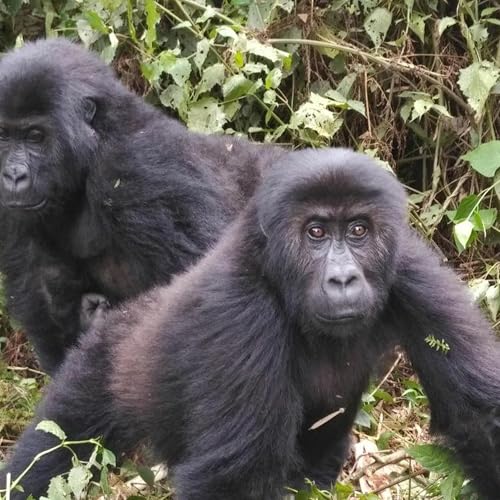
    Welcome to the second part of my conversation with Dominique Bikaba, in this episode Dom talks about his personal relationship with the forest and his journey into conservation work having learnt about wildlife from his grandmother and his chosen Batwa 'mother' and setting up his first conservation organisation at the age of 20. Dom talks about the brutal eviction of forest peoples, including that of his family. We discuss the need to decolonise conservation – for the sake of biodiversity and to challenge racism towards black led organisations. Listen in to hear about successes within community based conservation work and indigenous leadership, including reversing the decline of the Eastern Lowland Gorilla (Glauer's Gorilla). Themes: Great Apes conservation - Forest habitats - Kahuzi Biega National Park - community based conservation – chiefdoms - indigenous knowledge - traditional ecological knowledge - illegal mining – wildlife trade - failed conservation models – culture - bio-cultural diversity - Batwa pygmy – culture - generational knowledge - politics of funding - Congo Basin - Democratic Republic of Congo - Eastern Lowland Guerillas – evictions - decolonising conservation – trauma – African philosophy
    Afficher plus Afficher moins
    28 min
  • S2, Ep: 1 part 1, Dominique Bikaba - Strong Roots, Eastern Lowland Gorilla Conservation, DRC
    Apr 23 2020
    Dominique Bikaba is Executive Director of Strong Roots, a conservation NGO working in the Democratic Republic of Congo to protect Great Apes and their Congo Basin Forest habitat for the benefit of humans and animals. Dominique received the Whitley Award in 2018, in recognition of his innovative community based conservation prioritising indigenous knowledge and concerns. He was speaking with me from Bakavu, a town not far from the forest where he was born. Dominique's family lived in what is now Kahuzi-Biega National Park, he learnt about wildlife from his grandmother who would take him into the forest from which she was evicted in the 70's under the banner of conservation. The area is now under threat from illegal mining, and ill judged western led conservation models which exclude the Batwa Pygmys who live there. In contrast local chiefs are providing protection by allocating their ancestral land to extend wildlife corridors which support biodiversity and the Gorillas, using traditional ecological knowledge within a model of community based conservation, which also protects humans from nature loss and emphasises the cultural value of biodiversity. Our conversation is split into 2 episodes, in part 1 we discuss Great Apes conservation, threats to the Congo Basin Forest, the politics of funding, failing western conservation models, indigenous ecological knowledge and community based conservation. In part two we talk about Dom's personal relationship with the forest, the eviction of forest peoples and the disenfranchisement of Batwa pygmys from their ancestral land, and continue our discussion about colonialism, racism, conservation methodology and the importance of preserving habitats for people and wildlife.
    Afficher plus Afficher moins
    17 min
  • Series 2 Intro
    Apr 22 2020
    In this series we'll hear African perspectives on conservation, colonialism, indigenous knowledge and environmental issues effecting local communities. I recently had the pleasure of speaking with leading African conservationists about their work and the environmental issues effecting their regions and local communities. Experts from Kenya, Uganda and DRC shared innovative and traditional approaches to caring for species and habitats and discussed the wider political dynamics of colonialism that contextualises the work of black African conservationists. A shared aim within their work is to support bio-cultural diversity, recognising the integral value of nature to cultural life and respecting indigenous communities' intimate knowledge of ecological systems and the symbiosis which sustains both biodiversity and human communities. As researchers, conservationists and educators, they share a wealth of knowledge about community based conservation drawing on the expertise of the indigenous communities that they work alongside. We explore the damage of a continuing colonialism which affects access to funding and who gets to lead within the environmental field and imposes western models of conservation which ignores the views of indigenous and local communities and disregards traditional ecological knowledge – unless appropriated. This is a toxic 'divestment conservationism' that has led to the disenfranchisement of Africans from nature and their ancestral land, inflicting twin traumas upon forest peoples; the trauma of being separated from the land – nature is integral to life - and trauma from the manner in which people were separated from nature, through violence, deceit and disregard for the culture, livelihoods and lives of forest peoples. A consistent theme that African environmentalists face are the obstacles created by western interests and colonial mindsets, which get in the way of caring for the environment. Conservation work is navigated through needing to advocate for a plethora of rights; land rights, human rights and indigenous rights, just to be able to reach the work of supporting biodiversity and communities.
    Afficher plus Afficher moins
    2 min
  • Ep: 6 Nana Firman - Director of Muslim Outreach, GreenFaith
    Jan 9 2020
    In this episode I'm talking with Nana Firman who is the Muslim Outreach Director at GreenFaith, an international non profit multi-faith climate and environmental organisation. Listen in to find out how religious congregations can contribute to education and social engagement on environmental issues, and the importance of highlighting and interpreting the value of nature through existing theology.
    Afficher plus Afficher moins
    26 min
  • Ep: 5 Eboni Preston - Director of Programmes, Greening Youth Foundation
    Jan 3 2020
    In this episode I'm talking with Eboni Preston, Director of Programmes for the Greening Youth Foundation, a national non-profit in the US. Listen in to hear how this Atlanta based organisation has partnered with the National Park Service to increase opportunities for African American young people to enter environmental careers.
    Afficher plus Afficher moins
    19 min
  • Ep 4: Dr Ka'mal McClarin, US National Parks Service Curator and Frederick Douglas scholar
    Dec 27 2019
    In this episode I'm talking with Dr. Ka'mal McClarin, a Frederick Douglas scholar and Curator of the Frederick Douglas House Museum within the US National Park Service in Washington DC. Douglas was a highly accomplished man; having escaped enslavement, he was an intellectual who became a statesman, advancing the cause of abolition and social reform - he also found time to pursue his interests as a keen naturalist. New research is helping to build an even richer picture of Douglas' life. Listen in to hear Ka'mal's research on Douglas's life in relation to the natural world, as we sit talking at Cedar Hill - Frederick's home and smallholding.
    Afficher plus Afficher moins
    12 min