Épisodes

  • Petite Sirah vs Syrah: What’s the Difference? (California’s Boldest Grape)
    Feb 18 2026

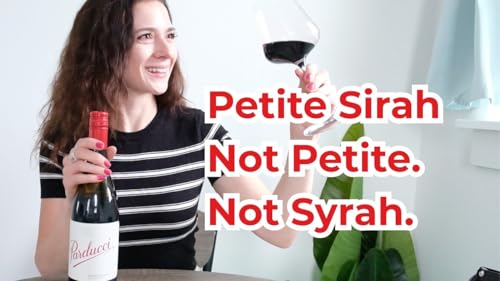
    Petite Sirah isn’t Syrah, and it might be one of the most misunderstood grapes in California.

    Today we're opening a bottle of Petite Sirah from Parducci Wine Cellars and breaking down what this bold, inky grape actually is, where it came from, and why Mendocino County might be one of the best places in America to grow it.

    We’ll talk about the history of Petite Sirah (also known as Durif), how it made its way to California in the late 1800s, and why it thrives in warmer inland valleys like those found in Mendocino County. Mendocino is often overshadowed by Napa and Sonoma, but it’s one of the most geographically diverse counties in the state, with mountain AVAs, coastal fog influence, and warm interior valleys that are ideal for powerful reds.

    Then we’ll taste through this Petite Sirah and talk structure and flavor.

    If you’re ready to break out of the world of the usual grapes and labels and try something off the beaten path, this one is for you.

    Suggested Chapters

    00:00 – What Is Petite Sirah? (And Why It’s Not Syrah)

    00:32 – The History of Durif in California

    00:51 – Where Petite Sirah Is Grown Today

    02:20 – Why Mendocino County Works So Well

    03:34 – Parducci Wine Cellars

    04:06 – Tasting the Petite Sirah

    05:15 – Who Should Be Drinking Petite Sirah?

    Afficher plus Afficher moins
    6 min
  • Rosé vs Orange Wine: What’s the difference (and why one tastes bitter)
    Jan 14 2026

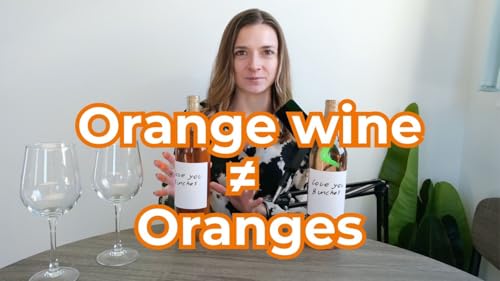
    Rosé and orange wine often look similar in the glass, but the taste completely different.

    In this video, we'll discuss the history, winemaking, and taste difference between Rosé and Orange wine. We’ll talk about skin contact, phenolic bitterness, and how rosé gets its color without turning into red wine.

    If you’ve ever wondered:

    – Why rosé and orange wine can look similar but taste nothing alike

    – Why orange wine tastes bitter or grippy

    – How skin contact changes a wine’s structure and feel

    This one’s for you.

    Wines tasted:

    – Love You Bunches Rosé (Stolpman Vineyards)

    – Love You Bunches Orange (Stolpman Vineyards)

    ⏱ Chapters:

    0:00 Rosé vs orange wine- same color, different wine

    0:45 What rosé actually is

    1:30 What orange wine actually is

    3:00 A quick history of rosé and orange wine

    5:30 The science of skin contact & phenolics

    8:00 Why these two wines taste so different

    10:30 Tasting: rosé vs orange

    13:30 The U.S. labeling problem with “orange wine”

    14:40 Final thoughts + who should drink which

    If you like approachable wine education and breaking down confusing wine topics without the snobbery, hit subscribe and drop a comment. Which one are you pouring: rosé or orange?

    Afficher plus Afficher moins
    11 min
  • What Is Fruit Wine? A deep dive into non-grape wine in America
    Jan 7 2026

    Wine without grapes? It’s not a trend, it’s history.

    Today we're exploring fruit wine (wine made from fruit other than grapes) and why it existed long before modern day winemaking. From ancient fermentation to modern American producers, fruit wine has always been part of the wine story, even if it’s been overlooked.

    0:00 Does wine have to be made with grapes?

    0:31 Brief history of wine

    1:31 Why do we ferment grapes?

    2:42 What fruit wine actually is (legally and historically)

    3:56 How fruit wine fits into American wine history

    5:16 Hermit Woods winery

    5:41 Why fruit wine has been dismissed as “not real wine”... and why that’s wrong

    6:22 What modern producers are doing to make dry, structured fruit wines today

    7:04 Hermit Woods Red Scare tasting (blueberry, blackberry, raspberry and honey wine)

    9:39 Hermit Woods Winni White tasting (plums, peaches, nectarines, kiwi berries, green tomatoes and rhubarb wine)

    If you're curious about off-the-beaten path wine, or the future of American wine beyond the usual grape varieties, join me on this journey!

    Afficher plus Afficher moins
    13 min
  • Why can some American wineries legally use the word Champagne?
    Dec 31 2025

    Champagne can only come from Champagne France, right?

    Well, yes... and also no.

    In this episode, we’re digging into the real history of American Champagne and sparkling wine. From how Champagne was invented in France, to American Sparkling's surprising roots in Ohio and New York, to why some U.S. producers can still legally use the word “Champagne” today.

    We’ll talk about:

    How sparkling wine actually came to be

    Why “Champagne” was once legal on American labels (and why most wineries can’t use it anymore)

    What is Champagne?

    What is Prosecco?

    What is Pét-nat?

    Tasting a rosé pét-nat from Field Recordings, the oldest style of sparkling wine there is

    Tasting a Champagne-method sparkling Pinot Noir from Peju

    American sparkling wine isn’t just a copy of France, it’s a story of history, climate, law, and creativity, all in the glass. Cheers!

    Afficher plus Afficher moins
    15 min
  • What are apple grape co-ferments? The rise of fruit wines in America
    Dec 10 2025

    Apple wine? Apple cider? Apple & grape co-ferments? Let’s clear this up.

    In today’s episode, we dig into the line between cider and wine, and how American producers have been experimenting with fruit & grape co-ferments for far longer than you might think. From early settler fermentations to today’s modern craft winemakers, fruit fermentation has shaped American wine culture for centuries.

    Whether you’re team hard cider or team wine, this episode breaks down the history and why these bottles deserve a place in the conversation about U.S. wine.

    00:00 Intro

    00:47 History of fruit wine

    02:54 Cider vs. Wine – What’s the actual difference?

    03:53 Tasting: Mari Vineyard’s Drolly Ambra

    06:54 Tasting: Rose Hill Chiffoner

    If you love discovering America’s best-kept wine secrets, subscribe for more deep dives into overlooked grapes, experimental winemakers, and the regions rewriting the rules.

    Afficher plus Afficher moins
    10 min
  • What is Cabernet Franc? From America’s oldest winery to modern day New York wine
    Dec 3 2025

    Hudson Valley New York isn't one of America's most known wine regions, but it has one major claim to fame: it’s home to America’s oldest continually operating winery, a piece of early U.S. wine history that predates most of what we think of as “American wine.”

    In this episode, we'll take a look at that history and then focus on two modern wines from the region. We'll taste a Cabernet Franc and a Cabernet Franc Rosé from Fjord Vineyards. These bottles show how Cab Franc expresses itself in a true cool-climate setting, and how producers in the Hudson Valley are shaping their own identity today.

    If you’re curious about New York wine, Cabernet Franc, or how this region is evolving, this tasting offers a grounded look at what’s happening in the valley right now.

    0:00 Intro

    0:35 Hudson Valley History

    2:08 America’s Oldest Winery (Brotherhood) History

    3:51 Intro to the wines

    4:21 Screw cap wine

    4:54 What is Cabernet Franc?

    6:25 Tasting Fjord Cabernet Franc

    8:31 Tasting: Fjord Cabernet Franc Rosé

    Afficher plus Afficher moins
    15 min
  • What Is Gamay? From Beaujolais Nouveau to American Gamay
    Nov 19 2025

    What is Gamay, really?

    In today’s episode, we’re taking Gamay far beyond Beaujolais and diving into it's diversity of styles: Beaujolais Nouveau, oak-aged Oregon Gamay, and even Gamay made as a white wine. If you’ve only ever tasted Gamay as a light red from France, buckle up. This grape has range.

    We start with the history of Beaujolais Nouveau, and how a local harvest wine turned into a global frenzy. We'll cover why it tastes like banana candy (its a real thing). Then we jump to the U.S. to dive into how American winemakers are rewriting Gamay, and Nouveau-style wine rules.

    0:00 – Intro

    1:12 – Beaujolais Region

    1:52 – Beaujolais Nouveau History

    5:06 – Winemaking Science Behind Nouveau Styles

    8:00 – Paul Brady’s Fauxjolais (New York)

    9:29 – Carbonic Maceration and Banana Candy & Bubblegum Flavors

    13:48 – Division Wine Company Gamay (Oregon)

    17:26 – Libertine Gamay Blanc

    20:57 – Final Thoughts

    Wines Featured:

    • Paul Brady Wine – Fauxjolais (New York)

    • Division Wine Co. – Gamay Noir Lutte (Oregon)

    • Libertine Wines – White Gamay (Oregon)

    If you’re into American wine, small producers, or discovering grapes beyond the mainstream, subscribe and stick around.

    Afficher plus Afficher moins
    23 min
  • Malbec Explained: Why Washington and New York Wines Taste Nothing Alike
    Nov 5 2025

    Most people think they know what Malbec tastes like: dark, jammy, plush, perfect with steak.

    But what if that’s only one version of the story?

    In this episode of American Wine Rebel, we're tasting two Malbecs that couldn’t be more different:

    - Gilbert Cellars Malbec from Horse Heaven Hills, Washington. This more classic malbec has structured tannin and big dark fruit flavors.

    - Benmarl Winery Malbec from Hudson Valley, New York. This cool climate Malbec is light bodied, bright, and full of red fruit and mineral flavors.

    We’ll trace Malbec’s journey from its French roots (and the frost that nearly killed it) to its rebirth in Argentina and its evolution across the U.S., then explore how terroir and winemaking shape this grape into completely different personalities.

    If you’ve ever thought “I don’t like Malbec,” this might change your mind.

    In this episode:

    00:00 Intro

    01:10 Introducing the wines

    03:11 Malbec’s French origins

    04:26 Argentina’s reinvention

    05:59 U.S. Malbecs and their new identities

    07:11 Tasting #1 – Gilbert Cellars (Horse Heaven Hills, WA)

    11:39 Tasting #2 – Benmarl Winery (Hudson Valley, NY)

    14:39 Final Thoughts and Why terroir changes everything

    Afficher plus Afficher moins
    17 min