

What We Eat
A Global History of Food
Impossible d'ajouter des articles
Échec de l’élimination de la liste d'envies.
Impossible de suivre le podcast
Impossible de ne plus suivre le podcast
Bénéficiez gratuitement de Standard pendant 30 jours

What We Eat
Acheter pour 17,99 €
-
Lu par :
-
Tanya Eby
Ketchup seems iconically American, but the word comes from a Southeast Asian anchovy sauce, and today it is made largely from Chinese tomato paste. Japan's beloved ramen arose from the meeting of Chinese noodles and American wheat flour before attaining worldwide popularity in both gourmet and convenience-food forms. The baguette is mythologized as a product of the French Revolution, but in fact it emerged during late-nineteenth-century urbanization. Colonialism brought baguettes to Vietnam, where street vendors devised a new dish: banh mi, which refugees took with them around the world.
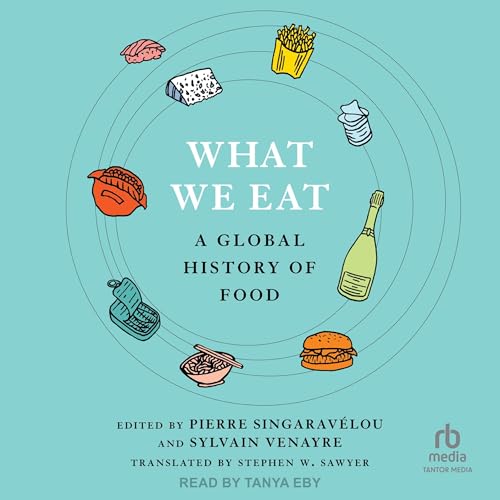
What We Eat explores world history through the lens of the global journeys of nearly ninety food products. Leading historians trace the origins and popularization of items commonly found in supermarkets, showing how each food illuminates wider histories. They consider the tension between the role of cuisine in shaping particular cultural identities and the standardization associated with globalization, and they demonstrate how foods have transformed as different societies have borrowed them. Chapters reveal the surprising sagas of coffee, cornflakes, gin, guacamole, hot dogs, hummus, naan, pet food, pizza, sparkling water, sushi, and more. At once an intimate and a global history, What We Eat shows listeners the everyday items on grocery store shelves in a new light.


