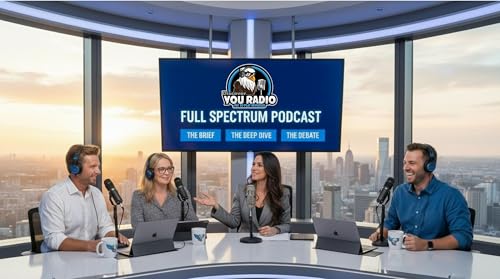
Couverture de Episode 45C The Debate - Chapter 2 - Your Guide by Brandon Eagle

Episode 45C The Debate - Chapter 2 - Your Guide by Brandon Eagle

Episode 45C The Debate - Chapter 2 - Your Guide by Brandon Eagle

Écouter gratuitement

Voir les détails
7 Reasons New Service Advisors Should Never Feel Guilty for Honoring Closing Time Few moments in automotive service culture cut as deep as the 6:05 PM knock on the glass. The lights are off. The computers are logged out. The final repair order is closed. And yet — there they are. A customer, peering through the locked service drive door, pointing at their vehicle parked just twenty feet away, demanding their keys like the posted business hours were merely a polite suggestion. This is the "Last Minute Sally" scenario, and it sits at the heart of Chapter 2 of Brandon Eagle's Your Guide to Customer Service (The Mirror Edition) — a book that pulls no punches in exposing the unfiltered realities of frontline service work. In Episode 45C of Discover YOU RADIO's The Debate, hosts Dakota Freeman and Lauren Miller go head-to-head over one of the most charged questions in dealership culture: should management ever override service policies and posted business hours to accommodate customers who arrive after the doors are locked? The episode, inspired by notes Dakota took while sitting in on a recording of The Deep Dive segment hosted by Robert Simmons and Rita Fox — a segment she described as "phenomenal" for the way it broke down the underlying mechanics of service operations — sparked a debate that's equal parts technical, philosophical, and deeply human. Whether you're a new service advisor navigating your first 6 PM standoff, or a service manager trying to figure out where the line actually is, here are seven reasons Eagle's text — and Freeman and Miller's debate — make the case that new advisors must never be guilt-tripped for honoring the clock. 1. The Customer Logic Loop Is Real, and It's Not Your Fault Eagle introduces one of his most memorable concepts early in Chapter 2: the customer logic loop. When a late customer pulls into the parking lot, they perform an immediate visual calculation. They see the building. They see a human being inside. They see their car. In their mind, that simple equation equals instant entitlement — my car is there, give it to me — regardless of what the clock says or what the posted hours make clear. Freeman explains it precisely in the episode: the customer "doesn't see the technical infrastructure." They don't see the cashier software shutdown. They don't see the closed accounting systems. They don't see the liability clock ticking on every open repair order. They see three data points and draw one conclusion. Understanding this loop doesn't mean tolerating it — it means new advisors can stop internalizing the customer's logic as a moral indictment of their own professionalism. It's a loop. It's predictable. And it's not yours to fix at 6:05 PM. 2. Cashier Software Shutdowns Are Not a Technicality — They're a Legal Firewall One of the sharpest moments in Freeman and Miller's debate comes when they dig into what actually happens when a dealership management system closes out for the night. This isn't merely a matter of inconvenience. As Freeman argues, keys are intrinsically tied to payment, and payment is tied to secure, closed accounting systems. "No payment equals no release. No system, no transaction." Reopening those systems after close doesn't just create a workflow headache — it introduces real business liability. If a repair order remains open when a vehicle leaves the lot and that customer gets into an accident at the intersection down the street, the dealership's insurance is potentially on the hook. Merchant agreements may be violated. Multi-million dollar operational integrity becomes a bargaining chip in exchange for one customer's poor planning. New advisors should understand that when they point to the system being offline, they aren't hiding behind technology. They are citing a legitimate, legally meaningful operational boundary. 3. The Vending Machine Analogy Explains Why Overrides Are Dangerous Eagle's vending machine analogy is one of those comparisons that lands immediately and sticks. When management overrides the system for a late arrival, they validate something deeply problematic: the customer's perception of the service department as a coin-operated machine. Drop a quarter in, get a soda — immediately, on demand, regardless of the hour. It doesn't matter that a dealership is a complex logistical operation with interlocking systems, staffed professionals, and real financial accountability. The vending machine customer doesn't see any of that. They see a button that worked once. And they will push it again. Miller, arguing from the manager's perspective in the episode, suggests that exceptions can be made for genuine crises. Freeman's counter is surgical: every time management caves, they are not demonstrating flexibility. They are running a behavioral conditioning session. They are teaching the next Last Minute Sally that the rules are, in fact, just suggestions — and that persistence is a better strategy than punctuality. 4. ...
adbl_web_anon_alc_button_suppression_t1
Aucun commentaire pour le moment